
TL;DR
Scientists have found evidence of vast, persistent structures in space that exceed current theoretical predictions. This challenges the standard cosmological model and suggests potential new physics. Further observations are underway to confirm these findings.
Recent astronomical observations have revealed that the universe contains large-scale structures extending over billions of light years, far larger and more persistent than current cosmological models predict. This discovery, based on data from the Dark Energy Spectroscopic Instrument (DESI), challenges the assumption that the universe is homogeneous and isotropic at the largest scales, a core principle of the standard model of cosmology.
Scientists analyzing data from DESI have identified cosmic structures that form preferred directions in galaxy distribution, even at scales of a gigaparsec (3.26 billion light years). These structures are significantly larger and more coherent than simulations based on the Lambda cold dark matter (ΛCDM) model predict, according to researchers involved in the study. The analysis employed statistical tools such as the Angular Distribution of Pairwise Distances (ADPD) to measure the size and persistence of these structures.
While the ΛCDM model accounts for the formation of the cosmic web from initial density fluctuations, the observed structures appear to contradict expectations of isotropy and uniformity at the largest scales. The findings suggest that the universe may not conform to the standard assumptions, potentially indicating the need for new physics or modifications to current theories. Future datasets from upcoming surveys, including the Euclid space telescope and the Vera C. Rubin Observatory, are expected to shed further light on these anomalies.
Implications for Cosmology and Fundamental Physics
The discovery of these larger, more persistent structures could fundamentally alter our understanding of the universe’s large-scale architecture. If confirmed, they challenge the cosmological principle that the universe is uniform and isotropic at the largest scales, a foundation of modern cosmology. This may lead to revisions of existing models or the development of new theories that better account for these anomalies. The findings also raise questions about the nature of dark matter and dark energy, and whether current models accurately describe their distribution and influence.

The Cosmic Web: Mysterious Architecture of the Universe
As an affiliate, we earn on qualifying purchases.
As an affiliate, we earn on qualifying purchases.
Background on Cosmic Structure and Standard Cosmology
The ΛCDM model has been the prevailing framework for understanding the universe since the late 20th century. It predicts that initial quantum fluctuations in the early universe evolved into a cosmic web of dark matter, gas, and galaxies, with large-scale uniformity. Recent high-resolution surveys, notably DESI’s extensive 3D mapping, have tested these predictions. While previous observations supported the model, recent data have hinted at anisotropies and larger structures, prompting renewed scrutiny of the model’s assumptions.
“The structures observed in the real universe are significantly larger and more persistent than those formed in standard simulations.”
— an anonymous researcher
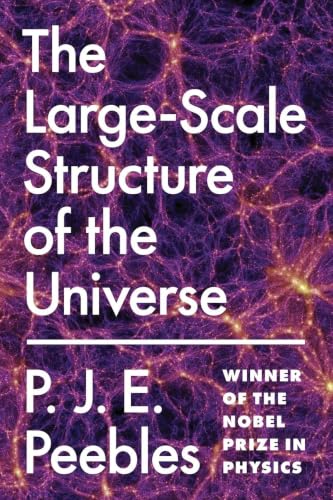
The Large-Scale Structure of the Universe (Princeton Series in Physics)
As an affiliate, we earn on qualifying purchases.
As an affiliate, we earn on qualifying purchases.
Unanswered Questions About Universe’s Large-Scale Structure
It remains unclear whether these observed large-scale structures are anomalies or indicative of a fundamental flaw in current cosmological theories. Further data from upcoming surveys are needed to confirm the persistence and scale of these structures. Additionally, it is not yet known how these findings will integrate with the cosmic microwave background data, which supports the universe’s uniformity at the largest scales.

Infidelity Detection Kit | Find Two Substances Found in Male Body Fluids | Results in 10 Minutes | One Kit
- Purpose: Infidelity detection in male fluids
- Detection Results: Positive for both substances indicates near certainty
- Ease of Use: Simple, quick results in 10 minutes
As an affiliate, we earn on qualifying purchases.
As an affiliate, we earn on qualifying purchases.
Upcoming Observations and Theoretical Investigations
Scientists plan to analyze additional data from DESI’s next data release, expected within a year, and from upcoming missions like Euclid and the Vera C. Rubin Observatory. These observations will help determine whether the large-scale structures are consistent across different datasets. Concurrently, theorists are exploring modifications to the ΛCDM model or alternative frameworks that could accommodate these findings, potentially leading to new physics.

Infinite Cosmos: Visions From the James Webb Space Telescope
As an affiliate, we earn on qualifying purchases.
As an affiliate, we earn on qualifying purchases.
Key Questions
What do these new structures mean for our understanding of the universe?
If confirmed, they suggest the universe may not be as uniform at large scales as previously thought, which could lead to revisions of fundamental cosmological principles.
Are these findings definitive or still under investigation?
The findings are significant but require further verification with additional data from upcoming surveys to confirm their scale and persistence.
Could these structures be artifacts or measurement errors?
The analysis employed rigorous statistical methods, but further observations are needed to rule out observational biases or errors definitively.
How might this impact the standard model of cosmology?
It could necessitate modifications to the ΛCDM model or the development of new theories to explain the larger-than-expected structures.
When will we learn more about these structures?
Additional data from DESI’s upcoming releases and other observatories are expected within the next year, which will clarify these findings.
Source: 404 Media