
TL;DR
On April 6, 2026, NASA’s Artemis II crew set a new record for the farthest humans have traveled from Earth, surpassing Apollo 13’s historic distance during a lunar flyby. This achievement demonstrates operational capabilities for future deep-space missions.
NASA’s Artemis II crew set a new record for the farthest humans have traveled from Earth on April 6, 2026, surpassing the 248,655 miles reached by Apollo 13 during its emergency return from the Moon in 1970. The achievement occurred during a planned lunar flyby, demonstrating operational capabilities for future deep-space missions and marking a historic milestone in human spaceflight.
The Artemis II spacecraft, launched on April 1, 2026, by NASA’s Space Launch System, conducted a lunar flyby that took the crew beyond the previous record set by Apollo 13. At 1:56 p.m. EDT, during a 40-minute communication blackout while flying approximately 4,067 miles above the lunar surface, Orion reached a maximum distance of 252,756 miles from Earth. This distance is about 4,100 miles more than Apollo 13’s historic mark, achieved during its emergency lunar orbit in 1970.
Unlike Apollo 13, which was forced into a far-side trajectory due to an oxygen tank explosion, Artemis II’s mission was deliberately planned as a lunar flyby to test Orion’s deep-space operations. The crew’s trajectory took them farther from Earth than any crewed mission since Apollo 13, without any incident or emergency situation. The mission’s primary goal is to validate systems for future lunar and Mars exploration, not landing on the Moon.
Operational Milestone in Human Deep-Space Flight
The record set by Artemis II signifies that crewed spacecraft can operate safely at greater distances from Earth than ever before, confirming the capability to support future lunar bases and Mars missions. It also demonstrates the effectiveness of current navigation, communication, and life support systems in deep space, marking a step forward in human space exploration.
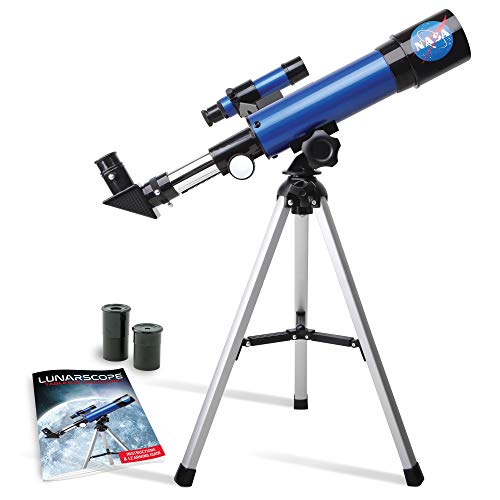
NASA Lunar Telescope for Kids Ages 8-12 with Tripod and Finder Scope
- Inspires Curiosity About Space: See the moon in incredible detail
- High-Quality Optical Glass: Includes finder scope and multiple eyepieces
- Easy to Use for Kids: Simple setup for young astronomy enthusiasts
As an affiliate, we earn on qualifying purchases.
As an affiliate, we earn on qualifying purchases.
Historical and Technical Background of Distance Records
The previous record for the farthest humans traveled from Earth was set unintentionally by Apollo 13 in 1970, which, after an oxygen tank explosion, looped around the far side of the Moon and reached 248,655 miles from Earth. That mission was a survival story, not a planned deep-space voyage. Since then, no crewed mission had surpassed that distance for over five decades. Artemis II, launched in April 2026, is the first mission to deliberately pass that mark, testing systems for future lunar and interplanetary exploration. This achievement underscores the shift from survival-driven missions to planned, operational deep-space flights.
“Welcome to my old neighborhood. Don’t forget to enjoy the view. This is a historic moment and a proud step forward for human exploration.”
— Jim Lovell (recorded message)

Celestron Cometron 7x50mm Astronomy Binoculars
- Ease of Use for Beginners: Simple, affordable entry into astronomy
- 7x Magnification: Wide field of view for expansive sky viewing
- Large 50mm Objectives: Gather more light for brighter images
As an affiliate, we earn on qualifying purchases.
As an affiliate, we earn on qualifying purchases.
Unconfirmed Aspects and Future Clarifications
While the distance record has been officially set, the long-term implications for crewed deep-space missions are still being evaluated. It is not yet clear how the operational data from Artemis II will influence future lunar and Mars missions, or whether similar distances can be reliably maintained in longer-duration flights. Additionally, the precise impact of this record on mission planning and international space policy remains to be seen.

DWARFLAB Dwarf Mini Smart Telescope – 1.85lb Portable Astronomy Telescope
- Compact and Lightweight: Weighs only 1.85 lbs for portability
- Easy App Control: Set up and start in 3 minutes
- Built-in Sky Atlas: Interactive star map for easy navigation
As an affiliate, we earn on qualifying purchases.
As an affiliate, we earn on qualifying purchases.
Next Steps for Artemis and Human Deep-Space Missions
NASA plans to analyze the data collected during Artemis II’s lunar flyby to refine deep-space navigation and life support systems. The upcoming Artemis III lunar landing mission will build on this experience, aiming to establish a sustained human presence on the Moon. Long-term, NASA and international partners are preparing for Mars exploration, with Artemis II’s record-setting distance serving as a foundational milestone for these future efforts.

Action City Space Mission 4 Piece Set, Nasa
- Die-Cast Metal Space Shuttle: With Opening Cargo Doors
- Includes 3 Astronaut Figures:
- Authentic NASA Markings:
As an affiliate, we earn on qualifying purchases.
As an affiliate, we earn on qualifying purchases.
Key Questions
How does Artemis II’s distance compare to Apollo 13’s?
Artemis II reached about 252,756 miles from Earth, surpassing Apollo 13’s 248,655 miles during its emergency lunar orbit in 1970.
Was Artemis II intended to set this distance record?
No, the mission was planned as a lunar flyby to test Orion’s deep-space systems. The record was an unplanned but deliberate outcome of the trajectory.
What does this mean for future lunar missions?
This achievement confirms that crewed spacecraft can operate safely at greater distances, supporting plans for lunar bases and Mars exploration.
Will Artemis II’s record be broken again soon?
Future missions, including Artemis III and beyond, are expected to push these boundaries further, especially with planned Mars missions in the coming decades.
Source: Google Trends