📊 Full opportunity report: The Persistent Radar Of AI: What Companies And Governments Need To Know on ThorstenMeyerAI.com — validation score, market gap, and execution plan.
TL;DR
Commercial synthetic aperture radar (SAR) satellites are transforming persistent surveillance, offering all-weather, day-night imaging. This development impacts industries, research, and national security, with European and US companies leading the market.
In 2026, the commercial satellite industry has seen a dramatic expansion of synthetic aperture radar (SAR) constellations, offering persistent, all-weather imaging capabilities that are reshaping surveillance across sectors. This technological shift is driven by a rapidly growing market, with European and US companies leading the charge, and has significant implications for industries, governments, and security agencies worldwide.
SAR satellites transmit microwave pulses that reflect off the ground, enabling imaging regardless of weather or daylight. Unlike optical satellites, SAR provides consistent, high-resolution images, with current commercial systems resolving objects down to 16 centimeters. Leading companies like ICEYE and Umbra are deploying large constellations—ICEYE alone plans to generate over €1 billion in revenue in 2026, with a backlog including a €1.76 billion contract with the German Bundeswehr.
European nations are increasingly adopting SAR constellations for sovereignty and security, exemplified by Poland, Portugal, and Greece integrating ICEYE satellites into their national programs. The technology’s capabilities extend beyond military use, impacting insurance, infrastructure monitoring, maritime tracking, and agriculture. The dual-use nature of SAR, serving both commercial and defense needs, accelerates its adoption and market growth.
Radar That Never Blinks
What SAR Does — for Companies, Institutions, Governments
Active microwave imaging: its own illumination, any weather, any hour. The sensor is solved — the reading of it isn’t.
Three consequences of the physics
Active sensor: transmits its own microwave pulses. Same image quality at 3 a.m. in a North Sea storm as at noon in the Sahara.
Phase-coherent imaging enables InSAR: ground deformation at millimeter scale — subsiding dams, sagging bridges, hidden excavation.
Metal reflects radar strongly. A ship that switches off its transponder vanishes from tracking sites — not from a radar image.
Who buys it, and why — three different answers
- Insurance: flood-extent maps within hours, through the storm — parametric payouts before adjusters arrive
- Infrastructure & energy: InSAR subsidence alerts on pipelines, rail, dams — no ground sensors
- Maritime & commodities: dark-vessel detection, port congestion, storage monitoring
- Caveat: buy analytics, not raw phase histories — the value is in the interpretation layer
- Disaster response: damage proxies and flood maps while optical is blind
- Climate science: ice velocity, deforestation under perpetual cloud (Sentinel-1, free & open)
- OSINT & journalism: verifiable all-weather evidence — normalized by Ukraine, institutionalized since
- Caveat: radar literacy is scarce — misread speckle becomes a confident, wrong “convoy”
- Deterrence: continuous all-weather watch closes the cloud-cover exploit window
- Verification: arms-control and sanctions evidence that doesn’t blink
- Autonomy: a subscription can be throttled by a foreign provider; a nationally-tasked constellation can’t
- Caveat: collection has outrun exploitation — the analyst corps can’t screen sub-hourly revisit manually
Europe is buying constellations, not just imagery
THE EXPLOITATION GAP
The scarce resource is no longer the satellite — it’s the software that turns phase histories into detections and decisions, in the jurisdiction the mission requires. Whoever owns the software that reads the radar owns the value of the constellation above it. Buying satellites while importing the exploitation stack just moves the dependency one layer up.
commercial SAR satellite imaging device
As an affiliate, we earn on qualifying purchases.
As an affiliate, we earn on qualifying purchases.
Implications of Commercial SAR for Security and Industry
The expansion of commercial SAR constellations signifies a shift in global surveillance capabilities, enabling real-time, all-weather monitoring that enhances security, disaster response, and commercial operations. For governments, it offers strategic sovereignty advantages; for industries, it provides timely insights that can prevent losses and optimize logistics. This technological leap raises questions about data sovereignty, privacy, and the future of intelligence gathering.

DEKCO 2K Security Camera Outdoor 2Packs, WiFi Outdoor Security Cameras Pan-Tilt 360° View, 3MP Surveillance Cameras with Motion Detection and Siren, 2-Way Audio, Full Color Night Vision, Waterproof
Smart Motion Tracking — Motion tracking allows DEKCO outdoor security camera to detect object in motion. Once enabled,…
As an affiliate, we earn on qualifying purchases.
As an affiliate, we earn on qualifying purchases.
Rapid Growth of Commercial SAR and European Adoption
Over the past decade, SAR technology transitioned from military exclusivity to a commercial commodity. Today, companies like ICEYE operate extensive constellations with sub-hourly revisit times, serving both defense and civilian markets. European countries are investing heavily in national SAR programs, reflecting a strategic move to reduce dependency on foreign satellite data and enhance sovereignty. The market is projected to grow from $7.45 billion in 2026 to nearly $19 billion by 2034, driven by technological advances and increasing demand across sectors.
“Our constellation provides rapid, reliable data that serves both commercial markets and defense agencies, with revenues expected to quadruple in 2026.”
— An ICEYE spokesperson
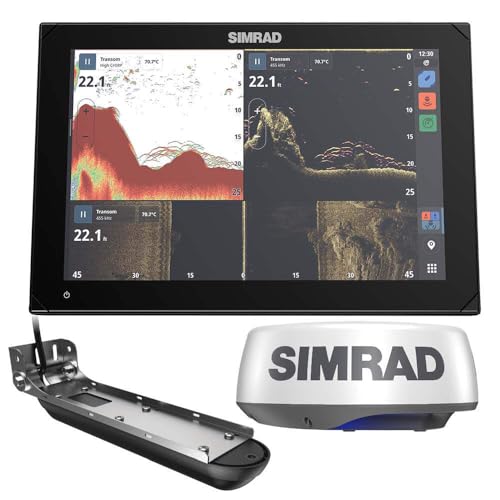
Simrad 000-15377-001, NSX 3009, Chartplotter and Fishfinder with Active Imaging 3-in-1 Transducer, HALO20+ Radar and C-MAP Discover X Charts, 9 Inch, Black
MULTIFUNCTION DISPLAY: 9-inch high-definition IPS touch screen with extreme viewing angles, even viewable through polarized lenses
As an affiliate, we earn on qualifying purchases.
As an affiliate, we earn on qualifying purchases.
Unresolved Questions About Data Privacy and Regulation
While the technical capabilities of SAR are well established, questions remain about data privacy, regulatory frameworks, and international norms governing high-resolution satellite imagery. It is unclear how different jurisdictions will regulate the proliferation of large SAR constellations, or how data sharing agreements will evolve to balance security and privacy concerns.

Escort MAX 360c MKII Laser Radar Detector & Escort Direct Wire Power Cord: Dual-Band Wi-Fi and Bluetooth, 360° Directional Arrows, Exceptional Range, Shared Alerts, Drive Smarter App, Black
50% Improved Range – Compared to the original MAX 360c model. Dual antennas increase detection range and sensitivity…
As an affiliate, we earn on qualifying purchases.
As an affiliate, we earn on qualifying purchases.
Next Steps in SAR Market Expansion and Policy Development
Expect continued growth in SAR satellite deployments, especially from European nations seeking sovereignty. Regulatory discussions around data privacy and international norms are likely to intensify, shaping how SAR data is accessed and used. Additionally, advancements in data analytics and AI will further enhance the value extracted from SAR imagery, making it a critical asset for multiple sectors.
Key Questions
How does SAR technology differ from optical satellites?
SAR uses microwave pulses to generate images regardless of weather or daylight, unlike optical satellites that depend on sunlight and clear skies. SAR can image through clouds, fog, and darkness, providing persistent surveillance capabilities.
Who are the main commercial players in SAR satellite deployment?
Leading companies include ICEYE (Finland), Umbra (US), Capella Space (US), and Synspective (Japan). European firms like Airbus and Thales are also investing heavily in SAR constellations.
What are the main applications of commercial SAR data?
Applications include disaster response, infrastructure monitoring, maritime tracking, agriculture, and defense. SAR provides timely, reliable data for decision-making in critical situations.
Will SAR data be accessible to the public or remain restricted?
Access depends on the provider and jurisdiction. Commercial companies sell processed analytics, while raw data may be restricted or regulated, especially for national security purposes.
Increased satellite coverage raises concerns about surveillance overreach, data privacy, and international norms. Regulatory frameworks are still evolving to address these issues.
Source: ThorstenMeyerAI.com