
TL;DR
The FCC on Nov. 25 authorized SpaceX to deploy up to 1 million satellites for its proposed Starmind space data centre system. The approval covers radio links and sets deployment deadlines; it does not establish that the system will work or be commercially viable. No satellites have launched under the authorization, and the FCC deferred SpaceX’s request concerning disposal orbits above 600 kilometres.
The Federal Communications Commission on Nov. 25 authorized SpaceX to deploy up to 1 million satellites for a proposed space-based data centre system called Starmind, setting milestones that run through 2040. The decision clears a regulatory step for the plan, but no satellites have been launched under the authorization, and the FCC did not assess whether orbital data centres are technically workable or financially viable.

Get business pricing on tech for your team
- Business-only prices and quantity discounts
- Tax-exempt purchasing
- Multiple users, one account, clear invoices
The FCC Space Bureau granted most of SpaceX’s application and authorized backup and emergency radio control links on two radio bands. SpaceX says the satellites would carry data mainly through laser links between spacecraft, with radio serving as a backup. The authorization specifies orbital shells between 500 and 1,002 kilometres above Earth, each 50 kilometres thick, according to the supplied account of the order.
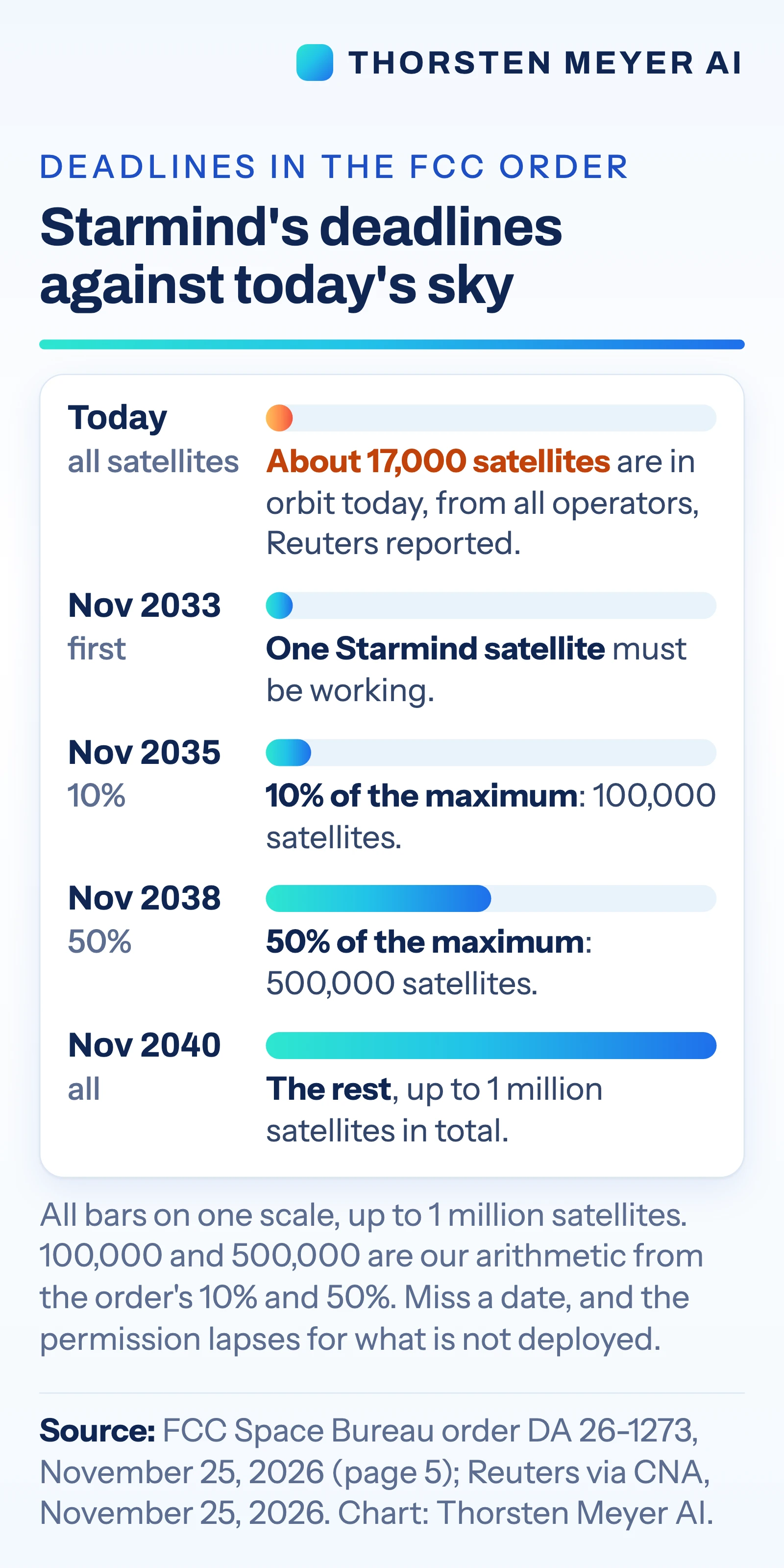
The approval includes deployment deadlines: SpaceX must have at least one satellite operating by Nov. 25, 2033, half of the authorized fleet by 2038, and the full fleet by 2040. The source says the authorization could lapse if the milestones are missed. The FCC also deferred the part of SpaceX’s request concerning disposal orbits above 600 kilometres, calling for more detail before that part can proceed.
The FCC’s decision addressed communications authorization, not the performance of the proposed computing system. The source says the agency denied petitions seeking to block the plan from Amazon’s satellite unit, Viasat and the American Astronomical Society. Those groups had asked the FCC to deny the application; their objections included concerns about the proposal’s effects. The FCC did not add conditions addressing the astronomy concerns described in the source.
A Long Lead Time for Orbital Computing
The authorization creates a regulatory path for a project that could link satellite communications with large-scale computing in orbit. If built and made to work as proposed, the system could let SpaceX use solar power in space and send computing results back to Earth over laser connections linked to Starlink. That is SpaceX’s stated rationale, not a finding by the FCC.
For customers and data centre operators, the near-term effect is limited: there is no service to buy and the first operating milestone is in 2033. The plan also raises questions about the scale of a potential satellite fleet and its effects on astronomy. The supplied source reports objections from astronomers, but does not provide measurements of expected impacts or show that the FCC resolved them through new safeguards.
Products Worth Considering

Bose QuietComfort Wireless Noise Cancelling Headphones – Cypress Green (Limited Edition)

DJI Osmo Action 5 Pro 4K Waterproof Action Camera with Dual OLED Touchscreens, Froggi 47-Piece Sport Kit and SD Card

Bose Smart Dolby Atmos Soundbar with Alexa, Voice Control, and Bluetooth
As an affiliate, we earn on qualifying purchases.
The FCC regulates radio use by satellites, which is why the decision concerns communications links rather than the computers themselves. In the account provided, the order authorizes radio control links for backup and emergencies; SpaceX says lasers would carry most of the data between satellites. A radio authorization is one part of the plan and does not, by itself, demonstrate that the proposed data centre hardware, power systems or communications network will operate as intended.
SpaceX has argued that AI computing requires substantial electricity and cooling and that satellites could use solar power in orbit. Reuters, as cited in the source, reported the company’s claim that the satellites would have access to “near-constant solar power” and low operating or maintenance costs. The Verge, also cited there, reported SpaceX’s description of Starmind as a way to capture solar energy in space to power AI on Earth. These are company claims; the source does not establish their costs or performance.
“the first authorization in U.S. history for a constellation of data centers in space”
— The Federal Communications Commission, as quoted in the supplied source
Open Questions on Disposal and Viability
The FCC has not determined whether Starmind can deliver computing at useful scale, what it would cost, or whether it can compete with data centres on Earth. Those questions remain unresolved, as do practical details of how the satellites would be powered, cooled, maintained and connected to customers. The supplied source does not include enough technical information to assess those points.
SpaceX must provide more information on the proposed disposal of satellites placed above 600 kilometres, because the FCC deferred that part of its request. The source also reports astronomy groups’ objections but does not spell out the FCC’s full reasoning for denying their petitions, nor does it provide a quantified assessment of effects on observations. The authorization alone does not settle those questions.
Milestones Begin in 2033
The next stated deadline is Nov. 25, 2033, when at least one satellite must be operating under the authorization. SpaceX would then need to meet the half-fleet milestone in 2038 and the full deployment milestone in 2040. The source does not identify a planned launch date or say when SpaceX will submit further details on disposal above 600 kilometres.
Until the first spacecraft operates and the company provides more information on outstanding issues, Starmind remains a permitted proposal rather than an available computing service. The FCC authorization establishes communications terms and deadlines; the system’s operation and commercial prospects remain to be demonstrated.
Key Questions
What did the FCC authorize?
The FCC authorized SpaceX to deploy up to 1 million proposed data centre satellites and use specified backup and emergency radio control links. The authorization does not establish that the computing system will work.
When will the first Starmind satellite launch?
The supplied source does not give a launch date. It says SpaceX must have at least one satellite operating by Nov. 25, 2033.
Are the satellites already providing AI computing?
No. According to the source, none has been launched under this authorization. The plan is not an available service.
What part of the application did the FCC defer?
The FCC deferred SpaceX’s request concerning satellite disposal orbits above 600 kilometres and requires more detail before that part proceeds.
Did the FCC decide whether orbital data centres are viable?
No. The FCC addressed satellite communications authorization. Whether the system is technically workable or financially viable remains unresolved.
Source: Thorsten Meyer AI