🔍 Read the full analysis: Previewing The Model Hardware Standard – Anthropic on ThorstenMeyerAI.com

Get business pricing on tech for your team
- Business-only prices and quantity discounts
- Tax-exempt purchasing
- Multiple users, one account, clear invoices
TL;DR
Anthropic announced a limited research preview of the Model Hardware Standard (MHS) on August 27, enabling selected partners to test AI-driven control of physical devices. The standard aims to streamline equipment integration and improve safety, but remains under development with ongoing validation needed.
Anthropic has launched a limited research preview of its Model Hardware Standard (MHS) on August 27, 2026, giving select laboratories and manufacturers early access to a shared specification for connecting AI agents with physical equipment. You can read more about the original analysis of the Model Hardware Standard. This development aims to facilitate interoperability between AI systems and laboratory or industrial instruments, potentially reducing integration times from weeks to minutes. The preview is currently restricted to partner organizations, with broader availability pending further validation and safety assessments.
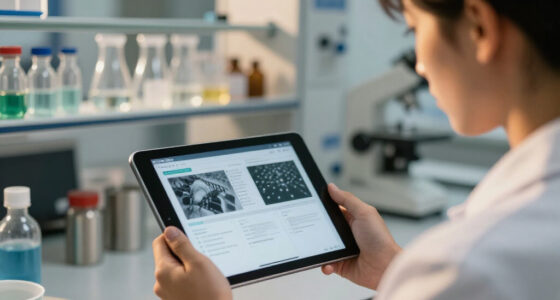
The Model Hardware Standard (MHS) introduces a standardized software driver layer that enables AI agents to discover, monitor, and operate connected equipment such as microscopes, liquid handlers, and robotic arms. Developed initially through collaboration with HHMI Janelia Research Campus, MHS allows agents to access device capabilities via the Model Context Protocol, a command-line interface, or code files. Drivers expose basic device functions—like reading temperature or adjusting settings—while also describing device specifications and safety limits.
Early projects testing MHS include protein-assay automation at Genentech, microscope control at Janelia, and laser stabilization at QuEra, a quantum computing firm. For more details on Anthropic’s latest developments, see Fable and Mythos: How Anthropic Shipped Its Most Powerful Model to Everyone. For example, Genentech’s proof of concept involved a Claude AI model coordinating a liquid handler, robotic arm, and plate reader. QuEra reported that an AI-developed controller recovered a laser lock in 99.3% of tests, though Anthropic has not published independent validation. The goal is to significantly cut down the time and effort needed to integrate diverse hardware, which traditionally takes weeks or months, to hours or minutes, based on company and partner experiences.
However, safety remains a concern. The current preview does not include comprehensive testing across all device types or failure modes, and the system’s effectiveness in real-world, unpredictable environments is still under evaluation. For more insights into safety considerations, see Anthropic: Claude Attacks Result Of Security Gaps, Not Model Issues. MHS’s safety claims are based on initial partner testing, and the robustness of safety enforcement—such as preventing damage or unsafe commands—is yet to be independently verified.
Potential Impact on Laboratory and Industrial Automation
The introduction of MHS could transform how laboratories and factories manage multi-instrument workflows by reducing custom integration efforts. A common driver layer could allow AI agents to coordinate complex operations across different hardware vendors more efficiently, decreasing setup times and enabling more flexible, scalable automation. This could benefit research institutions, biotech companies, and manufacturing plants by making automation more accessible and less reliant on bespoke control systems.
Nevertheless, giving AI agents direct influence over physical equipment introduces safety risks. Errors could lead to equipment damage, compromised samples, or safety hazards. The success of MHS in real-world deployments will depend on reliable safety enforcement, comprehensive device descriptions, and support across a broad range of hardware. The current limited testing and lack of independent validation mean that widespread adoption remains uncertain at this stage.
laboratory robotic arm control software
As an affiliate, we earn on qualifying purchases.
As an affiliate, we earn on qualifying purchases.
Origins and Development of the Model Hardware Standard
The MHS originated from collaborative efforts between Anthropic and HHMI Janelia Research Campus, focusing on research rigs combining lasers, cameras, motors, and control software from various vendors. The goal was to replace numerous point-to-point connections with a shared interface that standardizes device controls and sensor data in a consistent format. Following initial success, the project expanded to include organizations in biotechnology, robotics, and quantum computing, with hardware and software partners such as AWS, Doosan Robotics, Tecan, and Universal Robots.
Anthropic’s approach builds on prior challenges in laboratory automation, where custom integrations often take weeks or months to develop. By creating a common driver layer, MHS aims to streamline workflows, reduce repetitive engineering, and improve reproducibility. The project is still in early stages, with ongoing testing to evaluate safety, reliability, and applicability across different environments and device types.
“The Model Hardware Standard is designed to reduce integration times and enable AI agents to safely and effectively control physical equipment.”
— Thorsten Meyer, Anthropic
AI compatible microscope controller
As an affiliate, we earn on qualifying purchases.
As an affiliate, we earn on qualifying purchases.
Unconfirmed Safety and Reliability Across Broader Use Cases
The safety and performance of MHS outside initial partner projects remain unproven. There are no published independent evaluations or comprehensive testing across diverse equipment types, failure modes, or operational environments. The system’s ability to prevent damage, handle unexpected conditions, or enforce safety limits reliably is still under investigation. Additionally, the effectiveness of safety features during communication failures or hardware malfunctions has not been fully demonstrated.
As an affiliate, we earn on qualifying purchases.
Next Steps for Broader Testing and Open-Source Release
Anthropic is accepting applications from research and industry organizations to participate in the limited preview, aiming to test additional devices, develop safety protocols, and refine deployment practices. The company plans to publish detailed findings, safety guidelines, and a roadmap for physical safety improvements. A key milestone will be demonstrating consistent, safe operation across multiple independent sites while maintaining oversight and safety limits during failures. The timeline for a broader, open-source release remains unannounced, pending further validation and safety assurance.
quantum laser stabilization equipment
As an affiliate, we earn on qualifying purchases.
As an affiliate, we earn on qualifying purchases.
Key Questions
What is the Model Hardware Standard?
The Model Hardware Standard (MHS) is a shared specification developed by Anthropic to enable AI agents to control physical equipment through common drivers, aiming to streamline automation and improve safety.
Who can participate in the current preview?
Research laboratories and industry partners working in biotech, robotics, quantum computing, and related fields can apply to join the limited preview, with selection based on their testing plans and safety protocols.
What are the main safety concerns with MHS?
Safety concerns include the potential for errors leading to equipment damage, unsafe commands, or sample spoilage. The current system relies on driver-level limits, but comprehensive validation and independent testing are still needed to confirm safety during complex or unexpected scenarios.
When will MHS be publicly available?
There is no announced date for the open-source or broader commercial release. Anthropic plans to publish findings and safety guidelines before expanding access widely.
How does MHS improve over traditional device integration?
MHS aims to reduce integration time from weeks or months to hours or minutes by providing a standardized interface and device descriptions, making multi-instrument workflows easier to develop, reproduce, and monitor.
Primary source: Anthropic · via ThorstenMeyerAI.com
Halloween Picks
halloween
As an affiliate, we earn on qualifying purchases.