

TL;DR
Cells are small primarily due to physical constraints such as surface area-to-volume ratio and diffusion efficiency. Larger cells face metabolic and transport challenges, shaping their size and structure. Exceptions like Thiomargarita magnifica challenge these rules.
Cells are small because physical laws, such as the surface area-to-volume ratio and diffusion limits, impose fundamental constraints on their size, influencing their structure and function.
Cells, ranging from tiny sperm cells to large oocytes, are shaped by physics. The surface area-to-volume ratio limits how large a cell can grow before it cannot efficiently exchange nutrients or waste. As cells increase in size, their internal volume grows faster than their surface area, reducing the efficiency of nutrient intake and waste removal. Additionally, diffusion—the process by which molecules move within the cell—becomes less effective as cell size increases, slowing down essential biochemical reactions.
For example, red blood cells are small and shaped to maximize surface area for oxygen exchange, while large oocytes store nutrients and do not rely as heavily on diffusion. Some bacteria, like Thiomargarita magnifica, defy typical size constraints by compartmentalizing their internal space, pushing most of their volume to the periphery to maintain diffusion efficiency. These physical constraints are fundamental to understanding why cells are generally small, but exceptions exist that challenge these rules.
Implications of Physical Constraints on Cell Size
Understanding why cells are small helps explain fundamental biological processes and the evolution of cellular structures. It also informs research into cell biology, medicine, and bioengineering, as manipulating cell size could impact tissue growth, disease progression, and synthetic biology applications. Recognizing these physical limits clarifies why certain cell types have evolved specific shapes and sizes, shaping our understanding of life at the cellular level.
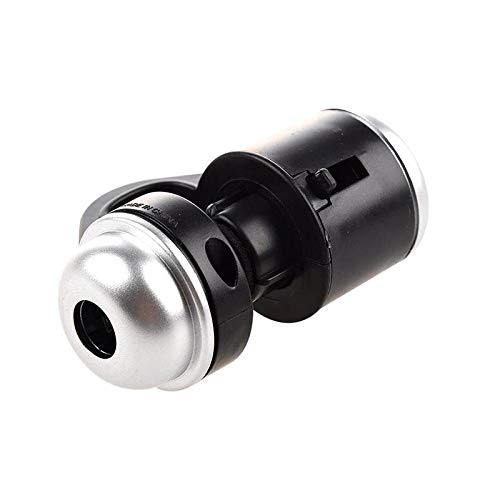
Jiusion 30X Zoom Bright LED Stereo Microscope Magnifier Clip-On Cell Phone Mobile Phone Camera Lens Compatible with Apple iPhone Samsung iPad
- Device Compatibility: Works with iPhone, Samsung, iPad
- Portable Design: Compact and easy to carry
- Universal Fit: Fits devices 0.5 to 0.9 inches thick
As an affiliate, we earn on qualifying purchases.
As an affiliate, we earn on qualifying purchases.
Physical Laws Shaping Cell Dimensions
The size of cells is primarily governed by physical principles established over a century ago. The surface area-to-volume ratio, which dictates how efficiently a cell can exchange materials with its environment, limits growth. Diffusion constraints further restrict how large a cell can become without impairing internal molecular interactions. Notably, some bacteria like Thiomargarita magnifica break these rules by developing specialized internal structures, such as large vacuoles, to circumvent size limitations. These insights are based on recent scientific discussions and longstanding biological theories.
“Cells are small because of the physical limits imposed by surface area-to-volume ratio and diffusion. Larger cells struggle to maintain efficient nutrient exchange and molecular interactions.”
— an anonymous researcher on Hacker News
“Exceptions like Thiomargarita magnifica show that cells can overcome typical size limits through structural adaptations, but these are rare and specialized cases.”
— an anonymous researcher on Hacker News

2 Set Magnetic Animal and Plant Cell Model Clearly Magnets Anatomy Models Educational Science Kits Back to School Biology Classroom Decor for Lab Decorations Teacher Must Haves Learning Teaching Aid
- Package Includes: 2 large magnets and 22 small shape magnets
- Durable Magnetic Material: Built to last and securely hold in place
- Realistic and Vibrant Design: Rich colors and accurate cell anatomy
As an affiliate, we earn on qualifying purchases.
As an affiliate, we earn on qualifying purchases.
Unresolved Questions About Cell Size Variability
It remains unclear how widespread and effective the various structural adaptations are in overcoming physical constraints. The full extent to which cells can deviate from typical size limits, especially in complex multicellular organisms, is still under investigation. Researchers continue to explore how internal compartmentalization and other mechanisms influence cell size and function.

Innovating Science Osmosis and Diffusion Lab Kit
- Materials for 15 groups: Includes enough supplies for 15 groups
- Educational guides included: Teacher’s manual and student study guides
- Non-regulated: Complies with safety regulations
As an affiliate, we earn on qualifying purchases.
As an affiliate, we earn on qualifying purchases.
Future Research on Cell Size and Structural Adaptations
Scientists plan to investigate how different cell types adapt to physical constraints and whether new mechanisms can be discovered to allow larger cell sizes. Advances in microscopy and molecular biology will help elucidate how exceptions like Thiomargarita magnifica develop and function. These studies could lead to new insights into cellular engineering and understanding disease processes related to cell growth.

Famemaster 4D-Science Animal Cell Anatomy Model Coral, Black, Mint Green, Beige, Gold, Rose Gold
- Size: 6-inch detailed model
- Parts: 26 detachable, hand-painted parts
- Transparency: Transparent housing for internal view
As an affiliate, we earn on qualifying purchases.
As an affiliate, we earn on qualifying purchases.
Key Questions
Why are most human cells so small?
Most human cells are small because physical constraints like surface area-to-volume ratio and diffusion limit their size, ensuring efficient nutrient exchange and molecular interactions.
Can cells grow larger than typical sizes?
Yes, some cells, like oocytes and certain bacteria, grow larger by evolving structural adaptations such as internal vacuoles or compartmentalization that help overcome size constraints.
What limits the size of bacteria compared to larger cells?
Bacteria are limited by similar physical laws, but some, like Thiomargarita magnifica, have evolved unique structures to bypass these constraints, allowing them to grow much larger.
Are there other factors besides physics that influence cell size?
Yes, biological factors such as metabolic activity, energy requirements, and evolutionary pressures also shape cell size, often working within the physical limits.
Source: Hacker News