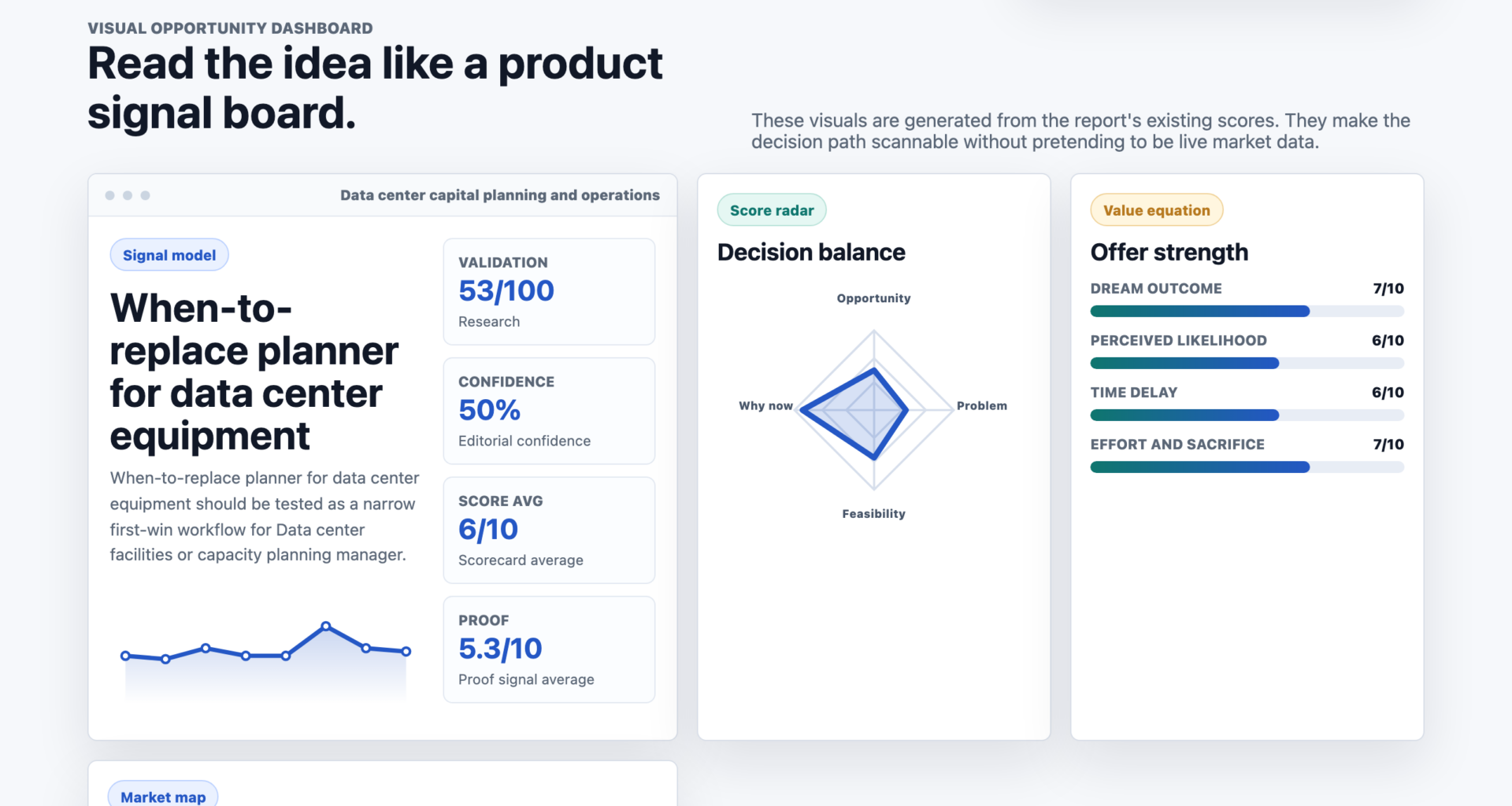

📊 Full opportunity report: When-to-replace planner for data center equipment on IdeaNavigator AI — validation score, market gap, and execution plan.

Get business pricing on tech for your team
- Business-only prices and quantity discounts
- Tax-exempt purchasing
- Multiple users, one account, clear invoices
TL;DR
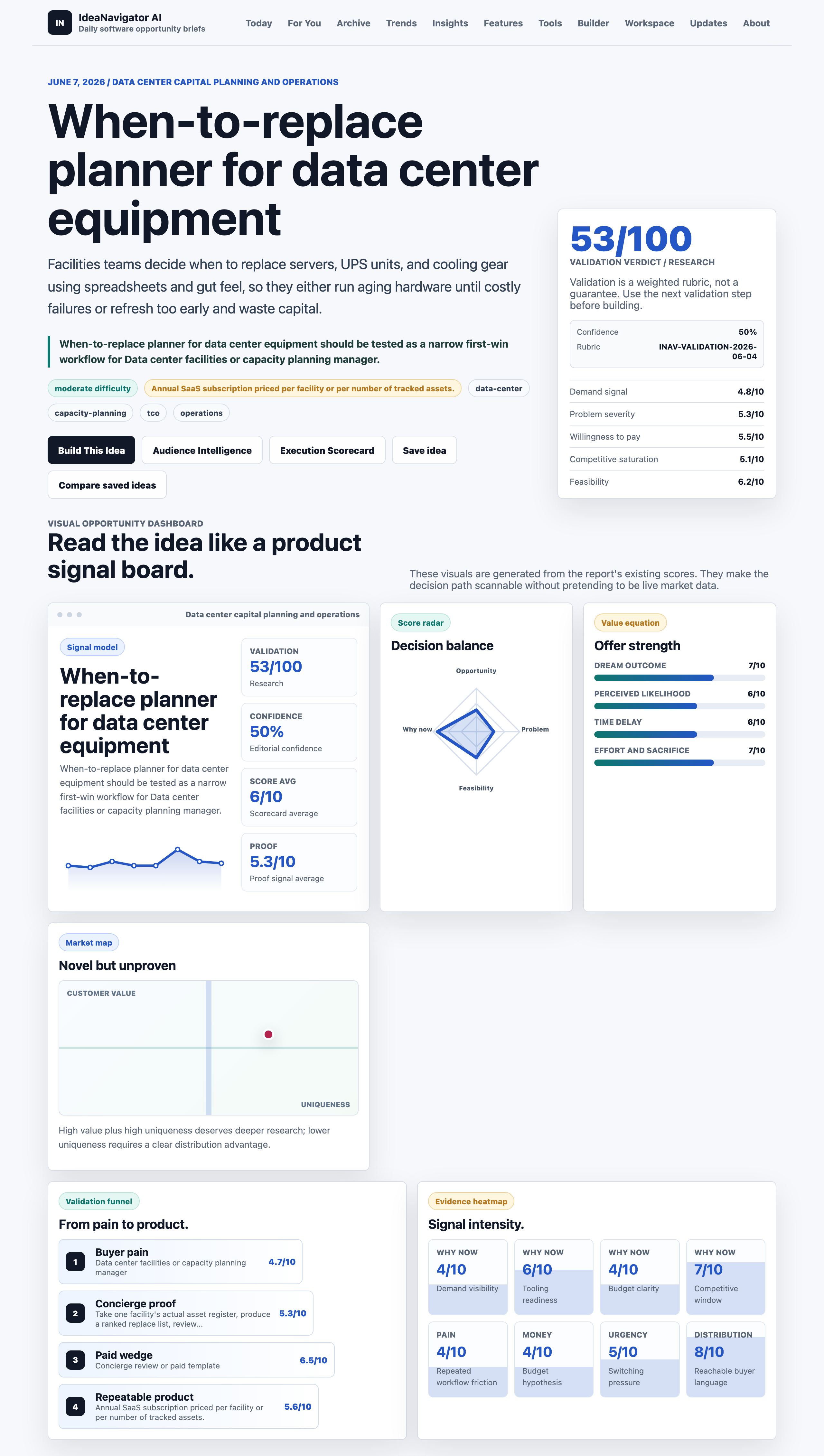
A new ‘when-to-replace’ planning tool is in development to assist data center facilities managers in optimizing hardware refresh cycles. It analyzes asset age, power, and costs to recommend replacements, potentially saving costs and improving energy efficiency.
A new software tool designed to help data center facilities managers determine the optimal timing for replacing servers, UPS units, and cooling equipment is being tested. The tool aims to address the longstanding challenge of balancing hardware aging risks against capital and energy costs, a problem made more urgent by rising energy prices and increasing hardware efficiency disparities.
The proposed ‘when-to-replace’ planner is a SaaS application that ingests an asset list from a data center, including information on asset age, power consumption, and maintenance costs. It then generates a ranked list of equipment, recommending which units should be replaced immediately versus those that can be kept longer. The goal is to optimize replacement decisions based on a combination of rising energy costs, failure risk, and hardware efficiency improvements.
Initial validation involves taking actual asset registers from a facility, producing a replacement ranking, and reviewing it with the facility’s capacity manager. The effectiveness of the tool will be measured by how many of its recommendations align with the manager’s judgments and whether following its advice results in cost savings or efficiency gains.
Why It Matters
This development is significant because current replacement decisions are often made based on spreadsheets and intuition, which can lead to premature hardware refreshes or costly failures. As energy costs increase and hardware becomes more efficient, accurately timing replacements can lead to substantial capital savings and operational improvements. The tool could transform how data centers plan their hardware lifecycle, making replacement decisions more data-driven and precise.
Products Worth Considering

LG 34GX90SA-W 34-inch Ultragear WQHD OLED Curved Gaming Monitor

LG UltraGear 27-Inch QHD OLED Gaming Monitor, 240Hz, 0.03ms, G-SYNC Compatible, FreeSync Premium Pro, HDMI 2.1

Samsung 32-Inch Odyssey OLED G8 (G80SH) 4K Gaming Monitor
As an affiliate, we earn on qualifying purchases.
Background
Data center facilities teams traditionally rely on manual methods, such as spreadsheets and gut feeling, to decide when to replace equipment. This approach can result in either running aging hardware until failures occur or replacing hardware too early, wasting capital. Rising energy costs and the availability of more efficient hardware have heightened the need for better decision-making tools. The concept of a ‘when-to-replace’ planner has been discussed in industry circles but has not yet been widely tested or adopted.
“This tool could help facilities teams make more informed, data-driven decisions about hardware replacement, potentially saving significant costs.”
— an anonymous researcher
What Remains Unclear
It is not yet clear how accurately the tool’s recommendations will align with actual operational needs or how much cost savings it will deliver in practice. The validation process is ongoing, and broader adoption depends on the results of initial testing.
What’s Next
The next steps involve completing the validation with a real facility, analyzing the accuracy and impact of the recommendations, and refining the algorithm based on feedback. If successful, the tool could be offered as a subscription service to other data centers, with further features added over time.
Key Questions
How does the ‘when-to-replace’ planner determine which equipment to replace?
The planner analyzes asset age, power consumption, and maintenance costs to rank equipment based on the risk of failure and potential energy savings, providing a prioritized list for replacement.
Is this tool suitable for all types of data center equipment?
The initial focus is on servers, UPS units, and cooling equipment, but the concept could be extended to other hardware as the system develops.
When will the tool be available for general use?
It is currently in testing, with a broader commercial rollout likely after validation results are analyzed in the coming months.
What are the main benefits of using this planner?
The primary benefits include reducing unnecessary capital expenditure, minimizing failure risks, and improving energy efficiency through better timing of hardware replacements.
Source: IdeaNavigator AI