
TL;DR

Get business pricing on tech for your team
- Business-only prices and quantity discounts
- Tax-exempt purchasing
- Multiple users, one account, clear invoices
Researchers conducted a one-year outdoor performance test on triple-junction perovskite/silicon solar cells. The devices experienced efficiency drops from 17–18% to 13–14%, mainly due to interface degradation and encapsulation delamination. The findings highlight challenges for commercial stability.
Researchers from TNO and Fraunhofer ISE have conducted a one-year outdoor performance test of triple-junction perovskite/silicon solar cells, revealing significant efficiency degradation driven primarily by interface deterioration and encapsulation delamination. The study provides critical insights into the stability challenges facing perovskite tandem technology in real-world conditions, emphasizing the need for improved durability for commercial deployment.
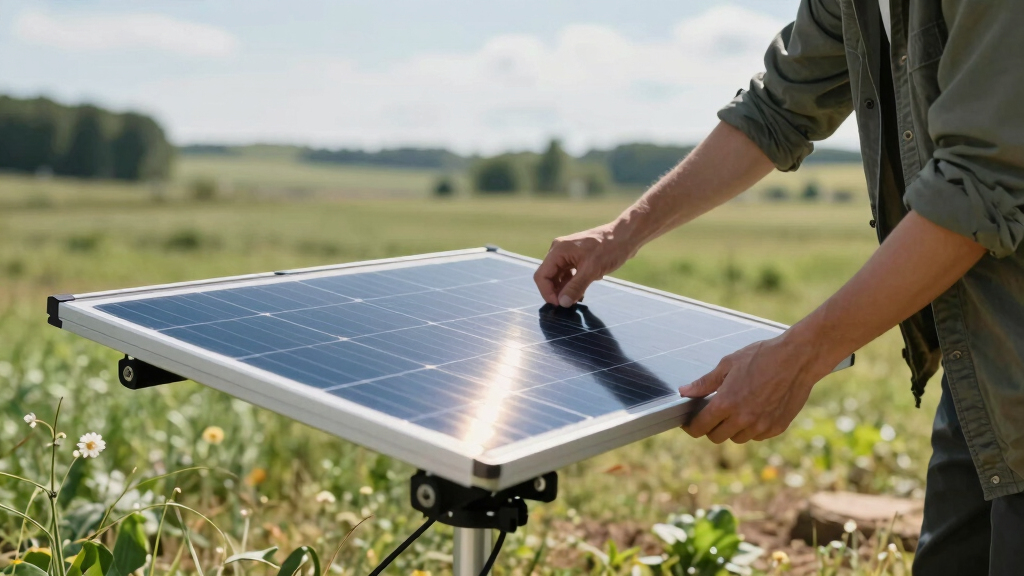
The outdoor test was performed in Petten, the Netherlands, using monolithic triple-junction devices with an active area of 1 cm × 1 cm, installed on rooftops facing south at a 30° tilt. Initial efficiencies ranged from 17% to 18%, but over the course of one year, performance declined to approximately 13–14%. The degradation occurred in two phases: an initial efficiency loss mainly due to voltage decline, followed by a more severe drop associated with encapsulation delamination, which reduced light in-coupling and current collection.
Microscopic analysis confirmed that delamination occurred within the encapsulation layers rather than at the active junctions, indicating mechanical or interlayer adhesion failures rather than moisture ingress. EQE and J–V measurements showed that performance losses were linked to interface-related issues and shunt pathways, not intrinsic absorber instability. Photoluminescence imaging revealed spatial inhomogeneity, with the middle perovskite layer remaining active while the top junction weakened significantly. Indoor tests indicated good damp-heat stability but high susceptibility to thermal cycling and UV exposure, with UV causing up to 65% efficiency loss.
Despite the degradation, the devices maintained an estimated average annual efficiency of around 10%. An anonymous researcher noted that the top junction was the least stable component, and that edge shunting and charge transport layer degradation contributed to performance decline. These results are published in ‘One Year of Outdoor Performance of Perovskite/Perovskite/Silicon Triple-Junction Solar Cell,’ and are guiding efforts to develop more stable next-generation devices.
Implications for Commercial Stability of Perovskite Tandems
The findings underscore the durability challenges facing perovskite tandem solar cells in outdoor environments, which are critical for commercial viability. The observed degradation mechanisms, particularly interface failure and encapsulation delamination, suggest that current device architectures need further improvement to withstand prolonged exposure to sunlight, temperature fluctuations, and UV radiation. Addressing these issues is essential for transitioning perovskite tandems from laboratory prototypes to reliable, large-scale energy solutions, impacting future research, manufacturing, and market adoption strategies.
perovskite solar cell encapsulation
As an affiliate, we earn on qualifying purchases.
As an affiliate, we earn on qualifying purchases.
Background on Perovskite Tandem Stability Testing
Perovskite solar cells have shown rapid efficiency gains in laboratory settings, with some reaching over 25%. However, their stability under real-world conditions remains a major hurdle. Prior indoor tests indicated good stability under damp-heat conditions, but outdoor performance data has been limited. The recent one-year outdoor testing of triple-junction devices provides rare insights into long-term operational stability, highlighting specific failure modes outside controlled environments. This aligns with ongoing efforts across the industry to improve durability and commercial readiness of perovskite-based photovoltaics.
“The devices achieved 80% of their initial efficiency after five months and 50% after seven months of outdoor operation.”
— an anonymous researcher
outdoor solar panel durability testing
As an affiliate, we earn on qualifying purchases.
As an affiliate, we earn on qualifying purchases.
Remaining Questions About Long-Term Stability and Improvement
It is not yet clear how different device architectures or encapsulation methods could mitigate the observed degradation modes. The long-term stability beyond one year, especially under varying climate conditions, remains to be established. Additionally, the extent to which these failure mechanisms can be prevented or reversed through material innovations or design modifications is still under investigation.
solar panel interface protection
As an affiliate, we earn on qualifying purchases.
As an affiliate, we earn on qualifying purchases.
Next Steps for Enhancing Device Durability and Performance
Researchers plan to test improved device architectures with enhanced encapsulation and interface layers to address delamination and interface degradation. Longer-term outdoor testing is expected to continue, assessing stability over multiple years and under different environmental conditions. These efforts aim to develop commercially viable perovskite tandem modules capable of maintaining high efficiency in real-world applications.
triple-junction solar cell stability
As an affiliate, we earn on qualifying purchases.
As an affiliate, we earn on qualifying purchases.
Key Questions
What are the main causes of degradation in these perovskite tandem cells?
The primary causes are interface-related losses, encapsulation delamination, and degradation of charge transport layers, rather than intrinsic absorber instability.
How much efficiency is lost after one year of outdoor operation?
The devices’ efficiency declined from about 17–18% initially to approximately 13–14%, representing a significant performance drop over the year.
Are the degradation mechanisms reversible or preventable?
It is currently unclear whether these degradation pathways can be fully reversed or prevented. Ongoing research aims to develop more stable materials and device architectures.
What does this mean for the commercial future of perovskite solar technology?
The findings highlight the need for further stability improvements before perovskite tandems can be reliably deployed at scale, though ongoing innovations are promising.
Will these results impact ongoing research and development?
Yes, understanding the specific failure modes guides future efforts to enhance device stability, making this data valuable for industry and academia.
Source: PV Magazine
Fall Picks
fall essentials
As an affiliate, we earn on qualifying purchases.