
TL;DR
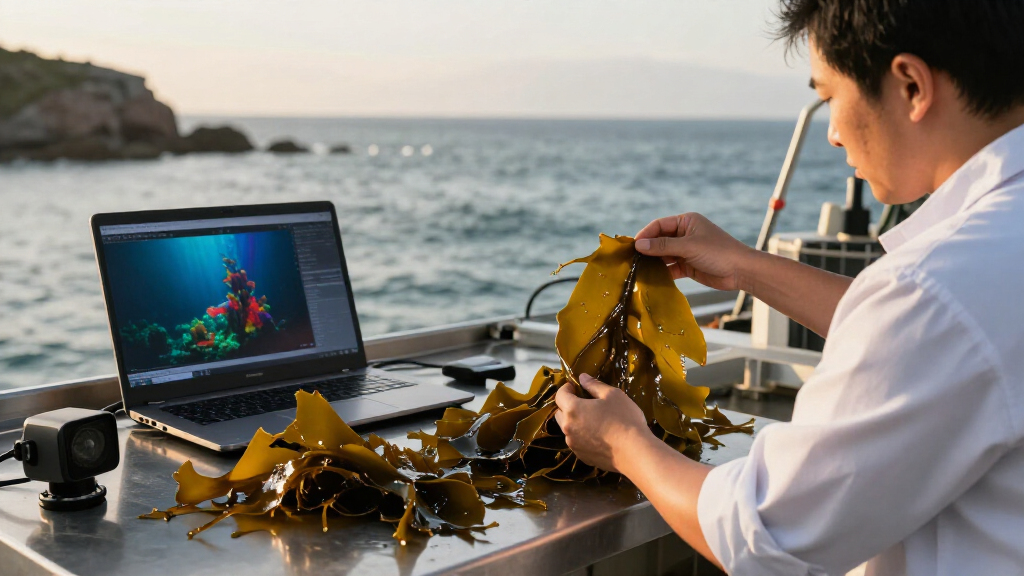
Google says CSIRO used a kelp-trained version of its DeepVariant tool to analyze DNA from 600 wild giant kelp specimens collected at 40 Tasmanian sites. The analysis is intended to help scientists select plants for selective breeding; field survival through warm summers has not yet been reported.
Google said on November 12 that Australia’s national science agency, CSIRO, used a version of Google’s DeepVariant DNA analysis tool adapted for giant kelp to study 600 wild specimens from Tasmania. The work is intended to help researchers select kelp for selective breeding as forests around the island have declined sharply, but whether bred plants can withstand warmer sea conditions remains untested in published results.

Get business pricing on tech for your team
- Business-only prices and quantity discounts
- Tax-exempt purchasing
- Multiple users, one account, clear invoices
According to Google’s post and accompanying video, the specimens were collected from 40 sites along Tasmania’s coast. Researchers used two Australian giant kelp reference genomes to compare the plants’ DNA and identify genetic differences. Google says the analysis found that remaining Tasmanian patches are genetically isolated. That finding, and the reported analysis of all 600 specimens, are described in Google’s announcement; the source material does not identify a published paper or dataset for those results.
The AI is one part of a research process, not a system that measures heat tolerance or restores kelp directly. Researchers conduct laboratory tests and connect those results with DNA data, then use the information to choose distinct native plants for crosses. The project describes this as selective breeding, not genetic modification. The planned next step is to grow young kelp and attach it to rocky reefs for pilot tests.
A separate part of the work is published: two Australian giant kelp reference genomes were reported in BMC Genomics in June 2026, with CSIRO scientists and a Google researcher among the authors. The genomes differ from a Californian reference by 1.5%, while the two Australian genomes differ from each other by 0.2%, according to the source material. The genome data is public.

Can Breeding Help Kelp Persist?
The research targets a loss with consequences beyond the kelp itself. Giant kelp forests provide habitat and nursery areas for marine life, and CSIRO describes the forest ecosystem as dependent on the plants. In Tasmania, researchers face pressure from warmer, nutrient-poor water and expanding sea urchin populations, which CSIRO associates with the East Australian Current moving further south.
Genomic analysis could help researchers find variation among surviving plants and choose which to cross. That may make breeding efforts more targeted, but it does not establish that selected traits will persist in the sea or that kelp forests will recover. The practical measure of success will be whether the young plants survive local conditions, including warm summers, after reef planting.
Products Worth Considering

Samsung 37-inch Odyssey G7 4K UHD Curved Gaming Monitor

Samsung Odyssey G55C 32-Inch QHD 1000R Curved Gaming Monitor

Sony WH-1000XM6 Wireless Noise-Canceling Headphones, Black
As an affiliate, we earn on qualifying purchases.
Tasmania’s Shrinking Kelp Forests
Macrocystis pyrifera, or giant kelp, grows in cold, shallow seas. CSIRO says plants in Tasmanian waters can reach around 30 metres. The forests support diverse marine life, including fish, octopuses, sea stars and sea lions.
CSIRO reports that giant kelp forests around Tasmania have declined by 95% in recent decades. A genome study preprint, citing earlier research, gives a 95% to 98% loss of East Tasmanian kelp cover since 1940. CSIRO attributes the decline to changing ocean conditions and sea urchins, and says the remaining habitat offers little room for the kelp to shift its range.
The broader partnership was announced in February 2024 by Google Australia, CSIRO, the University of Tasmania’s Institute for Marine and Antarctic Studies and conservation partners. Its work included mapping kelp using satellite imagery and genomics. Google’s November 2026 post focuses on the genomics strand; the original mapping plans involved Google Earth Engine and Vertex AI.
“Without Giant Kelp to form the forests, the entire ecosystem disappears.”
— CSIRO
Field Survival Is Still Unknown
The announced analysis has not yet been supported by a paper or dataset identified in the source material. It is also unclear how the reported genetic isolation was measured, which specific genetic traits will guide breeding, or how well those traits predict heat tolerance.
No survival results from reef planting have been published in the material provided. It therefore remains unknown whether selectively bred kelp can withstand warmer summers in Tasmanian waters, establish successfully on reefs, or help restore forests at a meaningful scale.
From Lab Crosses to Reef Trials
Researchers plan to cross selected native kelp in the lab, grow young plants and attach them to rocky reefs in pilot tests. Those trials can show whether the plants survive under local marine conditions. The key next evidence will be reported survival and growth through warm periods, alongside details of the breeding choices and the genetic analysis.
Key Questions
What did Google’s AI do in the kelp project?
Google says a version of its DeepVariant tool, trained for kelp DNA, analyzed genetic differences among 600 wild specimens. The tool supports researchers’ analysis; it does not plant kelp or directly test heat tolerance.
Has the AI analysis been published in a scientific paper?
The two Australian reference genomes were published in BMC Genomics in June 2026. The 600-specimen analysis and the claim that remaining patches are genetically isolated are described in Google’s November 12 post and video; the source material identifies no paper or dataset for those results.
Is the kelp being genetically modified?
No genetic modification is described. The planned approach is selective breeding: crossing selected native plants in a laboratory.
Has bred kelp survived warmer summers at sea?
No survival results are reported in the source material. Whether the young kelp can withstand warm summers in Tasmanian waters remains an open question.
Source: Thorsten Meyer AI