
TL;DR

Get business pricing on tech for your team
- Business-only prices and quantity discounts
- Tax-exempt purchasing
- Multiple users, one account, clear invoices
Anthropic’s senior hiring over the year to July 2026 has concentrated on compute, infrastructure, land, energy and procurement alongside prominent research appointments. The roster indicates that deploying contracted computing capacity has become a central operating challenge, although Anthropic still depends heavily on outside infrastructure providers.
Anthropic has expanded its senior infrastructure leadership with hires covering compute, procurement, leasing, land and energy, according to a July 16 review of appointments made over the previous year. The hiring pattern suggests that turning contracted power and hardware into reliable AI training capacity is now a major operating priority for the Claude developer.
The review identified at least 12 senior or strategically placed hires. Six were grouped into a capacity operation under Chief Compute Officer Tom Brown: Tom Blomfield and Romen Nordeen in compute, Niall Fontoura and Dylan Boyd in infrastructure, Brendan Hughes as head of leasing, land and energy, and Mike Marquez as director of compute infrastructure procurement.
Anthropic also added prominent researchers, including Andrej Karpathy, former Berkeley computer science chair Ion Stoica Nelson and 2024 Nobel laureate John Jumper. Their appointments drew wider attention, but the larger operational cluster covers the steps between acquiring hardware and running dependable workloads: power, sites, networking, deployment and scheduling.
The source analysis says Anthropic has capacity arrangements involving Amazon, Google and an xAI-associated facility, spanning Trainium, TPU and Nvidia systems. It describes commitments of up to 5 gigawatts each from Amazon and Google and more than 300 megawatts at the third facility. Those figures are reported commitments, and the supplied material does not show how much capacity is currently active.
Capacity Becomes a Research Constraint
The appointments matter because contracted megawatts are not immediately usable computing capacity. Sites must receive power, hardware must be installed and connected, and workloads must run with acceptable reliability. Delays at any point can slow model training, research experiments and commercial service.
The hiring also exposes Anthropic’s dependence on outside providers. Its infrastructure partners supply power, chips and facilities while competing in parts of the same AI market. Using several chip architectures may reduce exposure to one supplier, but it creates added demands around software portability and workload management.
As an affiliate, we earn on qualifying purchases.
Anthropic’s recruitment was not limited to infrastructure. Karpathy joined pretraining work, Nelson moved from Berkeley into a pretraining role, and Jumper arrived from Google DeepMind with his remit not publicly detailed. The capacity appointments sit beside these research hires rather than forming a single unified team.
The company also expanded its public-sector and international leadership through Richard Carlson, Daniela Ciauri and Puneet Chandok Ghose. The source argues that government access and institutional approval have become operational inputs alongside physical capacity, although that is the author’s interpretation of the roster, not a stated Anthropic strategy.
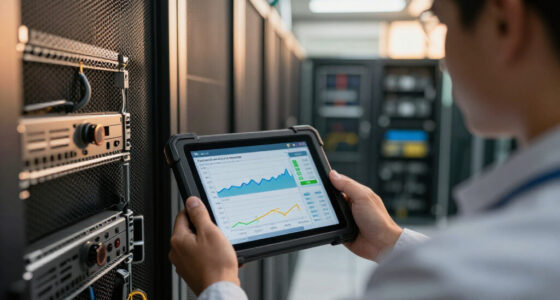
enterprise server racks for AI training
As an affiliate, we earn on qualifying purchases.
As an affiliate, we earn on qualifying purchases.
Active Capacity Remains Undisclosed
It is not yet clear how many announced megawatts are operational, when the remaining capacity will become available or how workloads are divided among Trainium, TPU and Nvidia hardware. Anthropic has also not publicly quantified whether the new appointments have improved training cycle times, service reliability or rate limits.
The source reports that a June 12 Commerce Department directive restricted two systems, identified as Fable 5 and Mythos 5, to US nationals before worldwide access returned July 1. The supplied material does not include the directive or an Anthropic statement confirming those details, so the episode remains insufficiently documented here.
high capacity power distribution units
As an affiliate, we earn on qualifying purchases.
As an affiliate, we earn on qualifying purchases.
Deployment Speed Will Test Strategy
The clearest test will be how quickly promised power becomes productive capacity. Evidence may appear through improved Claude availability, fewer rate limits, greater service reliability and disclosed progress at planned infrastructure sites.
Another measure will be whether Anthropic can move meaningful workloads across three chip ecosystems without major performance losses. Future company disclosures may also clarify Jumper’s role, Blomfield’s responsibilities and the timetable for new capacity.
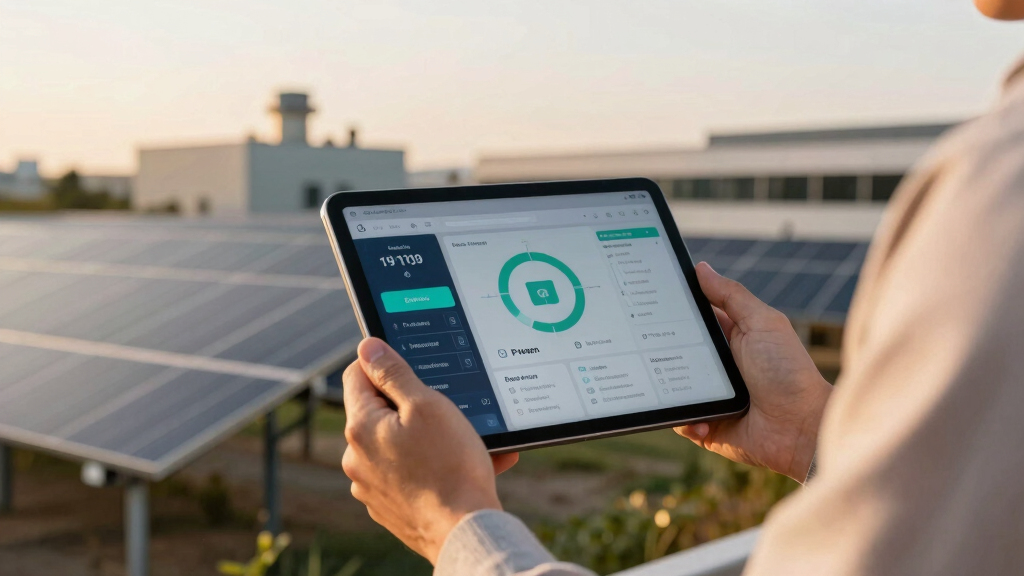
cloud infrastructure management tools
As an affiliate, we earn on qualifying purchases.
As an affiliate, we earn on qualifying purchases.
Key Questions
What is the main development?
Anthropic has built a senior capacity operation covering compute, infrastructure, procurement, land and energy. The appointments indicate a focus on converting external power and hardware commitments into working AI systems.
Does Anthropic own its computing infrastructure?
The source describes Anthropic as relying on capacity supplied by Amazon, Google and an xAI-associated facility. The exact ownership and operating arrangements for each site are not fully detailed in the supplied material.
Why hire specialists in land and energy?
Large AI facilities require powered sites, leases, permits and equipment deployment before researchers can use the hardware. A land and energy executive can coordinate those physical requirements with Anthropic’s computing plans.
Has Anthropic shown that the strategy is working?
No public measurement cited here shows that the hires have already shortened training cycles or increased active capacity. Progress will depend on deployment schedules, reliability data and Anthropic’s ability to run workloads across several hardware platforms.
Source: Thorsten Meyer AI
Halloween Picks
halloween
As an affiliate, we earn on qualifying purchases.