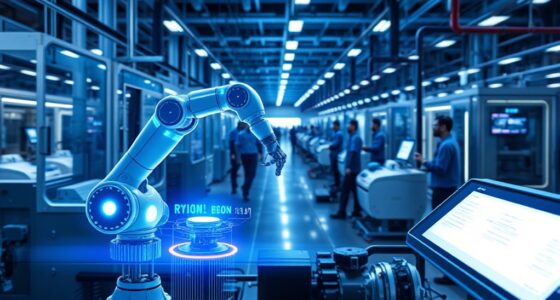

To succeed in an automated workplace, you need a mix of technical skills and emotional intelligence. Employers value your ability to collaborate with AI tools, interpret outputs, and adapt quickly to new technology. Soft skills like empathy, teamwork, and communication remain essential, helping you build trust and navigate complex relationships. Balancing these skills will make you a valuable asset. The more you understand these areas, the better prepared you’ll be to thrive in the future workforce.
Key Takeaways
- Technical expertise combined with soft skills like emotional intelligence enhances collaboration with AI and improves workplace adaptability.
- Critical thinking and strategic mindset enable effective decision-making alongside automated systems.
- Emotional intelligence fosters teamwork, trust, and conflict resolution in increasingly automated environments.
- Continuous learning about new AI tools and developing interpersonal skills remain essential for future job success.
- Flexibility and openness to integrating evolving technologies help individuals stay competitive in an automated workplace.

As automation transforms industries and reshapes the job market, developing the right skills becomes indispensable for thriving in the future workplace. While technical expertise remains valuable, soft skills are increasingly critical in an environment driven by AI collaboration and human-centered work. Employers are looking for individuals who can work seamlessly alongside AI tools, leveraging these technologies to boost productivity and innovation. Understanding how to collaborate effectively with AI systems isn’t just about knowing the basics of data input or automation software; it involves a strategic mindset where you see AI as an ally rather than a threat. You’ll need to learn how to interpret AI outputs, refine processes, and make informed decisions, all while maintaining a flexible approach to technology integration.
Success in the future workplace depends on mastering AI collaboration and embracing a strategic, adaptable mindset.
Equally important is emotional intelligence, which enables you to navigate complex interpersonal dynamics that AI simply cannot replicate. In a future where robots and algorithms handle routine tasks, your ability to connect with colleagues, clients, and stakeholders on a human level becomes a significant advantage. Emotional intelligence encompasses empathy, self-awareness, social skills, and adaptability—qualities that foster teamwork, resolve conflicts, and enhance leadership. You may find yourself in situations where technical skills alone won’t suffice; instead, your capacity to understand and respond to emotional cues will set you apart. This skill allows you to build trust, motivate others, and create a positive work environment, even amidst rapid technological change.
Developing these skills also means staying curious and adaptable. As AI continues to evolve, so will the ways you collaborate and communicate. You should actively seek opportunities to learn about new AI tools, understand their capabilities, and explore how they can augment your work. At the same time, honing your emotional intelligence involves practicing active listening, showing genuine empathy, and being receptive to feedback. Both skills require intentional effort and continuous improvement, but they offer a competitive edge in a job market where automation handles the routine, and human qualities become the differentiators. Recognizing the importance of projector technology in enhancing visual communication can further support your growth in adapting to new tools and environments.
In essence, your future success hinges on your ability to blend technological savvy with emotional insight. By mastering AI collaboration and nurturing your emotional intelligence, you position yourself as a valuable asset in any organization. These skills enable you to adapt quickly, work effectively with intelligent systems, and foster meaningful relationships—traits that will remain essential as automation reshapes the nature of work. Preparing now by developing these competencies will ensure you’re ready to thrive in the increasingly automated workplace of tomorrow.

A Practitioner's View Of AI: A reflection on human and AI collaboration
As an affiliate, we earn on qualifying purchases.
As an affiliate, we earn on qualifying purchases.
Frequently Asked Questions
How Can Employees Stay Updated With Rapidly Changing Technology Skills?
You can stay updated with rapidly changing technology skills by regularly participating in tech workshops and taking online courses. These options allow you to learn new tools and stay current with industry trends. Make it a habit to explore fresh content and practice new skills consistently. By actively engaging in these learning opportunities, you’ll remain adaptable and competitive in an automated future.
What Industries Are Most Affected by Automation Currently?
Automation is transforming industries at lightning speed. You’ll notice manufacturing automation revolutionizes production lines, making them faster and more efficient than ever. Retail technology integration changes how you shop, with AI-driven checkout systems and personalized online experiences. These industries are the most affected right now, as they rapidly adopt new tools. Staying adaptable and learning new tech skills will keep you ahead in this fast-evolving landscape, ensuring you thrive amid the automation wave.
How Do Soft Skills Influence Employability in an Automated Job Market?
Soft skills like emotional intelligence and adaptability quotient greatly boost your employability in an automated job market. You can navigate change more easily and build strong relationships, making you invaluable. Your ability to understand others and adapt quickly sets you apart from machines. Employers seek candidates who bring these qualities, ensuring you stay relevant and competitive as automation continues to reshape industries. Emphasizing these skills will open more opportunities for you.
What Role Does Continuous Learning Play in Future Career Success?
Think of your career as a garden that needs constant tending. Lifelong learning acts as your watering can, nurturing skill adaptation and growth. By embracing continuous learning, you stay ahead of automation’s weeds, ensuring your skills remain relevant and vibrant. This ongoing effort cultivates resilience and opportunity, turning challenges into chances for renewal. Your commitment to growth transforms your future, making success not just a goal but a thriving, ever-evolving landscape.
How Can Employers Effectively Reskill Their Existing Workforce?
You can reskill your workforce effectively by offering personalized training tailored to individual needs and skill gaps. Focus on developing programs that promote workforce agility, enabling employees to adapt quickly to new technologies and roles. Encourage ongoing learning and provide resources like online courses or workshops. This approach keeps your team engaged, enhances their capabilities, and prepares your organization to meet evolving industry demands seamlessly.

52 Essential Emotional Intelligence Training – Relationship Skills Card Game for Empathy, Trust Building Activities, Conversation Starters, Team Icebreaker Tools – by Harvard Researcher
Featured in Forbes, CNBC, Business Insider, PopSugar: Packed with effective language, skills, and strategies; improve personal and professional…
As an affiliate, we earn on qualifying purchases.
As an affiliate, we earn on qualifying purchases.
Conclusion
To thrive in an automated future, you need to master adaptable skills like critical thinking, creativity, and emotional intelligence. Embrace continuous learning and stay curious—these qualities will set you apart in a world where technology advances at lightning speed. Remember, your ability to adapt is more powerful than any machine, capable of transforming the impossible into reality. Stay ahead, stay flexible, and turn the future’s challenges into your greatest opportunities.

Critical Thinking Software Tools and Workbook: With Stella II Demonstration Software
As an affiliate, we earn on qualifying purchases.
As an affiliate, we earn on qualifying purchases.
Digital SAT Test Prep: The Complete & Step-by-Step Study System to Ace the SAT and Improve Your Score — Daily AI Coaching, Adaptive Learning Platform, and 50 Bonus Full-Length Tests
As an affiliate, we earn on qualifying purchases.
As an affiliate, we earn on qualifying purchases.