

In today’s fast-paced digital landscape, reskilling is more critical than ever to stay competitive as automation changes jobs rapidly. You need to embrace continuous learning, focus on digital literacy, and develop soft skills like resilience and analytical thinking. While many organizations face hurdles in designing effective programs, strategic leadership and a culture of growth can help you overcome them. Keep moving forward, and you’ll uncover ways to guarantee your skills stay relevant amid ongoing technological change.
Key Takeaways
- Rapid technological advancements demand continuous, tailored reskilling to keep pace with evolving job requirements.
- Organizations are investing heavily in digital literacy and soft skills to adapt effectively to automation.
- Challenges like resource constraints and resistance hinder the implementation of effective training programs.
- Leadership and culture play crucial roles in fostering an environment receptive to ongoing learning.
- Innovative methods such as online platforms, VR, and gamification support scalable, engaging reskilling efforts.
The Growing Urgency of Workforce Reskilling

As technology accelerates digital transformation, the need for workforce reskilling becomes more urgent than ever. You’re part of a rapidly changing job market where 50% of workers have already completed training or upskilling, yet 44% face skills disruption in the next five years. Digital tools like AI are fueling this shift, making reskilling essential for staying relevant. By 2027, six in ten employees will need to upskill or reskill to meet evolving demands. Companies are investing heavily—over $101 billion in the US alone—to prepare their workforce, but skill gaps remain. If you don’t adapt now, you risk falling behind as roles disappear and new ones emerge. Reskilling isn’t just an option; it’s a necessity for future job security and organizational resilience.
Technological Innovations Reshaping Skill Demands

Rapid advances in AI and other digital technologies are transforming workplace skills requirements at an unprecedented pace. As AI adoption accelerates, skills in big data analytics, cybersecurity, and digital literacy become essential for staying competitive. You’ll notice a shift toward durable and cognitive skills like analytical thinking, resilience, and collaboration, which are increasingly valued for long-term success. Automation reduces demand for manual dexterity and routine tasks, while adaptability and agility grow in importance. Technology bridges gaps by providing scalable online training and on-the-job learning, helping workers quickly acquire new skills. This digital transformation pushes you to develop not only technical expertise but also soft skills that enable you to work effectively alongside AI and emerging technologies, ensuring your relevance in the evolving job landscape. Additionally, understanding the specific home theatre projectors and their features can empower you to make smarter purchasing decisions as technology continues to evolve. To support ongoing skill development, many organizations now incorporate innovative training methods, such as virtual reality simulations and gamified learning platforms, to enhance engagement and retention. Furthermore, staying informed about the latest technological innovations can give you a competitive edge in adapting to new skill demands. For example, organizations are increasingly investing in reskilling initiatives to prepare their workforce for automation-driven changes. Emphasizing the importance of AI security training can also prepare professionals to better understand and mitigate cybersecurity threats associated with digital transformation.
Challenges in Implementing Effective Reskilling Programs

Implementing effective reskilling programs presents numerous challenges that organizations must navigate carefully. One major hurdle is program design and execution. Less than half of organizations excel at curriculum design, and only about 25% effectively motivate participation with incentives. Communication plans are seen as a strength by just 40%, while engagement with external partners remains weak, with fewer than 25% reporting success. Balancing reskilling demands with daily operations is the top challenge for 53% of organizations. Additionally, measuring impact and ROI proves difficult due to inconsistent data, lack of standardized metrics, and the challenge of isolating long-term benefits. These issues compound resource constraints, resistance from employees, and insufficient leadership support, making successful implementation complex and requiring strategic focus and commitment. Incorporating comprehensive well-being tips and fostering a supportive environment can enhance engagement and overall program success.
Strategies for Future-Proofing Employee Capabilities

Organizations that recognize the hurdles in deploying effective reskilling programs are now focusing on proactive strategies to future-proof employee capabilities. To succeed, you need to identify skills in high demand, like digital literacy, technological, and social-emotional skills, which are vital as automation grows. Developing tailored, ongoing training programs that emphasize these areas ensures your workforce stays relevant. Encouraging collaboration and continuous learning fosters adaptability. Consider this table highlighting key focus areas:
| Skill Type | Importance | Growth Rate (2016-2030) |
|---|---|---|
| Basic Digital Skills | Foundation for automation adaptation | 69% (US), 65% (EU) |
| Technological Skills | Advanced skills for future roles | 50% (US), 41% (EU) |
| Social & Emotional Skills | Human-machine interaction needs | Accelerating |
| Workforce Adaptation | Preparing for job shifts | 62% of execs agree |
| AI & Automation | Essential for job relevance | Nearly 50% see as necessary |
This approach prepares your team for ongoing technological shifts. Continual investment in employee training and development is crucial to stay ahead in a rapidly changing landscape, especially as research shows that personality traits can influence how well employees adapt to new skills. Recognizing the importance of training effectiveness can help organizations tailor programs that maximize learning outcomes. Additionally, integrating digital literacy initiatives can further enhance the overall skill set of the workforce.
The Role of Leadership and Culture in Reskilling Success
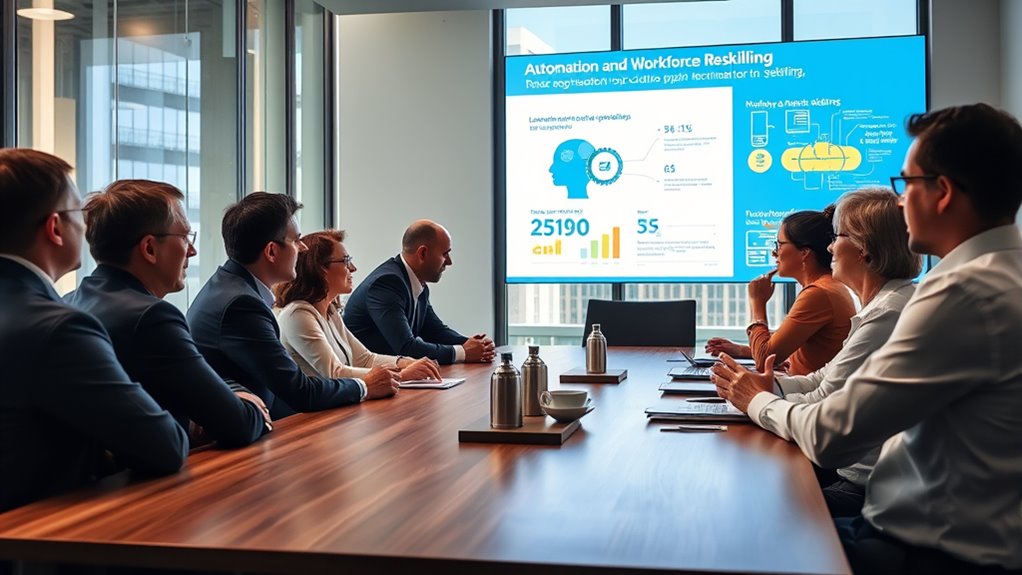
Leadership plays a critical role in shaping a culture that supports reskilling and continuous learning. Your leaders set the tone by emphasizing the importance of adaptability and innovation. To succeed, they should focus on:
- Clearly communicating reskilling goals and benefits, fostering engagement. The increasing impact of automation and AI makes clear communication essential to help employees understand and embrace change.
- Allocating resources effectively for training and development initiatives.
- Building a collaborative environment that encourages idea sharing and peer learning. Promoting support hours and resources can help employees access assistance when they need it most. Additionally, integrating AI in Business strategies can provide personalized learning pathways that align with individual skill gaps. Ensuring that the culture promotes continuous improvement encourages employees to stay motivated and adaptable in a rapidly changing landscape. Recognizing the importance of creative practice can also inspire innovative approaches to reskilling challenges. Emphasizing hours of operation in the context of accessible training sessions can further support ongoing development, especially when considering varying employee schedules.
Strong leadership guides employees through change, helping them see reskilling as an opportunity rather than a burden. By evaluating skills regularly, mentoring staff, and promoting digital literacy, leaders address skills gaps efficiently. Cultivating an inclusive, flexible culture ensures everyone feels empowered to grow—making your organization more agile and future-ready.
Frequently Asked Questions
How Can Small Businesses Afford Comprehensive Reskilling Programs?
You can afford extensive reskilling programs by prioritizing high-impact efforts that boost productivity and profitability. Take advantage of government grants, subsidies, and tax incentives to offset costs. Use blended learning with online and in-person training to save money, and partner with local institutions or digital platforms for affordable solutions. Implement scalable, phased programs that grow with your business, making continuous skill updates manageable and cost-effective.
What Metrics Best Measure Reskilling Program Effectiveness?
Did you know that companies with effective reskilling programs see a 20% increase in productivity? When measuring reskilling effectiveness, focus on employee performance improvements, post-training job placements, and retention rates. Track completion rates, assessment scores, and feedback to gauge engagement. Also, monitor business impacts like productivity gains and skill gap reductions. These metrics help you understand if your training truly prepares your workforce for future automation challenges.
How Do Organizations Address Resistance to Change During Training?
When facing resistance during training, you should focus on building trust and clear communication. Address employees’ fears and uncertainties by explaining the reasons behind change and showing how training benefits them. Involve staff in decision-making and offer support to boost confidence. Providing ongoing learning opportunities and creating a psychologically safe environment encourages engagement, reduces resistance, and helps guarantee smoother progression during organizational change.
What Role Do External Partners Play in Workforce Reskilling Efforts?
External partners play a vital role in your workforce reskilling efforts by providing specialized knowledge, up-to-date curricula, and flexible training solutions. They help you access industry-relevant certifications and academic resources, making training more effective and efficient. By outsourcing niche skills and leveraging technology platforms, you reduce costs, save time, and guarantee your employees stay current with evolving demands, ultimately strengthening your organization’s adaptability and competitive edge.
How Can Reskilling Initiatives Be Tailored for Diverse Learning Preferences?
Think of reskilling as tuning a musical instrument—you need diverse strings to create harmony. You can’t use a one-size-fits-all approach because employees have different learning styles, ages, and backgrounds. Offer blended, flexible, and culturally relevant training that appeals to everyone. By listening to feedback and customizing content, you’ll foster engagement and guarantee your workforce stays in tune with evolving demands.
Conclusion
While some might think reskilling is too costly or time-consuming, investing in your employees now guarantees long-term success. By embracing continuous learning and fostering a culture of adaptability, you can stay ahead of automation’s rapid advancements. Remember, resisting change only risks falling behind. With strategic training and strong leadership, you’ll empower your workforce to thrive in this evolving landscape, turning challenges into opportunities for growth and innovation.