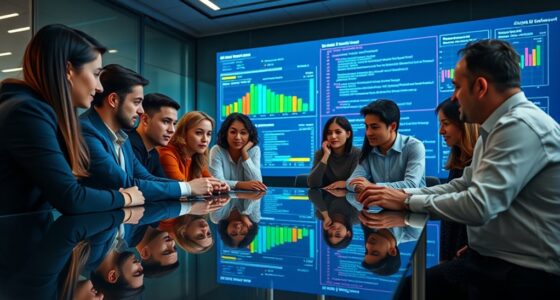
Big-screen projection is making a comeback in modern living spaces because technology has become more affordable and offers improved picture quality. You can enjoy immersive entertainment, movies, sports, and gaming on large, customizable screens that transform your home into a mini cinema. Projectors now fit easily into your space, with fewer setup challenges and smarter features. If you keep exploring, you’ll discover how these innovations are changing the way we experience home entertainment.

Get business pricing on tech for your team
- Business-only prices and quantity discounts
- Tax-exempt purchasing
- Multiple users, one account, clear invoices
Key Takeaways
- Technological advancements have significantly lowered costs and improved image quality, making projectors more accessible.
- Large projection screens create immersive, cinematic experiences that enhance home entertainment and social gatherings.
- Flexible setup options and adjustable screen sizes allow seamless integration into various living room layouts.
- Growing trends favor artistic displays and versatile environments, transforming living spaces into visually dynamic areas.
- Projectors offer a space-efficient, customizable alternative to traditional TVs for large, vivid displays.
Products Worth Considering

Apple Watch Ultra 2 GPS + Cellular, 49mm Natural Titanium Case with Natural Titanium Milanese Loop, Large

DJI Mini 3 Pro Fly More Vlogger Combo with DJI RC

DJI Mini 5 Pro Fly More Combo with DJI RC 2
As an affiliate, we earn on qualifying purchases.
Why Big-Screen Projection Is Replacing Traditional TVs at Home

Have you ever wondered why more homeowners are choosing big-screen projectors over traditional TVs? It’s because projectors offer a unique nostalgic entertainment experience, reminiscent of classic movie nights and theater outings. The aesthetic appeal of a large, immersive display transforms your living space into a mini cinema, creating a cozy, mesmerizing environment. Unlike flat-screen TVs, projectors allow you to easily adjust screen size to fit any room, making your viewing experience more flexible and personalized. They also foster a sense of community, encouraging family and friends to gather around for shared entertainment. Additionally, the contrast ratio of projectors plays a vital role in delivering vivid images with deep blacks and bright highlights, enhancing your overall viewing pleasure. As technology advances, resolution improvements continue to make projectors an even more attractive option for home entertainment. Moreover, the light output of modern projectors has increased, allowing for brighter images even in well-lit rooms. This blend of nostalgic charm and visual grandeur makes big-screen projection an increasingly popular choice, redefining the way you enjoy movies, sports, and gaming at home. The advancements in projection technology further contribute to the growing popularity of these devices in contemporary living spaces. Additionally, ongoing technological improvements are making projectors more affordable and easier to set up, broadening their appeal for everyday consumers.
How Advances in Projector Tech Make Large Screens More Affordable

Advances in projector technology have considerably lowered production costs, making large-screen displays more accessible. Improvements in image quality mean you get sharper, brighter visuals without a hefty price tag. As a result, high-quality projection setups are now within reach for more households. Additionally, large-screen displays are becoming easier to integrate into various living spaces, enhancing your home entertainment experience. The ongoing innovations in digital concepts are also driving the adoption of these setups by providing more versatile and adaptable options.
Lower Production Costs
Recent innovations in projector technology have particularly lowered production costs, making large-screen displays more accessible for everyday living spaces. This cost reduction stems from streamlined manufacturing processes and the use of cheaper, yet durable, components. As a result, market trends show a surge in affordable projectors that deliver impressive image sizes without breaking the bank. Manufacturers are leveraging economies of scale, which further drives down prices and increases competition. This shift not only benefits consumers but also encourages wider adoption of big-screen projection in homes. With lower production costs, more affordable projectors are hitting the market, making it easier for you to enjoy cinema-quality displays at a fraction of traditional costs. Additionally, the advances in projector tech allow for flexible placement and screen sizes, enhancing the overall viewing experience. The trend points toward a future where large screens become a standard feature in modern living spaces. The integration of affordable projection options is transforming how people experience entertainment at home.
Enhanced Image Technology
How do new image technologies make large-screen projectors more affordable? Advances like augmented reality and holographic displays are pushing costs down while enhancing visual quality. Modern projectors now incorporate improved light sources and image sensors, delivering sharper, brighter images with less power. Augmented reality tech allows for real-time image adjustments, reducing the need for expensive calibration. holographic displays create immersive visuals without bulky screens, making large visuals easier to produce and install. These innovations lower manufacturing costs and increase competition, driving prices down. Additionally, the integration of battery inverter technology in projectors improves energy efficiency and portability, further reducing overall costs. The decreasing cost of advanced optics is also contributing to more affordable high-quality projection systems. As these technologies continue to evolve, they foster a competitive market that benefits consumers through lower prices and better features. The overall reduction in production expenses is also helping to make large-screen projection more accessible to a broader audience. As a result, high-quality large screens become accessible to more consumers, transforming how you experience entertainment and presentations at home. Enhanced image technology is truly democratizing big-screen projection, making it more affordable and appealing for everyday living spaces.
What to Consider When Setting Up Your Home Projector

When setting up your home projector, you need to take into account your space and room layout to ensure a clear view. Proper equipment placement is key to avoiding shadows and glare, so think about where to position your projector and screen. Taking these factors into consideration will help you create a seamless, immersive viewing experience.
Space and Room Layout
Have you considered how your room’s layout impacts your home projector setup? Proper space optimization is key to a seamless experience. You need enough distance between the projector and screen, ensuring the image is clear and properly scaled. Avoid clutter that blocks the projection path or distracts from the viewing area. Think about aesthetic integration—your projector and screen should blend with your decor, not disrupt it. Position furniture to maximize viewing comfort while maintaining open space for easy movement. Consider ceiling or wall mounting options to save space and keep the room tidy. A well-planned layout enhances the viewing experience, making your setup feel natural and unobtrusive. Remember, a thoughtful room design guarantees your big-screen projection complements your living space without sacrificing style or functionality.
Equipment and Placement
Choosing the right equipment and placement is vital to achieving a crisp, vibrant image in your home theater. Focus on screen ergonomics to guarantee the projector is positioned at the ideal height and angle for clear viewing without strain. Avoid placing the projector too close or too far from the screen, as this affects image size and quality. Consider ambient lighting; bright lights or windows can wash out the picture, so use blackout curtains or dimmable lights to enhance contrast and color. Make certain your projector is on a stable surface or mounted securely to prevent movement. Proper placement minimizes distortion and guarantees consistent focus. By paying attention to these factors, you’ll maximize image clarity and create a more immersive viewing experience.
The Best Content to Enjoy on a Big Projection Screen

A big projection screen transforms your viewing experience, making it ideal for a variety of content that benefits from larger-than-life visuals. Movies and TV shows come alive, especially when your projector’s color calibration is optimized for vibrant, accurate colors. Action-packed films with dynamic visuals and immersive sound are perfect for showcasing your sound systems, creating theater-like experiences. Sports events also shine on a big screen, allowing you to catch every detail. Video games look incredible at this scale, pulling you into the action. Even art and photography presentations gain depth and impact when projected large. To truly maximize your experience, verify your content is well-calibrated for color and paired with quality sound systems that fill the space.
Comparing Projectors and TVs: Which Is Better for Your Living Room?
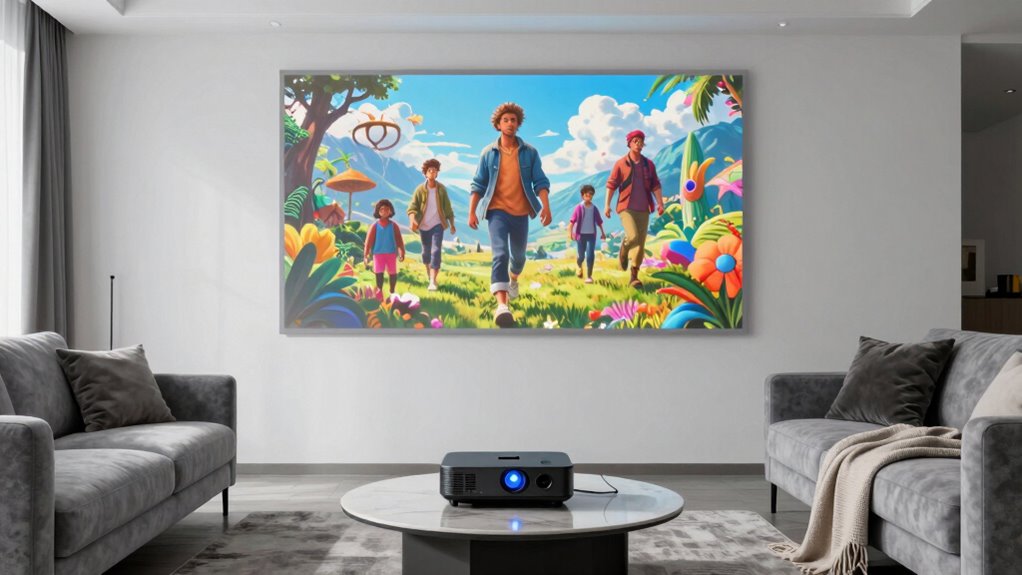
When deciding between a projector and a TV for your living room, consider how each setup aligns with your viewing habits and space. Projectors often deliver a larger image and a cinematic feel, but they may struggle with color accuracy in bright rooms. TVs, on the other hand, typically offer better color accuracy and vibrant visuals, especially in well-lit environments. Sound quality also varies; most TVs have built-in speakers that are sufficient for casual viewing, while projectors often require external audio setups for better sound. If you prioritize sharp, vivid images with rich colors and convenient sound, a TV might be the better choice. However, if you want a massive screen and a flexible setup, a projector can create an immersive experience in your living space. Additionally, considering the latest home security systems can enhance your entertainment area’s safety and convenience. Understanding home technology trends can help you make more informed choices about integrating your entertainment setup with smart home features.
Common Challenges With Home Projectors and How to Solve Them

Home projectors can transform your living space into a mini theater, but they often come with challenges that can hinder your viewing experience. Ambient lighting is a common issue; bright lights wash out the picture, so managing light sources or choosing projectors with high brightness can help. Additionally, sound synchronization can be tricky, especially with wireless setups or multiple audio devices. To fix this, use a dedicated sound system or guarantee your projector and audio equipment are properly connected and calibrated. Adjusting room lighting and investing in quality audio gear can make a significant difference. For those interested in enhancing the overall environment, incorporating specialized kitchen gear like ambient lighting controls can create a more cinematic atmosphere. It’s also helpful to consider smart home security solutions, which can add convenience and peace of mind while setting up your home theater. Proper projection placement can also prevent image distortion and improve picture quality, making your viewing experience more enjoyable. Additionally, selecting the right cabling solutions can prevent connection failures and ensure a seamless setup. To further optimize your setup, examining home automation options can streamline controlling your theater environment. By addressing these challenges, you’ll enjoy a clearer picture and immersive sound, making your home theater experience more enjoyable and hassle-free.
Why Big-Screen Projection Is Growing in Popularity for Modern Living Rooms

Have you noticed more people choosing big-screen projection setups over traditional TVs for their living rooms? This trend is driven by the ability to create stunning artistic displays that transform your space. With a projector, you can easily switch from casual viewing to immersive art, enhancing your environment’s aesthetic. Ambient lighting plays an essential role, allowing you to set the mood and reduce glare, making the projection clearer and more vibrant. Big-screen projection offers flexibility in size and placement, giving your living room a sleek, modern look. As technology advances, projectors become more user-friendly and affordable, encouraging more homeowners to explore this dynamic option. Incorporating smart furniture can further optimize your space, making it more functional and stylish. Additionally, the ability to integrate soundproofing solutions ensures that your viewing experience remains quiet and immersive, free from external noise distractions. It’s not just about watching movies; it’s about turning your living space into a versatile, visually mesmerizing environment.
Frequently Asked Questions
How Long Do Home Projectors Typically Last Before Needing Replacement?
Home projectors typically last around 5,000 to 10,000 hours before needing replacement, depending on the projection lamp lifespan. You’ll need to take into account the replacement frequency, which varies based on usage and lamp quality. If you watch regularly, expect to replace the lamp every 2-3 years. Proper maintenance and choosing a projector with a longer-lasting lamp can extend its lifespan, ensuring you enjoy high-quality images without frequent replacements.
Are There Specific Room Sizes Best Suited for Projection Setups?
Like a vintage film reel, the perfect room size depends on your projection setup. For a crisp, immersive experience, a room between 100 to 300 square feet works best. Smaller rooms may cause image distortion, while larger ones might diminish brightness. Make certain your space allows for proper projector placement and comfortable viewing distance. Ultimately, evaluating your room size helps optimize your projection setup for a cinematic feel at home.
What Are the Energy Consumption Differences Between Projectors and TVS?
You’ll find that projectors generally have lower energy efficiency and power consumption compared to TVs, especially LED or OLED models. While projectors use less electricity during standby, their active use can consume more power, depending on brightness settings. Modern TVs, especially energy-efficient ones, consume a consistent amount of power. If you prioritize saving energy, a small, efficient TV might be better, but high-brightness projectors may increase overall power use.
Can Projectors Be Used Outdoors Effectively for Movie Nights?
Absolutely, you can turn your backyard into a blockbuster theater! With the right outdoor setup and weather-resistant projectors, movies under the stars are effortless. Just make certain your projector has weatherproof features, like splash resistance and UV protection, and set up a sturdy screen and sound system. This way, rain or shine, your movie nights stay epic, unforgettable, and totally outdoor-proof!
How Do Ambient Light Conditions Affect Projection Image Quality?
Ambient light greatly impacts your projection’s image clarity. When there’s too much ambient light, your screen appears washed out, making details hard to see. To get the best image quality, you should minimize ambient light by dimming lights or using blackout curtains. Proper lighting conditions guarantee vibrant colors and sharp details, so your movie nights are immersive and enjoyable, even in less controlled environments.
Conclusion
Just like a lighthouse guiding ships safely to shore, big-screen projection is lighting your living space with immersive entertainment. As technology advances and costs drop, you’ll find it easier than ever to create a stunning home theater. So, why settle for a small screen when a projector can transform your room into a cinematic escape? Embrace the trend — your living room deserves this upgrade to make every movie night unforgettable.