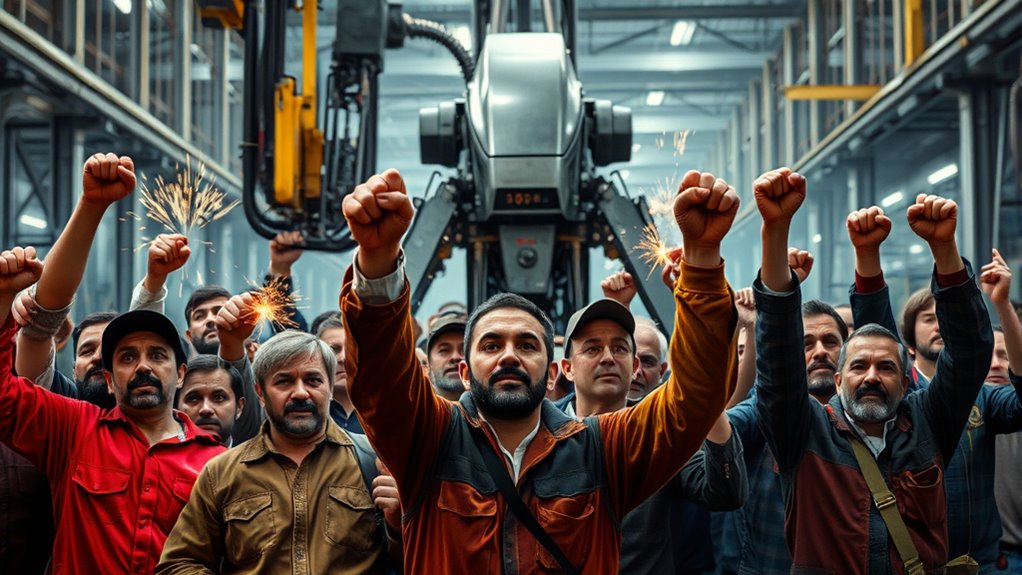

Workers are pushing back against automation through strikes and protests because they fear job loss, reduced rights, and economic instability. They demand stronger protections, fair shift policies, and a say in how technology is implemented. Unions and grassroots groups are uniting to influence policies that prioritize workers’ well-being. These movements highlight that automation isn’t just about technology; it’s a social issue. To understand the full scope of their efforts, keep exploring this topic further.
Key Takeaways
- Workers protest automation fearing job loss and diminished labor rights, demanding protections and fair transition policies.
- Unions and grassroots groups organize strikes to pressure policymakers and corporations to consider workers’ interests.
- Movements highlight automation as a social issue, advocating for technology that complements rather than replaces human labor.
- Protests aim to ensure that technological progress benefits all, not just corporate profits, safeguarding economic stability and dignity.
- Workers seek inclusive decision-making and regulation to balance innovation with social responsibility during industry changes.
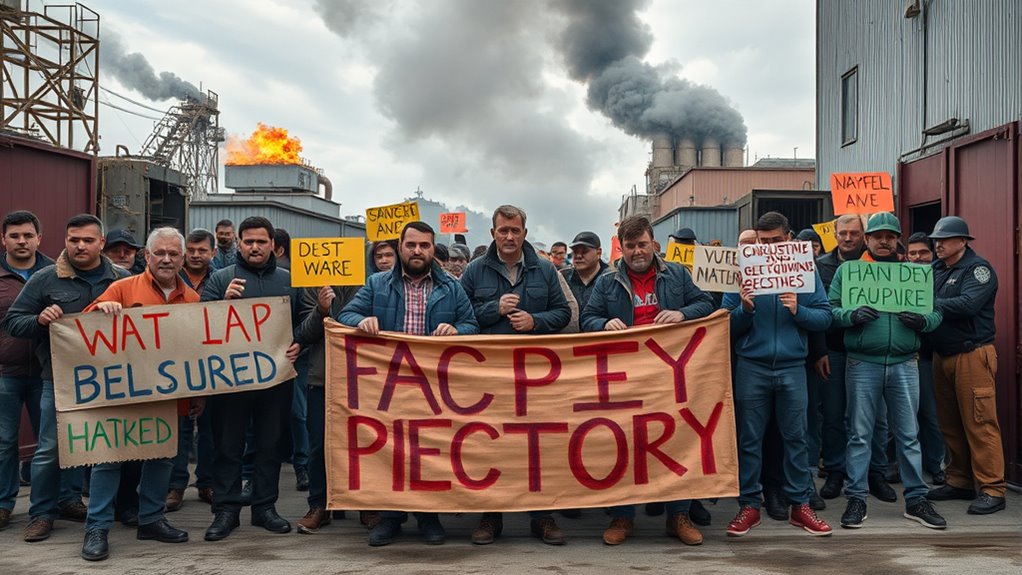
As automation continues to reshape industries worldwide, workers are increasingly taking to the streets to voice their concerns. You might see protests erupting outside factories, tech firms, or government buildings, all driven by fears over job security and the pace of technology adoption. These demonstrations reflect a deep apprehension that automation threatens not just individual livelihoods but also fundamental labor rights. When machines replace workers, it’s not just about losing a job; it’s about losing economic stability, dignity, and a voice in the workplace. You realize that, for many, the pushback isn’t just about resisting change but fighting to guarantee that technology serves everyone, not just the profits of a few corporations.
In these protests, workers often demand greater protections and clear regulations surrounding automation. They argue that unchecked technology adoption can lead to exploitative practices, with companies rushing to automate without considering the social impacts. The central issue becomes labor rights—workers want guarantees that their rights won’t be sacrificed in the rush to modernize. You see banners calling for fair transition policies, retraining programs, and stronger labor protections. These demands highlight that technology should complement human labor, not eliminate it without regard for those affected. Workers are calling for a balanced approach that values their contributions and ensures they won’t be left behind as industries evolve.
The protests also underscore the importance of collective action. Many workers believe that their best chance to influence automation policies lies in uniting and raising their voices together. You notice that these movements often involve unions and grassroots groups working hand-in-hand to press policymakers and corporations. They emphasize that labor rights aren’t negotiable, even as technology advances. The message is clear: automation should not undermine workers’ rights or diminish their bargaining power. Instead, workers want a seat at the table when decisions about integrating new technologies are made, so that their concerns are heard and addressed.
Ultimately, these strikes and protests serve as a reminder that technology adoption isn’t just a technical issue—it’s a social one. As you observe these movements, you realize that the fight isn’t against automation itself but for a future where technological progress benefits everyone, not just a select few. Workers are standing up, demanding fair treatment, and fighting to shape a future where labor rights remain protected amidst rapid change. Their actions highlight the need for thoughtful policies that balance innovation with social responsibility, making sure that technological advancement uplifts rather than displaces workers.
Frequently Asked Questions
How Do Automation Protests Impact Overall Economic Growth?
Automation protests can slow down overall economic growth because they challenge technological innovation’s role in boosting productivity. When workers push back, it creates uncertainty in the labor market, making companies hesitant to invest in new technologies. This resistance can lead to delayed advancements, reducing potential economic gains. However, addressing workers’ concerns can foster a balanced labor market, ensuring that technological progress benefits everyone without causing widespread unemployment.
What Legal Rights Do Workers Have During Strikes Against Automation?
Think of your legal rights during a strike as your shield in a storm. You’re protected by laws that ensure fair treatment, like legal protections against unfair dismissal. Through collective bargaining, you and your coworkers can negotiate better conditions. These rights empower you to stand up against automation, making your voice heard without fear of retaliation. It’s your right to fight for fair work conditions in the face of change.
Are There Successful Examples of Negotiations Between Workers and Companies?
Yes, there are successful examples where workers and companies have reached agreements through negotiation strategies. When you build worker solidarity, it strengthens your bargaining power, making negotiations more effective. Companies often respond positively when you present clear demands and demonstrate unity. These negotiations can lead to compromises that protect workers’ rights and jobs while allowing companies to implement automation gradually. Your collective action, combined with strategic negotiation, fosters positive outcomes.
How Do Automation Protests Influence Government Policy Decisions?
Ever wonder how protests shape policies? When automation protests gain momentum, they boost public awareness and put pressure on government leaders to protect labor rights. These demonstrations highlight workers’ concerns, making it hard for policymakers to ignore. As a result, governments may introduce regulations or incentives to balance innovation with job security, ensuring automation advances without compromising workers’ livelihoods. Your voice in protests can truly influence meaningful change.
What Are the Long-Term Implications for Employment Stability?
Your future job security could be uncertain as automation continues to reshape industries. You might face increased competition and job displacement, but workforce adaptation offers hope. By upgrading your skills and embracing new technologies, you can better navigate these changes. Long-term, flexible, and continuous learning will be key to maintaining employment stability, allowing you to stay relevant in an evolving job market and ensuring your career resilience.
Conclusion
As you watch workers gather, their voices rising in unison, it feels like a quiet storm brewing just beneath the surface. The clatter of machinery fades into the background, replaced by determined footsteps and shouted demands. In this moment, the clash between progress and protest paints a vivid picture—reminding you that even in a world racing toward automation, human spirit and resistance refuse to be silenced. Change is coming, but not without a fight.