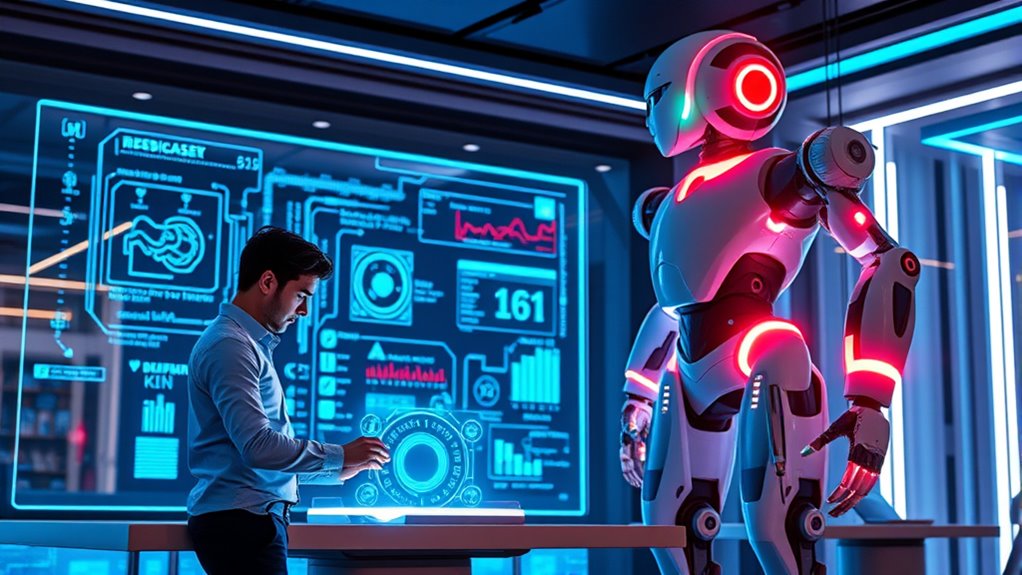

As automation takes over management tasks, your boss can now be an algorithm guiding operations and assigning work. This shift means you’ll need new skills like data literacy, understanding AI systems, and working alongside autonomous technologies. Trust and transparency become critical, but many still hesitate to rely fully on algorithms. Addressing these challenges involves adapting your expertise, understanding ethical and regulatory issues, and staying ahead with continuous learning—if you want to grasp how to thrive in this new era.

Get business pricing on tech for your team
- Business-only prices and quantity discounts
- Tax-exempt purchasing
- Multiple users, one account, clear invoices
Key Takeaways
- Many cyber-physical jobs involve oversight of automated systems managed by algorithms, requiring skills in monitoring and adjustment.
- Employees need digital literacy, technical skills, and adaptability to work effectively alongside AI-driven bosses.
- Trust and transparency are critical; understanding AI decision-making enhances accountability and reduces reliance on opaque algorithms.
- Regulations and ethical frameworks aim to ensure responsible AI deployment, affecting how workers interact with algorithmic managers.
- Continuous learning and interdisciplinary skills are essential for workforce success in environments where algorithms direct operations.
As an affiliate, we earn on qualifying purchases.
The Rise of Automated Oversight in Cyber-Physical Environments
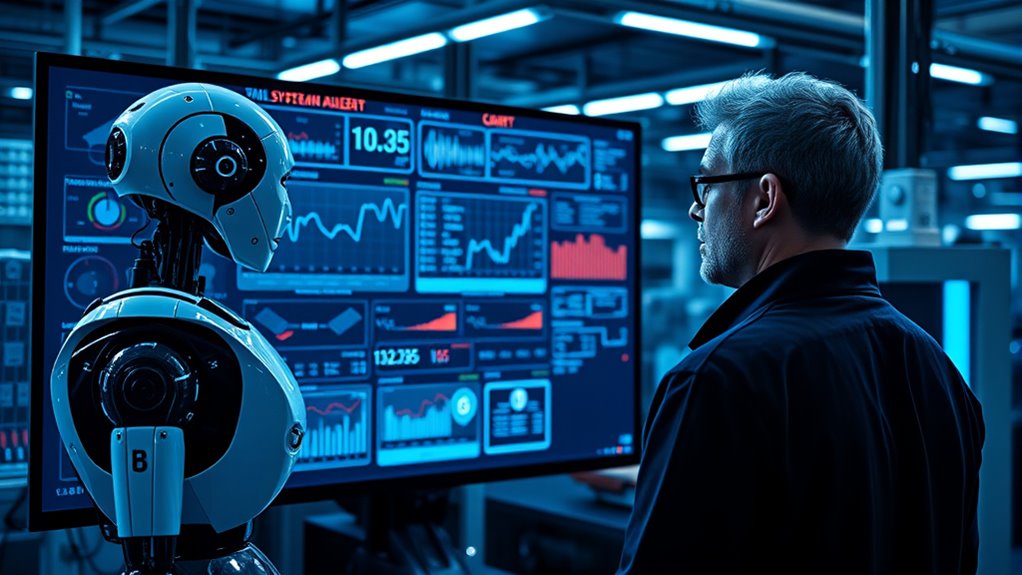
Automated oversight in cyber-physical environments is transforming how industries monitor and manage complex systems. With sensors, processors, and actuators working in real time, you can now detect issues before they escalate, ensuring smoother operations. IoT devices facilitate continuous data exchange, enabling proactive fault prediction and quick responses to changing conditions. This automation reduces the need for human intervention in routine tasks, allowing personnel to focus on higher-level oversight. In sectors like smart grids and manufacturing, adaptive responses—such as load balancing or real-time adjustments—are handled automatically, boosting efficiency. As a result, industries improve safety, minimize downtime, and optimize resource use. This shift toward supervisory automation is reshaping traditional roles, emphasizing oversight and exception management instead of manual control. Market growth projections indicate that the integration of these technologies will accelerate, further enhancing operational capabilities across industries. Additionally, understanding personality traits of team members can improve coordination and response strategies in automated environments.
As an affiliate, we earn on qualifying purchases.

As industries rely more on algorithmic oversight, you must develop new skills to thrive. Adaptability is key—you need to easily adjust to new technologies and changing workflows. Data literacy is increasingly important; understanding how to analyze and interpret data helps you work effectively with algorithms. Proficiency in digital tools and platforms is essential for daily tasks. You’ll also need skills in monitoring algorithmic feedback and making necessary adjustments, ensuring processes stay on track. Problem-solving becomes critical when algorithms encounter issues or produce unexpected results. Your work environment shifts toward a performance-driven, data-centric culture, where real-time metrics influence your standing. To succeed, you must continuously learn and adapt, turning algorithmic tools from threats into valuable assets in your professional toolkit. Developing an understanding of eye patch benefits can also enhance your awareness of wellness strategies that support your overall productivity and well-being.
IoT sensors for industrial automation
As an affiliate, we earn on qualifying purchases.
As an affiliate, we earn on qualifying purchases.
The Intersection of Human Expertise and AI-Driven Decision Making

You play a crucial role in shaping how humans and AI work together, balancing automated insights with your expertise. Trust in these systems depends on your understanding and oversight, making your skills more vital than ever. As hybrid roles emerge, developing skills that complement AI decision-making becomes essential for your success. Active AI users are particularly optimistic about the benefits, highlighting the importance of human oversight in ensuring responsible implementation. Additionally, understanding AI in Education can enhance your ability to manage these new collaborative environments effectively.
Human-AI Collaboration Dynamics
Human-AI collaboration is transforming decision-making processes across industries by combining human expertise with AI-driven insights. You’ll find AI increasingly embedded in workplaces, nearly doubling its use in just two years and impacting 40% of US employees. This synergy facilitates up to $15.7 trillion in economic value by 2030. Humans and AI are collaborating in defined roles, enhancing both decision-making and creativity. AI offers sophisticated data analysis and predictive insights, enabling faster, more accurate choices. Meanwhile, your expertise complements AI’s capabilities, leading to better scenario planning. Effective collaboration depends on measuring real-world skills for both humans and AI, ensuring seamless interaction. As this dynamic evolves, clear communication and ethical deployment remain critical to harnessing AI’s full potential in decision-making. Additionally, the emphasis on AI as a collaborator has shifted toward AI systems providing insights and assistance, marking a significant transition from initial fears of automation displacing jobs, and highlighting the role of AI augmentation in making humans better at their jobs. Recognizing the importance of human-AI synergy can help organizations optimize this partnership for greater innovation and efficiency.
Trust in Automated Systems
Effective collaboration between humans and AI relies heavily on trust, especially when decisions impact critical outcomes. Building this trust involves understanding how users perceive AI systems. Consider these key points:
- The Short Trust in Automation Scale (S-TIAS) accurately measures trust with just three questions, predicting reliance on AI effectively.
- Despite widespread AI use, over half of people still hesitate to trust it fully, reflecting a significant trust gap.
- Only 47% believe their data is protected, fueling privacy concerns that undermine confidence.
- A mere 14% of users fully trust AI-generated information, and only 31% of IT pros trust AI to make decisions independently.
These insights highlight that trust hinges on perceived reliability, transparency, and ethical safeguards—crucial factors for seamless human-AI collaboration.
Skills for Hybrid Roles
As AI becomes more integrated into workplaces, mastering a blend of technical and soft skills is essential for success in hybrid roles. You need AI literacy skills, which have surged 177% among professionals since 2023, to navigate new tools effectively. Equally important are soft skills like creativity, critical thinking, and emotional intelligence, as they remain irreplaceable. Hybrid roles demand agility—learning to apply AI technologies while leveraging human problem-solving. Since skills for AI-exposed jobs evolve 66% faster, continuous upskilling is crucial to stay relevant and command higher wages. Developing these hybrid skills ensures you can adapt, innovate, and thrive in the evolving workforce landscape. AI in Business adoption rates continue to grow across industries, underscoring the importance of integrating technological literacy into professional development.
digital skills training for employees
As an affiliate, we earn on qualifying purchases.
As an affiliate, we earn on qualifying purchases.
Challenges in Ensuring Algorithmic Transparency and Accountability

Ensuring algorithmic transparency and accountability presents significant challenges, as the complexity of modern algorithms often makes it difficult to understand how decisions are made. Here are some key hurdles:
Modern algorithms’ complexity hampers understanding and accountability in decision-making processes.
- Bias and Inequality: Algorithms trained on biased data can perpetuate societal biases.
- Complex Decision-Making: Many algorithms operate with decision processes too intricate to fully grasp.
- Transparency in Code: Their complexity makes explaining how algorithms arrive at conclusions tough.
- Accountability in Errors: Identifying mistakes and assigning responsibility remains a significant obstacle. Additionally, algorithmic interpretability is crucial for stakeholders to comprehend and trust automated decisions.
– Additionally, human input in creating and monitoring algorithms is essential but often insufficient to address these issues comprehensively.
These issues hinder trust and proper oversight, making it hard to ensure algorithms serve fairness and justice. Without clear standards and effective monitoring, algorithmic decisions can remain opaque and unaccountable, risking harm and mistrust in cyber-physical workplaces.
Evolving Job Roles in a World Managed by Intelligent Systems

As intelligent systems become more integrated into daily work, you’ll need to adapt by mastering new AI tools and understanding their applications. Your role may require combining expertise from different disciplines to solve complex problems effectively. Embracing these shifts will be essential to stay relevant in an evolving, tech-driven job landscape. Regularly updating your skills in juice cleanses and detox can also promote personal resilience and mental clarity amidst technological changes.
Integration of AI Tools
The integration of AI tools is transforming job roles across industries by automating routine tasks and enhancing productivity. You’ll see AI making a significant impact in several areas:
- Customer Service: 85% of interactions are expected to be managed by AI by 2025, improving response times and satisfaction.
- Sales & Marketing: AI increases lead generation by 50%, cuts call times by up to 70%, and reduces costs substantially.
- Workforce Impact: While 92 million roles may be displaced by 2030, AI will create a net gain of 78 million new jobs focused on AI management. AI is projected to create 170 million new jobs worldwide by 2030.
- Workplace Applications: Over half of HR departments now use AI for talent acquisition and engagement monitoring.
These shifts are reshaping responsibilities, requiring you to adapt and leverage AI as a strategic tool.
Multi-disciplinary Skill Demands
In a world increasingly managed by intelligent systems, job roles are evolving to demand a broad and adaptable skill set. You’ll need technical expertise like programming, data analysis, and software development, along with strong mathematical foundations to handle complex systems. Social awareness is equally important—understanding social impacts and ethical considerations becomes essential in human-interactive roles. Collaboration across disciplines is critical, requiring you to work effectively with diverse teams. As technology advances rapidly, adaptability and continuous learning are crucial to stay current. You might find yourself managing cybersecurity threats, which demand specialized knowledge in technical, legal, and policy areas. To succeed, you must embrace interdisciplinary education, gain practical experience, and remain open to ongoing training to meet the multifaceted demands of cyber-physical environments. Recognizing the importance of interdisciplinary collaboration is essential for developing comprehensive solutions in these complex systems. Additionally, developing sound healing science knowledge can enhance your understanding of how different systems can be harmonized for optimal performance.
Regulatory and Ethical Considerations for Algorithmic Control

Regulatory and ethical considerations for algorithmic control are increasingly essential as digital management systems become more embedded in workplaces. You need to understand the evolving landscape of laws and principles shaping this shift. 1. Regulations like the EU’s Platform Work Directive aim to oversee algorithmic management practices. 2. State bills, such as New York’s AI Bill of Rights, seek to protect workers from discrimination and bias. 3. GDPR’s Article 22 addresses automated decisions, though its application remains complex. 4. U.S. bills like the No Robot Bosses Act target the regulation of workplace AI systems. Effective oversight mechanisms are necessary to prevent AI-driven harms and uphold worker protections. Balancing efficiency with worker rights requires transparency, accountability, and oversight. Ethical frameworks must prioritize fair treatment and adapt to technological changes, ensuring algorithms serve workers—not exploit them.
Preparing Workforce for a Future Dominated by Autonomous Systems

Preparing workforce for a future dominated by autonomous systems requires proactive skill development and targeted training programs. You need to learn how to work alongside and manage these technologies, including monitoring, maintenance, and troubleshooting. Certification bodies, like ASE, are creating specialized credentials in areas such as Advanced Driver Assistance Systems (ADAS) to validate these skills. Educational institutions are updating curricula to blend traditional knowledge with digital and automation skills, ensuring workers are prepared. Many employees express a strong desire for formal AI and automation training, seeing it as essential for success in algorithm-managed roles. Currently, many workers receive minimal training in AI tools, highlighting a critical gap. Addressing this early will help you adapt and thrive amid the evolving job landscape driven by autonomous systems. Autonomous vehicle technology is rapidly advancing, emphasizing the importance of early skill acquisition to remain competitive. Developing body awareness and physical skills can also enhance your ability to work effectively with new technologies, especially in hands-on roles that involve maintenance or physical interaction with autonomous systems.
Strategies for Balancing Automation With Human Oversight

Balancing automation with human oversight hinges on clearly identifying which tasks are best suited for machines and which require human judgment. To do this effectively, consider these strategies:
- Identify tasks for automation—focus on repetitive, data-intensive work that machines handle best.
- Determine areas needing human insight—reserve judgment calls, empathy, and complex decisions for humans.
- Design clear processes—specify decision points where human intervention is essential, such as handling exceptions or ethical issues.
- Use structured frameworks—tools like the RACI matrix help define roles: Responsible, Accountable, Consulted, and Informed.
Frequently Asked Questions
How Do Workers Ensure Ethical Decision-Making When Supervised by Algorithms?
When supervised by algorithms, you guarantee ethical decision-making by developing strong data literacy and questioning outputs critically. Participate in inclusive design processes and voice concerns early on. Stay informed about how algorithms work and demand transparency and explainability. Keep leadership accountable and support policies that prioritize fairness and dignity. By staying engaged, advocating for ethical safeguards, and continuously educating yourself, you help maintain integrity and fairness in algorithm-driven environments.
What Training Is Necessary for Employees to Adapt to Algorithm-Driven Environments?
Think of adapting to algorithm-driven environments like learning to sail in changing winds. You need data literacy to interpret AI outputs, ethical awareness to navigate biases, and risk management skills to avoid hidden dangers. Training should teach you about transparency, privacy laws, and bias recognition. Developing soft skills like communication and critical thinking ensures you can adapt, collaborate, and stay resilient amid continuous technological shifts in your workplace.
How Are Algorithm Biases Identified and Corrected in Cyber-Physical Systems?
You can identify algorithm biases by analyzing decision patterns and testing models against diverse datasets. To correct biases, you should conduct regular audits, guarantee data is clean and representative, and re-train models with updated information. Incorporate human oversight and fairness metrics to spot issues early. Continuous monitoring and transparent processes help maintain fairness, allowing you to adapt and improve your algorithms over time.
What Legal Protections Exist for Workers Affected by Automation in Critical Infrastructure?
Imagine a shield around you—legal protections guard workers affected by automation in critical infrastructure. You’re protected by OSHA laws against retaliation, ensuring your safety concerns won’t be ignored. Laws like PPD-21 and critical infrastructure policies also prioritize your access and safety during emergencies. These frameworks work like a safety net, making sure automation doesn’t compromise your rights, safety, or ability to keep essential systems running smoothly.
How Do Organizations Maintain Human Trust in Ai-Managed Physical Systems?
To maintain your trust in AI-managed physical systems, organizations need to be transparent about how these systems work and their reliability. They should include visible, tangible interfaces, like robotic elements, to boost trust. Consistently high performance and clear explanations of decision-making processes also help. Listening to your feedback and addressing concerns builds confidence, ensuring you feel safe and supported while interacting with these intelligent systems.
Conclusion
As algorithms increasingly oversee your work, remember that 70% of jobs will involve some form of AI integration by 2030. Embrace continuous learning, stay adaptable, and develop skills that complement automation. While machines handle data and routine tasks, your human judgment, creativity, and ethical insights remain irreplaceable. By balancing technology with your expertise, you can thrive in this evolving landscape and shape a future where humans and AI work hand in hand.
Fall Picks
fall essentials
As an affiliate, we earn on qualifying purchases.