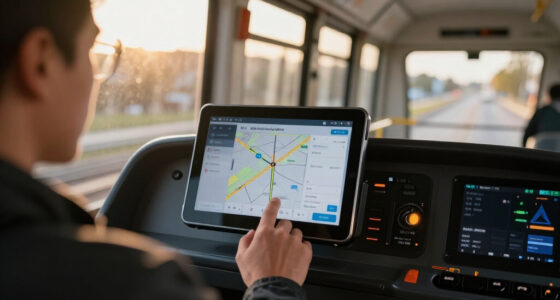
📊 Full opportunity report: The Google I/O 2026 Preview: What May 19-20 Will Reveal About Google’s Agentic Bet on ThorstenMeyerAI.com — validation score, market gap, and execution plan.
TL;DR
Google I/O 2026 will showcase advancements in agentic AI, including the anticipated Gemini 4.0 release and multi-agent protocols. The event tests whether Google’s infrastructure translates into consumer-ready products, impacting AI deployment strategies.
Google is expected to announce the release of Gemini 4.0 and expanded multi-agent protocols at I/O 2026, marking a significant step in deploying agentic AI at scale. The event will also feature new consumer devices, including XR glasses, testing whether Google’s infrastructure translates into practical, consumer-facing products. This development is crucial as it signals the company’s readiness to move AI from demonstration to widespread deployment.
At I/O 2026, Google is likely to unveil Gemini 4.0, an upgraded version of its core AI model, along with expanded A2A (Agent-to-Agent) protocols designed to facilitate multi-agent orchestration. These updates build on the foundation laid during Cloud Next 2026 in April, where Google announced the Gemini Enterprise Agent Platform, a comprehensive environment for managing AI agents at enterprise scale. The platform includes new governance tools, improved orchestration capabilities, and enhanced security measures, addressing enterprise concerns about control and compliance.
In addition, Google is expected to introduce consumer-focused hardware such as XR display-free smart glasses, with a confirmed ship date in 2026. These devices aim to showcase the practical application of agentic AI in everyday life, integrating multimodal assistance and contextual understanding. The event may also feature a beta release of Android 17 (Aluminum), a new OS for laptops, signaling Google’s cross-platform ambitions. While some features like Project Astra’s multimodal assistant and new video generation tools are still speculative, they remain plausible given the company’s recent product trajectory and prior announcements.
Demo or deployment.
Cloud Next 2026 already shipped the infrastructure. May 19-20 reveals whether consumer-product demonstrations match back-end capability.
Gemini 4.0 expected centerpiece. A2A (Agent-to-Agent) Protocol. Android XR display-free smart glasses confirmed for 2026 launch. Android 17 (Aluminum) general release. Gemini API at 16B tokens/min · 60% QoQ growth · Gemini Enterprise paid MAU +40% QoQ. Five variables reveal deployment-phase thesis credibility.
May 12 · T-7 days
Ten announcements. Five variables.
The most consequential variable: live demonstrations of agentic Gemini completing real multi-step tasks under uncontrolled conditions. The credibility gap between “agent demos” and “production agent deployment” is wide.

XREAL 1S AR/XR Glasses, 500" Virtual Screen Smart Glasses with 52° FOV, Native 3DoF, REAL 3D, Powered by X1 Chip, Supports All USB-C DP Devices Including iPhone 17/16 and Handhelds, like ROG/SteamDeck
Giant Virtual Screen – Immersive Theater Anywhere: Step into a breathtaking virtual screen up to 500 inches, transforming…
As an affiliate, we earn on qualifying purchases.
As an affiliate, we earn on qualifying purchases.
Three scenarios. One event.
30/50/20 probability allocation. Base case represents normal-execution outcome where some announcements deliver and others slip. Cloud Next infrastructure foundation is locked in regardless.
- Live demos succeedRealistic multi-step tasks complete.
- Smart glasses ship Q3-Q4Display version early 2027.
- Aluminum OS concreteSpecific launch timeline.
- Revenue numbers disclosedSpecific Gemini Enterprise scale.
- Outcome: Stock +3-5%. Capex thesis demand-pull validated.
- Some demos succeedSome scenarios pre-recorded.
- Display-free shipsDisplay version unconfirmed.
- Aluminum directionalNo specific launch date.
- Growth-rate disclosureContinued QoQ%, not absolute.
- Outcome: Stock neutral. Continuation trajectory.
- Gemini 4.0 delayedOr scoped down to 3.5.
- Demos pre-recordedConspicuously controlled.
- Smart glasses pushed 2027Apple wins the timing.
- Aluminum stays conceptualNo launch path.
- Outcome: Stock -3 to -7%. Bubble bear case gains evidence.
I/O 2026 either confirms or undermines the agentic deployment thesis at consumer scale. Cloud Next 2026 already established the infrastructure baseline. I/O reveals whether consumer-product deployment substantiates the infrastructure investment.
SMISEACOW Laptop Screen Extender Triple 15.6", 1080P FHD IPS 0.18" Ultra-Slim & 3.9 lbs, Plug-Play Portable Monitor for Laptops Fits 12-17.3" Laptops, Compatible with Win/Mac/Android
【15.6" FHD Screen – Ultra-Slim & Travel Ready】 15.6-inch 1080P IPS display with 1000:1 contrast ratio and 300…
As an affiliate, we earn on qualifying purchases.
As an affiliate, we earn on qualifying purchases.
Four assignments. By role.
Position based on demonstration quality.
Headline announcements primarily affect long-term product positioning rather than near-term financials. Position based on demonstration-quality variables (live demos, revenue disclosure, case studies). The deeper read: I/O provides forward signal on Q3-Q4 2026 Cloud revenue growth trajectory and the hyperscaler capex thesis demand-pull validation.
Watch Firebase / Antigravity / Flutter GenUI.
Developer-toolchain announcements determine ecosystem stickiness. Specific pricing transparency, production deployment patterns, and security guarantees are the criteria. Production-ready announcements vs framework-with-future-shipping signal different competitive trajectories. Gemma open-model expansion vs Llama / DeepSeek positioning matters.
Read announcements for positioning effects.
Strong I/O demonstrations compress addressable space for non-Google players (Anthropic, OpenAI). Weak demonstrations create competitive opening. The Anthropic IPO positioning particularly affected — strong Google announcements raise the bar for enterprise messaging; weak announcements give Anthropic competitive opening into Q3-Q4 2026.
Integrate I/O signal into multi-vendor sourcing.
Cloud Next infrastructure announcements established platform readiness; I/O announcements about consumer/SMB agent deployment establish ecosystem viability beyond enterprise-only positioning. Multi-vendor sourcing strategies should incorporate I/O signal alongside the bubble question dispatch framework for differentiating durable-value from frothy providers.

Protocols for Health Complete Multivitamin Dietary Supplement – for Wellness Support, 120 Veg Capsules
Supports Energy Production and Stress Response
As an affiliate, we earn on qualifying purchases.
As an affiliate, we earn on qualifying purchases.
Implications of Google’s Agentic AI Launches
This event is a critical test of Google’s ability to transition from AI demonstrations to real-world, consumer-ready products. The announced upgrades, especially Gemini 4.0 and multi-agent protocols, could significantly influence the AI ecosystem by enabling more sophisticated, autonomous interactions across platforms. If Google successfully demonstrates live multi-step tasks on stage, it would validate the deployment-phase thesis, positioning Google as a leader in practical agentic AI. The consumer device launches, if aligned with these advancements, could accelerate adoption and set new standards for AI integration in daily life.

Google Nest Cam Outdoor (Wired, 2nd Gen) – Security Camera – Snow – 2 Pack
Meet the smarter, sharper wired Google Nest Cam Outdoor; with 2K HDR video and Gemini, it knows what…
As an affiliate, we earn on qualifying purchases.
As an affiliate, we earn on qualifying purchases.
Background on Google’s AI Infrastructure and Market Position
Google’s recent announcements at Cloud Next 2026 set the stage for I/O 2026, with the launch of the Gemini Enterprise Agent Platform, eighth-generation TPUs, and increased investment in cloud-based AI workloads. These developments reflect a solid infrastructure foundation aimed at supporting large-scale agentic AI deployment. Industry competitors like OpenAI, Apple, and Meta are also advancing in this space, with OpenAI reportedly developing an agentic OS phone, and Apple’s Project Iris smart glasses expected in 2026-2027. The market is rapidly evolving, with software-engineering jobs surging and valuations of AI startups rising, indicating strong industry momentum. Google’s challenge now is to demonstrate that its infrastructure translates into tangible, consumer-facing innovations that can capture market share and influence industry standards.
Unconfirmed Features and Deployment Outcomes
While Gemini 4.0 and multi-agent protocols are highly probable announcements, it remains unclear whether Google will demonstrate live multi-step tasks on stage or only present pre-recorded demos. The launch of consumer devices like XR glasses and Aluminum OS for laptops is confirmed for 2026, but their integration with AI features and actual market availability are still uncertain. Additionally, some anticipated features such as Project Astra’s multimodal assistant and new video generation tools are speculative and not yet officially confirmed for I/O 2026. The extent to which these innovations will be showcased or launched remains to be seen.
Next Steps After Google I/O 2026 Announcements
Following the event, Google will likely focus on rolling out Gemini 4.0 and expanded multi-agent protocols to developers and enterprise customers, testing their scalability and robustness. The consumer devices, including XR glasses and the Aluminum OS beta, are expected to enter limited release or beta testing phases. Industry analysts will closely monitor whether Google demonstrates operational multi-step agent tasks live, which will be critical for validating the deployment thesis. Further product launches and updates are anticipated throughout 2026, with broader market adoption contingent on successful demonstration and integration of these AI capabilities.
Key Questions
What is Gemini 4.0, and why is it important?
Gemini 4.0 is the anticipated next-generation AI model from Google, designed to enable more sophisticated, multi-step, autonomous tasks. Its release could be a key milestone in moving AI from demos to practical, scalable applications.
Will Google demonstrate live multi-agent AI tasks at I/O 2026?
This remains uncertain. While it is a likely focus, Google has not confirmed whether live demonstrations will occur or if they will only present pre-recorded showcases.
What consumer devices are expected at I/O 2026?
Google is expected to introduce XR display-free smart glasses with a confirmed ship date in 2026, along with possible previews of Aluminum OS for laptops, aiming to integrate AI capabilities into everyday hardware.
How does this event impact Google’s competitive position?
If successful, Google’s announcements could solidify its leadership in deploying agentic AI at scale, challenging competitors like OpenAI and Apple in both infrastructure and consumer products.
What remains uncertain about Google’s AI roadmap after I/O 2026?
Key uncertainties include whether live multi-step tasks will be demonstrated, the actual market release timelines for new hardware, and how well the announced features will integrate into consumer products.
Source: ThorstenMeyerAI.com