TL;DR

Get business pricing on tech for your team
- Business-only prices and quantity discounts
- Tax-exempt purchasing
- Multiple users, one account, clear invoices
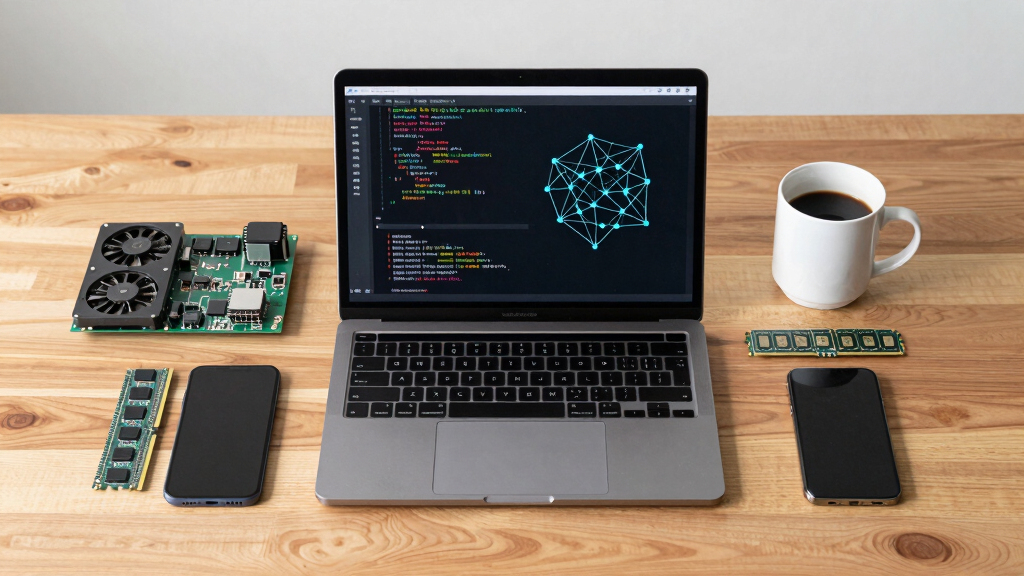
AWS announced new hardware and infrastructure offerings tailored for training and inference of large foundation models. These include NVIDIA GPU instances, high-speed networking, and scalable storage, aimed at supporting the entire model lifecycle.
Amazon Web Services (AWS) has introduced new hardware and infrastructure offerings, including advanced NVIDIA GPU instances and enhanced networking capabilities, to support the training and inference of large foundation models. This development aims to meet the growing demands of AI workloads and streamline the entire model lifecycle on AWS.
AWS’s latest offerings include the Amazon EC2 P5 and P6 instance families, equipped with NVIDIA H100, H200, and Blackwell B200 GPUs, which provide high tensor throughput, large device memory, and optimized interconnect bandwidth. These instances are designed for large-scale pre-training, post-training fine-tuning, and inference tasks, enabling machine learning engineers to scale models efficiently.
In addition to compute, AWS has enhanced its networking infrastructure with high-bandwidth, low-latency interconnects, such as NVLink and NVSwitch, to facilitate efficient collective communication across GPUs within nodes and clusters. The platform also offers scalable distributed storage solutions, including Amazon FSx and S3, optimized for handling large datasets, checkpoints, and model weights.
These infrastructure components are integrated with AWS’s managed services and open-source software stacks, such as Kubernetes and Slurm for resource orchestration, and ML frameworks like PyTorch and JAX for model development and training. The goal is to provide a cohesive environment that supports the full lifecycle of foundation models, from data ingestion to deployment.
Why It Matters
This development is significant because it addresses the increasing infrastructure complexity required for training and deploying large foundation models, which are fundamental to many AI applications today. By offering specialized hardware and optimized networking, AWS aims to reduce bottlenecks related to compute, memory, and communication, enabling faster iteration and deployment of AI models at scale.
For organizations, this means potentially lower costs, improved performance, and easier access to state-of-the-art hardware without managing physical infrastructure. It also signals AWS’s commitment to supporting the rapidly evolving AI ecosystem, where infrastructure plays a critical role in enabling breakthroughs and operational efficiency.
As an affiliate, we earn on qualifying purchases.
Background
Traditionally, scaling foundation models focused on increasing compute resources during pre-training, following empirical laws such as those reported by Kaplan et al. (2020). However, recent trends emphasize the importance of post-training fine-tuning, inference, and test-time compute strategies. This shift has driven the need for more sophisticated, tightly integrated hardware and software ecosystems.
AWS’s announcement builds on its existing offerings by integrating cutting-edge NVIDIA GPU instances with high-bandwidth interconnects and scalable storage, aligning with industry trends toward convergent infrastructure for all phases of the model lifecycle. Previously, organizations relied on a patchwork of hardware and open-source tools, often facing bottlenecks at the communication and data movement levels.
“Our new hardware offerings are designed to support the entire foundation model lifecycle, from training to inference, with optimized compute, networking, and storage.”
— AWS spokesperson
“The latest GPU architectures, combined with high-bandwidth interconnects, are critical for scaling foundation models efficiently on cloud platforms.”
— NVIDIA representative
high bandwidth networking for GPU clusters
As an affiliate, we earn on qualifying purchases.
As an affiliate, we earn on qualifying purchases.
What Remains Unclear
It is not yet clear how widely these new AWS offerings will be adopted by organizations or how they will compare in performance and cost-effectiveness to other cloud providers’ solutions. Details about specific availability dates and regional deployment are still emerging.
scalable storage solutions for AI training
As an affiliate, we earn on qualifying purchases.
As an affiliate, we earn on qualifying purchases.
What’s Next
Next steps include AWS rolling out these instances to select regions and offering detailed benchmarks and case studies demonstrating their performance. Industry analysts and early adopters will evaluate how these infrastructure improvements impact model training timelines and operational costs.
Further updates are expected as AWS integrates these hardware options with its managed services and ecosystem tools, potentially expanding support for additional hardware configurations and software integrations.
As an affiliate, we earn on qualifying purchases.
Key Questions
What specific hardware does AWS now offer for foundation model training?
AWS offers the Amazon EC2 P5 and P6 instance families, equipped with NVIDIA H100, H200, and Blackwell B200 GPUs, optimized for high tensor throughput, large memory capacity, and fast inter-GPU communication.
How does this infrastructure improve foundation model training and inference?
It provides high-performance compute, low-latency networking, and scalable storage, reducing bottlenecks during training, fine-tuning, and inference, enabling faster model development and deployment at scale.
When will these new instances be available to customers?
Availability details are still being finalized, but AWS has announced a phased rollout starting in the upcoming months, with broader regional deployment expected shortly after.
Will this infrastructure support open-source ML frameworks?
Yes, these instances are designed to support popular frameworks like PyTorch and JAX, integrated with AWS’s managed services and open-source tools for resource orchestration and monitoring.
Fall Picks
fall essentials
As an affiliate, we earn on qualifying purchases.