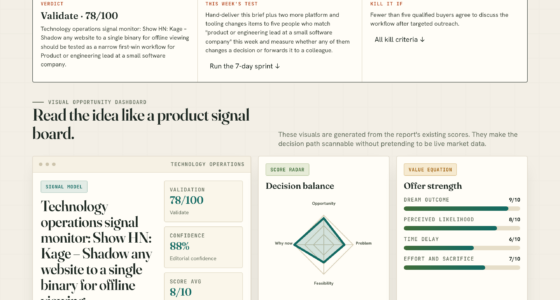
📊 Full opportunity report: How AI Operations Are Resembling Real Estate Investment Trusts Over Lab Innovation on IdeaNavigator AI — validation score, market gap, and execution plan.
TL;DR
AI operations are now exhibiting characteristics similar to data center REITs rather than traditional research labs. This shift affects how organizations monitor and adapt to rapid capability and policy changes, especially for small teams deploying AI tools.
AI operations are increasingly adopting a structure akin to data center REITs, rather than functioning as traditional frontier research labs. This development impacts how organizations, especially small teams deploying AI tools, monitor and respond to rapid shifts in AI capabilities and policies. The insight emerged from recent discussions on Hacker News, highlighting a significant change in operational dynamics that could influence decision-making and strategy.
Recent analyses suggest that AI operations, exemplified by organizations like xAI, are shifting toward models resembling real estate investment trusts (REITs)—focusing on managing infrastructure and capacity rather than pioneering new frontier research. This trend is driven by the need to efficiently handle large-scale AI infrastructure, which requires significant investment and operational oversight similar to REITs managing real estate portfolios.
According to sources, this shift makes it harder for operations leads to catch early signals of capability and policy changes, as these are scattered across news outlets, forums, and filings. The rapid pace of AI capability development and policy adjustments exacerbates this challenge, making role-specific, filtered monitoring tools increasingly essential. Hacker News recently surfaced this trend with a high signal score of 84/100, indicating strong community awareness and concern.
The proposed solution involves building a targeted monitoring system that filters AI capability and policy shifts relevant to small teams deploying AI tools, providing concise briefings on what has changed, why it matters, and recommended actions. This approach aims to streamline decision-making and reduce information overload for operational leaders.
Implications of AI Infrastructure Resembling REIT Models
This trend signifies a fundamental shift in how AI organizations structure their operations, emphasizing infrastructure management over frontier research. For small teams, it means a need for more agile, role-specific monitoring tools to stay ahead of rapid capability and policy developments. The shift could also influence investment, resource allocation, and strategic planning, as organizations adapt to a more infrastructure-centric AI landscape.

AI for DevOps Engineers: Master AIOps, Kubernetes Automation, and Cloud Infrastructure Monitoring
As an affiliate, we earn on qualifying purchases.
As an affiliate, we earn on qualifying purchases.
Rise of Infrastructure-Focused AI Operations
Historically, AI labs and research organizations focused on pioneering new capabilities through experimental projects. Recently, however, there has been a noticeable transition toward infrastructure management, akin to REITs managing large portfolios of physical assets. This change is driven by the increasing scale and cost of AI infrastructure, which demands dedicated operational oversight.
Discussions on platforms like Hacker News highlight growing community awareness of this shift. The trend reflects broader industry movements toward consolidating AI infrastructure and emphasizing capacity management, which impacts how organizations monitor, invest in, and regulate AI capabilities and policies.
“The challenge for small teams is catching early signals of capability and policy shifts, which are scattered and fast-moving.”
— a source familiar with industry trends

faleemi 2K WiFi Security Camera for Home with Cell Phone App Control, Color Night Vision, Ai Motion Detection, Auto Tracking, 2 Way Audio, Waterproof, Local/Cloud Storage, Compatible with Alexa
[Real 2K Ultra HD Video with full-color night vision] This indoor/outdoor Wi-Fi camera is a real 2K/3MP resolution…
As an affiliate, we earn on qualifying purchases.
As an affiliate, we earn on qualifying purchases.
Extent and Future of Infrastructure-Driven AI Models
It remains unclear how widespread this REIT-like model will become across the AI industry and whether it will fundamentally alter innovation dynamics. The long-term impact on research, competition, and regulation is still developing, with industry leaders and policymakers yet to fully respond.
The Data Center as a Computer: Designing Warehouse-Scale Machines (Synthesis Lectures on Computer Architecture)
As an affiliate, we earn on qualifying purchases.
As an affiliate, we earn on qualifying purchases.
Monitoring Tools and Industry Adaptation Strategies
Next steps include developing specialized monitoring tools tailored for small teams, testing their effectiveness, and observing how organizations adapt their strategies. Industry analysts will likely track whether this infrastructure focus leads to more centralized AI management or fosters new innovation models.

Medical Alert System for Seniors – Advanced Mini Device with Automatic Fall Detection, 24/7 Monitoring, GPS Tracking, Emergency Alert Pendant Necklace, SOS Button, Caregiver App, Waterproof | Black
EASY ACTIVATION + MONTHLY SUBSCRIPTION: Elevate your safety and security with our straightforward medical alert pendants. For just…
As an affiliate, we earn on qualifying purchases.
As an affiliate, we earn on qualifying purchases.
Key Questions
Why are AI operations starting to resemble REITs?
This shift is driven by the increasing scale and infrastructure needs of AI systems, requiring management of capacity and resources similar to real estate portfolios.
How does this change affect small teams deploying AI?
Small teams now need role-specific, filtered monitoring tools to stay ahead of rapid capability and policy changes, which are often scattered across various sources.
Will this trend slow down AI innovation?
It is uncertain; some believe focusing on infrastructure could streamline deployment, while others worry it might centralize control and limit experimentation.
What are the risks of this REIT-like model?
Potential risks include reduced agility for innovation, increased dependency on infrastructure providers, and regulatory challenges related to centralized control.
What should organizations do next?
Organizations should develop role-specific monitoring tools, stay alert to policy and capability shifts, and adapt their strategies accordingly.
Source: IdeaNavigator AI