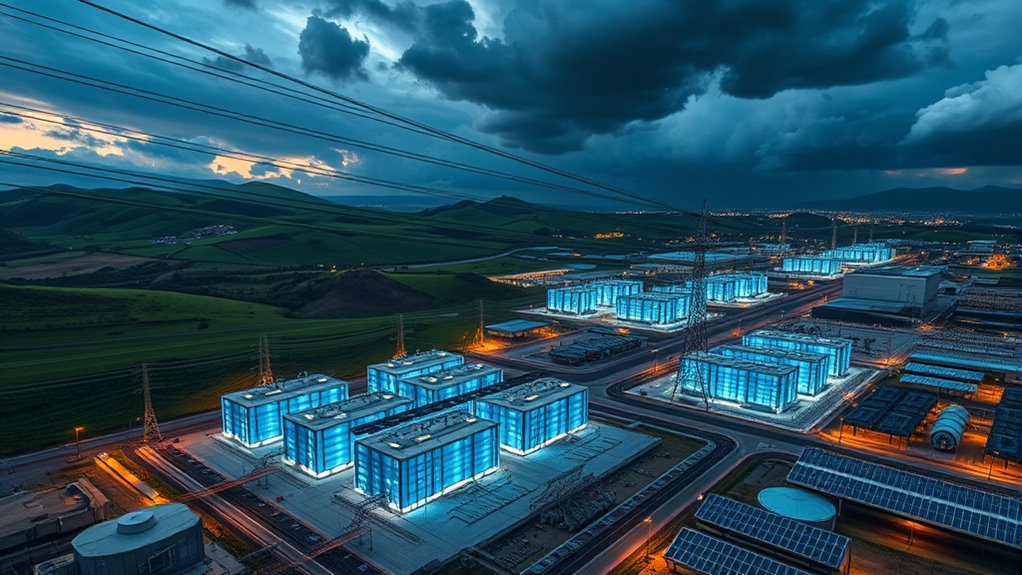

As AI data centers grow rapidly worldwide, energy grids from Mexico to Ireland are under increasing pressure. This surge in demand strains local infrastructure, causing community protests and regulatory scrutiny. Many regions worry about environmental impact and sustainability since a significant portion of energy still comes from fossil fuels. If you’re curious about how this global tension is unfolding and what solutions are emerging, there’s more to uncover that can shed light on this complex challenge.
Key Takeaways
- Growing AI data center energy demands are causing widespread concerns over grid stability worldwide.
- Countries like Mexico and Ireland face increased scrutiny due to their energy infrastructure’s inability to support expansion.
- The rapid development of AI-specific centers threatens to overburden local power grids and delay regulatory approvals.
- Environmental impacts from increased fossil fuel reliance for data centers intensify global ecological backlash.
- Governments are considering regulatory reforms to manage energy consumption and promote renewable solutions amid protests.

As artificial intelligence continues to advance rapidly, the energy demands of data centers are soaring, putting increasing pressure on power grids across the United States and around the world. You’ll notice that by 2035, US data-center power demand is expected to more than double, reaching 78 gigawatts from nearly 35 gigawatts in 2024. Even more striking is Deloitte’s estimate that AI-specific data centers could grow more than thirtyfold, hitting 123 gigawatts. Globally, data center energy consumption is already substantial, with estimates between 240-340 TWh in 2022, and AI is set to accelerate this growth. You might not realize that AI-related server energy use jumped from just 2 TWh in 2017 to 40 TWh in 2023, highlighting the rising power needs of AI advancements. These centers now require a lot more energy per square foot than traditional data centers, making their power demands even more dynamic and challenging. Demand for data center capacity is growing rapidly, with major regions like PJM, Ercot, and the Southeast racing to accommodate this surge. Developing these facilities isn’t quick or simple; it typically takes around seven years from planning to operation in the US. You’ll face hurdles like securing land, permits, and reliable power sources, especially as some projects are planned on massive campuses spanning 50,000 acres, which could substantially drain local energy supplies. Integrating these large-scale centers into existing grids is complex, and regulatory reforms are needed to streamline connection processes and improve grid support.
Innovation offers some relief, with technologies like DeepseekV3 designed to cut power demand during AI training. Advances in server and GPU efficiency are also vital for reducing overall energy consumption. The shift towards renewable energy is gaining momentum, with predictions that 60% of data center power will be clean by 2035. Yet, many centers still depend on fossil fuels, with about 38 GW of gas plants planned to support them, raising environmental concerns. As data centers consume more energy—reaching 176 TWh in 2023 and emitting roughly 105 million metric tons of CO2—their environmental footprint grows. This increase is drawing criticism from communities and governments alike, as they grapple with the economic and ecological impacts. Balancing the soaring demand for AI-driven data processing with sustainable energy solutions remains a pressing challenge for the global community.
Top picks for "global backlash data"
Open Amazon search results for this keyword.
As an affiliate, we earn on qualifying purchases.
Frequently Asked Questions
How Are Governments Planning to Address AI Data Center Energy Demands?
Governments plan to address AI data center energy demands by streamlining permits, expanding infrastructure, and promoting efficiency. You’ll see efforts to fast-track approvals, use federal lands, and coordinate across agencies to build more energy infrastructure. Additionally, policies focus on improving data center efficiency through R&D, hardware upgrades, and heat recovery systems. They also aim to balance growth with low electricity costs and environmental safeguards, ensuring sustainable expansion without overburdening energy grids.
What Renewable Energy Sources Are Being Utilized by AI Data Centers?
You see vast fields of solar panels glinting under the sun, wind turbines spinning gracefully, and rivers powering hydroelectric dams—these are the renewable sources AI data centers tap into. They rely on hydropower, wind, solar, and geothermal energy to keep operations running cleanly. Some even generate power on-site with solar panels or wind turbines, reducing their dependence on fossil fuels and helping build a greener digital future.
How Does AI Data Center Energy Consumption Compare Globally?
You’ll find that AI data center energy consumption is rapidly increasing worldwide. By 2030, it could make up over 21% of global electricity demand, doubling from recent years. AI workloads now account for a significant share of data center power use, with projections showing consumption rising from 40 TWh in 2023 to around 200 TWh by 2025. This growth emphasizes AI’s substantial impact on global energy use and infrastructure.
What Innovations Are Emerging to Reduce AI Data Center Energy Use?
You can expect innovations like specialized AI chips, liquid cooling, and workload optimization to cut energy use. On-site renewable generation, microgrids, and smarter scheduling help harness clean energy efficiently. Industry efforts focus on new metrics and stricter policies, encouraging transparency and sustainability targets. These innovations work together to make AI data centers more energy-efficient, reducing their environmental impact while meeting growing computational demands.
Are There Environmental Policies Targeting AI Data Center Sustainability?
Yes, there are environmental policies targeting AI data center sustainability. You’ll find local governments implementing zoning laws, water usage regulations, and pollution controls to manage data center impacts. At the federal level, the U.S. is promoting deregulation to accelerate infrastructure, but critics worry about environmental safeguards. Meanwhile, tax incentives and renewable energy mandates are emerging to encourage greener data center operations, aiming to balance growth with environmental responsibility.
Conclusion
As the world watches this unfolding story, remember the tale of Icarus soaring too close to the sun. Your choices around AI and energy consumption shape our future. If we ignore these warnings, we risk burning out our energy grids just like Icarus’s wings. Stay aware, stay responsible, and help steer technology toward a sustainable horizon. The power is in your hands—will you fly too close or soar wisely?