
🔍 Read the full analysis: Bangladesh Garment Workers Take To The Highways As Automation Advances on ThorstenMeyerAI.com

Get business pricing on tech for your team
- Business-only prices and quantity discounts
- Tax-exempt purchasing
- Multiple users, one account, clear invoices
TL;DR
Bangladesh garment workers protested and blocked highways around Dhaka from November 17 to 18 after a scheduled minimum-wage board meeting was postponed. Workers’ representatives have proposed 32,000 taka a month, while factory owners have not submitted a formal figure; the board is due to meet again November 23.
Bangladesh garment workers blocked highways around Dhaka on November 17 and 18 after a scheduled wage-board meeting was postponed, escalating a dispute over minimum pay in an industry employing millions. Workers’ representatives have proposed 32,000 taka a month, while factory owners have not yet put a formal offer before the board.
The minimum-wage board’s third meeting was set for November 16, when employers were expected to respond to the workers’ proposal. The Bangladesh Garment Manufacturers and Exporters Association (BGMEA) and Bangladesh Knitwear Manufacturers and Exporters Association (BKMEA) said in a joint statement that workers’ representative Anwar Hossain had fallen ill and been admitted to hospital. The associations said employers were ready to present their proposal and requested a new meeting date. The board is now scheduled to meet on November 23.
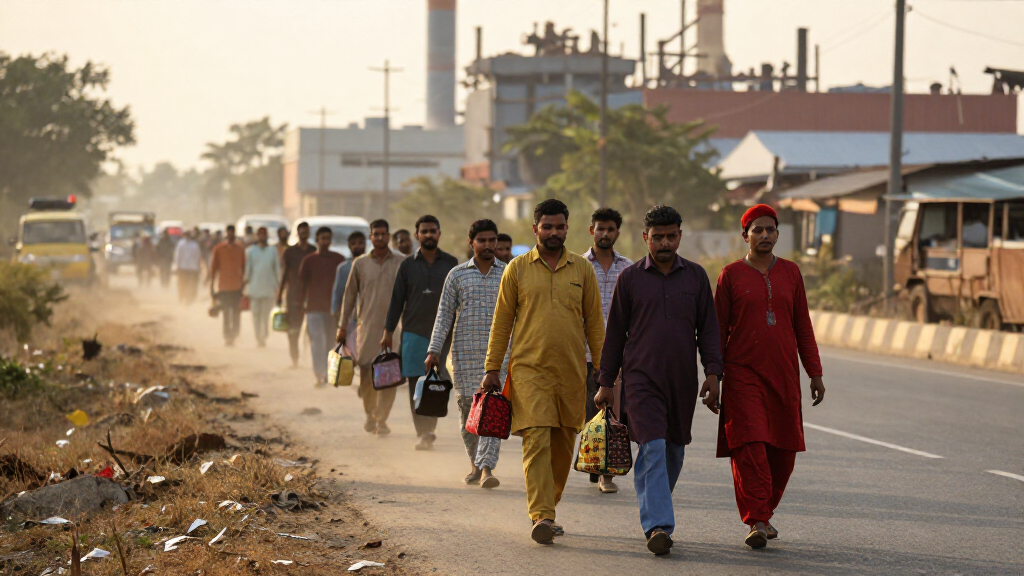
Protests spread the next day across Gazipur, Savar, Ashulia and Mirpur. The Associated Press reported that around 20,000 workers from one factory blocked the Dhaka-Aricha Highway in Savar on November 18. Police used tear gas, stun grenades and batons, AP reported, adding that the number of people injured was not immediately clear. On November 17, police and paramilitary forces were deployed in industrial areas. Reports differed on the number of factories affected: estimates ranged from at least 250 closures in parts of the Dhaka area to about 500 nationwide, while a BGMEA vice-president said production had stopped at nearly 450 factories.
The current monthly minimum wage is 12,500 taka, in force since December 1, 2023. Protesters have called for 30,000 taka, while the workers’ representatives on the board formally proposed 32,000 taka. Those figures are demands, not an agreed wage. Factory owners have not submitted a formal figure; The Financial Express reported that owners had discussed a figure of around 15,000 taka before the postponed meeting. The board chairman has said the new rate is to take effect December 1, with workers receiving it in their January 2027 pay, regardless of the amount.
Pay Dispute Hits Export Factories
The dispute affects workers in one of Bangladesh’s major export industries and raises the prospect of further interruptions to factory output if protests continue. A halt across hundreds of factories can disrupt production schedules, although the reporting available so far does not establish the total financial cost or the duration of any shutdowns.
The wage question also sits between workers’ demands and factory owners’ concerns about operating costs. Owners have argued that a steep increase could weaken Bangladesh’s cost advantage over competitors such as India and Vietnam. They also point to buyer prices and energy costs. These are arguments made by employers; no international buyer had commented on this round of negotiations in the reports reviewed.
Products Worth Considering

LG UltraGear 34G600A-B 34-Inch Curved WQHD Gaming Monitor

LG UltraGear 34-Inch Curved QHD Gaming Monitor, 160Hz, FreeSync Premium

Bose SoundLink Plus Portable Bluetooth Speaker, Black
As an affiliate, we earn on qualifying purchases.
Three Sides of the Wage Squeeze
The wage board was formed to set a new industry minimum, but the November 16 meeting was its third scheduled meeting, not a final decision. The worker-side proposal of 32,000 taka is separate from the 30,000-taka figure voiced by protesters. Both are far above the current legal minimum, and neither has been accepted by employers or the board. The reported 15,000-taka discussion by factory owners is also not a formal offer.
Automation is a longer-running pressure on employment, rather than the immediate cause of the highway protests. A 2024 study of factories around Dhaka found that automated production lines required 30.58 percent fewer workers, most of them helpers. Separately, an International Labour Organization working paper calculated that women’s share of apparel jobs fell from 46.2 percent in 2016–17 to 35.2 percent in 2024, using labour-force survey data. The figures describe changes in staffing and workforce composition; they do not establish that automation alone caused the decline in women’s share.
Authorities have also described a substantial security response. The Daily Star reported that Border Guard Bangladesh deployed 42 platoons across industrial zones in Dhaka, Gazipur and Narayanganj. A Savar police officer said 117 people had been arrested since October 31 and that 11 cases had been filed. The officer alleged that people from various organisations, including banned groups, had joined the movement; the cited report did not provide evidence for that allegation.
“We want to return to our machines.”
— A 28-year-old garment worker, speaking to AFP
Offer, Injuries and Closures Unclear
The board has not announced a wage figure, and employers have not formally submitted an offer. It is not yet clear whether the November 23 meeting will produce an agreement or whether the board will set a rate without consensus. Reports also give different counts of closed or halted factories, reflecting different locations, sources and points in time.
The number of people injured in the November 18 clashes was not immediately clear in AP’s report. Earlier coverage said no deaths had been reported in the accounts reviewed, but that is not confirmation that no one was injured. Police allegations about infiltration of the movement have not been substantiated in the reporting cited here. The full effect of automation on employment, and whether it is connected to the current protests, also remains undetermined.
November 23 Wage Board Meeting
The next scheduled milestone is the wage board meeting on November 23. The board chairman has said the new minimum is to take effect December 1 and appear in January 2027 pay, but the amount and the process for reaching it remain unresolved. Workers, employers and the government may face pressure to narrow the gap before then.
In the meantime, the scale of factory closures, highway blockades and police deployments will shape whether production can resume normally. The available reports do not establish how long the disruptions will last or whether additional talks will take place before the board meets.
Key Questions
What are Bangladesh garment workers demanding?
Protesters have demanded a monthly minimum of 30,000 taka. Workers’ representatives on the wage board formally proposed 32,000 taka. These are separate demands, and neither is an agreed wage.
What is the current garment-sector minimum wage?
The current minimum is 12,500 taka a month. It has been in effect since December 1, 2023.
Why was the November 16 wage meeting postponed?
BGMEA and BKMEA said workers’ representative Anwar Hossain had fallen ill and been admitted to hospital. They said employers were prepared to submit their proposal and asked for the meeting to be rescheduled.
When will the wage board meet again?
The board is scheduled to meet on November 23, 2026. Its chairman has said the new rate is intended to take effect December 1 and be paid with January 2027 wages.
How is automation related to the dispute?
Automation is a longer-term employment concern, not a confirmed trigger for the current protests. A 2024 study of factories around Dhaka found automated lines needed 30.58 percent fewer workers, most of them helpers.
Source: ThorstenMeyerAI.com