

TL;DR
Contrary to popular belief, AI has not caused widespread unemployment. Employment rates remain high, and many companies report no job reductions or even increases, challenging the narrative of AI as a job destroyer.
Despite the widespread belief that artificial intelligence is a major threat to employment, recent data shows that AI has not caused significant job losses in the broader economy. Employment rates remain near historic highs, and surveys indicate that most companies using AI report no reduction in overall staffing. This disconnect between perception and reality raises important questions about the actual impact of AI on the labor market.
Multiple studies and surveys, including recent polling and Census Bureau data, reveal that employment levels have remained resilient despite the rapid adoption of AI technologies. The prime-age employment rate in the United States continues to hover near all-time highs, contradicting the common narrative of AI as a mass job killer.
In addition, a survey by the Census Bureau shows that most companies that have integrated AI report no change in total employment, and some even report increases. Sector-specific data indicates that sectors expected to be most affected, such as software and tech, are experiencing growth in employment, not decline.
Experts point out that AI’s effect on jobs is more complex than simple displacement. Automation can create new roles, improve productivity, and even lead to new tasks for workers, which may offset or surpass job losses. For example, software engineers now spend more time instructing AI and developing new applications rather than coding manually, leading to a rise in related employment.
AI Keeps Stubbornly Refusing To Take Our Jobs
Contrary to popular belief, AI has not caused widespread unemployment. Employment rates remain near historic highs, and most companies adopting AI report no job reductions — or even increases — challenging the narrative of AI as a mass job destroyer.
The Discrepancy Between Perception and Reality
Recent polling and Census Bureau data reveal that employment levels have remained resilient despite rapid AI adoption. This disconnect matters — it shapes policy debates, public opinion, and business strategy.
Employment Stays High
The US prime-age employment rate continues to hover near all-time highs, contradicting the common narrative of AI as a mass job killer.
Firms Report Stability
Census Bureau surveys show most companies that have integrated AI report no change in total employment — and some even report increases.
Tech Is Growing, Not Shrinking
Sectors expected to be most affected, such as software and tech, are experiencing employment growth rather than decline.
Every Wave of Automation Created New Work
From the power loom to the internet, technological innovation displaced some jobs but spawned new roles and industries. Economists call this the “reinstatement effect” — and AI looks no different so far.
Displacement vs. Reinstatement
Acemoglu and Restrepo show automation both displaces workers and creates new tasks requiring human labor — the two effects can offset or outweigh each other.
Coding Shifted, Roles Expanded
Tools like Codex and Claude Code changed how engineers work — but software engineers now spend more time instructing AI and building new applications, driving related employment up.
How the Economy Absorbs AI Without Mass Layoffs
A chain of adjustments explains why job losses haven’t materialized at scale.
AI Automates Tasks
Specific tasks are automated, not whole jobs overnight.
New Tasks Emerge
Instructing, managing, and improving AI systems requires humans.
Productivity Rises
Output per worker grows, expanding business capacity.
Roles Expand
New applications and demand create fresh employment.
Employment Holds
Net effect: stable or rising employment in adopting sectors.
What Observers Are Saying
Commentators and economists note the striking gap between AI fears and labor-market data.
I really wish the rise of LLMs didn’t come along with catastrophic job loss, massive privacy invasions, and maybe also the apocalypse. Because when you put those side effects aside, it is the COOLEST MOST WILD TECHNOLOGY EVER.
The doom of the software developer job has been greatly exaggerated… As a share of the US labor force, it’s near the highest it’s ever been and on a steep uptrend.
Most companies using AI report no change in overall employment, and more report increases than decreases.
The Open Questions Ahead
Current data shows stability — but important uncertainties remain as AI capability advances.
Is AI really not affecting jobs as much as feared?
Current data suggests no widespread job losses — and possible employment growth in some sectors. Long-term impacts remain uncertain and under observation.
Which industries see the most AI-related job growth?
Technology, software development, and AI research are adding jobs as workers shift toward AI development, instruction, and integration roles.
Could AI still cause mass unemployment later?
An open question. Long-term impact depends on technological advances, policy responses, and how businesses and workers adapt.
What role do new tasks play?
Tasks like managing, instructing, and improving AI systems appear to offset displacement effects, supporting continued employment growth.
How should policymakers respond?
Focus on workforce training and education for evolving AI roles, rather than restrictions that could hinder technological progress.
What happens next?
Researchers will keep tracking employment trends; future surveys and labor statistics will show whether resilience persists or new disruptions emerge.
The bottom line: If AI is not the mass job destroyer many believe it to be, policymakers might reconsider strict regulations aimed solely at limiting AI development — and businesses can focus on how AI complements workers rather than only replacing them.
Implications of the Discrepancy Between Perception and Reality
This disconnect matters because it influences policy debates, public opinion, and business strategies. If AI is not the mass job destroyer many believe it to be, policymakers might reconsider strict regulations aimed solely at limiting AI development. It also challenges the narrative that technological progress inevitably leads to widespread unemployment, highlighting the importance of understanding how AI can complement and create jobs instead of only replacing them.
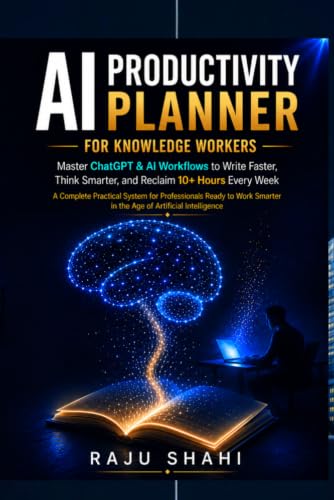
AI PRODUCTIVITY PLANNER FOR KNOWLEDGE WORKERS: Master ChatGPT & AI Workflows to Write Faster, Think Smarter, and Reclaim 10+ Hours Every Week
As an affiliate, we earn on qualifying purchases.
As an affiliate, we earn on qualifying purchases.
Historical and Recent Trends in AI and Employment
Historically, technological innovations like the power loom and the internet have displaced some jobs but also created new roles and industries. Economists like Acemoglu and Restrepo have shown that automation can have both displacement and reinstatement effects—where new tasks emerge that require human labor. Recent AI developments, such as Codex and Claude Code, have shifted coding tasks but also expanded roles for software engineers and AI specialists.
Despite fears, data from surveys and government reports since 2023 indicate that overall employment has remained stable or increased in sectors adopting AI, suggesting that the economy is adjusting in ways that mitigate job losses.
“I really wish the rise of LLMs didn’t come along with catastrophic job loss, massive privacy invasions, and maybe also the apocalypse. Because when you put those side effects aside, it is the COOLEST MOST WILD TECHNOLOGY EVER.”
— Tim Urban, @waitbutwhy
As an affiliate, we earn on qualifying purchases.
Unresolved Questions About AI’s Long-Term Impact
While current data shows stability, it remains unclear whether this trend will continue as AI technology advances further. Long-term effects, especially in less-studied sectors or smaller firms, are still uncertain. Additionally, the potential for AI to eventually replace more complex tasks or to cause disruption in specific industries has not been fully assessed.
automation software for businesses
As an affiliate, we earn on qualifying purchases.
As an affiliate, we earn on qualifying purchases.
Monitoring AI’s Impact Through Future Data and Policies
Researchers and policymakers will continue to track employment trends as AI evolves. Future surveys and labor statistics will clarify whether the current resilience persists or if new disruptions emerge. Additionally, discussions around regulation and workforce adaptation are likely to intensify to ensure that AI complements rather than harms employment.
AI training courses for professionals
As an affiliate, we earn on qualifying purchases.
As an affiliate, we earn on qualifying purchases.
Key Questions
Is AI really not affecting jobs as much as feared?
Current data suggests that AI has not caused widespread job losses and may even be associated with employment growth in some sectors. However, long-term impacts remain uncertain and are subject to ongoing observation.
Technology, software development, and AI-related research are experiencing employment increases, as workers shift toward roles involving AI development, instruction, and integration.
Could AI eventually lead to mass unemployment in the future?
This remains an open question. While current trends show resilience, the long-term impact depends on technological advances, policy responses, and how businesses and workers adapt.
What role do new tasks play in counteracting job displacement?
New tasks created by AI—such as managing, instructing, and improving AI systems—appear to offset some displacement effects, supporting continued employment growth in certain fields.
How should policymakers respond to these findings?
Policymakers might consider focusing on workforce training and education to prepare for evolving AI roles, rather than imposing restrictions that could hinder technological progress.
Source: rss