
TL;DR
Ring announced two mobile security devices on November 10, 2026: an indoor drone for homes and a wheeled patrol robot for businesses. Ring says both can respond to alerts from other Ring devices; the drone’s sale depends on FCC authorization, and scheduled patrols require a compatible Ring Protect plan.
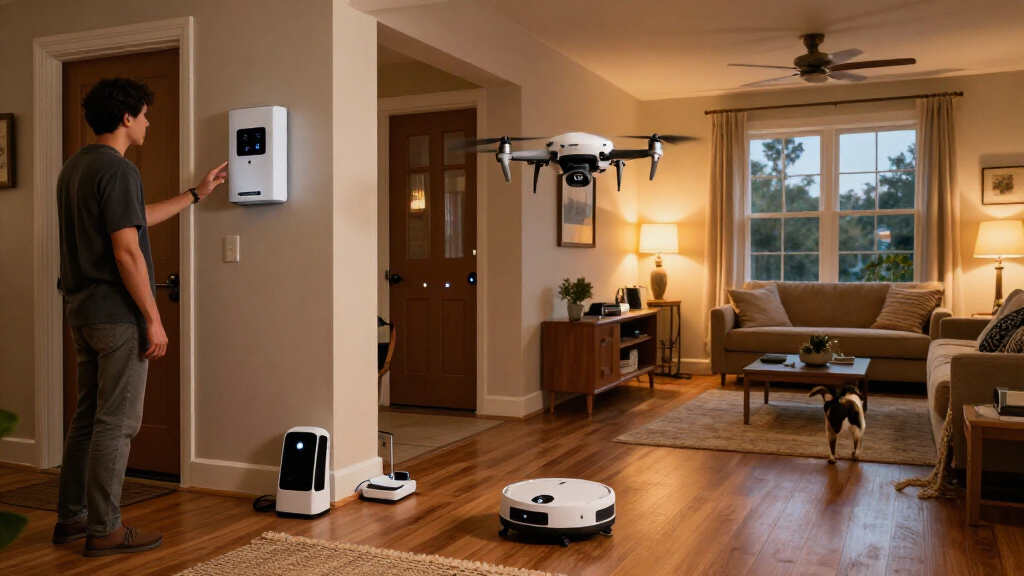
Amazon’s Ring announced two mobile security devices on November 10: Drone Cam, a camera that flies inside homes, and Rover Cam, a wheeled robot for business patrols. Ring says both can investigate alerts from other Ring devices, extending its security system beyond cameras fixed in place; Drone Cam’s U.S. sale is pending Federal Communications Commission authorization.

Get business pricing on tech for your team
- Business-only prices and quantity discounts
- Tax-exempt purchasing
- Multiple users, one account, clear invoices
Ring lists Rover Cam at $999.99, with U.S. shipping starting December 16, 2026. Drone Cam is listed at $249.99, with shipping scheduled to begin January 27, 2027. Ring says scheduled patrols for both products require a compatible Ring Protect plan. The announcement does not specify the plan’s price or which tiers qualify.
Ring says the devices use a system called AI Pilot to map spaces, suggest patrol points and avoid obstacles. When a Ring camera, sensor or alarm is triggered, either device can go to investigate, according to the company. Ring describes AI Pilot as using device cameras, vision models, sensors and cloud processing.
Drone Cam flies scheduled routes or can be sent on demand, Ring says. Its listed specifications include 2K video, a 148-degree field of view, 360-degree rotation and two lights. Ring says the camera is off while the drone is docked. The company’s announcement says it has not been authorized as required under FCC rules and may not be sold until authorization is granted.
Rover Cam is intended for businesses. Ring says it can patrol on a schedule, travel to a patrol point after an alert and scan 360 degrees when it arrives. Its adjustable mast raises a camera above counters or shelves; the device also has a siren, light tower and two-way audio. Ring says Rover records in up to 4K while moving or patrolling, and can begin recording when it detects motion even while docked.

Mobile Cameras Expand Ring’s Reach
Both products shift security monitoring from fixed viewpoints to devices that move toward an alert. That could let a household or business check spaces beyond a camera’s fixed field of view, while giving operators another way to investigate activity without going to the location themselves. Ring presents this as an extension of its existing cameras, sensors and alarms.
The trade-offs will matter to buyers. Drone Cam depends on a connection to the internet, according to The Verge’s reporting from the announcement; the outlet reported that without Wi-Fi it can only land. The Verge also reported that the drone’s flight lasts an estimated five to eight minutes per charge, citing Ring, and that Rover is designed for one floor. These limits shape how much of a space the devices can cover and how reliably they can respond.
Privacy is another central consideration because mobile cameras can capture more than a fixed camera aimed at a particular area. Ring says its devices have recording indicators and privacy controls. Those company assurances arrive amid scrutiny of Ring’s handling of customer video and disagreement over the strength of its encryption, so buyers may want to compare the stated controls with their own privacy needs.
Products Worth Considering

Apple Watch Series 12 GPS 42mm Smartwatch

Bose QuietComfort Wireless Over-Ear Noise-Cancelling Headphones, Sandstone

Apple AirPods Pro 3 Wireless Earbuds with Active Noise Cancellation
As an affiliate, we earn on qualifying purchases.
From Astro to Ring Robotics
Ring’s announcement follows years of work on a moving home camera. CNBC reported that Ring first previewed an indoor drone, then called Always Home Cam, in 2020. The Verge reported that founder Jamie Siminoff said development began in 2016. The new Drone Cam is the announced product’s current form, though the company has not yet given it a confirmed retail date independent of FCC authorization.
Rover Cam draws on Amazon’s earlier work with Astro, according to Ring, which says business customers valued Astro’s roving security features. The Verge reported that Amazon launched Astro for Business in 2023 and discontinued the service a year later. Ring’s announcement positions Rover as a purpose-built security robot, but the company has not provided independent operating results or evidence of demand.
Ring says privacy features include a docked state with Drone Cam’s camera off, and a Rover Sleep Mode that retracts its periscope and turns off its microphone. Both devices have visible recording indicators, according to the company. Ring also says video is protected by Throw Away the Key encryption (TAKE). Ring announced TAKE in August 2026 and says its servers temporarily access keys for cloud features before deleting them. The company describes full end-to-end encryption as an optional setting.
“For years, customers told us they wanted eyes in the places a fixed camera couldn’t reach, and peace of mind in the spots they’d never want one.”
— Jamie Siminoff, Ring founder and chief inventor, in Ring’s announcement
Approval, Plans and Performance
FCC authorization is the immediate outstanding condition for Drone Cam sales. Ring says the product may not be sold until it receives the authorization required by FCC rules, but its announcement does not say when that decision may come.
Ring has not detailed which Protect plan tiers support scheduled patrols, the associated subscription costs, or whether other features require a paid plan. Its announcement also does not establish how the devices perform across different home or business layouts. The Verge reported estimates of about 30 minutes of battery life and roughly 5,000 square feet of coverage for Rover; those are outlet-reported figures, not specifications stated in Ring’s announcement.
The privacy debate also remains open. Ring describes TAKE as its strongest default encryption, while the EFF has criticized it compared with end-to-end encryption. Ring’s announcement does not resolve that disagreement or independently verify how its controls perform in use. In 2023, the Federal Trade Commission charged Ring with allowing employees and contractors broad access to customers’ private videos; that was an agency charge, not a finding described in the supplied material as a final ruling.
Sales Dates and FCC Decision
The next listed milestone is Rover Cam’s U.S. shipping date of December 16, 2026. Ring lists Drone Cam for January 27, 2027, but sales depend on FCC authorization. The company has not announced an updated schedule in the supplied material if approval takes longer than expected.
Before purchase, business customers and households will need details on eligible Ring Protect plans, ongoing costs and device availability. Reviews and customer use may also clarify how well AI Pilot handles real spaces, how long Rover operates between charges and how the privacy controls work in everyday use. Those points remain unsettled by the launch announcement.
Key Questions
What are Ring Drone Cam and Rover Cam?
Drone Cam is a flying indoor security camera for homes. Rover Cam is a wheeled patrol robot Ring is marketing to businesses.
How much do the devices cost, and when will they ship?
Ring lists Rover Cam at $999.99, with U.S. shipping from December 16, 2026. Drone Cam is listed at $249.99, with U.S. shipping from January 27, 2027, subject to FCC authorization.
Do the devices require a subscription?
Ring says scheduled patrols require a compatible Ring Protect plan. The announcement does not specify which plans qualify or their prices.
Can Drone Cam operate without Wi-Fi?
The Verge reported that Drone Cam depends on an internet connection and can only land without Wi-Fi. Ring’s announcement describes cloud processing as part of AI Pilot.
What privacy controls does Ring say are included?
Ring says Drone Cam’s camera is off while docked, Rover has a Sleep Mode that retracts its camera mast and turns off its microphone, and both devices show recording indicators. Ring also says video uses TAKE encryption; the EFF has criticized how that compares with end-to-end encryption.
Source: Thorsten Meyer AI