TL;DR
Apple’s August 25 announcement positioned the Mac mini as a desktop for always-on agentic computing, following Tim Cook’s April comments about demand for AI tools. Published specifications and model-maker memory estimates suggest that some open models can run locally, but system use, context length and model size constrain what fits.
Apple’s August 25 announcement presented the Mac mini as a desktop for always-on agentic computing, putting local artificial intelligence among the computer’s headline uses. Published memory figures indicate that some open models can fit on the machine, but the available memory, model size and extra demands from macOS and long conversations limit what users can run.

Get business pricing on tech for your team
- Business-only prices and quantity discounts
- Tax-exempt purchasing
- Multiple users, one account, clear invoices
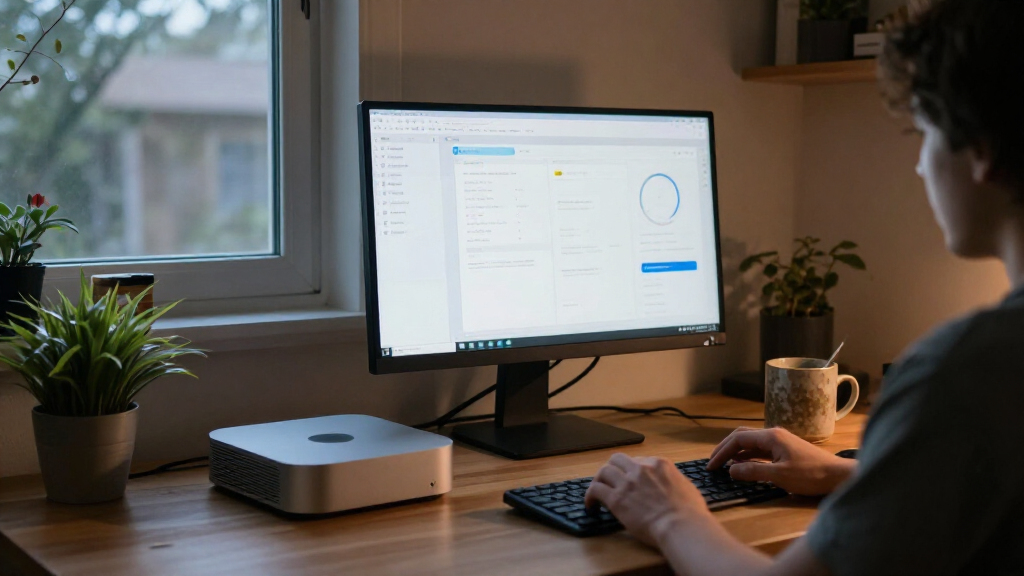
Apple’s press release called the Mac mini “the leading desktop for always-on agentic computing.” The source reports that, on an April 30 earnings call, chief executive Tim Cook said demand for the Mac mini and Mac Studio as platforms for AI and agentic tools was arriving faster than Apple had predicted. Those remarks point to customer interest, but do not quantify sales or establish how many buyers use either computer for local AI.
The source lists two chip options and memory configurations. The M6 Mac mini is available with 16 to 32 GB of unified memory; the M5 Pro version ranges from 24 to 64 GB, configurations considered in these local AI mini PC options. Apple’s silicon architecture lets the CPU and GPU use the same memory pool, according to Apple’s MLX documentation. That pool also serves the operating system and other apps, so its full capacity is not available to a model.
Model makers’ published estimates offer a rough guide. Google lists 17.5 GB to load Gemma 4 31B at 4-bit precision and 34.9 GB at 8-bit; these figures cover the model weights. OpenAI says gpt-oss-20b runs “within 16GB of memory.” By contrast, OpenAI sizes gpt-oss-120b for a single 80 GB GPU, more memory than the source’s listed 64 GB Mac mini maximum. These estimates do not by themselves establish a particular computer’s speed or performance.

Memory Sets the Local AI Limit
The main practical question for a buyer is whether a chosen model fits alongside the rest of the computer’s workload. Weights are only part of the memory demand: Google’s Gemma guidance says larger context windows require additional memory. Feeding long documents or maintaining a long conversation can therefore make a model that fits on paper harder to run in practice.
Memory bandwidth also affects how quickly data can move while a model works. The source lists 307 GB/s for the M5 Pro and compares it with 3.35 TB/s for Nvidia’s H100 data-center GPU. Those are published bandwidth figures for different systems; they do not establish a direct comparison of application performance. The source’s point is that a desktop with ample memory can still have speed trade-offs against data-center hardware.
Local operation may appeal to people seeking offline access, more control over where prompts and files are processed, or a setup without per-token charges. Those are potential benefits, not guarantees for every model or application. Users should check whether the software they want supports local operation and what data it sends elsewhere. The source also reports a 4-watt idle figure while an agent waits for work, but gives no measurement method or operating conditions.
Products Worth Considering

Bose QuietComfort Headphones (2nd Gen), Wireless Over-Ear Noise-Cancelling Headphones, Black

Bose QuietComfort Headphones, White Smoke

Bose QuietComfort Wireless Noise-Cancelling Headphones, Petal Pink
As an affiliate, we earn on qualifying purchases.
Apple’s Shift Toward Agentic Computing
The announcement follows a reported comment from Cook on April 30 about faster-than-predicted customer recognition of the Mac mini and Mac Studio as platforms for AI and agentic tools. Apple’s later press release made that use explicit in its description of the new Mac mini. The source does not provide the full earnings-call transcript or sales figures, so the remarks are evidence of Apple’s stated view of demand, not a measure of adoption.
Apple’s U.S. prices, as listed in the source on November 16, start at $899 for a 16 GB M6 model. It lists a 64 GB M5 Pro configuration with 1 TB of storage at $3,199. These are source-dated prices and configurations; they may change. Memory is selected when ordering, so buyers cannot assume they can add more later.
The supplied material frames local AI as a new use for a compact desktop and supports that framing with Apple’s marketing and model-maker memory estimates. It does not include independent testing of the listed Mac mini configurations, measured response times, or a comparison of output quality across local and hosted models.
Performance Depends on the Workload
The supplied material does not report independent tests showing how quickly the listed Gemma or gpt-oss models run on each Mac mini configuration, or how output quality changes at different precision levels. Memory estimates describe whether weights can be loaded, not the complete experience of using a model. Actual needs may vary with software, context length and other apps running at the same time.
It is also unclear how many customers are using Mac mini computers for local AI, what tasks they run, and whether the reported demand has translated into sustained sales. The source’s account of idle power provides no testing conditions. Its final discussion of which models fit is cut off, so no further configuration recommendations can be established from the supplied material.
Check Tests and Current Configurations
For now, buyers can compare Apple’s current memory options with the model makers’ published estimates, while leaving room for macOS, apps and context. Before choosing a configuration, they can check whether their intended model and local AI software support the Mac and the desired precision. Those checks can narrow the options, but the figures alone cannot predict speed.
More concrete evidence would come from independent tests of named Mac mini configurations running specific models and workloads, including long-context use and power measurements under stated conditions. Future sales or usage figures could also clarify the scale of customer adoption. The supplied source does not identify a date for such tests, figures or another Apple announcement.
Key Questions
What did Apple announce about the Mac mini?
Apple’s August 25 press release called it “the leading desktop for always-on agentic computing,” according to the supplied source.
Can a Mac mini run AI models locally?
Published estimates indicate some models can fit in available memory. For example, OpenAI says gpt-oss-20b runs “within 16GB of memory.” Whether a model is practical for a particular use also depends on system memory use, context length, software support and speed.
Why does unified memory matter?
Apple’s CPU and GPU share a memory pool, according to its MLX documentation. That pool can hold model weights, but macOS and apps use it too, and context adds further demands.
Will the largest models fit on the 64 GB Mac mini?
Not every model will. The source says OpenAI sizes gpt-oss-120b for a single 80 GB GPU, while the largest listed Mac mini has 64 GB. The supplied figures do not establish whether any alternative setup could run that model on a Mac mini.
Source: Thorsten Meyer AI