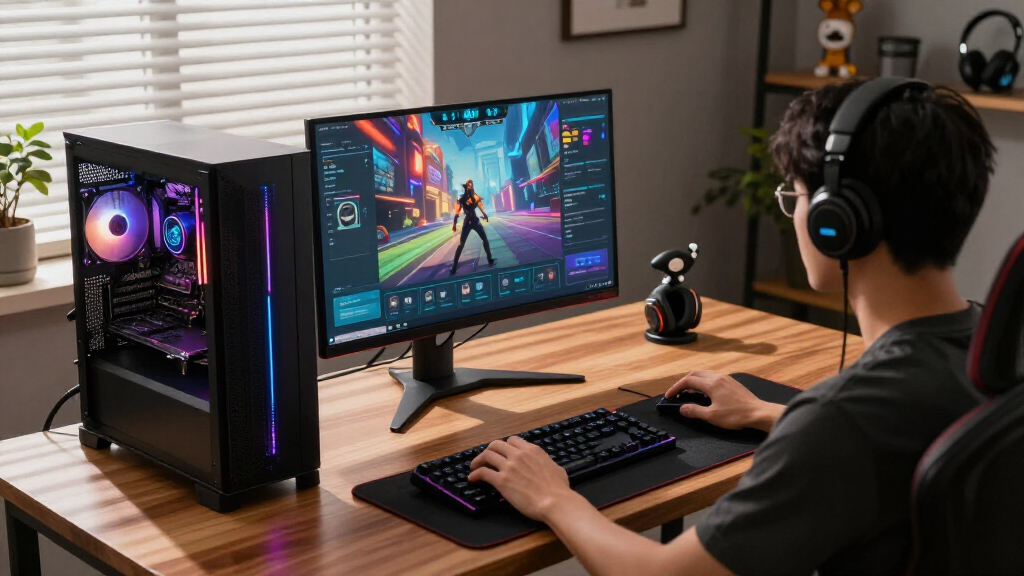

🔍 Read the full analysis: Gaming In 2026: The Best Motherboards Featuring AI Technology on ThorstenMeyerAI.com
TL;DR
In 2026, the leading gaming motherboards integrate AI-powered features for enhanced performance and stability. MSI, ASUS, and other brands offer models with WiFi 7, USB4, and advanced VRMs, catering to diverse gamer needs.
In 2026, gaming motherboard manufacturers have introduced models featuring AI technology that promises to optimize system performance, stability, and user experience. These developments are shaping the future of gaming PCs, with new features like AI-driven overclocking, adaptive cooling, and intelligent resource management becoming standard in high-end and mainstream boards.
Leading brands such as MSI, ASUS, and others have launched new gaming motherboards that incorporate AI-powered features (see the original analysis). The MSI MPG X870E Carbon WiFi, for example, combines premium power delivery, WiFi 7, and advanced expansion options, making it a top choice for gamers seeking high performance without excessive costs. For more on top gaming motherboards, see this guide. Similarly, ASUS’s TUF Gaming B850-PLUS WiFi offers a compelling value proposition on the AM5 platform, emphasizing connectivity and upgradeability.
These boards also include AI-enhanced features like automatic overclocking, thermal management, and system tuning, which are designed to improve gaming performance and stability. The integration of AI technology into BIOS and firmware updates allows systems to adapt dynamically to workload demands, reducing latency and power consumption while maintaining smooth gameplay.
Platform choice remains critical; the shift toward AM5 and X870E chipset boards reflects the industry’s focus on future-proofing. The new motherboards support DDR5-6000 memory, PCIe 5.0, and USB4, aligning with the latest standards for gaming peripherals and storage. Notably, models like the MSI MPG Carbon offer comparable features to more expensive options like ASUS ROG, but at a lower cost, emphasizing value. Learn more about the best options in this detailed review.
Why AI-Enhanced Motherboards Matter for Gamers
The integration of AI technology into gaming motherboards in 2026 signifies a shift toward smarter, more adaptable PC builds. These features enable gamers to achieve higher stable overclocks, better thermal management, and reduced latency without manual tuning. This evolution simplifies system optimization and extends the upgrade lifespan, making high-performance gaming more accessible and reliable.
For gamers, this means less time troubleshooting and more focus on gameplay. It also positions AI as a key differentiator in motherboard design, influencing future hardware development and the overall gaming experience. As AI continues to mature, its role in enhancing system efficiency and user customization will likely expand further, impacting how gaming PCs are built and maintained.
As an affiliate, we earn on qualifying purchases.
Evolution of Gaming Motherboards and AI Integration
Over the past few years, motherboard technology has increasingly incorporated AI features, initially in high-end models and now becoming commonplace. In 2024, AI-assisted overclocking and thermal management started gaining popularity, driven by improvements in firmware and machine learning algorithms. By 2026, these features are standard, with manufacturers emphasizing AI-driven automation for both performance tuning and system stability.
Platform choices like AM5 and X870E have become dominant, offering support for DDR5 memory, PCIe 5.0, and WiFi 7. The focus on future-proofing reflects the industry’s anticipation of rapid hardware advancements, ensuring gamers can upgrade components without replacing their entire system. This ongoing evolution underscores the importance of AI integration as a core feature in next-generation gaming motherboards.
motherboard with PCIe 5.0 and DDR5 RAM support
As an affiliate, we earn on qualifying purchases.
As an affiliate, we earn on qualifying purchases.
Unconfirmed Aspects of AI Integration in Gaming Motherboards
While AI features are increasingly common, the extent of their impact on actual gaming performance remains under evaluation. It is unclear how much AI-driven optimization will outperform traditional manual tuning in real-world scenarios, and whether these features will be universally available across all motherboard tiers.
Additionally, the long-term stability and firmware support for AI functions are still developing, with some experts questioning whether AI algorithms will require frequent updates to maintain effectiveness. The full scope of AI’s influence on system longevity and user experience in gaming PCs is still being studied.
gaming motherboard with AI overclocking
As an affiliate, we earn on qualifying purchases.
As an affiliate, we earn on qualifying purchases.
Upcoming Developments in AI-Enabled Gaming Motherboards
Manufacturers are expected to release firmware updates that expand AI capabilities, including more refined overclocking, adaptive cooling, and resource allocation. Future models will likely feature even deeper integration of AI, with some systems potentially offering real-time game performance tuning based on game type and user preferences.
Industry analysts anticipate that AI features will become standard across all price points within the next two years, with software updates further enhancing capabilities. The next milestone will be widespread adoption and validation of AI’s benefits through independent testing and gamer feedback.
future-proof gaming motherboard ASUS MSI
As an affiliate, we earn on qualifying purchases.
As an affiliate, we earn on qualifying purchases.
Key Questions
How do AI features improve gaming performance?
AI features optimize system settings, manage thermal performance, and dynamically allocate resources, leading to smoother gameplay, higher stability, and potentially better overclocking results without manual intervention.
Are AI-enabled motherboards more expensive?
While some high-end models incorporate more advanced AI features, many AI-enabled motherboards are competitively priced, with mid-range options offering substantial benefits at lower costs.
Will AI features require frequent updates?
Yes, AI algorithms may need firmware updates to improve accuracy and compatibility, but manufacturers are working to make these updates seamless and user-friendly.
Is AI technology in motherboards necessary for gaming?
AI features are designed to enhance system stability and performance but are not strictly necessary. Gamers can still achieve excellent results with traditional tuning and hardware configurations.
Source: ThorstenMeyerAI.com