
📊 Full opportunity report: Capital: The Lever Beneath the Levers on ThorstenMeyerAI.com — validation score, market gap, and execution plan.
TL;DR
In 2026, major AI companies are converting private investments into public offerings, revealing a circular flow of capital that fuels AI growth but also introduces financial fragility. This dynamic impacts the broader economy and market stability.
On June 12, SpaceX, which now includes xAI, listed on the Nasdaq with a valuation near $1.77 trillion, briefly surpassing $2 trillion in early trading. This move, along with filings from Anthropic and OpenAI, marks a significant development in AI funding, as private investments are converted into public risk at a large scale.
In 2026, the three most valuable private AI companies—SpaceX/xAI, Anthropic, and OpenAI—are preparing for or have initiated public listings, collectively representing around $4 trillion in private valuation. These IPOs reflect a transfer of risk from early investors to the public market, with oversubscription and high retail share allocations indicating strong demand.
This capital movement is part of a financial cycle where major tech firms reinvest in AI infrastructure through internal demand, creating a feedback loop that sustains growth. Notably, Microsoft, Amazon, and Google allocate funds to Nvidia, which supplies hardware, and also invest in AI startups through internal credits and direct funding. This interconnected system creates a self-reinforcing cycle that may increase systemic vulnerabilities.
However, this cycle also presents potential risks: demand may be overestimated, and investments in capacity could be mispriced, making the system susceptible to shocks. For example, Microsoft has recently scaled back its compute commitments, indicating caution amid uncertain demand. The broader economic implications are notable, as AI infrastructure spending is heavily financed through debt, with estimates of $3 trillion in global data-center investments between 2025 and 2028, primarily funded by private credit.
Capital: The Lever Beneath the Levers
Every chokepoint costs money — so whoever can fund the buildout decides who builds at all. In 2026 the bill came due in public: a trillion-dollar IPO wave, financed by a circle of firms paying each other, now sold to everyone else.
The meta-chokepoint: it gates the other five, because you can’t build any of them without clearing the capital bar. A synchronized machine has no natural brake — no one can slow first — and the IPO wave moves the risk to the public as insiders take gains. The hedge is solvency that doesn’t depend on the music playing: sane burn, own what’s cheap, self-host where you can.
Implications of Capital Cycles for AI Market Stability
This situation highlights potential systemic risks in the AI sector, as high valuations, significant debt, and interconnected demand create a fragile financial environment. If demand decreases or key players reduce investments, there could be broader economic impacts, especially considering the increasing market share of AI-related stocks. The transition of private risk into public markets at high valuations raises concerns about potential overpricing and future corrections, which could have ripple effects across financial systems.

AI Data Center Infrastructure Engineering: Power Distribution, Liquid Cooling, High-Density Networking, and Energy Efficiency for GPU Training … Hardware & Compiler Engineering Series)
As an affiliate, we earn on qualifying purchases.
As an affiliate, we earn on qualifying purchases.
2026: A Year of Historic AI Funding Milestones
Prior to 2026, AI funding was largely private, driven by early investments and venture capital. The year 2026 marks a shift as these private investments are transitioned into public offerings, with valuations reaching into the trillions of dollars. This cycle is supported by a network of technology companies and hardware providers, creating a demand loop. Nonetheless, this cycle also exposes vulnerabilities, especially as demand signals are primarily internally generated rather than from independent customers, increasing the potential for mispricing and systemic shocks.
“Current market conditions show high liquidity and optimism, but these factors also warrant careful monitoring for potential risks.”
— Goldman Sachs CEO
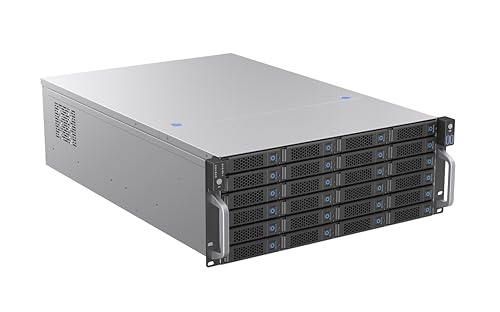
Rosewill 4U Rackmount Server Chassis | Supports up to 24 3.5" 12Gbps Hot Swap SATA/SAS | E-ATX & SSI-EEB Compatible | 3X 120x38mm PWM Fan | RSV-H424
24-Bay 12Gbps Storage Powerhouse in 4U: Maximize your rack space efficiency with a petabyte-scale storage server. This chassis…
As an affiliate, we earn on qualifying purchases.
As an affiliate, we earn on qualifying purchases.
Unclear Risks of Market Overvaluation and Demand Collapse
The sustainability of this funding cycle remains uncertain, especially if demand does not meet expectations or if a major participant withdraws. The extent of overvaluation and the timing of potential corrections are not yet clear. Additionally, macroeconomic factors such as interest rate changes or economic downturns could influence this fragile cycle, but their impacts are not fully understood.

Opengear OM2248-10G Infrastructure Management Equipment
Autosensing is very impressive
As an affiliate, we earn on qualifying purchases.
As an affiliate, we earn on qualifying purchases.
Next Steps in Monitoring AI Funding and Market Stability
Stakeholders will monitor upcoming financial disclosures, IPO performances, and macroeconomic indicators for signs of stress. A slowdown in investments by major technology firms or a decline in demand for AI infrastructure could prompt reassessment of valuations and risk levels. Transparency from companies and prudent policy measures will be important in managing potential systemic vulnerabilities.

Modern Computer Architecture and Organization: A systems-level guide to modern computer architectures, from hardware foundations to AI datacenters
As an affiliate, we earn on qualifying purchases.
As an affiliate, we earn on qualifying purchases.
Key Questions
Why is capital so central to AI development?
Capital supports the development of infrastructure, hardware, and research necessary for AI progress. It also influences control over the buildout, making it a key factor in the ecosystem.
What are the risks of this funding cycle?
The primary risks include potential overvaluation, overestimation of demand, and systemic fragility if key investors reduce their commitments or demand declines unexpectedly.
How does the circular flow of money affect the market?
This cycle can create a self-reinforcing demand loop that may inflate valuations but also increase vulnerability to shocks if assumptions about demand or capacity prove inaccurate.
What could trigger a market correction?
A sudden decrease in demand, a significant pullback by major investors, or macroeconomic shocks could lead to valuation adjustments and increased market volatility.
Who are the main players controlling this capital flow?
Major technology companies such as Microsoft, Amazon, and Google, along with hardware providers like Nvidia, are key participants influencing the flow of capital in AI infrastructure development.
Source: ThorstenMeyerAI.com