TL;DR
A July 1, 2026 ISR Briefing analysis cast Ukraine’s Delta as a leading example of software-defined warfare: a cloud-backed, browser-based system that fuses battlefield data into one map. Confirmed details include Delta’s role as a Ukrainian situational-awareness and battlefield-management platform; claims such as “1,500 targets/day” remain Ukrainian Defense Ministry assertions that have not been independently verified.
A July 1, 2026 ISR Briefing report framed Ukraine’s Delta as one of the clearest examples of software-defined warfare, saying the browser-based battlefield system shows how cloud-hosted data fusion can move a shared operating picture from headquarters to frontline phones and laptops.
Delta is a Ukrainian situational-awareness and battlefield-management system that fuses inputs from drones, satellite imagery, sensor networks, vetted reports and partner intelligence into a geolocated real-time map. Public summaries say the system has involved Aerorozvidka, Ukraine’s Defense Ministry innovation apparatus and the Ministry of Digital Transformation.
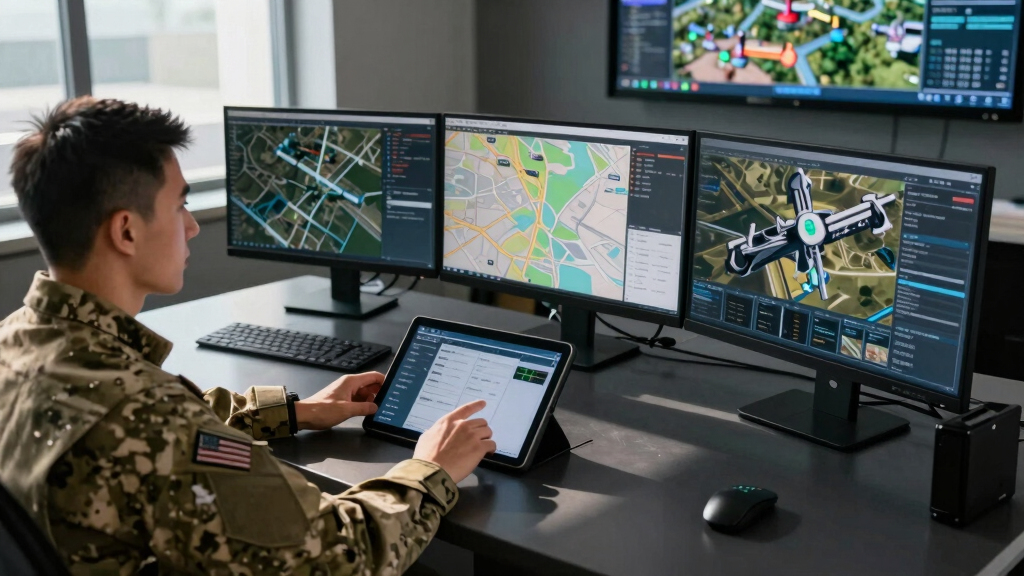
The briefing’s central point is that Delta’s power comes less from any single sensor than from the fusion layer: the software that turns scattered feeds into one usable picture. The system’s cloud-native backend and browser client mean users can access it through ordinary phones, tablets and laptops rather than dedicated military terminals.
Some claims remain attributed rather than independently established. The Ukrainian Defense Ministry has credited Delta with helping identify 1,500 Russian targets per day during the defense against Russia’s Kyiv convoy, but the briefing says that figure is not independently verified. The risk side is also documented: BleepingComputer, citing CERT-UA, reported in December 2022 that Delta users were targeted by phishing and information-stealing malware.
Software-defined warfare: how Ukraine’s Delta turned the battlefield into a shared, real-time map
A soldier opens a browser and sees the fused war — drones, satellites, sensors and vetted reports on one live map. The backend is a cloud deliberately hosted abroad so a missile can’t take it down. The clearest case yet of treating warfare as software.
Optical sensors go blind in cloud & dark; an all-weather SAR radar layer — the kind VigilSAR produces — slots into a picture like this as one resilient, sovereign input. vigilsar.com · And note the paradox: to survive missiles & cyberattack, Ukraine hosted its crown-jewel cloud outside its own borders — trading physical sovereignty for operational survivability. Resilience through distribution.
Delta’s lasting lesson isn’t a piece of software — it’s a model of how to build: commodity clients, cloud backend, open standards, relentless iteration, fusion over hardware, and resilience through distribution. It’s why a wartime NGO out-shipped procurement bureaucracies on a fraction of the budget. The platform mattered less than the picture — and the picture is software. Own the fusion layer, own the sovereign feeds into it, and get it to the edge.
Fusion Outpaces Bespoke Hardware
The report matters because it points to a shift in military advantage from expensive bespoke platforms toward fast software iteration, open standards and the ability to push reliable data to the edge. For allies watching Ukraine, Delta suggests that command-and-control reach can come from commodity devices when the backend is resilient and the data pipeline is trusted.
The briefing also highlights a sovereignty trade-off. Hosting parts of a military cloud outside national territory can reduce exposure to missile strikes and local infrastructure attacks, but it also raises hard questions about control, dependency and cyber defense. That tension is now part of how modern militaries think about wartime digital infrastructure.
browser-based battlefield management software
As an affiliate, we earn on qualifying purchases.
As an affiliate, we earn on qualifying purchases.
From NATO Trials To War
Delta traces back to a 2017 NATO-linked effort to move Ukrainian forces away from Soviet-style information silos and toward shared battlefield data. Public accounts say the system became broadly operational in August 2022, after Russia’s full-scale invasion forced rapid experimentation across drones, sensors, communications and command systems.
Ukraine’s government approved full deployment of Delta to the Armed Forces in February 2023 and allowed cloud components to be hosted abroad to improve survivability. The July 2026 briefing connects that design to the broader idea of software-defined warfare, where the decisive layer is often the software that collects, verifies and distributes data.
“The scarce resource was never the sensor.”
— Thorsten Meyer AI ISR Briefing
real-time geolocation mapping device
As an affiliate, we earn on qualifying purchases.
As an affiliate, we earn on qualifying purchases.
Open Claims And System Risks
Several details remain unclear. The 1,500 targets per day figure is attributed to Ukraine’s Defense Ministry and has not been independently confirmed. The precise way Delta integrates allied intelligence, drone feeds and sensor networks is also not public, likely because of operational security.
The briefing flags other unresolved risks: connectivity loss under jamming, possible data poisoning in crowdsourced inputs, phishing against users and the danger that faster decision cycles could add escalatory pressure. Those are hazards of the model, not proof that Delta has failed.

Next Level Cybersecurity: Detect the Signals, Stop the Hack
As an affiliate, we earn on qualifying purchases.
As an affiliate, we earn on qualifying purchases.
Allies Study The Delta Model
The next phase is likely to be military adoption and testing outside Ukraine, as NATO members and partners study whether Delta’s pattern can be adapted to their own forces. The main work will be less glamorous than new hardware: identity protection, data validation, resilient communications and open integration standards.
For Ukraine, Delta’s future will depend on whether it can keep improving under pressure from cyberattacks, jamming and battlefield losses. For readers, the key point is that battlefield software is no longer a support layer; it is becoming a central part of how wars are coordinated.

Universal Drone Airdrop System, Universally Drone Drop Release Device
- Universal Compatibility: Works with most RC drones over 100g
- Complete Delivery Kit: Includes device, manual, remote, cable, tape, lines
- Long-Distance Control: Operates up to 100m remotely with 750g capacity
As an affiliate, we earn on qualifying purchases.
As an affiliate, we earn on qualifying purchases.
Key Questions
What is Ukraine’s Delta system?
Delta is a Ukrainian battlefield-management and situational-awareness system that combines drone feeds, satellite imagery, sensors and reports into a shared digital map.
Was Delta newly launched in July 2026?
No. The July 1, 2026 development was a new briefing about Delta’s lessons. The system itself has been broadly operational since 2022 and received full deployment approval in 2023.
Why is Delta linked to software-defined warfare?
The label fits because Delta’s value comes from software, data fusion and rapid updates, not from a single weapons platform. Its browser-based client lets ordinary devices access a live operating picture.
Is the 1,500 targets per day claim confirmed?
No independent public evidence confirms it. The 1,500-per-day figure is a Ukrainian Defense Ministry claim, and the briefing treats it as unverified.
What are the main risks for systems like Delta?
The main risks are phishing and malware, degraded access during jamming or outages, false data entering the system and dependence on secure cloud infrastructure.
Source: Thorsten Meyer AI