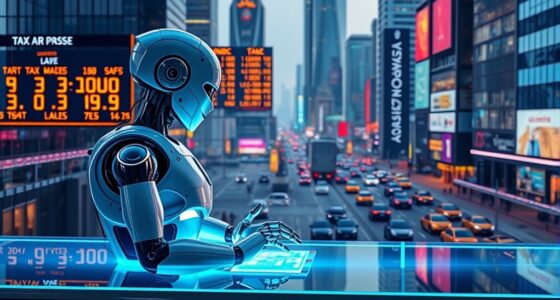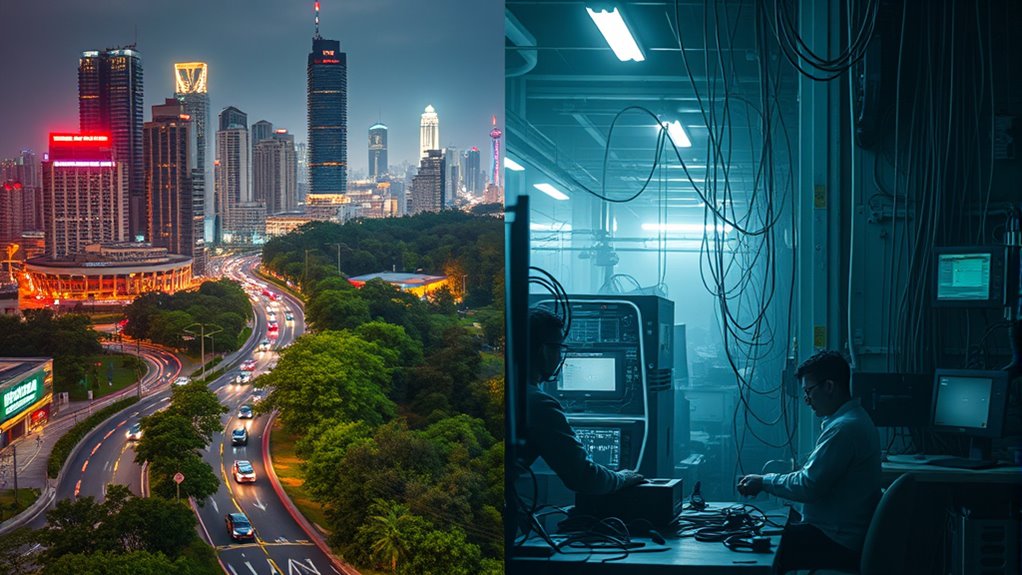

If you explore the debate between techno-optimists and techno-pessimists, you’ll see two contrasting views of the automated future. Optimists believe innovation will bring progress and new job opportunities, while pessimists warn about job losses, privacy issues, and societal risks. Both sides agree on the importance of ethics and regulation. Understanding these perspectives can help you better grasp how technology might shape our world — if you keep going, you’ll uncover more insights.
Key Takeaways
- The techno-optimist sees AI as a driver of innovation, economic growth, and new job opportunities, while the techno-pessimist warns of widespread displacement and inequality.
- Optimists emphasize responsible development and ethical AI to build trust, whereas pessimists highlight risks like bias, privacy loss, and misuse.
- Both perspectives agree on the importance of regulation, but optimists believe adaptation will create new industries, while pessimists worry about societal preparedness.
- Concerns about job displacement are central, with optimists expecting economic shifts to offset losses, and pessimists fearing significant societal harm.
- Technological advances, like high-refresh-rate projectors, illustrate progress that requires careful regulation to maximize benefits and minimize risks.

The debate between techno-optimists and techno-pessimists reflects contrasting beliefs about technology’s role in shaping our future. As you consider how automation and artificial intelligence will influence society, you might find yourself weighing the promises of progress against the fears of disruption. Techno-optimists see innovation as a force that can solve complex problems, boost economic growth, and improve quality of life. They believe that advancements in AI will create new opportunities, making work more efficient and freeing people from mundane tasks. However, they also acknowledge the significance of AI ethics, emphasizing responsible development to prevent misuse or unintended harm. For example, guaranteeing AI systems operate transparently and fairly can help build trust and prevent bias. But you might worry about job displacement, a common concern in this optimistic view. As machines take over routine jobs, some sectors could experience significant layoffs, leaving workers scrambling for new roles. While optimists argue that the economy will adapt, creating new industries and jobs, you could feel anxious about the immediate impacts on livelihoods and the social fabric. Moreover, the integration of high-quality projectors in home entertainment systems exemplifies how technological advancements can enhance personal experiences, yet also raise questions about accessibility and the digital divide.
On the other hand, techno-pessimists tend to focus on the risks and downsides of rapid technological growth. They believe that unchecked AI development might lead to widespread job displacement, especially for roles that are easy to automate. This perspective highlights the potential for increased inequality, as those with technical skills benefit while others are left behind. They also stress AI ethics, warning about issues like surveillance, loss of privacy, and decision-making transparency. You might worry that without proper safeguards, AI could be used to manipulate public opinion or infringe on individual rights. Pessimists argue that society isn’t always prepared for these challenges, and the pace of technological change could outstrip our ability to regulate it effectively. They suggest that, instead of rushing to adopt the latest innovations, we should pause and carefully consider the social consequences. The concern is that if we push ahead without addressing these issues, we risk creating a future where economic displacement and ethical violations become commonplace, eroding trust in technology and institutions.
Ultimately, whether you lean towards optimism or pessimism, it’s clear that AI ethics and job displacement will shape the conversation. Balancing the potential benefits of automation with the need to protect vulnerable workers and uphold ethical standards is vital. As you navigate this debate, it’s important to recognize that technology isn’t inherently good or bad—its impact depends on how we choose to develop and regulate it. The future will likely be a mix of both perspectives, demanding vigilance, responsibility, and proactive measures to ensure that progress benefits everyone. Recognizing the importance of high refresh rates and low latency in gaming projectors demonstrates how technological innovations can significantly improve user experience while also requiring thoughtful regulation and ethical considerations.

AI Risk Management & Compliance: Preventing Lawsuits, Fines & Reputational Damage (AI Ethics & Governance)
As an affiliate, we earn on qualifying purchases.
As an affiliate, we earn on qualifying purchases.
Frequently Asked Questions
How Will Automation Impact Global Income Inequality?
Automation is likely to increase income disparity and wealth concentration if benefits stay concentrated among tech owners and high-skilled workers. You might find that lower-skilled jobs are replaced, widening the gap between the wealthy and the rest. Without policies to address inequality, automation could deepen existing economic divides, making it harder for many to access opportunities and secure financial stability.
What Role Will Government Policy Play in Technological Advancements?
Congratulations, you get to be the hero—or villain—in shaping the future! Government policy plays a pivotal role by setting regulation standards and offering innovation incentives. You can stifle progress with red tape or spark breakthroughs with smart policies. Your decisions influence how technology evolves, ensuring it benefits everyone—or just a select few. So, get ready to regulate or incentivize—your move determines the automated future’s fate!
Can AI Develop Moral and Ethical Decision-Making Capabilities?
AI can develop moral and ethical decision-making capabilities through ethical programming, but it won’t possess true moral agency like humans. You can design AI systems to follow specific moral guidelines, yet they lack genuine understanding and consciousness. While they can simulate ethical responses, their decisions are based on algorithms, not moral intuition. So, AI can assist with ethical choices, but it doesn’t truly grasp morality on its own.
How Might Automation Affect Environmental Sustainability?
Imagine a forest thriving because of smart resource management—automation can do the same for our environment. It boosts green innovation by optimizing energy use and reducing waste. You might see cleaner air and water as automated systems monitor pollution and manage resources efficiently. Embracing automation helps you support sustainable practices, ensuring future generations enjoy a healthier planet while advancing eco-friendly solutions.
Will Future Technologies Create New Job Sectors or Eliminate Them?
Future technologies will likely create new job sectors, leading to increased job creation, especially in emerging fields like AI, cybersecurity, and renewable energy. You’ll need to focus on skill development to stay competitive as some roles become automated. Embracing these changes allows you to adapt, seize new opportunities, and thrive in a shifting job market, ensuring your career remains relevant and fulfilling in the evolving technological landscape.
![[Officially-Licensed APP & 2500 ANSI] 4K Projector with WiFi and Bluetooth,TOF Real-Time Auto Focus Smart Projector, AuKing Outdoor Movie Home Theater Proyector with Omni-Adjustable Stand(Grey)](https://m.media-amazon.com/images/I/51jcTjFXrwL._SL500_.jpg)
[Officially-Licensed APP & 2500 ANSI] 4K Projector with WiFi and Bluetooth,TOF Real-Time Auto Focus Smart Projector, AuKing Outdoor Movie Home Theater Proyector with Omni-Adjustable Stand(Grey)
[Smart Projector Built-in APP – Cinema Experience, Anywhere] Experience effortless entertainment with the AuKing smart projector, which features…
As an affiliate, we earn on qualifying purchases.
As an affiliate, we earn on qualifying purchases.
Conclusion
As you consider both perspectives, remember that automation could displace up to 85 million jobs worldwide by 2030. Yet, it also promises new opportunities and innovations. Whether you’re optimistic or cautious, staying informed helps you navigate this evolving landscape. Embrace change and prepare yourself—because the future of technology isn’t just about machines, but about how you adapt and thrive in a world driven by automation.

Spy Associates Ultrasonic Privacy Protector – Portable Acoustic Masking Device, Voice Privacy Tool for Secure Conversations in Meetings, Offices, Cars & Travel
ULTRASONIC SPEECH PRIVACY: Uses ultrasonic acoustic output (above 25 kHz, inaudible to humans) to help protect speech privacy…
As an affiliate, we earn on qualifying purchases.
As an affiliate, we earn on qualifying purchases.

AEKE Smart Home Gym System- Fitness Mirror K1: AI-Powered All-in-One Fitness Machine for Full-Body Strength Training and Personalized Workouts
🎁🎁🎁Unlock Your Free Gift! Simply Bundle The Yoga Mat, Extender Belt Attachments, And Barbell Pad In Your Cart….
As an affiliate, we earn on qualifying purchases.
As an affiliate, we earn on qualifying purchases.