

AI research agents can help gather sources, synthesize findings, and carry out multistep research tasks, but these ten books vary in how directly they address that work. AI Research Agents: From Search to Discovery is the clearest research-specific pick, while AI Agents in Action, Second Edition stands out for practical workflows and current agent concepts. For readers who want an accessible start, An Illustrated Guide to AI Agents emphasizes concepts and code. The main tradeoff is focus: specialized research guidance versus broader agent-building skills, with framework-specific titles adding technical depth but potentially narrowing their usefulness. Read on for the full breakdown and a guide to choosing the right resource for your needs.

Get business pricing on tech for your team
- Business-only prices and quantity discounts
- Tax-exempt purchasing
- Multiple users, one account, clear invoices
Key Takeaways
- Research focus separates the most direct fit. AI Research Agents: From Search to Discovery is the only title whose stated scope centers on the move from search to research discovery.
- Practical breadth and research specialization serve different goals. AI Agents in Action, Second Edition covers workflows and newer agent topics, while the research-focused title is better aligned with readers specifically building research systems.
- Technical depth comes with framework commitments. The LangChain, LangGraph, and MCP guide and the AWS guide are most relevant when those tools or platforms match a reader’s planned stack.
- Beginners have distinct entry points. The illustrated guide foregrounds concepts and code; the small-business guide frames agents around everyday professional tasks rather than system architecture.
- Multiagent and scaling books fit later-stage work. Titles focused on multiagent systems or scaling goal-driven agents address broader design challenges than a reader needs for a first research prototype.
| Hermes AI: Build Self-Improving AI Agents with Nous Research Hermes Agent |  | Best for Agent Memory and Self-Improvement | Subject: Building self-improving AI agents | Named agent: Nous Research Hermes Agent | Memory: Covered | VIEW LATEST PRICE | See Our Full Breakdown |
| AI Agents on AWS: Beginner’s Guide to Building AI Agents on AWS |  | Best for AWS Beginners | Subject: Building AI agents | Platform focus: AWS | Intended level: Beginner | VIEW LATEST PRICE | See Our Full Breakdown |
| Engineering AI Agents with Gemini Deep Research API: A Guide to Building Autonomous Agents |  | Best for Gemini Deep Research API Focus | Subject: Engineering AI agents | Named API: Gemini Deep Research API | Agent focus: Autonomous agents | VIEW LATEST PRICE | See Our Full Breakdown |
| AI Agents and Applications: With LangChain, LangGraph, and MCP |  | Best for Framework Coverage | Subject: AI agents and applications | Named framework: LangChain | Named framework: LangGraph | VIEW LATEST PRICE | See Our Full Breakdown |
| Building Applications with AI Agents: Designing and Implementing Multiagent Systems |  | Best for Multi-Agent Application Design | Subject: Building applications with AI agents | System focus: Multi-agent systems | Stated approach: Designing and implementing | VIEW LATEST PRICE | See Our Full Breakdown |
| The Agentic AI Bible: A Guide to Designing, Developing, and Scaling Goal-Driven AI Agents |  | Best for Agent Design and Scaling | Format: Book | Subject: Agentic AI | Agent focus: Goal-driven agents | VIEW LATEST PRICE | See Our Full Breakdown |
| AI Agents in Action, Second Edition: Intelligent Workflows with LLMs, MCP, A2A, and More |  | Best for Workflow Builders | Edition: Second Edition | Topics: LLMs, MCP, A2A, and intelligent workflows | Primary focus: Building AI agent workflows | VIEW LATEST PRICE | See Our Full Breakdown |
| AI Research Agents: From Search to Discovery |  | Best Match for Research-Agent Readers | Title focus: AI research agents | Subject framing: From search to discovery | Product attribution: AI Mastery Lab | VIEW LATEST PRICE | See Our Full Breakdown |
| AI Agents for Everyday Business: A Practical Guide for Small Businesses and Professionals |  | Best for Small-Business Research Workflows | Audience: Small businesses and professionals | Guide focus: Practical AI agents for everyday business | Covered application: Research | VIEW LATEST PRICE | See Our Full Breakdown |
| An Illustrated Guide to AI Agents: Concepts and Code for Building Agents with LLMs, Tools, and Memory | 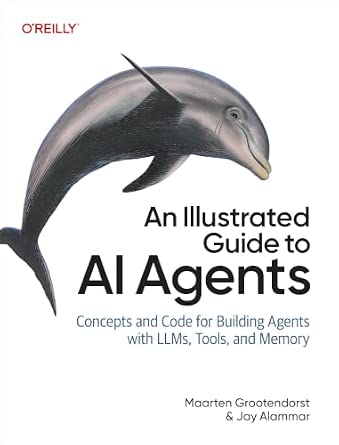 | Best for Visual Concepts and Code | Guide format: Illustrated guide | Coverage: AI agent concepts and code | Model topic: Large language models | VIEW LATEST PRICE | See Our Full Breakdown |
| AI research agent | Subject |
|---|---|
| Hermes AI: Build Self-Improvin | Building self-improving AI agents |
| AI Agents on AWS: Beginner’s G | Building AI agents |
| Engineering AI Agents with Gem | Engineering AI agents |
| AI Agents and Applications: Wi | AI agents and applications |
| Building Applications with AI | Building applications with AI agents |
| The Agentic AI Bible: A Guide | Agentic AI |
| AI Agents in Action | — |
| AI Research Agents: From Searc | — |
| AI Agents for Everyday Busines | — |
| An Illustrated Guide to AI Age | — |
More Details on Our Top Picks
Hermes AI: Build Self-Improving AI Agents with Nous Research Hermes Agent
Hermes AI is the most focused choice here for readers who want to build agents that retain context and gain reusable capabilities. Its coverage of memory, skills, MCP, and automation points toward practical agent systems rather than a broad survey of AI research methods. Compared with AI Agents and Applications: With LangChain, LangGraph, and MCP, this guide centers on the Nous Research Hermes Agent and its self-improvement approach, which gives it a narrower but more specific technical focus. It also addresses multi-agent systems and local models, useful for builders thinking beyond a single hosted model. The tradeoff is that the book’s tool and platform emphasis may be less useful to readers seeking vendor-neutral concepts or a beginner’s introduction. The supplied details do not specify its format or level of implementation depth.
Pros:- Covers agent memory and skills, two building blocks for agents that need to reuse context and behavior.
- Includes MCP and multi-agent systems for readers connecting tools and coordinating agents.
- Addresses automation and local models, extending the subject beyond basic hosted-model examples.
Cons:- Its focus on the Nous Research Hermes Agent may not transfer directly to other agent frameworks.
- The supplied product information does not establish the book’s format, depth, or amount of hands-on code.
Best for: Developers exploring persistent agent memory, reusable skills, MCP integrations, and local-model workflows with the Nous Research Hermes Agent.
Not ideal for: Readers seeking a vendor-neutral introduction or a clearly documented beginner path, since the available description centers on one agent framework and does not specify its teaching level.
- Subject:Building self-improving AI agents
- Named agent:Nous Research Hermes Agent
- Memory:Covered
- Skills:Covered
- MCP:Covered
- Multi-agent systems:Covered
- Automation:Covered
- Local models:Covered
Our verdict“Choose this guide if your priority is building Hermes-based agents with memory, skills, and local-model options rather than learning agent design from a framework-neutral starting point.”
AI Agents on AWS: Beginner’s Guide to Building AI Agents on AWS
AI Agents on AWS is the clearest fit in this group for a reader whose main goal is to start building agents within the AWS ecosystem. Its beginner-oriented title signals a more accessible entry point than Engineering AI Agents with Gemini Deep Research API, which targets a specific research API, or the Hermes guide’s focus on one agent. That ecosystem focus can help AWS users connect agent concepts to the cloud platform they already work in. The tradeoff is equally clear: this is not the pick for someone comparing frameworks across providers or prioritizing research-agent workflows. The available product details confirm the beginner and AWS focus, but offer no further information about services, examples, or technical depth, so I would not assume particular coverage beyond that stated scope.
Pros:- Explicitly aimed at beginners, making its intended audience easier to identify than the more specialized guides.
- Keeps the subject centered on building agents on AWS.
- May suit developers who want to relate agent-building work to an existing AWS environment.
Cons:- The supplied description gives no details about covered AWS services, tools, or implementation examples.
- Its AWS-specific scope may be limiting for readers who need cross-cloud or provider-neutral guidance.
- No details are provided about format, prerequisites, or the depth of its agent-building material.
Best for: Developers new to AI agents who already work with AWS and want a starting point framed around that cloud platform.
Not ideal for: Researchers or engineers seeking a provider-neutral framework comparison, detailed research-agent methods, or confirmed coverage of specific AWS services.
- Subject:Building AI agents
- Platform focus:AWS
- Intended level:Beginner
- Product type:Guide
- Title format:Beginner’s guide
- Specific AWS services:Not specified in supplied product details
Our verdict“Pick this as an AWS-oriented starting point if you are new to agents, but choose a more clearly specified technical guide if you need details on particular APIs or research workflows.”
Engineering AI Agents with Gemini Deep Research API: A Guide to Building Autonomous Agents
This guide has the most direct connection to AI research agents in the group: its title names the Gemini Deep Research API and focuses on autonomous agents. That makes it a more targeted option than AI Agents on AWS, which is framed as a beginner guide for a cloud platform, and more research-specific than the Hermes book’s focus on memory and skills. Its apparent strength is also its main limitation: the available description does not identify its contents, examples, format, or prerequisites. I can’t tell from the supplied information whether it explains research planning, source handling, or production deployment, so buyers should treat the API-specific scope as the clear signal rather than assume broader coverage. It is best suited to readers already interested in Gemini’s research tooling.
Pros:- Names the Gemini Deep Research API, giving the guide a specific technical focus.
- Explicitly addresses autonomous AI agents.
- Its research-oriented API focus distinguishes it from the AWS beginner guide and Hermes-focused material.
Cons:- The supplied product data gives no detail about chapters, examples, or practical exercises.
- The named API focus may be less relevant to readers building agents on other platforms.
- No format, prerequisite, or coverage details are provided to help buyers judge depth.
Best for: Developers specifically investigating autonomous agents built around the Gemini Deep Research API.
Not ideal for: Readers who need a documented beginner curriculum, cross-provider comparisons, or confirmed information about examples and implementation depth.
- Subject:Engineering AI agents
- Named API:Gemini Deep Research API
- Agent focus:Autonomous agents
- Product type:Guide
- Specific contents:Not provided
- Format:Not provided
Our verdict“Choose this if your project centers on autonomous agents with Gemini Deep Research API, and look elsewhere if you need a clearly documented general-purpose learning path.”
AI Agents and Applications: With LangChain, LangGraph, and MCP
AI Agents and Applications stands out by naming three distinct parts of an agent-building toolkit: LangChain, LangGraph, and MCP. That gives it a broader framework-oriented signal than Hermes AI, which centers on the Nous Research agent, while still making it more technically specific than the beginner-focused AWS title. For readers comparing ways to build and connect agent applications, this combination could make the book a useful bridge between orchestration frameworks and tool integration. The supplied information, however, contains no description of its chapters, examples, audience, or treatment of research workflows. I would not assume that the title’s framework breadth means it covers autonomous research in depth. Buyers who need one clearly specified API path may prefer the Gemini guide instead.
Pros:- Names LangChain and LangGraph, making its framework orientation explicit.
- Includes MCP in its stated scope, relevant to connecting agents with tools.
- Offers a broader named-toolkit focus than the Hermes-specific guide.
Cons:- No supplied description clarifies how the three named technologies are covered or compared.
- The product data does not confirm whether it focuses on research agents or general agent applications.
- No audience level, format, or example details are provided.
Best for: Developers comparing agent application frameworks who want material explicitly associated with LangChain, LangGraph, and MCP.
Not ideal for: Readers seeking confirmed beginner guidance, a specific research-agent workflow, or a detailed description of the book’s examples and technical depth.
- Subject:AI agents and applications
- Named framework:LangChain
- Named framework:LangGraph
- Named protocol:MCP
- Product type:Book
- Specific contents:Not provided
Our verdict“Favor this title if named coverage of LangChain, LangGraph, and MCP matters more than a documented research-agent curriculum or a single-platform tutorial.”
Building Applications with AI Agents: Designing and Implementing Multiagent Systems
Building Applications with AI Agents is the strongest match here for readers thinking about complete applications built from multiple cooperating agents. Its stated focus on design and implementation separates it from Hermes AI, which highlights memory, skills, and a particular agent, and from the Gemini guide’s API-specific angle. That application-level perspective may help developers who need to reason about system structure rather than only an individual agent’s capabilities. The supplied description is brief, though: it does not identify frameworks, examples, audience level, or how the multi-agent systems are implemented. That uncertainty makes it harder to judge whether the book offers concrete engineering guidance or a higher-level overview. Readers wanting named tools such as LangChain, LangGraph, and MCP have a clearer signal in AI Agents and Applications.
Pros:- Explicitly focuses on designing and implementing multi-agent systems.
- Frames the subject around applications rather than an isolated agent capability.
- Offers a distinct systems-level angle compared with API-specific and single-agent-focused titles.
Cons:- The supplied description does not name frameworks, tools, or implementation examples.
- No audience level or prerequisite information is provided.
- The brief product data does not clarify how much practical engineering detail the book contains.
Best for: Software developers planning applications that coordinate multiple AI agents and want a guide framed around design and implementation.
Not ideal for: Readers who need named framework coverage, a confirmed beginner-friendly approach, or detailed evidence about examples and implementation methods before choosing.
- Subject:Building applications with AI agents
- System focus:Multi-agent systems
- Stated approach:Designing and implementing
- Product type:Book
- Named frameworks:Not specified
- Specific contents:Not provided
Our verdict“Choose this for an application-design perspective on multi-agent systems, but prefer the LangChain and LangGraph title if specific framework coverage is your priority.”
The Agentic AI Bible: A Guide to Designing, Developing, and Scaling Goal-Driven AI Agents
The Agentic AI Bible is the clearest fit here for readers who want to think about an agent across its lifecycle: designing it, developing it, and scaling it. Its focus on goal-driven LLM agents gives it a broader remit than AI Research Agents: From Search to Discovery, whose title centers specifically on research. The description also points to agents that execute tasks and evolve, which may appeal to builders planning systems beyond one-off prompts. The tradeoff is limited detail about the book’s methods, examples, or technical depth, so I can’t judge how actionable its guidance is from the available information. Readers seeking named workflow topics such as MCP and A2A may prefer AI Agents in Action, Second Edition; this title instead signals wider attention to agent design and scale.
Pros:- Covers agent design, development, and scaling
- Focuses on goal-driven agents powered by LLMs
- Addresses task execution and agent evolution
Cons:- Available information does not specify methods, tools, or frameworks
- The description does not confirm how much hands-on code or research-agent material it includes
Best for: Developers and technical leads planning goal-driven LLM agents that need to execute tasks and grow beyond a single workflow.
Not ideal for: Readers who need confirmed code examples, specific frameworks, or a detailed research-agent curriculum; the available description does not establish that coverage.
- Format:Book
- Subject:Agentic AI
- Agent focus:Goal-driven agents
- Model approach:Large language models
- Coverage:Designing, developing, and scaling AI agents
- Described capabilities:Task execution and evolution
Our verdict“Choose this guide if you want a lifecycle view of goal-driven agents, but pick a more specifically documented workflow or research title if you need confirmed implementation detail.”
AI Agents in Action, Second Edition: Intelligent Workflows with LLMs, MCP, A2A, and More
AI Agents in Action, Second Edition is the most explicitly workflow-oriented option in this group. Its named coverage of LLMs, MCP, and A2A gives prospective builders clearer subject signals than The Agentic AI Bible, which emphasizes agent design and scale without naming particular workflow technologies. That specificity can help readers decide whether the subject matches their work, especially when they are connecting agents into intelligent processes. The limitation is that the available description gives no chapter details, examples, or level of technical difficulty, so the title alone cannot show how deeply each topic is treated. Compared with An Illustrated Guide to AI Agents, this book foregrounds workflow concepts and protocols rather than promising an illustrated concepts-and-code approach.
Pros:- Names LLMs, MCP, and A2A as coverage areas
- Centers intelligent workflows rather than agents in isolation
- Identifies itself as a second edition
Cons:- Available details do not describe sample projects or implementation depth
- The description does not establish whether research-agent workflows receive focused treatment
Best for: Developers and technical practitioners who want a guide explicitly centered on LLM-powered workflows and topics such as MCP and A2A.
Not ideal for: Readers looking for a clearly described beginner path, illustrated instruction, or a focused research-agent guide; the provided information does not confirm those features.
- Edition:Second Edition
- Topics:LLMs, MCP, A2A, and intelligent workflows
- Primary focus:Building AI agent workflows
- ASIN:1633434532
- Named model topic:Large language models (LLMs)
- Named protocol topics:MCP and A2A
Our verdict“Pick this title when LLM workflows, MCP, and A2A are your priority, and compare its unspecified teaching detail against more clearly described concepts-and-code guides.”
AI Research Agents: From Search to Discovery
AI Research Agents: From Search to Discovery is the most direct title match for this roundup: it names research agents and frames their work as moving from search to discovery. That makes it the most focused choice for readers who want to investigate research-oriented agents rather than general business automation or agent workflows. By comparison, AI Agents for Everyday Business describes practical functions across business teams, while AI Agents in Action, Second Edition names workflow technologies such as MCP and A2A. The tradeoff is a near-total lack of supporting product detail: the available information does not identify methods, tools, examples, or skill level. I would choose it for topical fit, not on an assumption about its technical depth or completeness.
Pros:- Directly focuses on AI research agents
- Frames the subject around a progression from search to discovery
- Has a more research-specific title than the business and general workflow guides
Cons:- No methods, tools, or examples are specified in the available information
- The description does not state the format, technical level, or depth of coverage
Best for: Readers specifically seeking a book titled around AI research agents and interested in the search-to-discovery framing.
Not ideal for: Buyers who need verified details about tools, coding exercises, research methods, or the book’s intended experience level before choosing.
- Title focus:AI research agents
- Subject framing:From search to discovery
- Product attribution:AI Mastery Lab
- ASIN:B0HK7685SP
- Format:Not specified
- Tools or frameworks:Not specified
Our verdict“Choose this for the clearest research-agent focus, but favor a better-documented title if you need confirmed technical instruction.”
AI Agents for Everyday Business: A Practical Guide for Small Businesses and Professionals
AI Agents for Everyday Business earns a distinct place by connecting agent use to work small businesses and professionals actually handle: research, customer service, operations, marketing, and reporting. For a buyer exploring AI research agents as one part of a broader business toolkit, that practical range may be more useful than the narrower research framing of AI Research Agents: From Search to Discovery. It also speaks more directly to non-specialist business needs than AI Agents in Action, Second Edition, whose title highlights technical workflow topics. The tradeoff is breadth: the description does not explain how deeply the book treats research agents compared with its other business applications. It also provides no specific frameworks, examples, or skill-level guidance.
Pros:- Covers several practical business functions, including research
- Targets small businesses and professionals rather than only technical teams
- Connects agent use to operational and reporting tasks as well as marketing and service
Cons:- Research-agent coverage may be only one part of a broad business guide
- Available details do not specify frameworks, code, or implementation examples
Best for: Small-business owners and independent professionals who want to explore agents for research alongside customer service, operations, marketing, and reporting.
Not ideal for: AI developers seeking a research-agent engineering manual or readers who need confirmed technical frameworks and code examples.
- Audience:Small businesses and professionals
- Guide focus:Practical AI agents for everyday business
- Covered application:Research
- Additional applications:Customer service, operations, marketing, and reporting
- Format:Not specified
- Frameworks or tools:Not specified
Our verdict“Choose this for a business-wide introduction to agent use that includes research, not for a dedicated technical guide to research agents.”
An Illustrated Guide to AI Agents: Concepts and Code for Building Agents with LLMs, Tools, and Memory
An Illustrated Guide to AI Agents stands apart by pairing concepts and code with a clearly named set of building blocks: LLMs, tools, and memory. That combination may suit readers who want to connect agent theory to implementation, whereas The Agentic AI Bible signals a wider lifecycle focus on designing and scaling goal-driven systems. The illustrated approach also distinguishes it from AI Research Agents: From Search to Discovery, whose available details do not say how the subject is taught. There is a limit to what the title can establish: the product information does not describe sample code, diagram style, difficulty, or specific research applications. I would treat this as a general agent-building guide with potential relevance to research systems, rather than a confirmed research-agent manual.
Pros:- Pairs conceptual coverage with code for building agents
- Names LLMs, tools, and memory as core topics
- Illustrated format signals a visual teaching approach
Cons:- Available information does not identify specific frameworks or code examples
- The description does not confirm focused coverage of research-agent tasks
Best for: Learners and developers who want an introduction to agent concepts alongside code, with attention to LLMs, tools, and memory.
Not ideal for: Readers who need a dedicated research-agent curriculum, named frameworks, or confirmed project details before selecting a guide.
- Guide format:Illustrated guide
- Coverage:AI agent concepts and code
- Model topic:Large language models
- Agent components:Tools and memory
- Intended activity:Building AI agents
- Frameworks:Not specified
Our verdict“Choose this for a visual concepts-and-code introduction to agent building, but pick a research-specific title if research workflows are your main requirement.”

How We Picked
I compared the ten titles by how clearly their stated scope supports research-agent goals: finding and using sources, coordinating steps, synthesizing information, and producing useful outputs. I also weighed accessibility, practical implementation guidance, coverage of tools and frameworks, and how well each book serves a distinct reader—from a first-time learner to a developer designing multiagent systems.
The ranking favors direct relevance to AI research agents, then practical usefulness and breadth for readers building or evaluating research workflows. A specialized title ranks ahead when its focus matches the query; broader books earn a place when they offer useful implementation context or a clear audience fit. Framework-specific and platform-specific guides rank lower for general readers because their value depends more on the buyer’s existing stack. These are books about learning and building agents, not necessarily ready-to-run research-agent products.
| AI research agent | Subject |
|---|---|
| Hermes AI: Build Self-Improvin | Building self-improving AI agents |
| AI Agents on AWS: Beginner’s G | Building AI agents |
| Engineering AI Agents with Gem | Engineering AI agents |
| AI Agents and Applications: Wi | AI agents and applications |
| Building Applications with AI | Building applications with AI agents |
| The Agentic AI Bible: A Guide | Agentic AI |
| AI Agents in Action | — |
| AI Research Agents: From Searc | — |
| AI Agents for Everyday Busines | — |
| An Illustrated Guide to AI Age | — |
Factors to Consider When Choosing AI Research Agents
Choosing a resource about AI research agents starts with the work you want the agent to do and your own technical starting point. The title that best matches a search-and-synthesis project may not be the one that teaches the most reusable engineering skills.
Match the book to the research task
Start by writing down the task you want to improve: literature discovery, source comparison, evidence extraction, or drafting a research brief. These require different agent behaviors, so a general guide to autonomous agents may not explain the source-handling details you need. A common mistake is choosing based on the word “agent” in a title without checking whether the material addresses research inputs and outputs. Look for guidance that connects retrieval, source tracking, synthesis, and human review. If your goal is mainly to learn agent concepts, a broad introduction can still be a better first step than a specialized research text. If the task is already clear, prioritize the resource whose scope most closely resembles it.
Choose your technical depth before your tool stack
Consider how much coding and system design you want to do before picking a framework-specific guide. Titles tied to AWS, LangChain, LangGraph, or Gemini may be useful when you are committed to those tools, but they can make less sense if your stack is undecided. A frequent buying error is treating a platform tutorial as a general guide to research-agent design. First identify concepts you need across tools—task decomposition, tool use, evaluation, and failure handling—then decide whether platform detail will help. A broad book offers more room to change direction; a focused one can reduce setup friction for a team already using that environment. Match the commitment in the book to the commitment in your project.
Decide whether you need one agent or several
Many research tasks can begin with one agent that searches, organizes evidence, and drafts a result under review. Multiagent designs may help when distinct roles need to work in parallel, but they also add coordination, testing, and debugging work. Do not assume that more agents automatically produce better research. Before choosing a multiagent-focused book, identify a real bottleneck that separate agents could address, such as independent source review or specialized analysis. For a first prototype, a simpler workflow can make errors easier to trace. Move to multiagent material when the task structure—not novelty—justifies the extra system complexity.
Check how the material handles evidence and review
A research agent’s fluent answer is not proof that its sources support the claims. Choose learning material that helps you think about citations, source quality, contradictory evidence, and human verification, not only how to connect tools. One common mistake is optimizing for a polished summary before deciding how to audit it. Think about the consequences of a missed or misread source in your setting, then set an appropriate review process. High-stakes research calls for traceable evidence and careful human judgment, even when an agent speeds up discovery. For informal exploration, lighter checks may be acceptable, but the source trail should remain inspectable.
Weigh durable concepts against fast-changing tooling
Agent libraries and protocols change quickly, while ideas such as decomposing tasks, checking outputs, and managing tool permissions tend to last longer. A highly specific implementation guide may shorten your learning curve today but require more adaptation as APIs shift. A concept-led book can age more gracefully, though it may leave you to fill in current implementation details. Check whether your priority is getting a prototype running or building knowledge that transfers across projects. Avoid choosing only by the number of named technologies; decide how much detail you can apply now. Pairing a durable design resource with current platform documentation can be a sensible compromise.
Frequently Asked Questions
Which title is most directly about building AI research agents?
AI Research Agents: From Search to Discovery has the most direct research-centered scope among these titles. It is the natural starting point if your main goal is to understand systems that move from finding information toward research outputs. AI Agents in Action, Second Edition is a broader alternative for readers who want workflow and agent-development context alongside research applications. If you need implementation tied to a specific stack, compare those broader goals with the AWS, Gemini, or LangChain-focused guides. Choose based on whether research workflow or platform instruction is your immediate priority.
Should I pick a research-specific guide or a general AI agent book?
Choose a research-specific guide when your project depends on discovery, source handling, and synthesis. A general agent book may be a better fit if you are still learning core concepts or want skills that apply to customer service, automation, and other tasks too. The tradeoff is focus: specialized material can align closely with your project, while broad material gives you more transferable context. If you are unsure, begin with the task you expect to build first rather than trying to learn every agent pattern at once. You can add a specialized resource when your research workflow needs become clearer.
Do I need programming experience to learn from these books?
Not every title signals the same level of technical demand. An Illustrated Guide to AI Agents presents itself as a concepts-and-code resource, while platform and framework guides are more likely to suit readers ready to work with implementation details. The small-business guide may be a closer starting point if your interest is practical use rather than building agent systems. Check the book’s intended audience and sample material before committing, especially if you are new to coding. A beginner can still learn from a technical text, but may need to work through programming foundations alongside it.
When is a multiagent approach worth learning for research?
Multiagent methods are worth exploring when a research task has separable roles that benefit from parallel work, such as gathering sources and independently checking claims. They are less compelling when one straightforward workflow can complete the task and a person can review the result. Multiple agents add coordination and can multiply errors, so they need evaluation rather than being treated as a shortcut to better answers. A book about multiagent systems makes more sense once you can describe the bottleneck a second agent would solve. For early experiments, build and inspect a simpler workflow first.
How can I choose between a framework guide and a broader agent book?
Pick a framework guide when your project already depends on its ecosystem and you need implementation guidance there. A broader book is usually the safer choice when you are comparing tools, learning design principles, or expect your stack to change. Framework-specific details can save time now, but they may be less reusable if your team switches platforms. Compare the book’s stated technologies with the tools you can actually use, and check whether its core lessons extend beyond setup steps. If both needs matter, use a broad resource for design and a focused guide for the chosen stack.
Conclusion
For the best overall fit for research-centered work, I would start with AI Research Agents: From Search to Discovery. Readers seeking the best value in practical breadth should look at AI Agents in Action, Second Edition, while the best premium-depth choice for complex system design is Building Applications with AI Agents, with its focus on multiagent systems. For beginners, An Illustrated Guide to AI Agents offers the clearest concepts-and-code framing; small-business owners may prefer AI Agents for Everyday Business for work-oriented guidance. Choose the AWS, Gemini, or LangChain and LangGraph title when that specific technology matches your project, and turn to The Agentic AI Bible for broader goal-driven design and scaling. The right pick is the one that matches your immediate task, technical level, and willingness to work within a particular stack.