

The search for AI automation software for small business usually surfaces two very different things: actual tools and the guides that teach you how to use them — and this roundup focuses on the latter, because most small business owners lose more time to implementing AI wrong than to picking the wrong tool. My top overall pick is AI for Small Business: A Practical No-Code Playbook, because it covers marketing, operations, and customer acquisition in one actionable framework. Close behind are No-Code Automation Mastery with Zapier and ChatGPT, the strongest choice for tool-specific workflows, and Agentic AI for Small Business, which stands out for its time-boxed weekend format. The main tradeoff across this category is breadth versus depth: broad overviews get you started fast, while narrow, tool-specific guides produce working automations sooner but leave gaps. Read on for the full breakdown of what each option does well, who it fits, and which ones to skip.

Get business pricing on tech for your team
- Business-only prices and quantity discounts
- Tax-exempt purchasing
- Multiple users, one account, clear invoices
Key Takeaways
- No-code framing separated the winners from the rest — guides like the Practical No-Code Playbook and the Zapier/ChatGPT title assume zero technical skill, while denser titles like Agentic Software assume more ambition than most owners have.
- Time-to-first-automation varied wildly: the best picks get a working workflow live in a weekend, while several overview-heavy titles spend hundreds of pages on concepts before any hands-on build.
- Tool-specific guides (QuickBooks, Copilot, Claude, ChatGPT) only pay off if you already use that platform — they rank lower for general buyers but are unbeatable within their niche.
- The income-focused titles (semi-passive income, selling AI solutions) target a different buyer entirely — freelancers and side-hustlers — and small business owners should treat them as secondary purchases.
- Guides that name specific hours saved per week (10-15 hours) were consistently more concrete and easier to follow than those promising vague transformation.
- Format matters: playbooks and handbooks with step-by-step builds outperformed ‘bible’-style reference guides for owners who need results, not encyclopedias.
| AI for Small Business: From Marketing and Sales to HR and Operations |  | Best for Big-Picture Strategy | Format: Kindle eBook / Paperback | Focus Areas: Marketing, Sales, HR, Operations | Audience: Small business owners | VIEW LATEST PRICE | See Our Full Breakdown |
| Microsoft Copilot Advantage: A Practical Guide for Beginners & Professionals |  | Best for Microsoft 365 Shops | Format: Kindle eBook / Paperback | Focus Areas: Word, Excel, Outlook, PowerPoint, Teams | Audience: Beginners through professionals | VIEW LATEST PRICE | See Our Full Breakdown |
| AI-Powered Automation and Workflows for Small Business Owners |  | Best for Workflow Builders | Format: Kindle eBook / Paperback | Series: AI Productivity for Small Business Owners, Book 5 | Focus Areas: Automation and workflows | VIEW LATEST PRICE | See Our Full Breakdown |
| QuickBooks Online Complete Guide | 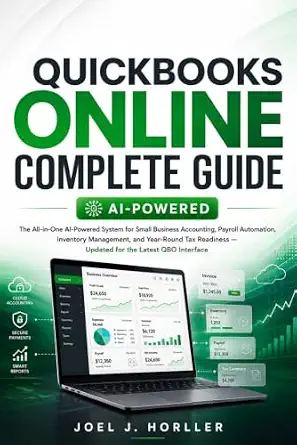 | Best for Finance Automation | Format: Kindle eBook / Paperback | Focus Areas: Accounting, payroll automation, inventory, tax readiness | Platform: QuickBooks Online | VIEW LATEST PRICE | See Our Full Breakdown |
| The AI Powered Small Business: How Small Business Owners Can Use ChatGPT and Claude |  | Best for Tool-Specific Tactics | Format: Kindle eBook / Paperback | Focus Areas: Time savings, decision-making, daily operations | Tools Covered: ChatGPT and Claude | VIEW LATEST PRICE | See Our Full Breakdown |
| The Claude AI Bible: The Complete Guide to Mastering Claude |  | Best Deep-Dive on a Single AI Tool | Format: Kindle / Digital Book | Primary Tool Covered: Claude AI | Skill Level: Beginner to Intermediate | VIEW LATEST PRICE | See Our Full Breakdown |
| No-Code Automation Mastery for Small Businesses with AI: How to Leverage Zapier and ChatGPT to Save Time, Cut Costs, and Scale Effortlessly | 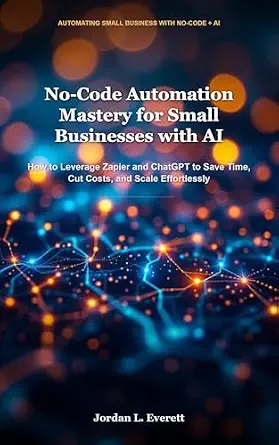 | Best Tool-Stack Pairing | Format: Kindle / Digital Book | Tools Covered: Zapier, ChatGPT | Skill Level: Beginner | VIEW LATEST PRICE | See Our Full Breakdown |
| Agentic AI for Small Businesses: No-Code Weekend Playbook to Automate Your Business in 5 Hours and Reclaim 15+ Hours Weekly |  | Best Fast-Start Implementation Plan | Format: Kindle / Digital Book | Approach: Weekend sprint playbook (~5 hours) | Claimed Outcome: 15+ hours reclaimed weekly | VIEW LATEST PRICE | See Our Full Breakdown |
| AI for Small Business: A Practical No-Code Playbook to Save Time, Get Customers, Automate Work, and Grow Your Business |  | Best for Growth-Focused Beginners | Format: Kindle / Digital Book | Tools Covered: General no-code AI tools | Skill Level: Beginner | VIEW LATEST PRICE | See Our Full Breakdown |
| AI Automation for Small Businesses: Build Semi-Passive Income Systems Without Hiring or Coding |  | Best for Solo Founders Building Income Systems | Format: Kindle / Digital Book | Focus Areas: Semi-passive income systems, business automation | Skill Level: Intermediate beginner (some AI familiarity assumed) | VIEW LATEST PRICE | See Our Full Breakdown |
| The No-Code AI Automation Handbook: Reclaim 10 Hours a Week by Automating the Busywork Your Small Business Does by Hand |  | Best for Zero-Code Beginners | Format: Kindle ebook | Skill level required: Beginner, no coding needed | Core focus: No-code AI task automation | VIEW LATEST PRICE | See Our Full Breakdown |
| ChatGPT Automation for Small Business: Build Reliable AI Workflows, Automate Daily Operations, and Create a Smarter Business Operating System |  | Best for ChatGPT Workflow Building | Format: Kindle ebook | Primary tool covered: ChatGPT | Skill level required: Intermediate | VIEW LATEST PRICE | See Our Full Breakdown |
| Agentic Software: The App Layer Wins: How One Founder Built an AI Workforce That Runs a Real Company |  | Best Big-Picture Strategy Read | Format: Kindle ebook | Genre: Business case study / strategy | Core focus: AI workforce and agentic software strategy | VIEW LATEST PRICE | See Our Full Breakdown |
| AI Agents for Profit: The Beginner’s 30-Day Blueprint to Build, Sell, and Automate AI Solutions for Small Businesses |  | Best for Aspiring AI Service Providers | Format: Kindle ebook | Structure: 30-day blueprint | Skill level required: Beginner | VIEW LATEST PRICE | See Our Full Breakdown |
| AI automation software for small business | Format | Focus Areas |
|---|---|---|
| AI for Small Business: From Ma | Kindle eBook / Paperback | Marketing, Sales, HR, Operations |
| Microsoft Copilot Advantage: A | Kindle eBook / Paperback | Word, Excel, Outlook, PowerPoint, Teams |
| AI-Powered Automation and Work | Kindle eBook / Paperback | Automation and workflows |
| QuickBooks Online Complete Gui | Kindle eBook / Paperback | Accounting, payroll automation, inventory, tax readiness |
| The AI Powered Small Business: | Kindle eBook / Paperback | Time savings, decision-making, daily operations |
| The Claude AI Bible: The Compl | Kindle / Digital Book | Workflows, task automation, productivity |
| No-Code Automation Mastery for | Kindle / Digital Book | Task automation, cost reduction, scaling |
| Agentic AI for Small Businesse | Kindle / Digital Book | Agentic AI, no-code automation |
| AI for Small Business: A Pract | Kindle / Digital Book | Customer acquisition, task automation, growth |
| AI Automation for Small Busine | Kindle / Digital Book | Semi-passive income systems, business automation |
| The No-Code AI Automation Hand | Kindle ebook | — |
| ChatGPT Automation for Small B | Kindle ebook | — |
| Agentic Software: The App Laye | Kindle ebook | — |
| AI Agents for Profit: The Begi | Kindle ebook | — |
More Details on Our Top Picks
AI for Small Business: From Marketing and Sales to HR and Operations
This title earns its place as the widest-scoping entry in the lineup, covering marketing, sales, HR, and operations under one cover. Where The AI Powered Small Business zooms in on ChatGPT and Claude specifically, this book steps back and asks a broader question: which functions of your business should AI touch at all? That breadth is its real value, but it comes at a cost. Readers who want hands-on workflow instructions will likely be better served by AI-Powered Automation and Workflows for Small Business Owners, which trades breadth for step-by-step depth. This pick makes the most sense as a first read before buying tool-specific guides — a map rather than turn-by-turn directions. Anyone expecting technical implementation details or tool walkthroughs will finish it informed but not equipped.
Pros:- Covers four distinct business functions in one volume
- Strong on framing where AI creates value across a whole company
- Practical strategy focus rather than hype or theory
- Useful as a roadmap before investing in narrower guides
Cons:- No technical detail or tool-specific walkthroughs
- Assumes some prior AI familiarity to apply the concepts
- Depth per function is limited by the breadth of scope
Best for: Owners planning company-wide AI adoption who want a strategic overview before committing to specific tools
Not ideal for: Hands-on implementers who need click-by-click tool instructions — this stays at the strategy level
- Format:Kindle eBook / Paperback
- Focus Areas:Marketing, Sales, HR, Operations
- Audience:Small business owners
- Depth Level:Strategic overview
- Technical Detail:Low — concepts over implementation
- Prior AI Knowledge Needed:Moderate
- Tool Coverage:General, not tool-specific
Our verdict“Read this first if you want a strategic map of where AI fits across your business, then pair it with a narrower guide for execution.”
Microsoft Copilot Advantage: A Practical Guide for Beginners & Professionals
Most books in this roundup discuss AI in the abstract; this one is anchored to software you probably already pay for. For businesses living inside Word, Excel, Outlook, PowerPoint, and Teams, that specificity is the whole point — no new stack to buy or learn. Compared with AI for Small Business, which surveys many functions generically, this guide trades breadth for immediate, desk-level productivity wins like drafting documents and automating spreadsheet work through Copilot. The tradeoff is a hard ceiling: if your operations run on Google Workspace, Zoho, or standalone tools, almost nothing here transfers. And advanced users who already prompt effectively will find the early chapters too basic to justify the price. This option stands out for teams standardizing on Microsoft, less so for tool-agnostic automation builders.
Pros:- Directly applicable to software most offices already use
- Practical frameworks rather than abstract AI theory
- Accessible to complete beginners
- Covers five core Microsoft applications in one place
Cons:- Locked to the Microsoft ecosystem with no transferability
- Content skews basic and may underdeliver for experienced users
- Value depends on already having Copilot access, which carries its own subscription cost
Best for: Small teams already on Microsoft 365 who want to squeeze productivity out of Copilot without buying new software
Not ideal for: Google Workspace users or businesses not paying for Copilot licenses — the entire book is tied to Microsoft’s ecosystem
- Format:Kindle eBook / Paperback
- Focus Areas:Word, Excel, Outlook, PowerPoint, Teams
- Audience:Beginners through professionals
- Depth Level:Foundational to intermediate
- Ecosystem:Microsoft 365 / Copilot only
- Technical Detail:Moderate — task-level guidance
- Prior AI Knowledge Needed:None
Our verdict“If your business runs on Microsoft 365, this is the most immediately actionable guide in the roundup — everyone else should skip it.”
AI-Powered Automation and Workflows for Small Business Owners
Positioned as Book 5 in a series, this entry is narrower and more execution-minded than the generalist titles around it. Where AI for Small Business explains why automation matters across departments, this one is about actually wiring workflows into daily operations, with step-by-step structure that series newcomers may find assumes groundwork laid in earlier volumes. Compared with The No-Code AI Automation Handbook, which leans on Zapier-style tooling, this book keeps its focus on workflow thinking itself rather than a single platform — an advantage if you haven’t committed to an automation tool yet, a weakness if you want platform-specific screenshots. The small business framing is tight and consistent, though owners of larger operations will bump against its ceiling. This pick makes sense for readers ready to move from reading about AI to building with it.
Pros:- Step-by-step workflow guidance rather than high-level theory
- Platform-agnostic approach that isn’t tied to one tool
- Purpose-built for small business constraints like lean staff
- Action-oriented structure suited to implementation
Cons:- Being book 5 of a series may leave newcomers missing context
- Light on technical depth for complex automation needs
- Assumes prior AI knowledge without much hand-holding
Best for: Owners who understand AI basics and want structured, step-by-step help designing real workflows
Not ideal for: Complete beginners — the series context and assumed AI familiarity make this a rough entry point
- Format:Kindle eBook / Paperback
- Series:AI Productivity for Small Business Owners, Book 5
- Focus Areas:Automation and workflows
- Audience:Small business owners
- Depth Level:Practical / implementation
- Technical Detail:Moderate — step-by-step but not deep technical
- Prior AI Knowledge Needed:Moderate
- Tool Coverage:General workflow tools, not platform-specific
Our verdict“A solid middle step between strategy overviews and tool-specific manuals — best for readers who already know the basics and want to build.”
QuickBooks Online Complete Guide
Every other book in this roundup treats automation as a company-wide topic; this one goes deep on a single high-stakes function — the books. That focus is its strength: payroll, inventory, and year-round tax readiness are areas where an automation mistake costs real money, and having current coverage of QuickBooks Online’s latest AI features matters more than generic advice. Compared with Microsoft Copilot Advantage, which spreads across five office apps, this guide concentrates everything on one system most businesses already run their finances on. The tradeoff is density — first-time bookkeepers may find it overwhelming, and if you use Xero or Wave instead, the book is irrelevant. This option stands out for owners who want their back office automated properly rather than experimentally, with the caveat that the sheer feature coverage demands patience.
Pros:- Covers accounting, payroll, inventory, and tax in one system
- Updated to reflect the latest QuickBooks Online features
- Automation-focused framing saves time on recurring financial tasks
- Year-round tax readiness approach avoids seasonal scrambling
Cons:- Dense and potentially overwhelming for newcomers to accounting software
- Completely tied to QuickBooks Online with no alternative coverage
- Value depends on QuickBooks features matching your subscription tier
Best for: Owners who run their finances on QuickBooks Online and want to automate payroll, inventory, and tax prep thoroughly
Not ideal for: Beginner bookkeepers or non-QuickBooks users — the density and platform lock-in make it a poor fit for both
- Format:Kindle eBook / Paperback
- Focus Areas:Accounting, payroll automation, inventory, tax readiness
- Platform:QuickBooks Online
- Audience:Small business owners and bookkeepers
- Depth Level:Comprehensive single-system guide
- Technical Detail:High for the platform, software-task level
- Prior Knowledge Needed:Basic accounting familiarity recommended
Our verdict“The clear pick if QuickBooks Online is your financial backbone — a poor purchase for anyone outside that ecosystem.”
The AI Powered Small Business: How Small Business Owners Can Use ChatGPT and Claude
This book occupies the practical middle of the lineup by anchoring itself to the two AI assistants most owners already have open in a browser tab: ChatGPT and Claude. That choice separates it from AI for Small Business, which stays tool-agnostic, and makes its advice immediately testable — you can read a chapter and try the tactic five minutes later. The framing around decision-making, not just time-saving, also distinguishes it from workflow-centric titles like AI-Powered Automation and Workflows for Small Business Owners, which is more about process design than daily AI-assisted judgment. The tradeoffs are real: no case studies means the strategies stay somewhat abstract, and readers unfamiliar with prompting basics may struggle to replicate results. Compared with The Claude AI Bible, coverage of both tools is shallower by design — breadth of application over depth of mastery.
Pros:- Built around two free-to-start tools anyone can access today
- Covers decision-making and efficiency, not just task automation
- Tactics are testable immediately after reading
- Practical framing for non-technical owners
Cons:- No case studies to show real-world results
- Assumes some baseline familiarity with AI concepts
- Coverage of each tool is broad rather than deep compared with single-tool guides
Best for: Owners who want same-day tactics using ChatGPT and Claude for decisions, writing, and daily productivity
Not ideal for: Readers seeking deep mastery of one tool or rigorous case-study evidence — this optimizes for quick application instead
- Format:Kindle eBook / Paperback
- Focus Areas:Time savings, decision-making, daily operations
- Tools Covered:ChatGPT and Claude
- Audience:Small business owners
- Depth Level:Practical tactics across two tools
- Technical Detail:Low to moderate — prompt-level guidance
- Prior AI Knowledge Needed:Some familiarity helpful
- Case Studies:None included
Our verdict“The fastest path from reading to doing if ChatGPT and Claude are your entry point to AI — just don’t expect in-depth training on either.”
The Claude AI Bible: The Complete Guide to Mastering Claude
Most books in this roundup spread themselves across multiple tools, but this one goes narrow and deep on Claude specifically. That focus pays off for owners who have already chosen Claude as their primary AI assistant and want to squeeze real automation value from it — workflow building, task automation, and productivity gains are all treated as Claude-native skills rather than generic advice. Compared with AI for Small Business: A Practical No-Code Playbook, which skims across the whole AI landscape, this guide trades breadth for mastery. The tradeoff is obvious: if your stack runs on ChatGPT or Zapier, much of the material won’t transfer directly. And unlike No-Code Automation Mastery, it assumes you’ll build workflows inside Claude rather than across connected apps.
Pros:- Focused depth on one widely used AI assistant
- Covers practical workflow building, not just theory
- Written for non-technical readers
- Strong on repetitive-task automation
Cons:- Locked to one tool — less useful for mixed AI stacks
- No visible pricing or reader rating data to gauge value
Best for: Small business owners already committed to Claude who want tool-specific workflow mastery
Not ideal for: Owners using ChatGPT or multi-tool stacks — the single-tool focus limits transferability
- Format:Kindle / Digital Book
- Primary Tool Covered:Claude AI
- Skill Level:Beginner to Intermediate
- Focus Areas:Workflows, task automation, productivity
- Coding Required:No
- Best Use Case:Single-tool AI mastery
Our verdict“Buy this if Claude is (or will be) your business’s AI workhorse; skip it if you need cross-platform automation guidance.”
No-Code Automation Mastery for Small Businesses with AI: How to Leverage Zapier and ChatGPT to Save Time, Cut Costs, and Scale Effortlessly
This pick makes the most sense for owners who want two proven tools doing the heavy lifting together — Zapier as the connective tissue and ChatGPT as the intelligence layer. Where The Claude AI Bible goes deep on a single assistant, this guide teaches the connective skill most small businesses actually need: linking apps so data moves without human hands. Compared with Agentic AI for Small Business, which pushes a single-weekend sprint, this book takes a steadier, strategy-first pace that suits owners building automation incrementally. The real tradeoff is the ceiling — readers building complex, multi-step AI logic will hit the limits of beginner-level Zapier guidance and need outside resources.
Pros:- Teaches two of the most widely adopted tools on the market
- Strategy-first framing tied to cost savings
- No coding experience required
- Directly addresses scaling operations
Cons:- Assumes some baseline familiarity with AI tools
- Advanced automation scenarios are not covered in detail
Best for: Time-strapped owners who want to connect their existing apps (email, CRM, spreadsheets) using Zapier and ChatGPT
Not ideal for: Owners with advanced automation needs — the walkthroughs stop short of complex logic and custom integrations
- Format:Kindle / Digital Book
- Tools Covered:Zapier, ChatGPT
- Skill Level:Beginner
- Coding Required:No
- Focus Areas:Task automation, cost reduction, scaling
- Prerequisites:Basic AI tool familiarity helpful
Our verdict“The strongest choice for owners who want a dependable two-tool stack rather than a survey of every AI option.”
Agentic AI for Small Businesses: No-Code Weekend Playbook to Automate Your Business in 5 Hours and Reclaim 15+ Hours Weekly
The promise here is unusually concrete: five hours of setup, fifteen hours reclaimed every week. That specificity is what separates this book from softer titles like AI for Small Business: A Practical No-Code Playbook, which motivates well but leaves the timeline vague. Structured as a weekend playbook, it walks through agentic automation — AI that acts, not just answers — in steps a non-coder can finish between Saturday morning and Sunday night. The honest tradeoff: you have to actually give up a weekend, and the one-size sprint won’t fit every business model. Compared with No-Code Automation Mastery, it trades tool-agnostic depth for speed, which matters if procrastination has killed your previous automation attempts.
Pros:- Concrete time-bound implementation plan
- Targets measurable weekly time savings
- No coding experience needed
- Focuses on agentic AI, a step beyond basic chatbot use
Cons:- Requires a dedicated weekend block of focused time
- Not tailored to every business type
- Advanced automation beyond the playbook isn’t covered
Best for: Owners who have bought automation books before but never finished them — the fixed weekend structure forces completion
Not ideal for: Businesses with unusual or highly regulated workflows the generic playbook won’t map onto
- Format:Kindle / Digital Book
- Approach:Weekend sprint playbook (~5 hours)
- Claimed Outcome:15+ hours reclaimed weekly
- Focus Areas:Agentic AI, no-code automation
- Coding Required:No
- Time Commitment:One weekend
Our verdict“Pick this if you need a deadline-driven sprint to finally get automation live; skip it if your weekends are already spoken for.”
AI for Small Business: A Practical No-Code Playbook to Save Time, Get Customers, Automate Work, and Grow Your Business
This option stands out as the widest-angle lens in this batch — it’s less about any single tool and more about where AI touches the whole small business, especially customer acquisition. Automation titles like ChatGPT Automation for Small Business optimize what you already do; this book also attacks the growth side, showing how AI can help find and convert customers. That makes it the natural first purchase for an owner who is new to AI entirely and wants a lay of the land before committing to a specific stack. The flip side of that breadth is depth: experienced users and owners who already run Zapier workflows will find the material too elementary to justify the read.
Pros:- Broad coverage spanning automation, marketing, and growth
- Accessible to complete AI beginners
- Practical, action-oriented framing
- Unique emphasis on customer acquisition
Cons:- Too basic for experienced AI users
- Lacks detailed technical instructions
- Advanced AI applications are out of scope
Best for: AI-curious owners who want growth and marketing applications covered alongside automation basics
Not ideal for: Owners already running AI workflows — the fundamentals will feel repetitive
- Format:Kindle / Digital Book
- Tools Covered:General no-code AI tools
- Skill Level:Beginner
- Focus Areas:Customer acquisition, task automation, growth
- Coding Required:No
- Depth:Introductory / overview
Our verdict“The right starting point if you’re new to AI and care as much about getting customers as saving time.”
AI Automation for Small Businesses: Build Semi-Passive Income Systems Without Hiring or Coding
Every other title in this roundup frames automation as cost savings; this one reframes it as revenue generation. For the solo founder with no staff and no interest in hiring, that angle is genuinely different — the book treats AI systems as income-producing assets rather than back-office efficiency tools. Compared with Agentic AI for Small Businesses, which claws back hours in an existing operation, this guide leans into building semi-passive streams that run with minimal oversight. The tradeoffs are real: the ‘semi-passive’ label still demands upfront building effort, some prior AI fluency is assumed, and the vague content preview makes it harder to judge depth before buying. This pick makes the most sense for owners thinking like entrepreneurs, not operators.
Pros:- Unique income-generation framing vs. pure cost savings
- Designed for businesses without staff
- No coding skills required
- Encourages systems thinking over task-by-task fixes
Cons:- Assumes some prior AI knowledge
- Limited detailed technical instruction
- Limited preview content makes value hard to verify pre-purchase
Best for: Solo founders and side-hustle builders who want automation to create income, not just save time
Not ideal for: Owners seeking detailed operational how-tos — the income-systems angle leaves step-by-step automation thin
- Format:Kindle / Digital Book
- Focus Areas:Semi-passive income systems, business automation
- Skill Level:Intermediate beginner (some AI familiarity assumed)
- Coding Required:No
- Hiring Required:No
- Best Use Case:Solo founder income automation
Our verdict“Choose this if you’re a one-person business chasing semi-passive revenue streams; skip it if you want an operational automation manual.”
The No-Code AI Automation Handbook: Reclaim 10 Hours a Week by Automating the Busywork Your Small Business Does by Hand
Most small business owners don’t fail at automation because they lack ambition — they fail because guides assume coding skills they don’t have. This handbook attacks that problem directly by keeping every strategy firmly in no-code territory, which makes it the friendliest entry point in this roundup for owners who have never built a workflow. Compared with ChatGPT Automation for Small Business, which leans on prompt engineering and assumes some technical comfort, this book trades depth for accessibility. The honest tradeoff: readers who already run automations will find the material elementary, and complete beginners should expect a learning curve even without code — tool setup still takes patience. Where it earns its place is the promise of reclaiming 10 hours a week, a concrete, measurable goal most titles in this list avoid committing to.
Pros:- Genuinely code-free approach suited to non-technical readers
- Concrete time-savings goal (10 hours/week) to measure progress against
- Step-by-step format that fits busy schedules
- Focused specifically on busywork small businesses do by hand
Cons:- Scope limited to small business automation scenarios only
- Complete beginners still face a tool-learning curve despite the no-code promise
Best for: Non-technical small business owners who want their first automation wins without touching code
Not ideal for: Owners already running Zapier or ChatGPT workflows — the material will feel too basic to justify the read
- Format:Kindle ebook
- Skill level required:Beginner, no coding needed
- Core focus:No-code AI task automation
- Target reader:Small business owners
- Primary outcome:Reclaim ~10 hours per week
- Approach:Step-by-step practical guidance
Our verdict“Pick this if you want the gentlest on-ramp to automation and have never built a workflow before.”
ChatGPT Automation for Small Business: Build Reliable AI Workflows, Automate Daily Operations, and Create a Smarter Business Operating System
While many titles in this roundup treat AI broadly, this one goes all-in on a single tool — and that focus pays off for readers who live inside ChatGPT. Its strength is the framing of automation as a business operating system: interconnected workflows that handle daily operations rather than isolated one-off tricks. That systems-thinking puts it a step above The No-Code AI Automation Handbook for owners ready to move past basics, though it demands more technical comfort in return. The reliability angle is refreshing — most AI guides ignore what happens when workflows break. The tradeoff is real, however: content stays inside small business applications, so consultants or product builders will bump against its ceiling quickly.
Pros:- Deep single-tool focus produces actionable, specific workflows
- Systems approach treats automation as an operating system, not tricks
- Addresses workflow reliability — rare among AI guides
- Directly targets daily operational tasks
Cons:- Assumes some technical knowledge, steeper than true beginner titles
- Content confined to small business use cases
Best for: ChatGPT subscribers who want to connect daily operations into dependable, repeatable AI workflows
Not ideal for: Readers wanting multi-tool coverage (Zapier, Claude, agents) — this stays narrowly on ChatGPT
- Format:Kindle ebook
- Primary tool covered:ChatGPT
- Skill level required:Intermediate
- Core focus:AI workflow construction and daily operations
- Key concept:Business operating system built on AI
- Target reader:Small business operators
Our verdict“The right choice if ChatGPT is your primary tool and you want workflows you can actually depend on.”
Agentic Software: The App Layer Wins: How One Founder Built an AI Workforce That Runs a Real Company
This is the vision book of the batch. Instead of tutorials, it delivers a founder’s real case study of an AI workforce running an actual company — proof-of-concept material you won’t find in AI Agents for Profit, which is structured as a beginner blueprint rather than a lived story. For readers deciding whether agentic AI deserves a place in their business at all, this narrative approach makes the strategic stakes vivid in a way how-to guides can’t. The flip side is equally clear: if you want to implement anything yourself, you’ll need a companion title. It skips detailed technical instruction and names few specific tools, so hands-on operators should pair it with something like ChatGPT Automation for Small Business. Read this to set direction, then buy a manual to execute.
Pros:- Real company case study rather than hypothetical scenarios
- Strong strategic framing of agentic AI and the app layer
- Inspiring for entrepreneurs weighing a big operational shift
- Software strategy insights applicable beyond small business
Cons:- Lacks detailed technical implementation guidance
- Names few specific tools or products to act on
Best for: Founders and strategy-minded owners evaluating whether an AI workforce model fits their business
Not ideal for: Doers who need implementation steps — there’s little technical detail or tool guidance here
- Format:Kindle ebook
- Genre:Business case study / strategy
- Core focus:AI workforce and agentic software strategy
- Skill level required:Strategic reader, any level
- Technical depth:Low — conceptual, not instructional
- Target reader:Founders and entrepreneurs
Our verdict“Buy this for vision and conviction, not for instructions — it answers ‘why,’ never ‘how.’”
AI Agents for Profit: The Beginner’s 30-Day Blueprint to Build, Sell, and Automate AI Solutions for Small Businesses
Every other title in this roundup teaches you to automate your own business. This one flips the model: it’s a 30-day plan to sell AI solutions to other small businesses, making it the clear pick for readers chasing income rather than efficiency. Compared with Agentic Software, which inspires from the strategy clouds, this book stays grounded in a day-by-day roadmap — build, sell, automate — that beginners can actually follow. The structure is its strongest asset; the depth is its weakest. It deliberately skips advanced AI techniques and detailed technical instruction, so anyone hoping to deliver sophisticated agent systems will outgrow it fast. Think of it as a launchpad into the AI services market, not a reference you’ll keep on the desk for years.
Pros:- Clear 30-day, step-by-step structure that fights procrastination
- Unique profit angle — selling to businesses, not just self-automation
- Accessible for complete beginners
- Covers the full arc: build, sell, and automate
Cons:- No detailed technical instructions for serious implementations
- Little coverage of advanced AI techniques
Best for: Beginners who want a structured first month building and selling AI services to small business clients
Not ideal for: Readers automating their own business only, or developers needing deep technical instruction
- Format:Kindle ebook
- Structure:30-day blueprint
- Skill level required:Beginner
- Core focus:Building and selling AI agent solutions
- Target reader:Aspiring AI service providers
- Outcome:Sellable AI solutions for small businesses
Our verdict“Choose this if your goal is a new income stream selling AI solutions — skip it if you just want internal automation.”

How We Picked
I evaluated each title against four buyer-relevant criteria. Practicality carried the most weight: does the reader finish with working automations, or just vocabulary? Titles with step-by-step builds, named tools, and measurable outcomes ranked above conceptual overviews. Accessibility came second — every pick was judged on whether a non-technical owner could follow it without hiring help, which is why no-code framing boosted several titles. Scope fit mattered too: a guide covering the whole business deserved different treatment than one mastering a single platform like QuickBooks or Excel.
Finally, I weighed value for money against what a small business owner actually needs in 2026: repeatable workflows, not theory. That logic explains the ranking — broad, actionable playbooks sit at the top, tool-specific guides cluster in the middle where they serve committed platform users, and niche income-oriented titles land lower for this audience despite being well-written for their own readers.
| AI automation software for small business | Format |
|---|---|
| AI for Small Business: From Ma | Kindle eBook / Paperback |
| Microsoft Copilot Advantage: A | Kindle eBook / Paperback |
| AI-Powered Automation and Work | Kindle eBook / Paperback |
| QuickBooks Online Complete Gui | Kindle eBook / Paperback |
| The AI Powered Small Business: | Kindle eBook / Paperback |
| The Claude AI Bible: The Compl | Kindle / Digital Book |
| No-Code Automation Mastery for | Kindle / Digital Book |
| Agentic AI for Small Businesse | Kindle / Digital Book |
| AI for Small Business: A Pract | Kindle / Digital Book |
| AI Automation for Small Busine | Kindle / Digital Book |
| The No-Code AI Automation Hand | Kindle ebook |
| ChatGPT Automation for Small B | Kindle ebook |
| Agentic Software: The App Laye | Kindle ebook |
| AI Agents for Profit: The Begi | Kindle ebook |
Factors to Consider When Choosing AI Automation Software For Small Business
Before spending money on any AI automation guide, it helps to understand what actually separates a useful purchase from shelf-ware. These are the factors I would weigh first — and the mistakes I see small business owners make repeatedly.Match the Guide to Your Bottleneck, Not Your Ambition
The single most common mistake is buying a broad AI transformation book when the real problem is one specific workflow — invoicing, follow-up emails, or scheduling. Broad guides feel productive but often delay the first real automation by weeks. If you can name the task eating your week, choose a focused title; if you genuinely don’t know where AI fits yet, a wide-coverage playbook earns its price. Be honest about which buyer you are before clicking buy, because the best guide for your neighbor’s business may be useless for yours.
Check Which Tools the Guide Actually Teaches
A guide built around Zapier and ChatGPT produces different results than one built around Microsoft Copilot or Claude, and switching costs are real. Before buying, inventory what your business already runs on — Microsoft 365 shops get far more from Copilot-focused material, while Google-and-Zapier users should avoid Microsoft-centric titles. Some books teach platform-agnostic principles that survive tool changes, which is a plus but usually at the cost of shallower step-by-step instruction. The tradeoff is durability versus immediacy, and most owners need immediacy first.
Time Investment Is Part of the Price
A $25 book that demands twenty hours of reading before the first payoff can cost more in owner time than a pricier, tighter playbook. Look for guides that promise a working automation within the first few chapters, and be skeptical of titles where automation only appears in the second half. The weekend-format guides exist precisely because owners abandon long books. Your hourly rate applies to learning time, so budget it like any other expense.
Beware the Income-Opportunity Pivot
Several popular titles in this space are really aimed at people who want to sell AI services, not business owners who want to use them. The cover copy often blurs this distinction. If a book’s promise centers on semi-passive income or client work, its workflows will be built for resale rather than for running a bakery, an agency, or a shop. Nothing wrong with that material — it just solves a different problem, and mixing the two audiences leads to disappointing purchases.
Freshness and the 2026 Tool Landscape
AI tools change fast enough that a guide written even eighteen months ago may reference deprecated features or ignore agentic workflows entirely. Check the publication date and whether the author promises updates or an online companion. Agentic AI — autonomous multi-step agents — is the biggest shift in this space, and guides covering it will age better than pure prompt-copy collections. That said, foundational workflow-thinking content ages well even when screenshots go stale, so weigh concepts over cosmetics.
When to Skip Books and Hire Help Instead
Books max out around a certain complexity: once you need custom API connections, multi-system data syncing, or compliance-sensitive workflows, a consultant or automation agency often beats any guide. The honest move is to buy one playbook, attempt two or three automations yourself, and evaluate whether the pattern generalizes to your harder problems. Owners who refuse to outsource anything tend to build fragile systems that break silently. Knowing your ceiling is a purchasing decision, not a defeat.
Frequently Asked Questions
Do I need any coding or technical skills to benefit from these AI automation guides?
Most of the top picks in this roundup were written specifically for non-technical owners and lean on no-code platforms like Zapier, Make-style workflow builders, and chat interfaces. If you can follow a recipe and drag blocks between apps, you can build the core automations these books teach. That said, a few titles — particularly the agentic software and income-blueprint entries — push into territory where comfort with APIs and basic logic helps a lot. My advice is to start with a no-code playbook, ship two or three automations, and only then decide whether deeper material suits you. Skipping that ramp is how most owners end up with half-finished systems.
Is one general AI guide enough, or should I buy a tool-specific one too?
For most small businesses, one well-chosen general playbook covers 70–80% of the value: email follow-up, content generation, scheduling, and basic data entry. A tool-specific guide earns its spot only when a single platform dominates your operations — a QuickBooks-centric business or a Microsoft 365 shop gets outsized returns from a dedicated title because the automations live inside software you touch daily. Buying both at once usually means neither gets read. Start general, and let your first month of hands-on work reveal whether a platform-specific deep dive would actually pay off.
How many hours per week can a small business realistically save with these methods?
The guides in this roundup claim anywhere from 10 to 15 hours saved weekly, and those numbers are plausible — but only for businesses with repetitive, rules-based work like quote follow-ups, appointment reminders, invoice chasing, and report assembly. A consultancy with five bespoke client projects a month will see smaller wins than a service business doing fifty similar jobs. In practice, expect five to eight hours back in the first months and more as you compound automations. Treat any book’s headline number as a ceiling reached after a full quarter of building, not a week-one result.
Are the agentic AI guides too advanced for a beginner?
Some are, and that distinction drove much of my ranking. The weekend-playbook style agentic guides are genuinely beginner-friendly because they hand you pre-built agent templates you can modify, while the more theoretical agentic titles assume you already understand automation fundamentals. If ‘AI agent’ is still a fuzzy concept to you, spend your first month with a standard no-code automation guide. Agents build directly on workflow thinking, so that foundation makes the agentic material dramatically easier. Jumping straight to agents without basics is the most common abandonment point I saw reflected in how these books are structured.
Will these guides still be relevant as AI tools change?
Partially, and it pays to know which part. Step-by-step instructions tied to a specific interface will drift out of date within a year or two — that’s unavoidable in this space. But the durable content, deciding what to automate, structuring handoffs between systems, and designing fallbacks when an automation fails, holds up regardless of which tool you use. Prioritize recent publications, check whether the author offers updated editions or companion resources, and favor books that teach transferable workflow design over prompt libraries. A book that teaches you to think in systems outlives three that teach you to copy prompts.
Conclusion
For most small business owners, AI for Small Business: A Practical No-Code Playbook is the best overall choice — it balances breadth, hands-on instruction, and realistic outcomes better than anything else in this lineup. If budget is the deciding factor, AI-Powered Automation and Workflows for Small Business Owners delivers the best value per dollar. The Claude AI Bible and Microsoft Copilot Advantage serve as the premium deep-dive picks for owners already committed to those platforms. Beginners should start with Agentic AI for Small Business: No-Code Weekend Playbook, whose time-boxed format prevents the overwhelm that kills most automation efforts. For specific needs: QuickBooks users should grab the QuickBooks Online Complete Guide, Zapier-centric businesses will get fastest results from No-Code Automation Mastery, and aspiring AI service providers — not typical owners — should look at AI Agents for Profit. Pick the one matching your bottleneck, build your first automation this week, and add the second book only after the first pays for itself.
Evergreen bestsellers Picks

LG StanbyME 2 Max 32-Inch 4K Portable Smart Touchscreen TV

Roborock Robot Vacuum and Mop with LiDAR Navigation and Self-Empty Dock

KitchenAid Artisan Series 5-Quart Tilt-Head Stand Mixer, Milkshake
As an affiliate, we earn on qualifying purchases.