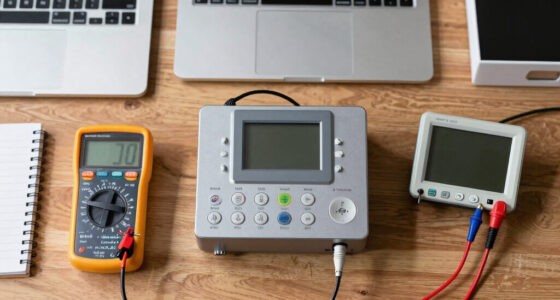

AI-powered home automation devices are transforming the way we manage our living spaces, offering smarter control, improved security, and energy efficiency. The Multi-Functional AI Voice Control Panel stands out for its versatile voice commands, making it ideal for tech-savvy users. The iSG Box SE Smart Home Hub delivers seamless integration with preinstalled software, perfect for those seeking quick setup. Meanwhile, the SwitchBot AI Hub Bundle combines indoor monitoring with AI-driven automation, suited for security-conscious buyers. However, tradeoffs include complexity, compatibility issues, and price variations. Keep reading for a detailed breakdown to help you find the best fit for your smart home needs.

Get business pricing on tech for your team
- Business-only prices and quantity discounts
- Tax-exempt purchasing
- Multiple users, one account, clear invoices
Key Takeaways
- Top picks excel in seamless integration with popular ecosystems like Home Assistant and Matter.
- Ease of setup varies: preloaded hubs save time but can limit customization options.
- Security features such as local storage and AI monitoring are key differentiators.
- Price range reflects capabilities—from DIY solutions to premium, all-in-one systems.
- Compatibility and future-proofing remain common challenges across devices.


More Details on Our Top Picks
Multi-Functional AI Voice Control Panel with Mechanical LCD Keys and Secondary Screen
This AI voice control panel stands out for its robust macro capabilities and high-resolution secondary display, making it ideal for users who want deep customization. Unlike the iSG Box SE, which emphasizes broad protocol support, this panel offers tactile mechanical LCD keys that provide immediate feedback, enhancing manual control. Its theme editor allows for interface personalization, but the setup can be complex for those lacking technical skills. The device’s compatibility with multiple OS and WiFi makes it flexible, though limited details on software updates pose a potential risk for future security and performance. It’s best suited for tech-savvy users seeking a hands-on automation control panel.
Pros:- Intuitive voice control combined with macro functionality
- High-res secondary display and tactile LCD keys for quick access
- Supports multiple OS platforms and WiFi connectivity
- Customizable theme editor for tailored interfaces
Cons:- Setup can be complex and may require technical expertise
- Limited information on software support and updates
Best for: Home automation enthusiasts who enjoy customizing interfaces and macros with technical knowledge
Not ideal for: Beginners or users seeking plug-and-play solutions with minimal setup
- Item Type:AI Voice Control Panel
- Material:ABS
- Key Resolution:128×128
- Secondary Screen:2.01 Inch, 240×296
- Memory Card:4G (Included)
- Interface:USB
- Support:WiFi 2.4GHz, AI Voice Recognition
Our verdict“This device is perfect for experienced users who want a customizable, tactile control panel for smart home automation.”
iSG Box SE Smart Home Hub with Preinstalled Home Assistant
The iSG Box SE shines in its support for over 2,500 brands and major protocols like Matter, Zigbee, and Z-Wave, making it a versatile choice for a diverse smart home ecosystem. Compared to the SwitchBot AI Hub bundle, which focuses heavily on indoor monitoring, the iSG provides a more centralized automation hub with pre-installed Home Assistant, enabling complex routines and local control. Its support for Apple HomeKit, Alexa, and Google Assistant ensures broad voice assistant compatibility, but it requires separate Zigbee/Z-Wave USB sticks, adding to the initial cost. The local-first architecture prioritizes privacy and instant responses but may challenge those unfamiliar with initial setup.
Pros:- Supports extensive protocols and device brands
- Pre-installed with Home Assistant for deep customization
- Local control ensures privacy and fast responses
- Seamless integration with popular voice assistants
Cons:- Requires separate purchase of Zigbee/Z-Wave USB sticks
- Setup complexity may be daunting for novices
Best for: Homeowners seeking a highly compatible, privacy-conscious automation hub with advanced features
Not ideal for: Beginners or users who prefer ready-to-go solutions without extra device purchases
- Connectivity Technology:Wi-Fi, Ethernet, Zigbee, Z-Wave
- Color:White
- Supported Protocols:Matter, Zigbee, Z-Wave
- Compatible Devices:TVs, smartphones, PCs, tablets
- Pre-installed Software:Home Assistant, HACS
- Features:HomeKit Bridge, Local Control, AI Home Agent
Our verdict“This hub is best suited for users who want a flexible, privacy-focused automation platform with broad compatibility.”
SwitchBot AI Hub Bundle with PTC Plus 5MP Camera, AI Smart Hub with OpenClaw Support for Indoor Monitoring, Pan Tilt Camera, Local Storage, Home Assistant Pre-Installed, Matter Bridge
This bundle combines a high-resolution 5MP camera with a versatile AI hub, making it ideal for indoor security and monitoring. The camera’s 360° pan and tilt, night vision, and two-way audio outperform the simpler indoor cameras in the same lineup, like the basic AI Hub. Its support for local storage and external drives means data privacy and storage flexibility, but the AI features often require an additional subscription, which increases ongoing costs. Additionally, setup can be complex, especially when integrating with existing systems. Overall, this package is well-suited for users prioritizing detailed indoor surveillance combined with smart home integration.
Pros:- High-quality 5MP camera with 360° pan and tilt
- Supports local storage via microSD and external drives
- Integrates with smart home protocols and platforms
- Includes two-way audio and night vision
Cons:- AI features often require additional subscription costs
- Setup may be complicated for non-technical users
Best for: Homeowners wanting comprehensive indoor security with AI-based monitoring and local storage
Not ideal for: Casual users seeking a straightforward, plug-and-play security camera system
- Connectivity Technology:Wi-Fi
- Video Capture Resolution:5MP
- Memory Storage Capacity:16 GB
- Color:Black
- Supports Local Storage:Yes, microSD up to 1TB
- Pan-Tilt Rotation:360° horizontal, 115° vertical
- Built-in Microphone and Speaker:Yes
Our verdict“Ideal for users desiring detailed indoor surveillance with flexible storage and AI capabilities, willing to handle a more involved setup.”
AI Powered Smart Home Guide for Beginners 2026
This guide offers a straightforward introduction to home automation, covering essential topics like energy management, security, and AI assistants. It is designed for those new to smart home tech, providing clear, step-by-step instructions that demystify the process. Unlike the more technical products like the Raspberry Pi guide, this resource lacks detailed technical specifications but compensates with accessible advice for beginners. Its practicality makes it an excellent starting point, though experienced users may find it too basic and lacking in technical depth.
Pros:- Simple, step-by-step instructions make setup accessible
- Covers a broad range of smart home topics
- Ideal for beginners wanting a comprehensive overview
Cons:- Lacks detailed technical specifications
- No customer reviews or ratings available for validation
Best for: Homeowners new to automation seeking practical, easy-to-understand guidance
Not ideal for: Experienced DIYers or technical users looking for in-depth technical details
Our verdict“This guide is perfect for beginners eager to learn the fundamentals of home automation without technical complexity.”
Build Your Dream Smart Home with Raspberry Pi: The Complete DIY Guide to Creating Automated Lighting, Intelligent Security, Voice Control, Energy-Saving Systems, and AI-Powered Home Automation
This comprehensive DIY guide targets Raspberry Pi users interested in creating customized smart home systems. It covers broad automation topics, from lighting to security and AI integration, making it ideal for those comfortable with electronics and programming. Compared to the plug-and-play solutions, this guide demands prior knowledge of Raspberry Pi and electronics, which can be a barrier for beginners. However, it offers unparalleled flexibility and learning opportunities for hands-on users willing to invest time and effort. It’s less suitable for users expecting ready-to-use products without technical setup.
Pros:- Step-by-step instructions facilitate DIY projects
- Covers a wide array of automation and AI topics
- Great for learning and customizing unique home systems
Cons:- Requires prior knowledge of Raspberry Pi and electronics
- Lacks specific technical specifications of components used
Best for: Tech-savvy DIYers and Raspberry Pi enthusiasts eager to build personalized smart home systems
Not ideal for: Users seeking quick, out-of-the-box automation solutions with minimal technical involvement
Our verdict“This guide is best for DIY-minded users ready to craft and customize their own home automation projects with Raspberry Pi.”
AI-Powered Smart Home Guide 2026: A Step-by-Step Guide to Designing, Optimizing, and Mastering a Fully Automated Smart Ecosystem
This comprehensive guide stands out for its focus on designing and optimizing a fully automated home ecosystem, making it ideal for those who want a strategic, holistic approach. Unlike hardware-centric options like the SwitchBot AI Hub, this guide provides detailed strategies that help users understand how to integrate various AI-powered technologies into their homes. However, it lacks specific product features or hardware details, which means you’ll need to source your own components and have a clear vision beforehand. It’s best suited for homeowners with some familiarity with smart tech who prefer a planned, customized setup over plug-and-play solutions.
Pros:- Provides detailed strategies for designing complex smart ecosystems
- Focuses on AI-powered technology integration for future-proofing
- Suitable for both beginners with guidance and advanced users seeking optimization
Cons:- Lacks specific hardware recommendations or setup instructions
- No customer reviews or hands-on ratings to validate effectiveness
Best for: Tech-savvy homeowners seeking a detailed, strategic blueprint to build or upgrade a fully automated smart home
Not ideal for: Beginners or those looking for ready-to-use hardware solutions without needing in-depth planning
Our verdict“This guide is best for homeowners who want to craft a tailored, AI-rich smart home environment from scratch.”
SwitchBot AI Hub with OpenClaw Support, Local NVR Camera Storage, and Home Assistant Pre-Installed
The SwitchBot AI Hub excels in supporting OpenClaw for versatile camera and device control, making it a strong choice for users who want local automation with integrated security. Its pre-installed Home Assistant simplifies initial setup, and the local storage options provide a practical edge over cloud-only solutions like the AI-powered devices bundle. However, its AI features depend on an additional subscription, which could add ongoing costs. It’s ideal for users who prioritize local control and detailed device management but are okay with subscription-based AI enhancements.
Pros:- Supports OpenClaw for flexible camera and device integration
- Pre-installed Home Assistant for quick deployment
- Local storage options with microSD and external hard drives
Cons:- AI features require an ongoing subscription, increasing costs
- Limited to supported cameras and devices, reducing flexibility
Best for: Homeowners who want a centralized controller for multiple cameras and devices with local storage support
Not ideal for: Casual users seeking a simple, all-in-one hub without subscription costs or advanced camera support
- Product Dimensions:7.8 x 5.79 x 2.2 inches
- Item Weight:1.17 pounds
- MicroSD Card Included:16GB
Our verdict“This hub is well-suited for tech-savvy users who want local control and reliable security integration with expandable storage.”
Hubitat Elevation C-8 Pro Smart Home Hub, Local Control and Automations
Compared with the more user-friendly SwitchBot Hub, the Hubitat Elevation C-8 Pro offers local processing for rapid automations and enhanced privacy, making it a top pick for enthusiasts who value control and security. Its support for multiple protocols, including Z-Wave, Zigbee, and Matter, and compatibility with voice assistants like Alexa and Google, position it as a flexible, future-proof platform. However, its setup can be complex, requiring some technical knowledge, which might deter casual users. This device is best for those comfortable with DIY configuration who want a robust, privacy-centric hub.
Pros:- Processes automations locally for faster response times
- Supports multiple protocols including Z-Wave, Zigbee, and Matter
- Continuous free updates expand device compatibility and features
Cons:- Setup and configuration require technical knowledge
- Some advanced features may need manual setup or troubleshooting
Best for: Home automation enthusiasts with technical skills seeking a highly customizable, locally processed smart hub
Not ideal for: Beginners or users seeking quick, easy setup with minimal configuration
- Product Dimensions:2.95 x 3.23 x 0.67 inches
- Item Weight:2.56 ounces
- Processor:2.0 GHz
- Connectivity:Wi-Fi, Ethernet
- Supported Protocols:Z-Wave 800 Series, Zigbee 3.0, Matter 1.5, Bluetooth
- Compatibility:Alexa, Google Home, Apple HomeKit
Our verdict“This hub is ideal for experienced users prioritizing privacy, local control, and protocol versatility over ease of use.”
AI-Powered Smart Home Devices
This collection of AI-powered smart home devices emphasizes seamless integration and convenience, making it a good choice for users who want an out-of-the-box experience. Compared to the more technical hubs like Hubitat, these devices focus on enhancing security, energy efficiency, and overall home connectivity with minimal setup. However, they may require technical skills for initial configuration and are dependent on Wi-Fi, which could impact reliability. Privacy concerns are also worth considering, as connected devices often collect personal data. Overall, these devices suit those looking for a straightforward, smart upgrade without complex setup.
Pros:- Enhances overall home automation and connectivity
- Integrates smoothly with a wide range of smart devices
- Improves security and energy management effortlessly
Cons:- May require technical setup and network configuration
- Dependent on Wi-Fi stability, which can affect performance
- Potential privacy issues due to data collection
Best for: Homeowners wanting to boost automation and security with minimal fuss and seamless device integration
Not ideal for: Advanced users seeking local control or highly customizable automation platforms
Our verdict“These AI-powered devices are best suited for homeowners seeking convenient, connected automation with straightforward installation.”

How We Picked
I evaluated each product based on performance, ease of use, build quality, expandability, and value for money. Devices that offered reliable AI-driven automation, broad ecosystem support, and straightforward setup ranked higher. I also considered long-term usability, such as compatibility with existing smart home standards and security features. The ranking reflects a balance between affordability and advanced capabilities, ensuring options for beginners and power users alike. Tradeoffs like complexity versus customization were key considerations in highlighting the best choices.Factors to Consider When Choosing AI-powered Home Automation Devices
Choosing the right AI-powered home automation device involves balancing features, compatibility, and your specific needs. Here are key factors to consider before making a purchase, helping you avoid common pitfalls and ensuring your smart home functions smoothly.Compatibility with Existing Ecosystems
Ensuring your new device works seamlessly with your current smart home setup is critical. Consider whether it supports standards like Zigbee, Z-Wave, or Matter, which improve interoperability. Overlooking compatibility can lead to frustration or the need for additional hubs, increasing costs and complexity. Think about your preferred voice assistants and whether the device integrates well with them. Prioritize devices that support multiple ecosystems if you plan to expand later.
Ease of Installation and Use
Some devices are designed for DIY installation, while others might require professional setup. Preconfigured hubs with intuitive apps reduce setup time but may limit customization. Conversely, highly customizable systems often demand technical knowledge and time investment. Consider your comfort level and the device’s user interface—simple controls are better for beginners, while advanced users may value detailed settings. Avoid overly complex products if you’re not prepared for ongoing management.
Security and Privacy Features
AI-powered devices collect sensitive data, so security is paramount. Look for products with local data storage options, robust encryption, and transparent privacy policies. Devices that rely solely on cloud storage might be more vulnerable to breaches. Evaluate whether the manufacturer provides software updates and security patches regularly. Protecting your home automation system from hacking attempts should be a top priority, especially if the device controls security or access points in your home.
Scalability and Future-Proofing
Smart homes should grow with your needs. Choose devices that support add-ons or modular expansion, so you aren’t forced to replace equipment prematurely. Devices supporting open standards and broad ecosystem integration tend to offer better long-term value. Consider whether the device can handle future updates and evolving AI capabilities. Avoid systems that lock you into proprietary platforms, which can limit upgrade options and increase costs over time.
Value for Money and Support
Price varies widely in this category, often reflecting features. While cheaper devices may suit basic automation needs, they might lack advanced AI capabilities or integration options. Premium products tend to offer better support, security updates, and more sophisticated features, but at a higher cost. Evaluate whether the added expense aligns with your intended use—are you seeking a simple system or a comprehensive AI-enhanced ecosystem? Also, check user reviews and support reputation to avoid products with poor after-sales service.
Frequently Asked Questions
Will these devices work together in my existing smart home setup?
Most AI-powered home automation devices support common standards like Zigbee, Z-Wave, or Matter, enabling cross-compatibility. However, compatibility depends on the specific products you choose and your current ecosystem. Checking each device’s supported protocols before purchasing helps ensure they can communicate effectively. Many devices also support integration through hubs or platforms like Home Assistant, which can bridge different protocols. Planning your setup around these standards reduces the risk of incompatibility issues later on.
Are AI-powered devices secure enough for controlling my home security systems?
Security is a vital concern with AI home automation. Look for devices that offer local storage options, end-to-end encryption, and frequent security updates. Devices relying solely on cloud services may introduce vulnerabilities if not properly secured. It’s also wise to choose products from reputable manufacturers with transparent privacy policies. Implementing strong network security practices, such as segmented Wi-Fi networks for your smart devices, can further protect your home from potential breaches.
How much should I expect to spend on a good AI-powered home automation system?
Prices range from affordable DIY solutions around $50 to advanced systems costing several hundred dollars or more. Budget options often include basic automation and voice control, but may lack sophisticated AI features or seamless integration. Premium systems with advanced AI, security, and extensive ecosystem support tend to be more expensive, sometimes exceeding $500. Consider your priorities—if you want a plug-and-play setup, investing in a higher-end hub might save time and frustration, whereas DIY options are better for tech enthusiasts on a budget.
Can I upgrade or expand my AI home automation system later?
Yes, many modern devices support expansion through additional modules, sensors, or integration with other systems. Choosing devices that adhere to open standards and support third-party integrations makes future upgrades easier. However, some proprietary platforms can limit expansion options, tying you to specific brands or ecosystems. Planning your initial setup with scalability in mind helps ensure your smart home can grow without requiring costly replacements or complex reconfigurations.
What should I prioritize if I am new to home automation?
If you’re just starting out, focus on ease of setup, compatibility with your existing devices, and clear support resources. Devices with user-friendly apps and straightforward installation save time and reduce frustration. It’s also wise to choose platforms with strong community support and regular updates. Starting with a versatile, beginner-friendly hub or voice control device can help you gradually expand your system as you learn more about AI automation and your specific needs.
Conclusion
For most users, the Multi-Functional AI Voice Control Panel offers a balanced mix of power and ease of use, making it a strong overall choice. Those seeking the best value should consider budget-friendly hubs like the iSG Box SE, which provide reliable performance without a premium price. If you’re after a premium experience with advanced AI features, the Hubitat Elevation C-8 Pro is designed to deliver high-end automation and local control. Beginners or casual users will find simple plug-and-play options ideal, while security-focused buyers should prioritize devices with local storage and robust encryption. Your ideal device depends on your technical comfort, budget, and specific automation goals.
Halloween Picks
halloween
As an affiliate, we earn on qualifying purchases.