
📊 Full opportunity report: Walk And Listen: An App That Adapts Its Narration To Your Route on IdeaNavigator AI — validation score, market gap, and execution plan.

Get business pricing on tech for your team
- Business-only prices and quantity discounts
- Tax-exempt purchasing
- Multiple users, one account, clear invoices
TL;DR
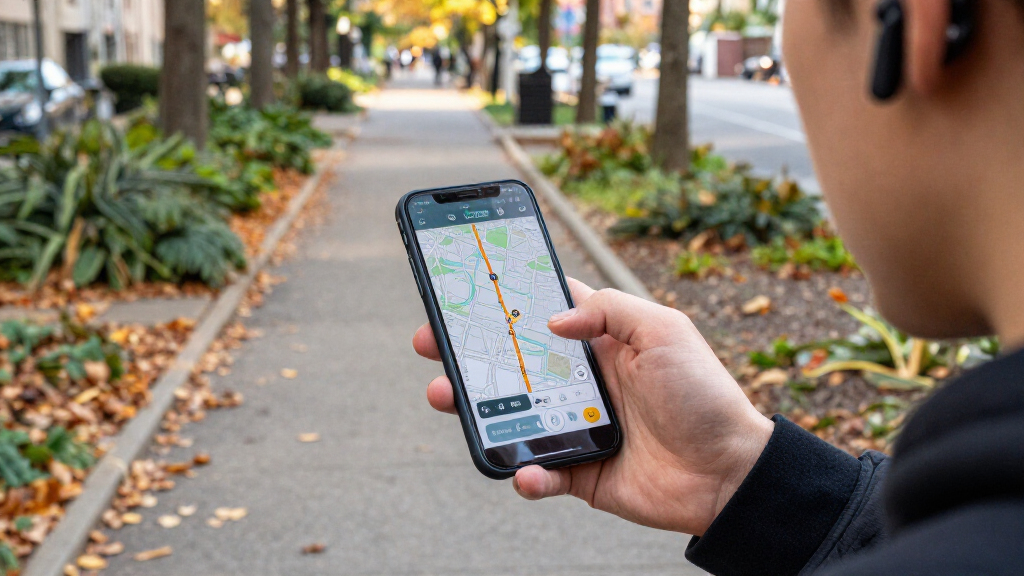
IdeaNavigator AI has outlined a concept for a walking app that generates narration based on a user’s live route, including local history, buildings and other details. The proposal recommends testing it in two cities and measuring week-four retention and narration accuracy; no launch, trial results or product performance are reported.
IdeaNavigator AI has proposed an audio walking app that would generate narration around a user’s live route, offering stories about local history, buildings and other details as walkers move through a neighborhood or travel destination. The proposal recommends testing the concept in two cities, but reports no existing product launch, completed pilot or evidence of user demand.
The proposed app would let a user start a walk and receive narration tied to the route, with content reacting at corners and landmarks. Suggested subject modes include history, architecture and nature, while saved favorite routes would let users return to walks they liked. These are proposed MVP features, not confirmed capabilities of a released app.
IdeaNavigator AI argues that generative AI and open data about history, architecture and places could support on-demand, location-grounded narration. Its concept says this could lower the cost of producing audio for individual routes, which it describes as a constraint on tours focused on well-known landmark districts. The proposal does not identify a developer, named product, data providers or technical safeguards.
The proposed business model combines a consumer subscription with a licensing tier for tourism boards. To test the idea, the proposal calls for a launch in two cities, tracking walks per week among users who remain active through week four, and auditing narration accuracy across a sample of routes. No pricing, target retention rate, accuracy threshold or city selection is provided.
Testing Beyond Landmark Tours
The concept targets a gap between general audio listening and conventional guided tours. Podcasts typically do not respond to a listener’s location, while many tour products focus on established visitor districts. A route-aware format could, if it proves useful and accurate, make everyday streets part of an audio discovery experience and let visitors explore without following a fixed tour.
The proposed two-city test matters because the idea depends on more than generating plausible narration. It would need to keep walkers interested across repeated outings and provide reliable information about the places they pass. Week-four retention would offer an early indication of repeat use, while an accuracy audit could identify errors in the generated stories. The proposal supplies no results on either measure.
Products Worth Considering

Bose QuietComfort Ultra Wireless Noise-Cancelling Headphones with Spatial Audio, Black

Jackery Explorer 2000 v2 Portable Power Station with Two 200W Solar Panels

Bose QuietComfort Wireless Noise-Cancelling Headphones, Petal Pink
As an affiliate, we earn on qualifying purchases.
How Route-Based Audio Would Work
The idea is framed as a narrow first-use workflow: a walker wants their neighborhood or travels narrated. Rather than commissioning a complete recording for each route, the proposed app would assemble narration from open information about nearby places and adapt it as the walk changes. That approach is presented as a way to reach streets beyond the landmarks already covered by traditional audio tours.
Location-sensitive audio and generative narration are the underlying ingredients in the proposal, but its description remains at the concept stage. It does not name a service, show a working demonstration or document a partnership. The suggested initial scope—two cities, themed narration and saved routes—is a plan for validation, not a reported deployment.
Product Readiness and Accuracy
There is no evidence in the proposal that an app has been built or released, and no test results are available. It is also unclear which two cities would take part, how users would be recruited, or how long the pilot would run. The suggested subscription and tourism-board licensing model has no stated prices or confirmed customers.
The proposal does not explain how the app would verify generated claims, handle incomplete or conflicting place records, or respond when location data is inaccurate. It also gives no details about privacy practices, accessibility, languages or how narration would work where open data is sparse. Those questions matter to whether route-specific audio could be dependable and useful beyond a small demonstration.
A Two-City Test Would Follow
The next step described by IdeaNavigator AI is a two-city pilot, followed by a review of walks per week at week four and an audit of narration accuracy on a sample of routes. The proposal does not give a schedule, identify a team responsible for the test or state when results might be published.
Until a pilot or product announcement supplies those details, the idea remains a product opportunity rather than a demonstrated service. Any assessment of demand, repeat use, factual reliability or commercial potential will depend on evidence from testing.
Source: IdeaNavigator AI
Key Questions
Has the walking app launched?
No launch is reported. IdeaNavigator AI describes a product concept and recommends a two-city test; it does not provide a release date or say that a working app is available.
What would the app narrate?
The proposed narration would draw on route-related information about local history, buildings and other details. Suggested modes include history, architecture and nature, but these are planned features rather than confirmed app functions.
How would the concept be tested?
The proposal recommends launching in two cities, measuring walks per week among users at week four, and auditing the accuracy of narration on a sample of routes. It does not specify the cities or report results.
How might the app make money?
The suggested model is a consumer subscription alongside a licensing tier for tourism boards. No prices, customer commitments or revenue estimates are given.
Source: IdeaNavigator AI