
📊 Full opportunity report: How To Engage Museum Visitors With Exhibit-Based Games on IdeaNavigator AI — validation score, market gap, and execution plan.

Get business pricing on tech for your team
- Business-only prices and quantity discounts
- Tax-exempt purchasing
- Multiple users, one account, clear invoices
TL;DR
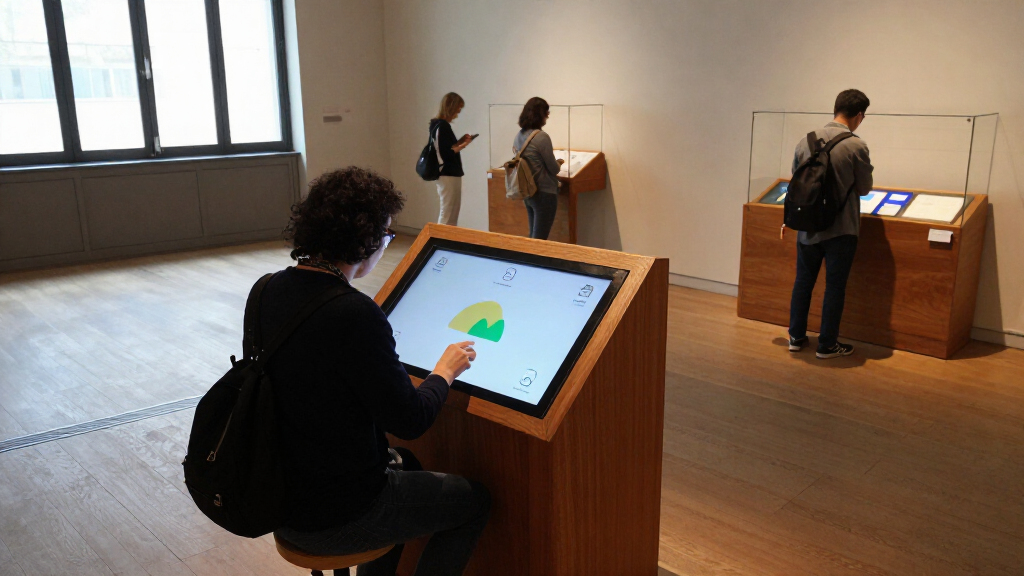
IdeaNavigator AI proposes testing a done-for-you, browser-based exhibit game package with three small museums. The concept aims to make school and family visits more interactive, but it has not yet been tested; effects on bookings, visit length and repeat visits remain unknown.
IdeaNavigator AI has proposed a pilot of exhibit-based learning games at three small museums, with the aim of giving schools and families more interactive visits without requiring an app download or custom agency build. The proposal is a test plan, not a report of results: it calls for tracking bookings, family visit length and repeat visits over one term, but provides no evidence yet that the games improve those measures.
The proposed product is a fixed-price, done-for-you package for a small history, art or science museum, generally described as having an annual budget below $250,000. Museums would provide photographs, exhibit labels and object records. Within two weeks, the provider would deliver a browser-based quest built around the collection, according to the proposal.
The suggested package includes three activity formats: a school-group hunt organized by grade band and aligned to state standards, a family quest and a 10-minute solo trail. The plan also calls for content review by a museum educator, a simple staff editor for replacing objects when exhibits change, a printable alternative and analytics that museums could use in grant reports. These are proposed features; availability and performance have not been independently demonstrated.
For an initial test, the proposal recommends building quests for three museums at cost and comparing results over one school term with the same term in the previous year. Measures would include school-group bookings, family dwell time and repeat visits. It also suggests asking whether at least two museums would seek funding for a paid content refresh in their next grant applications. No pilot participants, prices or measured outcomes are identified.
How Exhibit Games Could Engage Visitors A three-museum pilot proposal
IdeaNavigator AI proposes browser-based collection quests for school and family visits. The concept has not yet been tested, so its effects remain unknown.
What the package proposes
A provider would build activities from each museum’s collection, with no app download required.
Collection hunt
Organized by grade band and aligned to state standards.
Family quest
A proposed interactive way to explore exhibits together.
Short trail
A 10-minute activity built around the collection.
How the pilot would work
The proposal suggests testing feasibility and visitor measures against the same term in the previous year.
Create collection-based quests at cost for small museums.
Measure school bookings, family dwell time and repeat visits.
Ask whether at least two museums would seek grant funding for a paid refresh.
What museums may gain
The service is aimed at museums with limited staff and education budgets.
- Provider drafts activities from museum materials.
- Staff editor helps replace objects when exhibits change.
- Printable alternative and analytics are proposed.
- Whether games improve learning or visit behavior.
- Price, participant museums and launch date.
- How analytics would be collected and compared.
Funding context
The proposal points to grant opportunities as a possible route, but none is confirmed for this package.
A Low-Cost Test for Museum Visits
Small museums often have limited staff and education budgets, leaving little capacity to create and maintain digital activities. IdeaNavigator AI describes existing school activities as worksheets that may be reused for years, while families can move through galleries quickly. The proposed package is intended to address that capacity problem by having a provider draft the activities from each museum’s own collection and giving staff basic tools to update them.
If tested successfully, a fixed-price service could offer museums an alternative to writing content in-house or commissioning a custom digital game. A browser-based format could also avoid asking visitors to install an app. But the proposal does not establish that interactive games will increase learning, lengthen visits or bring families back. Those outcomes would need to be measured, and the pilot’s small scale would limit how broadly its results could be applied.
The idea also connects to funding decisions. The proposal frames the package as a project small museums might include in a grant application, with group purchasing through regional museum associations as another possible route. Whether grantmakers would support such spending, or museums would pay for continuing hosting and refreshes, remains untested.
Products Worth Considering

Apple AirPods Pro 3 Wireless Earbuds with Active Noise Cancellation

Logitech MX Mechanical Wireless Illuminated Keyboard, Tactile Quiet, Graphite

Apple MacBook Air 13.6-inch Laptop with M5 Chip, 16GB Memory, 512GB SSD, Midnight
As an affiliate, we earn on qualifying purchases.
Grant Timing Shapes the Proposal
IdeaNavigator AI points to federal museum funding as a reason to test a product that could fit within a defined education-project budget. It says the Institute of Museum and Library Services announced its FY2026 Inspire Grants for Small Museums on Sept. 9, 2026, funding 88 small museums to develop educational programs and exhibits. The proposal also notes that a court settlement in April 2026 left the agency intact.
At the same time, the proposal says the president’s FY2027 budget again proposed eliminating IMLS and that the FY2027 National Leadership Grants deadline was tentatively set for Nov. 13, 2026. These details describe the funding environment as presented in the proposal; the grant deadline is explicitly tentative. The timing does not establish that the proposed game package has secured funding or that any museum has committed to buy it.
The product concept is aimed at museums with few employees and volunteers who handle multiple responsibilities. The stated business model combines a fixed-price initial build with a modest annual hosting and refresh fee. Regional museum associations could potentially buy the service for several institutions, though no association partnerships are reported.
Pilot Evidence Is Still Missing
The proposal does not name participating museums, a service provider or a launch date. It also does not give a price, explain how visitor analytics would be collected, or set out a method for separating the games’ effects from other changes in attendance or programming. The suggested previous-year comparison could provide a reference point, but the proposal does not specify how differences between terms would be handled.
There are no reported results on learning, accessibility, staff workload, school bookings or family behavior. It is also unknown whether the activities would meet individual museums’ curriculum needs or whether two museums would actually pursue paid refreshes. The cited grant context does not confirm that any funding has been awarded to support this particular product.
Three-Museum Test Would Settle Feasibility
The next step proposed by IdeaNavigator AI is to build the package for three small museums at cost, then follow outcomes for one term and compare them with the same term a year earlier. A useful account of the test would report the participating museums, the costs, the measures used and any limits in the comparison, alongside the booking, dwell-time and repeat-visit figures.
The proposal also calls for checking whether at least two of the three museums would include a paid refresh in a future grant application. Until such a pilot is completed and results are shared, the concept remains an unvalidated service idea rather than an established way to increase visitor engagement. The proposed grant deadline is tentative, and no later project milestone or confirmed buyer is reported.
Source: IdeaNavigator AI
Key Questions
Has the museum game package been tested?
No results are reported. IdeaNavigator AI recommends an initial test at three small museums but does not identify participants or say that the pilot has begun.
What would the proposed games include?
The suggested browser-based package has a school-group hunt, family quest and 10-minute solo trail, along with an editor for staff, a printable fallback and visit analytics.
How would the pilot measure results?
The proposal recommends tracking school-group bookings, family dwell time and repeat visits over one term and comparing them with the same term in the previous year. It does not provide pilot data or a detailed evaluation method.
How would museums pay for the service?
The suggested model is a fixed-price initial build plus an annual hosting and refresh fee. Regional museum associations are proposed as possible group buyers, but no prices or partnerships are reported.
Source: IdeaNavigator AI