📊 Full opportunity report: Accessible Travel: Understanding Physical-Demand Scores on IdeaNavigator AI — validation score, market gap, and execution plan.

Get business pricing on tech for your team
- Business-only prices and quantity discounts
- Tax-exempt purchasing
- Multiple users, one account, clear invoices
TL;DR
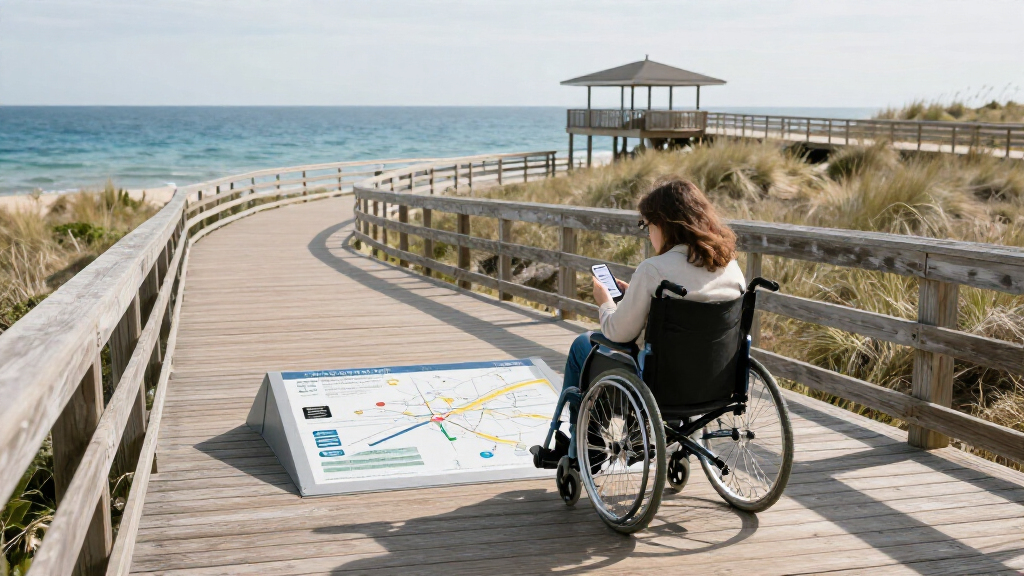
A proposal for tour operators would replace vague effort labels such as “moderate” with profiles detailing walking distance, stairs, terrain and rest options. It is a product concept, not a reported launch: the suggested test is to rate 30 excursions for two operators and compare outcomes over a season.
IdeaNavigator AI has proposed a physical-demand rating system for tours and shore excursions, offering details such as walking distance, stairs, terrain and opportunities to sit before a traveler books. The concept targets tour operators serving older guests and people who can walk but have limited stamina, addressing a gap left by broad labels such as “moderate” or “some walking.”
In its proposal, IdeaNavigator AI says a profile would record total walking distance, the longest stretch without a break, stair count, steepest gradient, surface type and time spent standing. It would also list whether seated rests and step-free alternatives are available. The aim is to describe the physical effort of a specific itinerary rather than rely on a single general difficulty label.
For an initial product, IdeaNavigator AI suggests having guides document a real tour using a phone app, a GPS track and a stair counter. Operators could then display an embeddable rating badge and let customers filter trips on booking pages. A “can I do this?” self-check is also proposed, though the concept does not specify how that check would make recommendations or account for individual health needs.
IdeaNavigator AI identifies product and operations leads at tour operators and shore-excursion sellers whose customers skew 60 and older as potential buyers. Examples in the proposal include river cruise lines, alumni travel programs and small-group tour companies. The suggested revenue model combines subscriptions based on the number of rated products with a one-time fee to assess an operator’s existing tour catalog.
Physical-demand scores before booking
IdeaNavigator AI proposes replacing vague effort labels with profiles describing the physical demands of tours. The service is a concept, with no launch or completed pilot reported.
What travelers would see
Profiles would describe effort across a specific itinerary.
Distance and breaks
Total distance and the longest stretch without a break help travelers judge walking demands.
Stairs and terrain
Stair count, steepest gradient and surface type add detail beyond “moderate.”
Sitting and step-free routes
Profiles would note seated rests and step-free alternatives where available.
Who the idea is for
The proposal targets travelers who can walk but may have limited stamina, and businesses serving them.
- Older guests
- People with limited walking endurance
- Customers deciding whether an outing feels manageable
- Tour operators and shore-excursion sellers
- River cruise lines
- Alumni travel programs and small-group tour companies
How the proposed pilot works
The trial would check whether clearer profiles are associated with changes in tour outcomes.
Guides record tours using a phone app, GPS track and stair counter.
Display ratings on booking pages so customers can review and filter trips.
Track incidents, stragglers, refund requests and reviews mentioning “too strenuous” against the prior season.
What remains unproven
The proposal describes goals for validation, not established results.
| Question | What is known |
|---|---|
| Is the service available? | No launch or participating operators are identified. |
| Will it reduce problems? | No pilot results or measured effects are reported. |
| Does a rating guarantee suitability? | No. Individual abilities differ, and the concept does not assess personal medical needs. |
| How consistent are ratings? | Accuracy checks and updates when routes change are not defined. |
More Detail Before Booking
For travelers with limited walking endurance, the difference between a short walk on a smooth path and a long route over cobblestones or stairs can determine whether an outing is manageable. IdeaNavigator AI’s proposal focuses on that middle ground: people who may be able to walk but need to know the distance, pace demands, terrain and chances to rest before committing.
The proposal argues that more specific descriptions could help operators set expectations. It says guests sometimes discover demanding conditions only on the day of a tour, leaving guides to manage stragglers and operators to handle incidents, refund requests or negative reviews. These are problems described in the proposal, not outcomes established by published operational data. The suggested trial would test whether ratings are associated with changes in those measures.
The system would not by itself determine whether a trip is safe or suitable for every customer. Physical capacity varies, and a distance or stair count cannot capture every medical limitation. The practical value would depend on consistent measurements and clear presentation, with travelers making their own decisions rather than treating a score as a guarantee.
Products Worth Considering

Sonos Era 100 SL Compact Microphone-Free Speaker, Black

Bose SoundLink Plus Portable Bluetooth Speaker, Black

Sonos Play Portable Wi-Fi and Bluetooth Speaker, White
As an affiliate, we earn on qualifying purchases.
Different From Wheelchair Access Data
IdeaNavigator AI distinguishes its concept from accessibility databases focused on wheelchair-related measurements of properties and facilities. The proposal argues that those records do not necessarily grade the walking effort required across an entire itinerary. Its suggested profile would instead focus on effort for people who can walk but have limits, while also recording step-free alternatives where they exist.
IdeaNavigator AI also points to the European Accessibility Act as a reason to explore the idea now. The act has applied since June 28, 2025. According to the proposal, it requires in-scope air, bus, rail and waterborne passenger services to provide information about accessibility of vehicles, surrounding infrastructure and the built environment. The proposal does not establish how the law applies to any particular tour operator or excursion product.
As another market signal, IdeaNavigator AI cites Wheel the World’s reported $11 million Series A funding round in February 2026. That funding is presented as evidence of investment in verified accessibility data, not proof that demand for this specific physical-effort product has been measured. The proposed service remains an idea rather than a confirmed commercial launch.
Pilot Results Have Yet to Come
IdeaNavigator AI’s proposal identifies no operating company, product launch, participating tour operator or completed trial. It provides no evidence that the ratings have already reduced incidents, refunds, guide workload or complaints. Those outcomes are goals for validation, not demonstrated results.
The proposed method also leaves practical questions open. The proposal does not explain how ratings would be checked for accuracy, kept current when routes change, or made comparable between operators. Nor does it define a single score or threshold for what counts as strenuous. The listed measurements could support a useful profile, but customers may still need to interpret them in light of their own abilities.
The proposal provides no legal analysis of which businesses or booking arrangements fall within the European Accessibility Act’s scope. The cited investment and legislation, meanwhile, do not confirm that an operator will adopt this particular system.
Test Ratings Across Two Operators
IdeaNavigator AI recommends a limited pilot: rate 30 existing excursions for two operators with customers aged 60 and older, then display the profiles on their booking pages for one season. The proposal does not say that any operator has agreed to take part or set a start date.
The suggested comparison is against the prior season, tracking on-tour incident reports, guide-flagged stragglers, refund requests and review mentions of “too strenuous.” Such a comparison could help test whether the information is useful, although seasonal differences or changes in tour offerings could affect the results. Until a pilot is conducted and reported, the concept’s effect on booking choices and tour outcomes remains unknown.
Source: IdeaNavigator AI proposal
Key Questions
What would a physical-demand profile show?
According to IdeaNavigator AI’s proposal, it would list measures such as walking distance, longest uninterrupted walk, stairs, steepest gradient, surfaces and standing time, along with seated-rest availability and step-free alternatives.
Is this rating service already available?
IdeaNavigator AI’s proposal does not identify a launched service or participating operators. It describes a product concept and a suggested pilot, not a completed rollout.
Who is the proposed service for?
The proposal targets tour operators and shore-excursion sellers serving older guests, and travelers who can walk but may have limited stamina or mobility.
How would the idea be tested?
IdeaNavigator AI suggests a pilot that would rate 30 excursions for two operators, display the profiles for one season and compare incidents, stragglers, refund requests and “too strenuous” review mentions with the prior season.
Would a rating guarantee that a tour is suitable?
No such guarantee is described in the proposal. The measurements could help people judge the effort involved, but individual abilities differ, and the proposal does not claim a profile can determine personal medical suitability.
Source: IdeaNavigator AI