

You may notice there are lots of job seekers, but employers still struggle to find workers with the right skills. This skills shortage isn’t due to a lack of labor but a mismatch caused by rapid technological advances and lagging education systems. Many workers lack the practical skills needed for modern roles, creating delays and increased costs for companies. Keep exploring to learn how education and training solutions are working to bridge this gap.
Key Takeaways
- Many jobs remain unfilled despite high unemployment, due to a mismatch between workers’ skills and employer needs.
- Rapid technological advancements outpace education systems, leaving graduates unprepared for modern roles.
- Skills shortages are driven by an education and training gap, not a lack of available workers.
- Employers face delays and higher costs because of limited qualified candidates with the right technical skills.
- Closing the skills gap requires targeted upskilling, curriculum updates, and vocational training aligned with current technology.
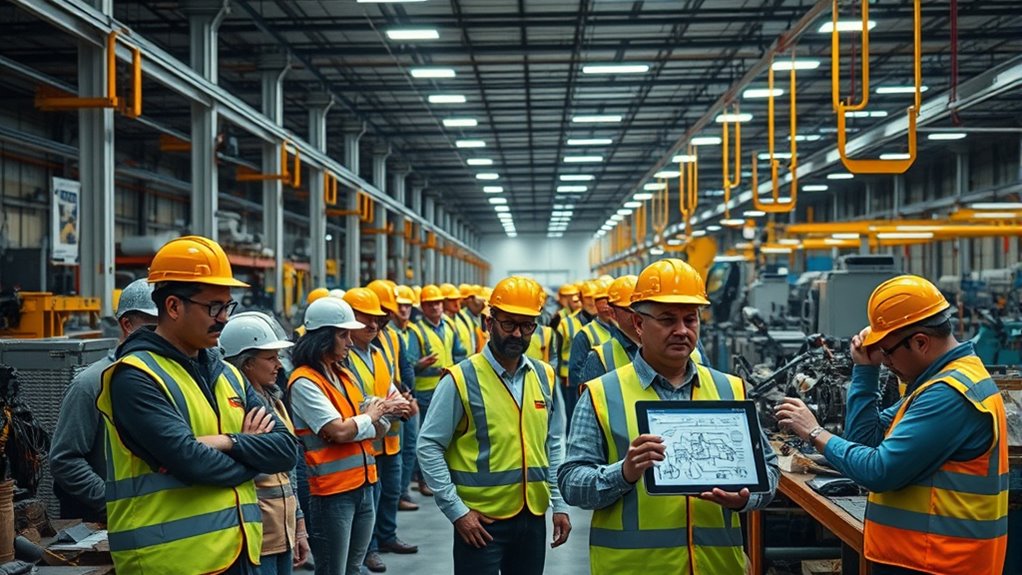
Despite widespread efforts to fill them, skills shortages persist across many industries, revealing a paradox at the heart of today’s labor market. You might think that with so many people looking for work, finding qualified candidates would be straightforward. Yet, many employers struggle to find workers with the right skills, exposing significant technological gaps and an education mismatch. These issues prevent a smooth shift from labor supply to demand, creating a disconnect that leaves many positions unfilled despite high unemployment rates. Advances in AI in Education are beginning to influence how skills are developed and delivered, potentially helping bridge some of these gaps. Technological advancement accelerates faster than many education systems can adapt. As new tools, software, and machinery emerge, the skills needed to operate them evolve rapidly. Unfortunately, educational programs often lag behind, unable to keep pace with the pace of technological change. You may find that recent graduates lack the practical skills for modern roles, or that workers already in the field need retraining to stay current. This education mismatch creates a bottleneck, where the skills learned in school don’t align with what employers actually need. The consequence is a widening gap: companies want workers who can hit the ground running with advanced tech, but the pool of qualified candidates remains limited. You might encounter this when trying to hire for roles in IT, manufacturing, or healthcare—sectors heavily influenced by technological progress. Instead of a straightforward hiring process, you face lengthy delays, additional training costs, or compromises on quality because the talent pool simply isn’t equipped with the necessary skills. This misalignment isn’t just a problem for employers; it also impacts workers. Many individuals find themselves stuck in jobs that don’t utilize their full potential or in roles that don’t match their skills and interests. The education mismatch means they’re not prepared for the jobs that are available, and retraining can be costly and time-consuming. Without targeted efforts to bridge these gaps—through upskilling programs, vocational training, or curriculum updates—the cycle continues. The skills shortage persists, not because of a lack of workers, but because the skills they possess don’t meet the demands of a rapidly evolving economy.

Education and Upskilling: Navigating Universities, Courses, and Career Development for a Brighter Future (Rebooting in London: A Guide to Starting Fresh in the UK’s Dynamic Capital Book 14)
As an affiliate, we earn on qualifying purchases.
As an affiliate, we earn on qualifying purchases.
Frequently Asked Questions
How Do Companies Identify the Specific Skills They Lack?
You identify the specific skills you lack through skills assessments and talent mapping. Start by evaluating your current team’s abilities with skills assessments to pinpoint gaps. Then, use talent mapping to visualize existing skills versus your future needs. This approach helps you spot critical shortages, guiding targeted training or hiring strategies, ensuring you acquire the right skills efficiently and effectively for your organization’s growth.
What Role Does Education Play in Resolving the Skills Gap?
Education plays a crucial role in resolving the skills gap by improving workforce readiness through targeted educational reform. You can advocate for curriculum updates that align with industry needs, guaranteeing students develop relevant skills. By fostering partnerships between schools and businesses, you help create practical training opportunities. This approach guarantees future workers are better prepared, reducing the skills mismatch and closing the gap between available talent and employer requirements.
How Can Government Policies Support Workforce Skill Development?
Imagine a city implementing policy initiatives that fund workforce training programs tailored to local industries. You can support skill development by advocating for policies that incentivize businesses to invest in training, such as tax credits or grants. These initiatives help bridge the skills gap by ensuring workers acquire relevant, up-to-date skills, aligning the workforce with market needs, and fostering economic growth through continuous workforce development.
What Industries Are Most Affected by the Skills Shortage Paradox?
You’ll notice that healthcare, technology, and manufacturing face the most significant sector mismatch due to talent scarcity. These industries struggle to find workers with the right skills, even though there are plenty of job seekers. This skills shortage paradox hampers growth and innovation, making it essential for you to support initiatives that bridge the skills gap. Addressing sector mismatch benefits both employers and workers, creating more balanced and resilient economies.
How Does Technological Advancement Influence the Skills Mismatch?
Technological advancement, especially automation impact and digital transformation, widens the skills mismatch. As businesses adopt new tools, you need updated skills to operate and maintain them. If you lack digital literacy, you struggle to keep up, causing a gap between available jobs and your skills. This shift demands continuous learning, but many workers don’t get the training needed, making it harder to fill roles requiring advanced tech proficiency.

REPAIR KIT FOR GRADING 248863 (Assessment Training Institute, Inc.)
As an affiliate, we earn on qualifying purchases.
As an affiliate, we earn on qualifying purchases.
Conclusion
You see, despite having plenty of workers, the skills gap remains a stubborn hurdle. It’s like trying to fit a square peg in a round hole — the talent isn’t quite what employers need. But don’t lose hope; with proactive training and forward-thinking, you can turn this challenge into an opportunity. Remember, every cloud has a silver lining. If you stay adaptable and committed, you’ll find a way to bridge the divide and thrive.

Coaching Volleyball Technical & Tactical Skills (Technical and Tactical Skills Series)
SHK01478
As an affiliate, we earn on qualifying purchases.
As an affiliate, we earn on qualifying purchases.

AI-Powered Pedagogy: Redefining Education
As an affiliate, we earn on qualifying purchases.
As an affiliate, we earn on qualifying purchases.