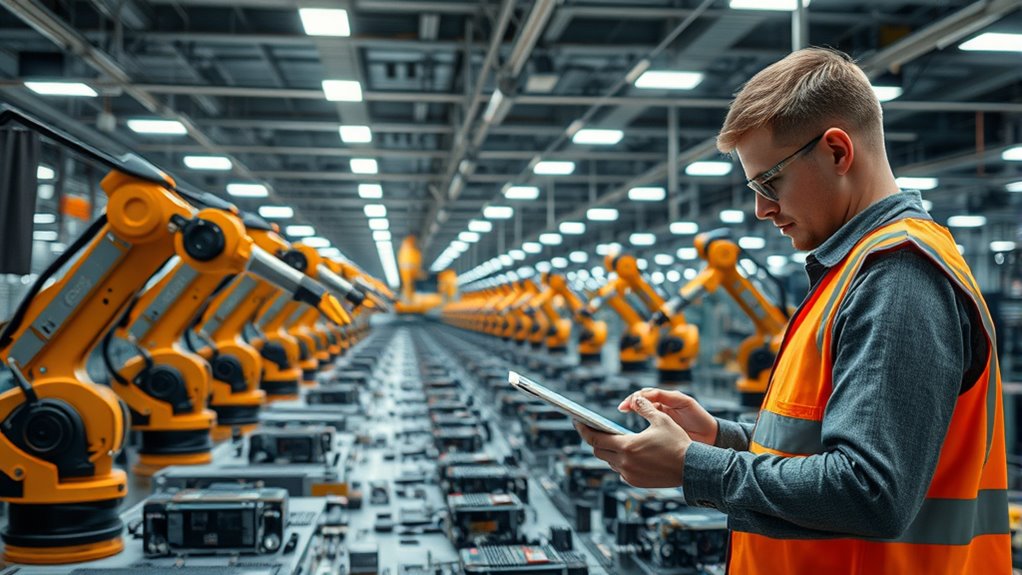

Automation now affects not just low-skilled jobs but a wide range of high-skilled roles across industries like healthcare, finance, and law. Tasks requiring complex judgment, creativity, and social skills are increasingly automated or transformed. This means your career may face risks beyond traditional concerns about low-wage work. Staying informed about how AI impacts different roles can help you adapt. If you want to understand how to navigate this evolving landscape, keep exploring this topic.
Key Takeaways
- Automation and AI threaten both low-skilled and high-skilled jobs across various industries globally.
- Many roles requiring secondary education and advanced skills are increasingly vulnerable to automation.
- High-skilled sectors like management, healthcare, and finance are evolving rapidly due to AI integration.
- Disruptive innovations are creating new opportunities, but also displacing jobs at all skill levels.
- Continuous skill development and adaptability are essential for workers across all skill tiers to remain employable.
The Scope of Automation: Beyond Low-Skilled Roles
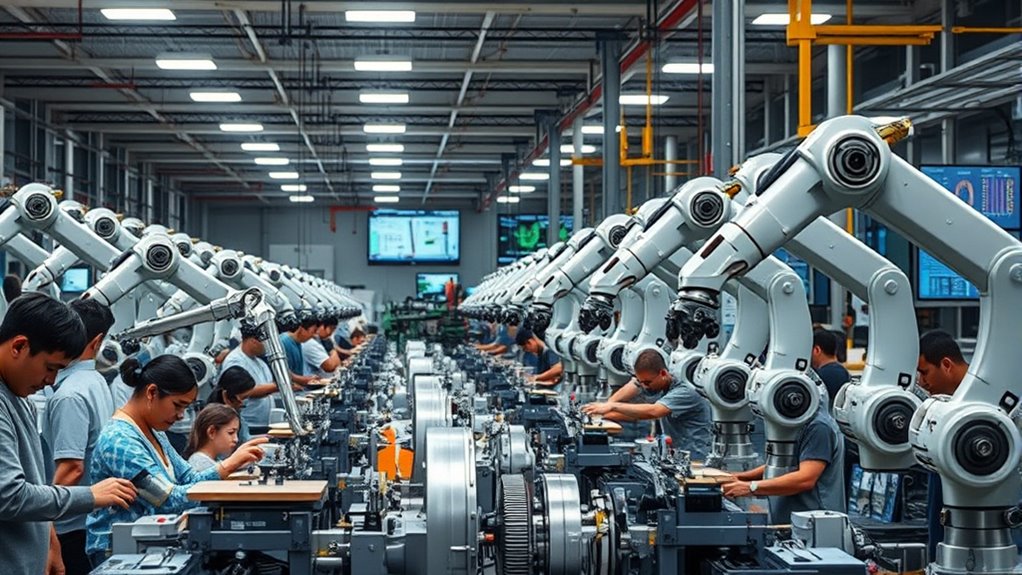
While many assume automation mainly threatens low-skilled jobs, its reach extends far beyond that. You might be surprised to learn that automation affects roles across various industries, including service and cognitive tasks. Jobs involving complex activities like driving, composing news articles, or analyzing data are increasingly vulnerable. AI isn’t just replacing manual labor; it’s integrating into sectors like science, technology, and business, expanding its influence. This shift isn’t limited to manufacturing; it touches jobs requiring secondary education in emerging economies and impacts middle-income roles. As AI capabilities grow, even high-skilled jobs face risks, challenging the idea that only low-skilled roles are at stake. Automation’s broad scope demands awareness and adaptation across all skill levels. Recognizing the importance of technological integration in various professions is crucial for understanding future employment trends. Moreover, the increased use of advanced algorithms in decision-making processes is transforming industries beyond traditional manual tasks. Additionally, the evolution of workforce automation continues to blur the lines between different skill tiers, making adaptability essential for workers at all levels. Furthermore, developments in artificial intelligence are enabling machines to perform tasks that were once thought to require human cognition, thereby broadening the impact of automation. For example, the use of home furnishings automation in industries like smart home technology illustrates how automation is expanding into everyday products, influencing how people live and work.
High-Skilled Jobs and AI: A Growing Intersection

AI is increasingly automating complex tasks in high-skilled jobs, transforming how you work and what skills are essential. While some roles shift or shrink, new opportunities also emerge for those who adapt and develop AI-related expertise. This intersection pushes you to stay agile and continuously upgrade your skills to thrive in the evolving landscape. Advanced reasoning and multimodal capabilities in AI are enabling machines to handle sophisticated decision-making and interpret diverse data types, further expanding the scope of high-skilled work. Additionally, automation in business is contributing to more efficient workflows and new job roles that require oversight and strategic input. As these technologies evolve, staying informed about job market trends becomes crucial for career resilience. Incorporating performance enhancements like those seen in tuning Chevrolet vehicles illustrates how technological progress can optimize performance across various industries, including the workforce. Recognizing how health benefits of juice promote overall well-being can also be relevant in fostering a healthier, more productive workforce. Moreover, understanding retail hours and service availability can help professionals plan their work and leisure activities effectively.
AI Automates Complex Tasks
Advancements in artificial intelligence are enabling machines to handle increasingly complex tasks once thought to require human expertise. AI performance on demanding benchmarks like MMMU, GPQA, and SWE-bench has improved dramatically, with increases of up to 67.3 percentage points. Generative AI tools now boost performance by an average of 66%, especially on complex challenges. In programming, language models have outperformed humans in specific tasks, and AI systems are generating high-quality videos. Over 92% of companies plan to increase AI investments, reflecting its expanding role in intricate fields. AI’s ability to automate sophisticated tasks is transforming industries, pushing the boundaries of what machines can do, and blurring the lines between high-skilled work and automation. Additionally, the integration of expert advice into AI systems is enhancing decision-making processes across various sectors. As these technological capabilities grow, the development of breakthrough technologies continues to accelerate innovation in multiple domains. Promoting biodiversity in the workplace, such as supporting green initiatives, can also contribute to sustainable development as organizations adapt to technological changes. Recognizing the potential of specialized skills in AI can help prepare the workforce for these evolving demands.
High-Skilled Job Transformation
As machines take on increasingly complex tasks, high-skilled jobs are also experiencing significant changes driven by automation and AI integration. You might think these roles are safe, but 60% of jobs in advanced economies face automation risks, including high-skilled positions. Tasks in management, finance, healthcare, and legal work are evolving rapidly, demanding more AI literacy and adaptability from you. For example:
| Sector | Automation Impact | Skills Needed |
|---|---|---|
| Accounting/Finance | 25.4% at high risk of automation | Data analysis, AI understanding |
| Healthcare | Evolving rather than replacing roles | Tech integration, critical thinking |
| Legal Services | AI automates research, documentation | Legal tech proficiency |
AI models like LLMs and machine learning are transforming how you work, requiring continuous learning and adaptation. Research indicates that automation is also reshaping high-skilled jobs, emphasizing the importance of ongoing skill development.
New Opportunities Emerge
The integration of AI into high-skilled sectors is opening up new job opportunities that were previously unimaginable. Within five years, AI and information-processing tech are expected to create 19 million jobs, outpacing displacement. Demand is surging for roles in data analysis, cybersecurity, networking, and tech literacy. Employers seek candidates with analytical skills and systems thinking to tackle complex, data-driven challenges. Programming expertise and adaptability to automation are increasingly valuable across industries. In IT, AI boosts productivity and creates roles in infrastructure management, deployment, and troubleshooting. Skilled workers are needed to oversee AI systems, reducing negative impacts. Additionally, new roles in AI ethics, governance, and interdisciplinary research are emerging, offering high-skilled professionals fresh avenues for growth and innovation. 170 million new jobs expected to be created this decade, representing 14% of current employment. Moreover, understanding AI integration is becoming essential for professionals aiming to remain competitive in evolving job markets. Gaining proficiency in home decor styling and wall organization can also give professionals an edge in designing functional and visually appealing spaces.
Skills Transformation and the Evolving Job Market
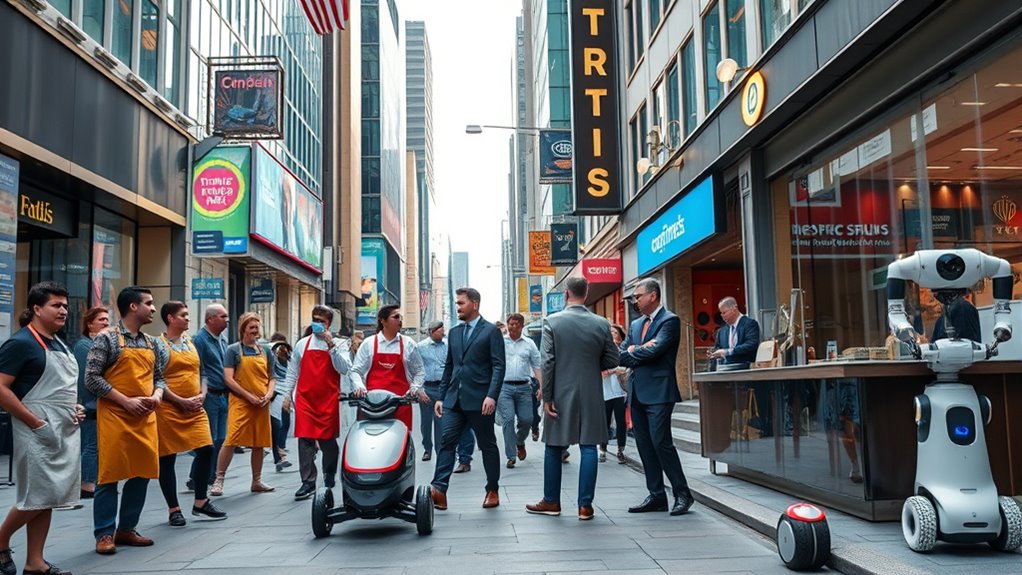
As automation changes the job landscape, you’ll need to adapt your skills continuously to stay relevant. The shift highlights the importance of lifelong learning and staying updated on new technologies. The integration of juice recipes and mixes into the culinary industry exemplifies how creative skill development can open new career pathways. Embracing ongoing skill development is key to thriving in this evolving market. Significant job creation in sectors like renewable energy, AI, and healthcare underscores the need for workers to acquire new competencies to capitalize on emerging opportunities. Understanding sound healing science and its applications can inspire innovative approaches to wellness careers, demonstrating how diverse skill sets can be leveraged in emerging fields. Staying flexible and proactive in developing reskilling strategies can help mitigate potential job displacement risks and ensure long-term employability. Moreover, leveraging predictive analytics for small businesses can provide valuable insights into market trends, helping workers and entrepreneurs adapt their skills to meet new demands. Additionally, participating in special events and themed breakfasts can provide valuable experience and networking opportunities to expand your professional skill set.
Skills Shift Dynamics
Have you noticed how rapidly the job market is shifting due to automation and technological advances? By 2030, automation will displace 92 million jobs globally, but it will also create 170 million new roles, resulting in a net gain of 78 million jobs. Growth is focused on fields like technology, green energy, healthcare, and caregiving. Alongside technical skills, human-centric abilities such as resilience, leadership, and social influence are increasingly valuable. Roles in cybersecurity and network management are expanding due to geopolitical and economic changes. To stay relevant, around 44% of workers will need reskilling within five years, focusing on AI, data analytics, and problem-solving. Skills-based hiring is replacing traditional credentials, emphasizing practical expertise and continuous learning to adapt to the evolving job landscape. According to macroeconomic projections, understanding these macrotrends is essential for workforce transformation planning.
Lifelong Learning Importance
Rapid technological advancements are reshaping the job market faster than traditional education can keep up, making lifelong learning more important than ever. You need to continuously adapt your skills to stay relevant and seize new opportunities. Embracing lifelong learning offers you:
- Personal growth and fulfillment—aligning your skills with industry changes, helping you progress and find purpose.
- Job security—bridging skills gaps caused by AI and automation, ensuring you remain essential in your field.
- Relevance in a changing world—adapting quickly to industry evolution, so you don’t get left behind as new roles emerge. Ongoing trends in workforce-aligned education and industry partnerships demonstrate a shift toward continuous skill development.
Staying committed to ongoing education isn’t just about career; it’s about shaping a meaningful, resilient future. Your ability to learn continuously will define your success in tomorrow’s workforce.
The Role of Upgrading Skills in Mitigating Displacement
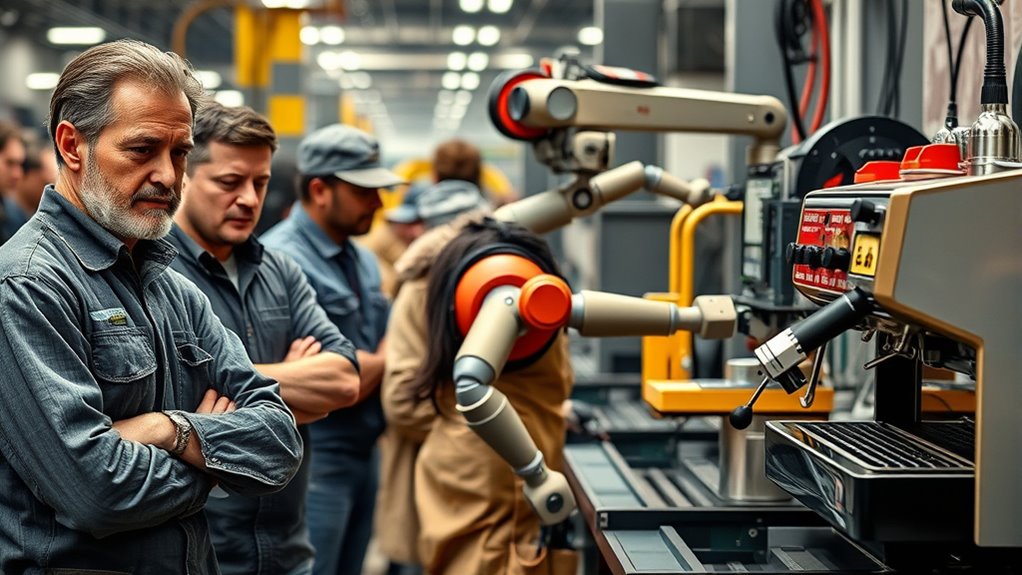
Upgrading your skills plays a crucial role in reducing the risk of job displacement caused by automation. By continuously developing your abilities, especially in areas like digital literacy, problem-solving, and social skills, you become less vulnerable to automation’s impact. Consider the following benefits:
| Skill Area | Job Types Less at Risk | Key Benefits |
|---|---|---|
| Creativity & Problem-Solving | Design, strategy, innovation | Higher adaptability |
| Social & Emotional Skills | Healthcare, education | Better human interaction |
| Technical Skills | Data analysis, AI | Increased employability |
Investing in skills ensures you stay competitive, transition smoothly to emerging roles, and safeguard your career in a rapidly changing job market.
Technological Advancements Reshaping Various Industries

Technological advancements are fundamentally transforming industries across the board, driving efficiency and innovation. You’re witnessing a revolution that’s reshaping manufacturing, energy, transportation, retail, and finance. These changes are not just incremental—they’re disruptive, creating new opportunities and risks.
Technological innovation is revolutionizing industries, creating new opportunities and risks.
- Manufacturing: Robotics and AI could replace up to 20 million jobs globally by 2030, dramatically altering the workforce.
- Transportation: Self-driving tech is progressing rapidly, with autonomous trucks like those from TuSimple already delivering goods.
- Customer Service: AI-powered chatbots are handling 95% of routine inquiries by 2025, transforming how businesses interact with customers.
These advancements boost efficiency but also challenge traditional job roles, pushing you to adapt or face displacement.
The Impact of AI on Tasks Requiring Human Judgment

While AI has made significant strides in automating routine tasks, it still falls short when it comes to tasks that demand human judgment. AI is designed to support, not replace, human decision-making by analyzing vast data and providing insights. However, it often suggests harsher judgments than humans, highlighting the need for human oversight. Tasks involving complex decision-making, ethics, and morality are better handled by humans because AI lacks the nuanced understanding of context and values. Human judgment is essential for creative problem-solving and real-time interactions, such as in education or counseling. Over-reliance on AI can weaken our cognitive skills, yet AI can enhance decision quality when used as a supportive tool. Ultimately, a balanced collaboration between AI and human judgment is key to future success.
Organizational Support and Workforce Adaptability
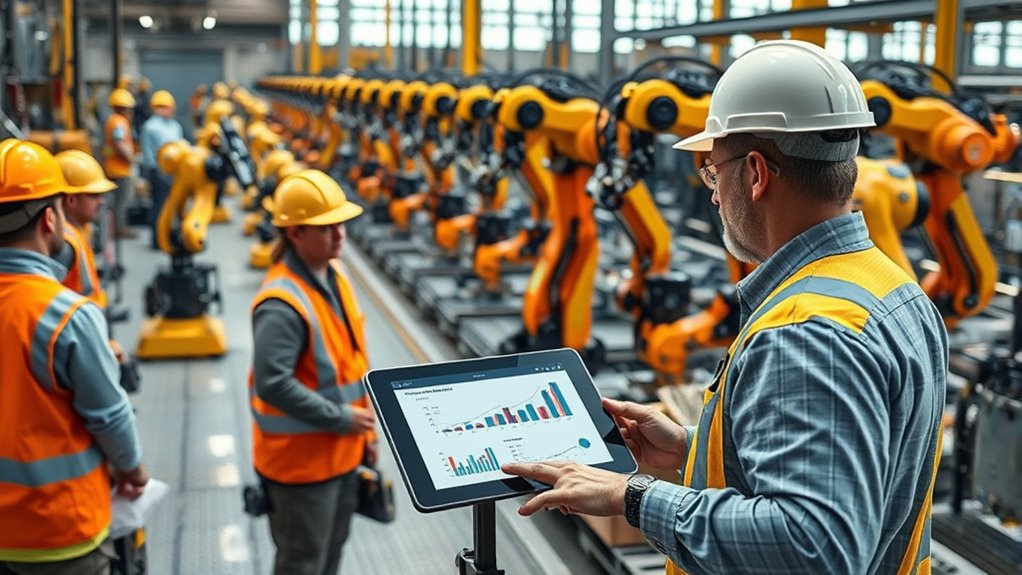
Organizational support plays a essential role in helping the workforce adapt to rapid automation and changing job demands. When your organization invests in adaptability measures, it boosts resilience and prepares you for future shifts. However, only 16% of companies worldwide prioritize continuous learning, leaving many workers unprepared. To effectively navigate these changes, consider these critical steps:
- Create a Culture of Continuous Learning: Encourage ongoing education to keep skills relevant and foster innovation.
- Build Strong Leadership: Leaders must champion upskilling efforts and overcome resistance to change.
- Invest in Tailored Upskilling Programs: Personalized training enhances employee capabilities and organizational agility.
Without these efforts, your workforce risks falling behind, and your organization’s competitiveness diminishes in a rapidly evolving landscape.
Future Projections: Job Growth and Skill Gaps

You are trained on data up to October 2023.
Strategies for Navigating Automation’s Broader Reach

As automation increasingly spans both low- and high-skilled roles, staying adaptable becomes essential. You need to proactively prepare for this broad shift. Here are three strategies to help you navigate automation’s expanding reach:
- Upskill continuously—learn digital literacy, data analysis, and tech skills to stay relevant in evolving roles.
- Diversify your skills—develop cross-functional abilities like critical thinking, creativity, and emotional intelligence that machines can’t replicate.
- Embrace human-machine collaboration—seek opportunities to work alongside AI, focusing on supervisory, interpretive, and innovative tasks.
Frequently Asked Questions
How Does Automation Affect High-Skilled Professions Differently Than Low-Skilled Jobs?
You see that automation impacts high- and low-skilled jobs differently. High-skilled professions benefit because machines handle routine tasks, making your creativity and problem-solving more valuable. In contrast, low-skilled jobs face higher replacement risks due to repetitive work, with fewer opportunities to adapt. While high-skilled workers can leverage new tech for growth, low-skilled workers often struggle with job loss and wage stagnation, highlighting the need for skill development.
What Industries Are Most Vulnerable to Ai-Driven Job Displacement?
The industries most vulnerable to AI-driven job displacement are like open fields ready for harvest, with certain crops more at risk. Office and administrative roles top the list, with nearly a quarter vulnerable due to routine tasks. Customer service jobs follow closely, replaced by chatbots and virtual assistants. Manufacturing also faces disruption as robotics and AI enhance productivity. These sectors are like ships adjusting their sails to the winds of automation.
Can Automation Improve Job Quality for Low-Skilled Workers?
Automation can improve job quality for low-skilled workers by reducing physical labor, increasing safety, and allowing focus on more specialized tasks. It can create new opportunities and higher wages when combined with proper training. However, you need to adapt and upskill to benefit from these changes. Access to retraining and education plays a pivotal role in helping you shift into more rewarding, less repetitive roles that automation can support.
How Do Global Skill Gaps Influence Automation’s Impact Worldwide?
Imagine a world where skills are the bridges connecting you to opportunity; when these bridges are shaky or missing, automation widens the gaps, leaving many stranded. Global skill shortages mean fewer people can navigate the changing landscape, causing disruptions across industries. You need to upskill to stay afloat, as automation reshapes jobs everywhere. Addressing these gaps guarantees you’re not left behind in this rapid technological tide.
What Roles Do Human Creativity and Emotional Intelligence Play in Future Jobs?
You play a crucial role in future jobs through your creativity and emotional intelligence. These skills enable you to solve complex problems, innovate, and connect with others—areas automation struggles to replicate. By developing your creative thinking and empathy, you make yourself more adaptable and valuable. Companies that prioritize these skills will thrive, and your ability to foster innovation and build relationships will set you apart in an evolving workplace.
Conclusion
As automation continues, it’s not just low-skilled jobs at risk—by 2030, up to 14% of jobs could be displaced, but many will evolve or create new opportunities. You can stay ahead by upgrading your skills and embracing lifelong learning. Remember, organizations that invest in workforce development see better adaptation. Staying adaptable now will help you navigate the changing job landscape and turn technological shifts into opportunities for growth.