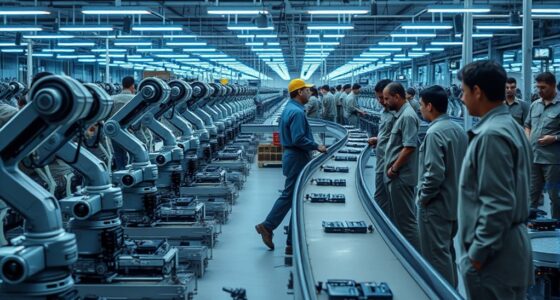
The “Humans Need Not Apply” fallacy falsely suggests that automation and AI will make humans completely obsolete. In reality, technology shifts job roles, creating new industries and opportunities while boosting productivity. Your skills like creativity, critical thinking, and emotional intelligence remain irreplaceable, and history shows technology usually enhances human work rather than replacing it entirely. If you stay adaptable and keep learning, you’ll find plenty of ways to thrive alongside evolving tools.

Get business pricing on tech for your team
- Business-only prices and quantity discounts
- Tax-exempt purchasing
- Multiple users, one account, clear invoices
Key Takeaways
- Automation shifts job roles and tasks, but rarely eliminates entire careers or industries.
- Historical technological advances have consistently created new opportunities, not made humans obsolete.
- Human qualities like creativity, empathy, and strategic thinking remain irreplaceable despite AI progress.
- New industries and roles continuously emerge from technological innovation, requiring ongoing skills development.
- Adaptability, continuous learning, and emotional intelligence are crucial for thriving alongside automation.
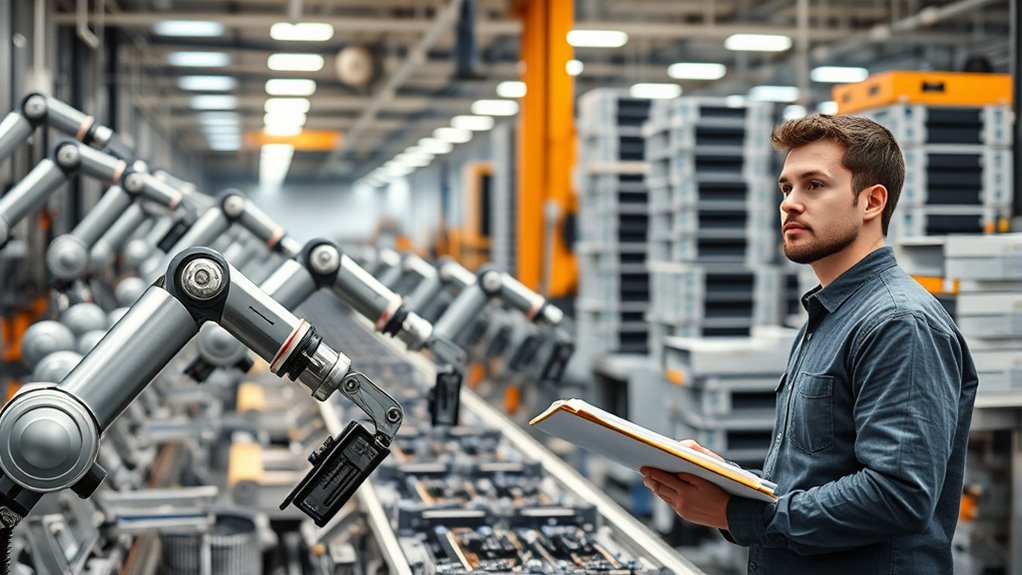
The “Humans Need Not Apply” fallacy suggests that automation and artificial intelligence will inevitably eliminate human jobs, often leading to fear and resistance. Many believe that machines and algorithms will take over every role, rendering human workers obsolete. This idea feeds into automation myths—misconceptions about how technology impacts employment. While it’s true that automation can replace certain tasks, it doesn’t mean that entire careers or industries will vanish. Instead, it often shifts the nature of work, creating new opportunities even as some roles become less relevant.
Automation reshapes jobs but doesn’t eliminate human roles—opportunities evolve alongside technological advances.
You might worry about job displacement, thinking that as machines get smarter, there’s no place left for humans in the workforce. However, history shows a different pattern. When technological advances emerge, they tend to change job requirements rather than eliminate jobs outright. For example, the rise of industrial machinery in the 19th century initially caused anxiety, but ultimately, it boosted productivity and created new roles in manufacturing, maintenance, and engineering. Today, AI and automation are similar—they automate routine, repetitive tasks, freeing you to focus on more complex, creative, and interpersonal aspects of your job.
It’s important to recognize that automation myths often overlook human adaptability. Instead of replacing humans, many technologies serve as tools to enhance your abilities and efficiency. For instance, AI can handle data analysis faster than a person, but it still relies on human oversight for decision-making and ethical considerations. Your skills in critical thinking, empathy, and strategic planning remain irreplaceable. As machines handle the mundane, you get to develop new skills and take on more meaningful roles.
Furthermore, new technologies tend to generate new industries and job categories that didn’t exist before. Think about the rise of digital marketing, app development, and cybersecurity—all of which grew alongside advances in automation. You might need to learn new skills or adapt your current ones, but that’s part of evolving with the times. The fear of job displacement isn’t unfounded but is often exaggerated. Instead of viewing automation as a threat, see it as an opportunity to stay ahead, reskill, and find new pathways for your career.
Additionally, understanding personality traits such as adaptability and emotional intelligence can be vital in navigating technological changes and maintaining relevance in the workforce. Ultimately, the idea that humans will become obsolete because of AI ignores the nuanced reality of technological progress. Rather than eliminating your role, automation often transforms it, emphasizing the importance of human judgment, creativity, and social skills. Embracing change and continuously learning ensure that you remain relevant, adaptable, and indispensable in an increasingly automated world.
critical thinking training books
As an affiliate, we earn on qualifying purchases.
As an affiliate, we earn on qualifying purchases.
Frequently Asked Questions
How Does the Fallacy Impact Employment Trends?
The fallacy can lead you to believe that automation will cause mass job displacement, discouraging skill adaptation. As technology advances, you might fear obsolescence, but in reality, new roles emerge that require fresh skills. To stay relevant, you should focus on continuous learning and adapting your abilities, ensuring you can thrive alongside automation rather than be replaced by it. Embracing change keeps you valuable in evolving employment landscapes.
Can Humans Truly Complement AI in the Workforce?
Yes, humans can genuinely complement AI in the workforce. Your human adaptability allows you to handle complex, nuanced tasks AI can’t easily replicate. Additionally, by considering ethical considerations, you guarantee AI deployment aligns with societal values. This synergy enables you to focus on creative problem-solving, emotional intelligence, and ethical decision-making—areas where AI still falls short—making you an essential part of the evolving workplace.
What Are Examples of Jobs Immune to Automation?
Imagine you’re a skilled artisan crafting a handmade violin, pouring your heart into every detail. Jobs like manual craftsmanship and roles demanding emotional intelligence are immune to automation because they require human touch, intuition, and empathy. For example, therapists or artists connect deeply with others, providing comfort and understanding machines can’t replicate. These roles thrive because they rely on qualities uniquely human, making them essential and irreplaceable.
How Do Economic Factors Influence Automation Fears?
Economic factors heavily influence automation fears by shaping the labor market and wage dynamics. When wages rise, businesses may hesitate to automate, fearing backlash or losing skilled workers. Conversely, low wages and high unemployment can accelerate automation as companies seek cheaper labor options. You might worry that rapid technological change will disrupt job stability, but understanding these economic influences helps you see that automation isn’t solely driven by technology; it’s also shaped by economic incentives.
What Role Does Creativity Play in Human Work?
Creativity is your superpower in the workforce, making human work irreplaceable. Your artistic expression and innovative thinking drive progress and inspire change, setting you apart from machines. Without your ability to think outside the box and craft unique solutions, industries would stagnate. Embracing creativity guarantees you’re not just part of the economy but a crucial catalyst for growth, making your role more essential than ever.
emotional intelligence development courses
As an affiliate, we earn on qualifying purchases.
As an affiliate, we earn on qualifying purchases.
Conclusion
So, don’t buy into the idea that humans are destined for obsolescence. Technology is there to assist, not replace us entirely. Remember, every tool has its limits, and no machine can truly replicate human ingenuity and empathy. Keep in mind, the grass isn’t always greener on the other side—sometimes, it’s just a different shade. Stay adaptable and keep your skills sharp; after all, you’re irreplaceable in ways no machine ever will be.
adaptability skills online course
As an affiliate, we earn on qualifying purchases.
As an affiliate, we earn on qualifying purchases.
As an affiliate, we earn on qualifying purchases.
Fall Picks
fall essentials
As an affiliate, we earn on qualifying purchases.