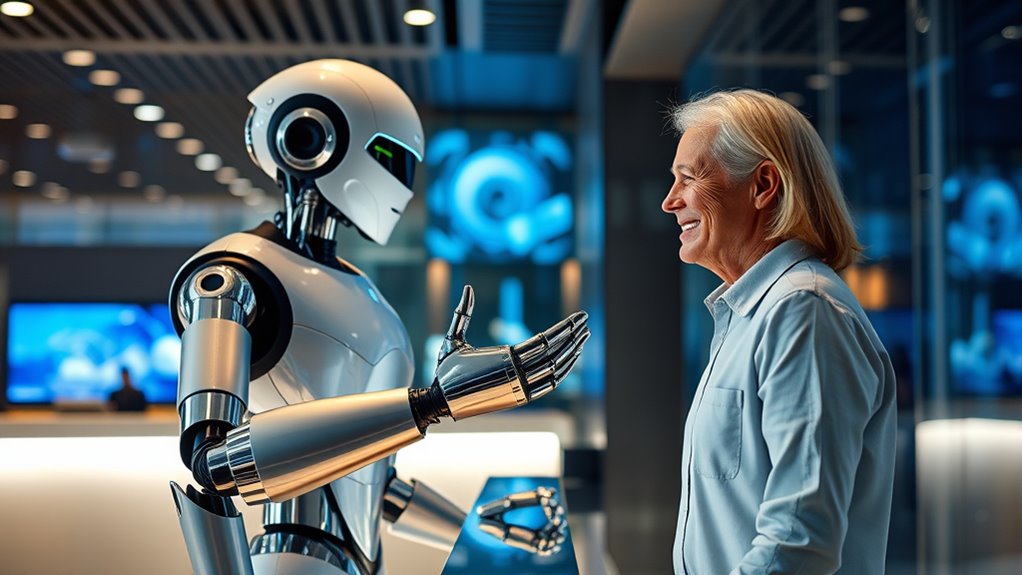

While automation is growing rapidly and offering big benefits like increased efficiency and lower costs, many people still value the human touch for genuine connection, trust, and emotional intelligence. Public trust remains low, especially around privacy and ethics, and comfort levels vary across demographics and industries. Although robots are becoming more advanced in collaboration, human interaction remains vital for satisfaction and teamwork. If you want to see how this balance is evolving, there’s more to discover below.
Key Takeaways
- Public trust in robots remains low due to concerns over ethics, privacy, and job security.
- Human connection and emotional intelligence are crucial for workplace satisfaction and productivity.
- Demographic factors influence acceptance, with older workers and certain regions less comfortable with automation.
- Human-robot collaboration (HRC) enhances safety and flexibility, supporting complementary roles rather than replacements.
- Transparency, ethical practices, and designing robots to support human roles foster greater acceptance of automation.
The Growing Presence of Robots in the Workforce

The presence of robots in the workforce is rapidly expanding, transforming industries worldwide. As of 2024, over 4 million industrial robots operate globally, with annual installations expected to reach 541,000, and growth accelerating through 2027. Robot shipments are projected to hit 718,000 by 2026, up from 553,000 five years earlier. Nearly all companies are investing in AI and robotics, though only 1% have fully integrated these technologies. By 2025, robotics could boost productivity by up to 30% across industries like manufacturing, logistics, and healthcare. In these sectors, robots handle repetitive, dangerous, or precision tasks, freeing humans for oversight, maintenance, and creative roles. The projected economic impact of AI by 2030 is estimated at $15.7 trillion. Additionally, advancements in robotic technology continue to improve adaptability and integration into existing workflows. As automation becomes more sophisticated, concerns about job displacement versus new opportunities remain a significant aspect of the ongoing automation debate. The trend indicates a steady shift toward automation, reshaping the workforce landscape markedly, and understanding the role of human touch remains crucial in evaluating future workforce dynamics. Moreover, the integration of tuning techniques from automotive industries exemplifies how continuous innovation can enhance robotic capabilities and efficiency.
Public Perceptions and Concerns About Automation

Are people genuinely ready to embrace the increasing presence of robots in the workplace? Many still have serious concerns. About 30% of workers fear their jobs will be replaced by AI or automation by 2025, and 14% have already been displaced. Younger workers, aged 18-24, are 129% more worried than seniors about losing their jobs to AI. Public trust remains low; only 15% of U.S. workers would consider having an AI boss. Fear of malfunctions, data privacy issues, and the erosion of human connection fuel skepticism. These concerns slow acceptance, even as automation boosts productivity and creates new jobs. Ultimately, public perception is shaped by anxiety about job security, ethical issues, and a desire for human interaction in the workplace. Robotics’ expanding role in healthcare and industry also influences perceptions, highlighting both opportunities and challenges in acceptance. Ongoing efforts to develop AI safety measures aim to address these fears and build greater trust in automation technologies. Additionally, understanding the importance of personal growth through reflection can help individuals adapt to technological changes in the workplace. Moreover, fostering a clear understanding of home essentials and other related tools can improve daily comfort and productivity amidst technological shifts. Building awareness about holistic wellness approaches may also support workers in managing stress and adapting to workplace transformations more effectively. Recognizing the role of mindful decluttering strategies can help create more organized and less stressful environments as workplaces evolve.
Preferences for Human Interaction Across Industries

Have you ever wondered why human interaction remains essential across different industries despite the rise of automation? It turns out, people value genuine connections at work. When communication is clear and inclusive, productivity increases—sometimes by nearly five times. Most workers (93%) feel connected to their coworkers, with over half feeling very connected, which boosts collaboration and teamwork. Social bonds at work also foster a sense of belonging and satisfaction, leading to higher retention rates. Additionally, effective conflict resolution relies heavily on human empathy and emotional intelligence. The office environment itself plays a crucial role, as physical presence enhances social interactions and fosters community. These human elements aren’t just nice extras—they’re key to organizational success and employee well-being. Supporting informational content highlights how social connections have a profound impact on mental health and job satisfaction. Furthermore, as AI ethicist jobs become more prominent, the importance of human-centered skills in fostering trust and ethical understanding remains irreplaceable. Recognizing the significance of social bonds in workplaces can help organizations prioritize meaningful interactions over automation alone. Moreover, incorporating elements like emotional intelligence can significantly improve workplace relationships and overall harmony. Additionally, leveraging sustainable practices in organizational culture can further strengthen employee engagement and corporate responsibility.
Demographic Influences on Acceptance of Robot Workers

While human connections drive teamwork and job satisfaction, acceptance of robot workers varies widely across different demographic groups. Age, gender, ethnicity, and education influence how comfortable workers feel around automation. Middle-aged employees often experience higher exposure to robots, but older workers tend to hesitate due to less tech familiarity. Men historically face more employment reductions from automation than women. Asian workers and those with college degrees are more exposed to AI, shaping their perceptions. Regional differences also matter—states like Kentucky and Texas have higher robot densities, impacting local acceptance. Understanding demographic factors helps clarify these diverse attitudes toward robot workers. Additionally, generational differences in technological adaptability significantly impact acceptance levels. Recognizing these demographic influences is crucial for developing effective strategies to integrate automation in the workplace. Moreover, regional differences can influence the pace and acceptance of automation adoption across various states.
Benefits of Automation: Efficiency Versus Human Touch

Automation enhances efficiency by enabling businesses to produce more with fewer resources and less downtime. You can operate 24/7, as automated systems don’t need breaks or shift changes. This results in faster, more consistent output while reducing human error. Industries benefit from higher production rates, helping meet fluctuating demand reliably. Current adoption rates indicate that 60% of companies utilize automation tools, demonstrating its widespread acceptance and effectiveness. However, automation also offers cost savings through reduced labor needs and lower maintenance costs thanks to predictive technologies. Resources are used more precisely, minimizing waste and maximizing efficiency. Automated systems ensure high quality and consistency, adhering strictly to programmed instructions and reducing error rates. They can quickly adapt to new demands and scale operations without significant increases in workforce or space. Vibrational alignment with technological progress can also support smoother integration of automation in various industries.
Ethical Considerations and Trust in AI-Driven Roles

As automation becomes more prevalent in workplaces, ethical considerations and trust in AI-driven roles come to the forefront. Privacy concerns arise as AI collects vast personal data, risking misuse. Bias and discrimination can perpetuate unfair outcomes, eroding trust. Job displacement due to automation challenges societal stability, while corporate accountability emphasizes companies’ ethical responsibilities. Regulatory demands grow to protect workers and ensure fair AI use.
| Ethical issues | Trust challenges |
|---|---|
| Privacy risks | Unintended biased decisions |
| Bias and discrimination | Opaque decision-making |
| Job displacement | Data quality concerns |
| Corporate responsibility | Security vulnerabilities |
The Future of Collaboration Between Humans and Robots

The collaboration between humans and robots is evolving rapidly, driven by technological advancements and shifting workplace needs. As cobots become more adaptable and intelligent through AI, machine learning, and sensor technology, your work environment will transform. You’ll see safer interactions, thanks to collision detection and safety features that eliminate the need for physical barriers. Cobots are easily reprogrammed, allowing quick shifts between tasks, which enhances flexibility in industries like manufacturing, healthcare, and logistics. The integration with IIoT enables smarter workflows and data-driven decisions, making operations more efficient. Low entry costs and simple programming encourage small businesses to adopt robots, increasing acceptance. As workforce shortages grow, robots will increasingly handle routine tasks, freeing you to focus on complex, value-added activities.
- Cobots will adapt quickly to changing tasks, boosting productivity.
- Enhanced safety features will increase human-robot cooperation.
- Small and medium enterprises will easily integrate robots into daily work.
Strategies to Balance Innovation With Societal Expectations

You need to ensure how ethical AI integration can build public trust and align technological progress with societal values. Enhancing human collaboration ensures that robots complement rather than replace workers, fostering acceptance. Striking this balance requires transparent policies and active engagement with communities to set realistic expectations.
Ethical AI Integration
Balancing innovation with societal expectations requires organizations to adopt ethical AI integration strategies that prioritize transparency, fairness, and accountability. You need to be clear about how AI is used, ensuring stakeholders understand decision processes and addressing concerns openly. Establishing strong ethical policies helps manage risks and aligns AI deployment with societal values. Leaders must champion cultural change, modeling ethical behavior from the top. Consider these strategies:
- Maintain open disclosure about AI’s role in decision-making.
- Conduct independent audits to detect biases and ensure fairness.
- Form oversight committees to monitor AI’s impact and uphold accountability.
Enhancing Human Collaboration
Integrating robots into workplaces requires careful strategies that foster effective human collaboration while respecting societal expectations. To do this, focus on designing HRC systems that combine human expertise with robotic speed and precision, enabling shared goals. Create collaborative spaces where people and robots communicate directly, exchange information, and work on tasks together. It is crucial to adapt workflows so workers can respond flexibly to new or changing roles, supported by monitoring technologies that improve oversight and responsiveness. Maintaining transparency about the benefits of robot integration helps ease societal concerns. Emphasize that robots support, not replace, meaningful human work. By balancing innovation with safety, ergonomics, and worker well-being, you can build trust and acceptance, ensuring that collaboration remains productive and aligned with societal values.
Frequently Asked Questions
How Will AI Impact Employment Opportunities for Different Skill Levels?
AI will substantially impact employment opportunities across all skill levels. You’ll see low-skilled jobs displaced by automation, reducing entry-level opportunities, especially in manufacturing and data entry. Meanwhile, high-skilled roles in tech and specialized fields will grow, creating new jobs requiring advanced skills. Mid-skilled workers might need to upskill to stay relevant, as AI supports but also transforms roles in healthcare, education, and other sectors.
What Industries Are Most Resistant to Replacing Human Workers With Robots?
Did you know that industries like healthcare and education still rely on over 80% human workers? When you look at industries most resistant to automation, sectors needing emotional intelligence, complex judgment, and creativity top the list. You’ll find that jobs in social work, law, and high-stakes decision-making are less likely to be replaced by robots because they require nuanced understanding, empathy, and ethical considerations that machines can’t replicate.
How Can Companies Build Trust in Ai-Driven Customer Service?
You can build trust in AI-driven customer service by being transparent about how AI operates, explaining decision-making clearly, and safeguarding customer data with strong security measures. Consistently delivering reliable service, reducing wait times, and handling inquiries efficiently show your commitment to quality. Encouraging feedback and combining AI with human support help customers feel valued, ultimately fostering confidence and trust in your AI systems.
What Policies Are Needed to Ensure Ethical Robot Integration?
Getting the ball rolling on ethical robot integration requires clear policies. You should establish transparent guidelines on how robots will be used, focusing on fairness, data privacy, and compliance. Regular audits and stakeholder communication help keep everyone on the same page. Training employees on responsible AI use is essential. By setting these policies, you’ll ensure robots support your goals without crossing ethical lines, making trust and accountability a priority.
Will Future Robots Be Able to Replicate Human Empathy and Emotional Intelligence?
You wonder if future robots can truly replicate human empathy and emotional intelligence. Given current advancements, robots are already demonstrating impressive EI skills, recognizing and responding to emotions effectively. As technology evolves, they’ll become even better at understanding nuance and context. While they may not fully replace human empathy, you’ll likely see robots that can simulate emotional intelligence convincingly, especially in roles like caregiving, education, and customer service, enhancing human-robot interactions considerably.
Conclusion
As you navigate this evolving landscape, remember that striking a balance between innovation and human touch is key. While robots boost efficiency, people still crave genuine interaction and trust. It’s not about throwing the baby out with the bathwater but finding ways for humans and machines to work hand in hand. By embracing change thoughtfully, you can guarantee progress doesn’t leave anyone behind—after all, it’s the best of both worlds that truly counts.