

You are likely familiar with the challenges of accurately measuring campaign effectiveness in Retail Media. Traditional methods, such as Marketing Mix Modeling, have been the cornerstone of this measurement. However, there’s a significant shift happening.
As a retailer, you’re probably aware that Incrementality Testing is becoming the new standard for evaluating campaign impact. This change is driven by the need for more precise attribution and ROI measurement.
The transition from traditional modeling to Incrementality Testing represents a crucial evolution in how you understand and optimize your campaigns. This shift is not just about adopting new methodologies; it’s about gaining a deeper understanding of your customers and their behaviors.
Key Takeaways
- Incrementality Testing offers more precise campaign attribution.
- The shift from Marketing Mix Modeling to Incrementality Testing is driven by the need for better ROI measurement.
- Retail Media is at the forefront of this change, leveraging Incrementality Testing for campaign optimization.
- Understanding customer behavior is crucial in this new measurement landscape.
- Adopting Incrementality Testing can lead to more effective campaign strategies.
Understanding Marketing Mix Modeling (MMM) in Retail Media
In the realm of retail media, Marketing Mix Modeling (MMM) stands out as a critical methodology for evaluating marketing effectiveness. MMM has been instrumental in helping retailers understand the impact of their marketing strategies on sales and revenue.
Definition and Core Principles of MMM
Marketing Mix Modeling is defined as a statistical analysis technique that assesses the impact of various marketing tactics on sales and other key performance indicators. At its core, MMM involves analyzing historical data to determine the effectiveness of different marketing channels and strategies.
Historical Development of MMM in Retail
The use of Marketing Mix Modeling in retail dates back several decades, evolving from simple regression analysis to sophisticated econometric models. Over time, MMM has adapted to changes in consumer behavior, technology, and the retail landscape.
Key Components of Traditional MMM
Traditional MMM typically involves several key components, including sales data, marketing spend across various channels, and external factors like seasonality and economic indicators. By analyzing these components, retailers can gain insights into the effectiveness of their marketing mix.

By understanding the principles and components of MMM, retailers can better measure the impact of their marketing efforts and make informed decisions about future strategies.
The Limitations of Traditional MMM Approaches
As retail media continues to evolve, the limitations of traditional MMM approaches have become increasingly apparent. You are now facing challenges that were not as pronounced in the past, primarily due to the complexity of modern retail environments and customer journeys.

Data Granularity Issues in Retail Environments
One of the primary limitations of traditional MMM is its inability to handle data granularity effectively. In retail environments, data is often aggregated at a level that masks important variations in customer behavior. You need more granular data to make informed decisions about your marketing strategies.
Attribution Challenges in Omnichannel Customer Journeys
The rise of omnichannel retailing has created attribution challenges that traditional MMM struggles to address. As customers move seamlessly between online and offline channels, attributing sales to specific marketing efforts becomes increasingly complex. You’re likely finding it difficult to accurately measure the impact of your marketing campaigns across different touchpoints.
Time Lag and Real-Time Decision Making Needs
Traditional MMM is also hampered by a significant time lag between data collection and insights generation. In today’s fast-paced retail environment, you require real-time data to make timely decisions. The delay in MMM’s insights can lead to missed opportunities and suboptimal marketing performance.
Understanding these limitations is crucial for you to adapt your measurement strategies to the evolving retail landscape. By acknowledging the shortcomings of traditional MMM, you can begin to explore alternative approaches that better meet your needs for data granularity, attribution accuracy, and real-time decision-making.
Introduction to Incrementality Testing in Retail Media
The future of retail media measurement lies in a more nuanced understanding of campaign effectiveness. As you navigate the evolving retail media landscape, understanding the true impact of your marketing efforts is crucial. Incrementality testing offers a sophisticated approach to measuring campaign effectiveness, providing insights that go beyond traditional attribution models.

Defining Incrementality in the Retail Media Context
Incrementality refers to the additional value or impact generated by a specific marketing activity or campaign. In the context of retail media, incrementality testing measures the incremental lift in sales, customer acquisition, or other key performance indicators that can be directly attributed to a particular marketing effort. This approach allows you to understand the true incremental value of your retail media campaigns.
How Incrementality Tests Differ from MMM
Unlike Marketing Mix Modeling (MMM), which provides a broad, macro-level view of marketing effectiveness, incrementality testing offers a more granular, micro-level analysis. While MMM examines the overall impact of various marketing channels and activities, incrementality testing focuses on the specific, measurable impact of individual campaigns or tactics. This difference in focus enables you to make more informed decisions about your retail media strategies.
The Science Behind Incrementality Measurement
The science behind incrementality measurement involves rigorous testing methodologies, including randomized controlled trials (RCTs) and statistical analysis. By comparing the performance of a test group exposed to a marketing campaign against a control group that is not, you can isolate the incremental impact of the campaign. This approach provides a more accurate measurement of campaign effectiveness, allowing for data-driven optimization of your retail media strategies.
From MMM to Incrementality Tests in Retail Media
In the evolving world of retail media, the limitations of MMM are driving the adoption of incrementality testing as a more effective measurement tool. As retailers seek to understand the true impact of their marketing efforts, they are turning to incrementality tests to provide a more nuanced view of their campaigns’ effectiveness.
The Evolution of Measurement Methodologies in Retail
The measurement landscape in retail media has undergone significant changes over the years. Traditional MMM provided a broad overview of marketing effectiveness but lacked the granularity needed for precise campaign optimization. Incrementality testing, on the other hand, offers a more detailed analysis by measuring the incremental impact of specific marketing activities.
This shift towards incrementality testing represents a significant evolution in retail measurement, enabling marketers to make more informed decisions based on causal analysis rather than correlation.
Why Retailers Are Making the Transition
Retailers are transitioning from MMM to incrementality tests for several key reasons. Primarily, incrementality testing provides a more accurate measurement of marketing ROI by isolating the effect of specific campaigns or channels. This is particularly important in today’s omnichannel retail environment, where customer journeys are complex and multifaceted.
Furthermore, incrementality tests allow for real-time or near-real-time measurement, enabling retailers to optimize their campaigns more quickly and effectively.

Complementary vs. Replacement Approaches
While incrementality testing offers several advantages over traditional MMM, it is not necessarily a replacement. Instead, many retailers are finding that these approaches are complementary, with MMM providing a broad strategic view and incrementality testing offering tactical insights.
| Aspect | MMM | Incrementality Testing |
|---|---|---|
| Granularity | High-level overview | Detailed, campaign-specific |
| Timeframe | Typically historical | Real-time or near-real-time |
| Focus | Strategic, broad insights | Tactical, causal analysis |
By understanding the strengths of both MMM and incrementality testing, retailers can develop a more comprehensive measurement strategy that leverages the benefits of each approach.
Types of Incrementality Tests for Retail Media Campaigns
The effectiveness of retail media campaigns can be significantly enhanced by employing the right type of incrementality test. Incrementality tests help retailers understand the true impact of their advertising efforts, allowing for data-driven decisions that optimize campaign performance.

Geo-Based Experiments for In-Store and Online Sales
Geo-based experiments involve dividing geographic regions into test and control groups to measure the impact of advertising on in-store and online sales. This method allows retailers to understand how their campaigns influence sales across different locations.
Retailer-Specific PSA Tests and Ghost Ads
PSA (Public Service Announcement) tests and ghost ads are methodologies used to measure the incrementality of advertising campaigns. PSA tests involve serving PSAs to a control group instead of ads, while ghost ads are ads that are served but not seen by users, helping to isolate the effect of advertising on customer behavior.
Holdout Tests on Retail Media Platforms
Holdout tests involve setting aside a portion of the target audience and excluding them from receiving ads. By comparing the behavior of the exposed audience to the holdout group, retailers can determine the incremental impact of their advertising efforts.
Intent-Based Testing for Retail Shoppers
Intent-based testing focuses on measuring the effectiveness of advertising in driving conversions among users with specific purchase intents. This approach helps retailers understand how well their campaigns resonate with high-intent shoppers.
| Test Type | Description | Key Benefits |
|---|---|---|
| Geo-Based Experiments | Divides regions into test and control groups to measure sales impact. | Provides insights into campaign effectiveness across different locations. |
| PSA Tests and Ghost Ads | Measures campaign incrementality using PSAs and unseen ads. | Helps isolate the effect of advertising on customer behavior. |
| Holdout Tests | Excludes a portion of the target audience from ad exposure. | Determines the incremental impact of advertising efforts. |
| Intent-Based Testing | Measures campaign effectiveness among users with specific purchase intents. | Helps understand campaign resonance with high-intent shoppers. |
Setting Up Your First Retail Media Incrementality Test
To ensure the success of your retail media incrementality test, you need to set clear objectives, determine the right sample size, and select an appropriate control group. Proper setup is crucial for obtaining actionable insights that can inform your marketing strategy.

Defining Clear Test Objectives for Retail Campaigns
Defining clear test objectives is the foundation of a successful incrementality test. You should identify what you want to achieve, whether it’s measuring the impact of a specific ad format, comparing the effectiveness of different targeting strategies, or assessing the overall incrementality of your retail media campaigns. Clear objectives will guide your test design and help you focus on the metrics that matter most.
Sample Size and Statistical Significance in Retail Audiences
Determining the right sample size is critical for achieving statistically significant results. A larger sample size reduces the margin of error and increases the reliability of your test findings. You should consider the size of your retail audience, the expected effect size, and the desired level of statistical significance when calculating your sample size. Typically, a sample size that can detect a 5-10% lift in your key performance indicators is considered robust.
Control Group Selection Strategies for Accurate Results
Selecting an appropriate control group is vital for isolating the effect of your retail media campaigns. Your control group should be representative of your target audience and not exposed to the campaign being tested. You can use various strategies, such as geographic segmentation or random sampling, to create a control group. Ensuring that your control group is properly isolated from the test group will help you accurately measure the incrementality of your campaigns.
By carefully defining your test objectives, determining an appropriate sample size, and selecting a suitable control group, you can set up a retail media incrementality test that provides valuable insights into your marketing efforts.
Key Metrics to Track in Retail Media Incrementality Testing
Understanding the effectiveness of your retail media campaigns requires a deep dive into the metrics that matter most in incrementality testing. As you implement incrementality tests, tracking the right metrics is essential for understanding campaign effectiveness and making informed decisions.
Online and In-Store Conversion Lift Measurements
One of the primary metrics to focus on is conversion lift, which measures the incremental impact of your advertising on sales. This involves comparing the conversion rates of your test group (exposed to the ad campaign) against a control group (not exposed). Conversion lift analysis helps you understand whether your ads are driving additional sales beyond what would have occurred organically.
For retail media, it’s crucial to measure both online and in-store conversion lift to get a comprehensive view of your campaign’s effectiveness across different shopping channels.
Return on Ad Spend (ROAS) Analysis for Retail Campaigns
Another critical metric is Return on Ad Spend (ROAS), which calculates the revenue generated by your campaign relative to the cost of the ads. ROAS analysis provides insights into the financial efficiency of your advertising spend. A higher ROAS indicates a more effective campaign.
- ROAS helps in comparing the effectiveness of different ad campaigns or channels.
- It guides budget allocation decisions by identifying which campaigns or channels deliver the best return.
Long-Term vs. Short-Term Impact on Customer Lifetime Value
When evaluating the success of your retail media campaigns, it’s also important to consider their impact on Customer Lifetime Value (CLV). This involves analyzing both the short-term and long-term effects of your advertising efforts on customer loyalty and repeat business.
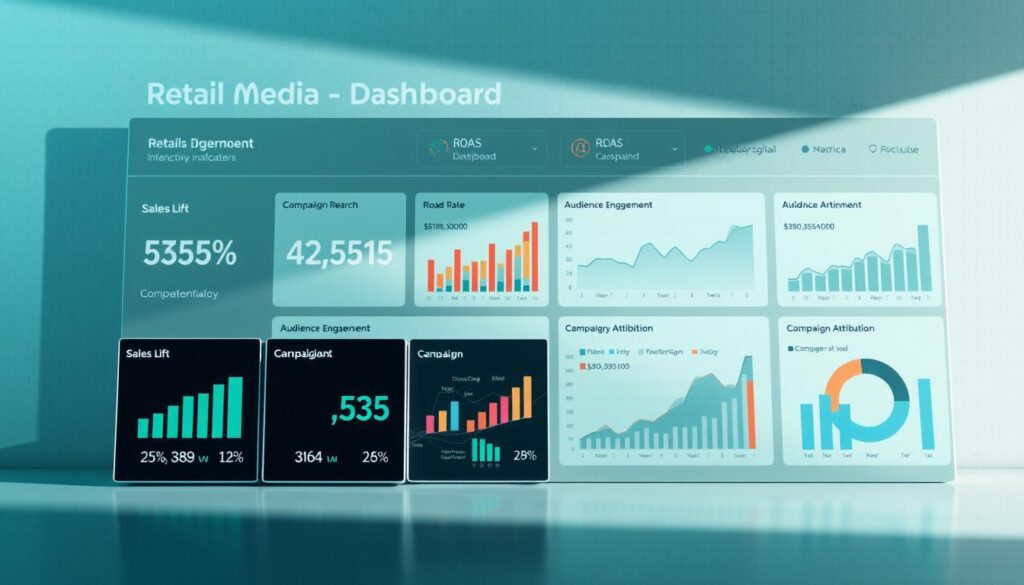
By examining the long-term impact on CLV, you can better understand how your campaigns contribute to sustained business growth and customer retention.
In conclusion, tracking key metrics such as conversion lift, ROAS, and the impact on CLV is vital for assessing the effectiveness of your retail media incrementality tests. These metrics provide a comprehensive view of your campaign’s performance, enabling data-driven decisions to optimize your advertising strategies.
Common Challenges in Implementing Retail Media Incrementality Tests
The path to successful incrementality testing in retail media is not without its hurdles. As retailers increasingly adopt this methodology, they must navigate a complex landscape of challenges that can impact the effectiveness and reliability of their tests.

Data Privacy and Compliance Issues with Shopper Data
One of the primary challenges retailers face is ensuring compliance with data privacy regulations, such as the General Data Protection Regulation (GDPR) in Europe and the California Consumer Privacy Act (CCPA) in the United States. These regulations impose strict guidelines on how customer data can be collected, stored, and used for incrementality testing. Retailers must implement robust data governance practices to maintain compliance while still gathering the necessary data for meaningful insights.
To address these concerns, retailers can adopt privacy-preserving techniques such as differential privacy, which allows for the analysis of data without revealing individual customer information. Additionally, leveraging aggregated and anonymized data can help mitigate privacy risks while still providing valuable insights for incrementality testing.
Cross-Channel Measurement Difficulties in Retail Ecosystems
Cross-channel measurement poses another significant challenge for retailers. With customers interacting across multiple touchpoints, both online and offline, attributing sales to specific advertising efforts becomes increasingly complex. Retailers must contend with the fragmented nature of retail media, where ads are served across various platforms, including social media, search engines, and in-store promotions.
To overcome these challenges, retailers can employ advanced attribution modeling techniques that account for the complexity of modern customer journeys. Utilizing unified measurement solutions that integrate data from multiple channels can provide a more comprehensive understanding of how different touchpoints contribute to overall sales lift.
Organizational Resistance to New Measurement Methodologies
Organizational resistance is a common barrier to the adoption of incrementality testing. Stakeholders accustomed to traditional measurement methods, such as Marketing Mix Modeling (MMM), may be hesitant to transition to new approaches. This resistance can stem from a lack of understanding or concerns about the reliability of incrementality testing.
To address this, retailers should invest in education and training for their teams, ensuring that stakeholders understand the benefits and limitations of incrementality testing. By fostering a culture of data-driven decision-making, retailers can build confidence in the insights generated by incrementality tests and drive broader organizational adoption.
Tools and Platforms for Retail Media Incrementality Testing
The shift towards incrementality testing in retail media has led to the development of various testing tools and platforms. As retailers look to measure the effectiveness of their campaigns more accurately, the demand for these tools has grown significantly.
Retail Media Network Testing Capabilities
Many retail media networks now offer built-in testing capabilities as part of their advertising platforms. For instance, Amazon Advertising provides robust testing features that allow brands to measure the incrementality of their campaigns directly within the platform. These capabilities often include geo-based experiments, holdout tests, and other methodologies to help advertisers understand their campaign’s true impact.

Third-Party Measurement Vendor Solutions
Beyond the capabilities offered by retail media networks themselves, third-party measurement vendors play a crucial role in providing specialized incrementality testing solutions. Companies like Neustar and Comscore offer advanced analytics and testing methodologies that can be applied across multiple retail media platforms, providing a more holistic view of campaign effectiveness.
“The use of third-party measurement vendors can provide an unbiased view of campaign performance, helping advertisers make more informed decisions.”
Building vs. Buying Testing Capabilities for Your Brand
When it comes to implementing incrementality testing, brands must decide whether to build their own testing capabilities or to buy existing solutions from vendors. Building in-house capabilities can offer customization and control, but it requires significant investment in technology and talent. On the other hand, buying from established vendors can provide quick access to proven methodologies and reduce the burden on internal resources.
| Capability | Building In-House | Buying from Vendors |
|---|---|---|
| Customization | High | Low |
| Initial Investment | High | Low |
| Maintenance and Updates | High | Low |
Ultimately, the choice between building and buying testing capabilities depends on the brand’s specific needs, resources, and strategic priorities.
Interpreting and Communicating Incrementality Test Results
To maximize ROI, it’s essential to understand how to interpret and communicate incrementality test results. Proper interpretation and communication of results are crucial for campaign optimization. Incrementality testing provides valuable insights into the effectiveness of your retail media campaigns, but these insights are only useful if they are accurately interpreted and effectively communicated to stakeholders.
Translating Statistical Findings into Business Insights
Translating statistical findings into actionable business insights is a critical step in the incrementality testing process. This involves moving beyond mere statistical significance to understand the practical implications of your test results. For instance, if an incrementality test shows a significant lift in sales due to a particular campaign, you need to consider what this means for your overall marketing strategy and budget allocation.
Key considerations include:
- The magnitude of the incrementality effect
- The cost of achieving this effect
- How the results compare to other marketing channels
Stakeholder Communication Frameworks
Effective communication of incrementality test results to stakeholders is vital for driving data-driven decision-making. To achieve this, you should develop a clear and concise communication framework that highlights key findings and recommendations. This may involve using visualizations such as charts and graphs to illustrate the results.
Best practices for stakeholder communication include:
- Focusing on key insights rather than technical details
- Using clear and simple language
- Providing actionable recommendations
Addressing Common Misinterpretations of Test Results
There are several common misinterpretations of incrementality test results that you should be aware of. For example, confusing correlation with causation or misinterpreting statistical significance. To avoid these pitfalls, it’s essential to have a solid understanding of the statistical methods used in incrementality testing.
| Common Misinterpretation | Correct Interpretation |
|---|---|
| Assuming a statistically significant result means the campaign was highly effective | Statistical significance indicates that the result is unlikely to be due to chance, but it doesn’t necessarily imply high effectiveness |
| Confusing incrementality with attribution | Incrementality measures the causal impact of a campaign, whereas attribution assigns credit for conversions to different touchpoints |

Case Studies: Successful Transitions from MMM to Incrementality
The shift from traditional Marketing Mix Modeling (MMM) to incrementality testing has proven to be a strategic move for many retailers, enabling them to optimize their marketing efforts and improve ROI. In this section, we’ll explore real-world examples of successful transitions, highlighting the challenges, solutions, and outcomes.

Walmart and Target Implementation Examples
Walmart and Target, two of the largest retailers in the United States, have successfully integrated incrementality testing into their marketing strategies. Walmart’s approach involved geo-based experiments to measure the impact of their retail media campaigns on in-store sales. By comparing the results from test regions to control groups, they were able to determine the incremental lift generated by their advertising efforts.
Target, on the other hand, utilized holdout tests on their retail media platforms to assess the effectiveness of their campaigns. By withholding a portion of their audience from targeted advertising, they could measure the difference in conversion rates between the exposed and holdout groups, thereby quantifying the incrementality of their ads.
- Walmart achieved a 15% increase in in-store sales through targeted advertising.
- Target saw a 20% lift in online conversions due to their holdout tests.
CPG Brand Success Stories on Amazon and Instacart
Consumer Packaged Goods (CPG) brands have also benefited from transitioning to incrementality testing on platforms like Amazon and Instacart. By leveraging intent-based testing, these brands were able to measure the impact of their advertising on consumer purchasing behavior.
One notable CPG brand used Amazon’s advertising solutions to run incrementality tests, comparing the sales lift generated by their ads against a control group. The results showed a significant increase in sales among the exposed audience, validating the effectiveness of their advertising strategy.
- A leading CPG brand achieved a 25% increase in sales on Amazon through targeted advertising.
- Another brand saw a 30% lift in conversions on Instacart due to their incrementality testing.
Quantifiable Results and Key Learnings
The case studies demonstrate that transitioning from MMM to incrementality testing can yield substantial benefits for retailers and CPG brands. By adopting these testing methodologies, brands can gain a clearer understanding of their advertising effectiveness and make data-driven decisions to optimize their marketing strategies.
Key learnings from these case studies include:
- The importance of choosing the right testing methodology based on campaign objectives.
- The need for robust data analysis to accurately measure incrementality.
- The potential for significant ROI improvements through targeted advertising.
Integrating Incrementality Insights into Your Retail Marketing Strategy
Incrementality insights offer a powerful tool for optimizing retail marketing campaigns, but effectively integrating these insights requires a structured approach. As you delve into the world of incrementality testing, you’ll need to rethink your marketing strategies to maximize ROI.
Actionable Decision-Making Frameworks for Campaign Optimization
To make the most of incrementality insights, you need a decision-making framework that can translate test results into actionable campaign optimizations. This involves setting clear KPIs, identifying areas of improvement, and adjusting your marketing mix accordingly. By doing so, you can enhance campaign performance and achieve better ROI.
Budget Allocation Across Retail Media Networks Based on Incrementality
One of the key benefits of incrementality testing is the ability to allocate your marketing budget more effectively. By understanding which retail media networks drive the most incremental sales, you can reallocate your budget to maximize ROI. This data-driven approach ensures that your marketing spend is optimized for maximum impact.

Creative and Targeting Optimization Using Test Results
Incrementality testing also provides valuable insights into the effectiveness of different creative assets and targeting strategies. By analyzing test results, you can identify which creatives and targeting approaches drive the most incremental sales, allowing you to optimize your marketing efforts. This enables you to refine your marketing strategies and improve overall campaign performance.
By integrating incrementality insights into your retail marketing strategy, you can make more informed decisions, optimize your marketing mix, and ultimately drive better business outcomes.
The Future of Measurement in Retail Media
The future of retail media measurement is being shaped by emerging technologies and methodologies. As the retail landscape continues to evolve, the need for more sophisticated and accurate measurement techniques becomes increasingly important. You are likely to benefit from understanding these advancements to stay ahead in the competitive retail media market.

AI and Machine Learning Applications for Automated Testing
Artificial intelligence (AI) and machine learning (ML) are revolutionizing the way retail media measurement is conducted. These technologies enable automated testing and provide insights that were previously unattainable. You can leverage AI and ML to:
- Enhance test accuracy and efficiency
- Reduce manual intervention in testing processes
- Gain deeper insights into customer behavior
Cookieless Measurement Solutions for Retail Environments
With the decline of third-party cookies, cookieless measurement solutions are becoming essential for retail media. These solutions focus on privacy-compliant methods to measure campaign effectiveness. You should consider:
- Implementing cookieless tracking technologies
- Utilizing aggregated data for insights
- Collaborating with vendors who offer cookieless solutions
Unified Measurement Approaches Combining MMM and Incrementality
A unified measurement approach that combines Marketing Mix Modeling (MMM) and incrementality testing offers a comprehensive view of retail media effectiveness. This hybrid approach allows you to:
- Leverage the strengths of both MMM and incrementality testing
- Gain a more accurate understanding of campaign impact
- Make informed decisions based on comprehensive data
By embracing these future measurement techniques, you can stay ahead in the retail media landscape and drive more effective campaigns.
Conclusion
As you navigate the evolving landscape of retail media, the transition to incrementality testing represents a significant advancement in measurement and optimization. By understanding the limitations of traditional Marketing Mix Modeling (MMM) and embracing incrementality testing, you can gain a more nuanced view of your marketing efforts’ impact.
Retail media networks, such as those on Amazon and Walmart, are increasingly adopting incrementality testing to provide more accurate attribution and inform data-driven decision-making. By leveraging these tests, you can optimize your campaigns, improve return on ad spend (ROAS), and drive long-term customer lifetime value.
The integration of incrementality insights into your retail marketing strategy enables you to make actionable decisions, allocate budget more effectively, and refine your creative and targeting approaches. As the retail media landscape continues to evolve, embracing incrementality testing will be crucial for staying ahead of the competition and achieving measurable success in your retail media campaigns.