
Torque sensors measure the force you apply to the pedals, providing detailed power output data to improve your technique and energy management. Cadence sensors, on the other hand, track how fast you’re pedaling, helping you maintain a steady rhythm. While torque sensors give in-depth insights for training and performance, cadence sensors are simpler, ideal for casual riding. To learn how combining both can enhance your cycling, keep exploring the differences.

Get business pricing on tech for your team
- Business-only prices and quantity discounts
- Tax-exempt purchasing
- Multiple users, one account, clear invoices
Key Takeaways
- Torque sensors measure actual power output by detecting force on pedals, while cadence sensors track pedaling speed (RPM) without measuring force.
- Torque sensors provide detailed performance data for training and technique improvement; cadence sensors mainly monitor pedaling rhythm.
- Torque sensors are more complex, often requiring regular calibration, whereas cadence sensors are simpler and require less maintenance.
- Torque sensors function reliably in various weather conditions, offering accurate data during rain and wind; cadence sensors may be less weather-resistant.
- Combining both sensors delivers comprehensive cycling insights, enhancing training precision and overall ride efficiency.
As an affiliate, we earn on qualifying purchases.
What Are Torque and Cadence Sensors and How Do They Work?
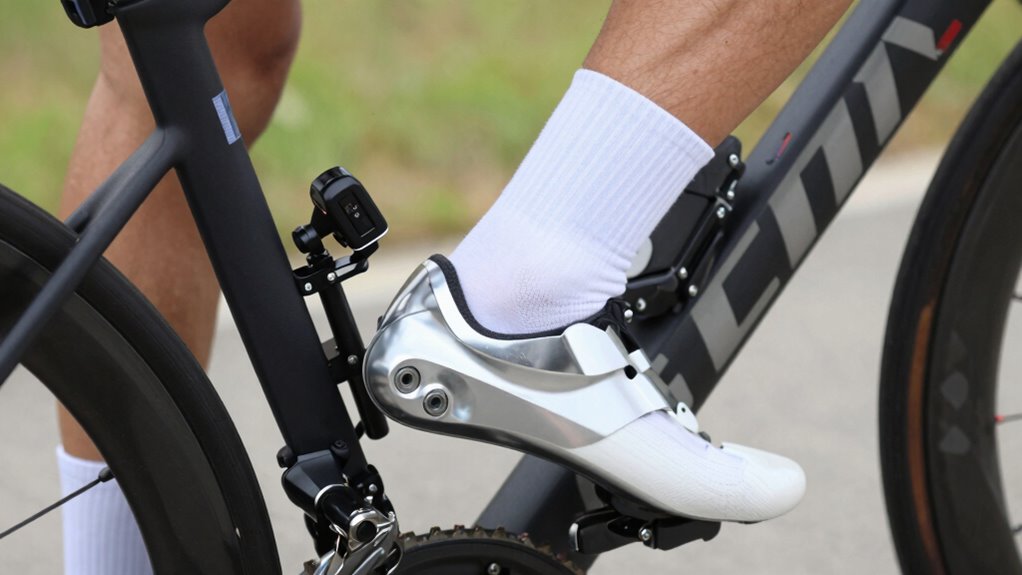
Torque and cadence sensors are essential components of modern cycling computers, providing vital data to improve your ride. Torque sensors measure the force you apply to the pedals, helping you optimize effort and power output. Cadence sensors track how fast you pedal, giving insights into your pedaling rhythm. Together, they enhance bike maintenance by alerting you to mechanical issues like uneven power delivery. These sensors also support rider ergonomics by helping you maintain efficient pedaling techniques, reducing fatigue and injury risk. They work through different mechanisms: torque sensors often use strain gauges or magnetic fields, while cadence sensors typically rely on magnets and sensors attached near the crank or wheel. Incorporating these sensors into your bike setup delivers real-time feedback, making your rides smoother and more effective. Understanding cycling technology can help you choose the right sensors for your riding style and goals. Additionally, understanding sensor mechanisms can further enhance your ability to troubleshoot and optimize your cycling setup. A deeper knowledge of sensor technology can also improve your maintenance routine and ensure accurate data collection.
As an affiliate, we earn on qualifying purchases.
Why Do Cyclists Use Sensors to Improve Performance?
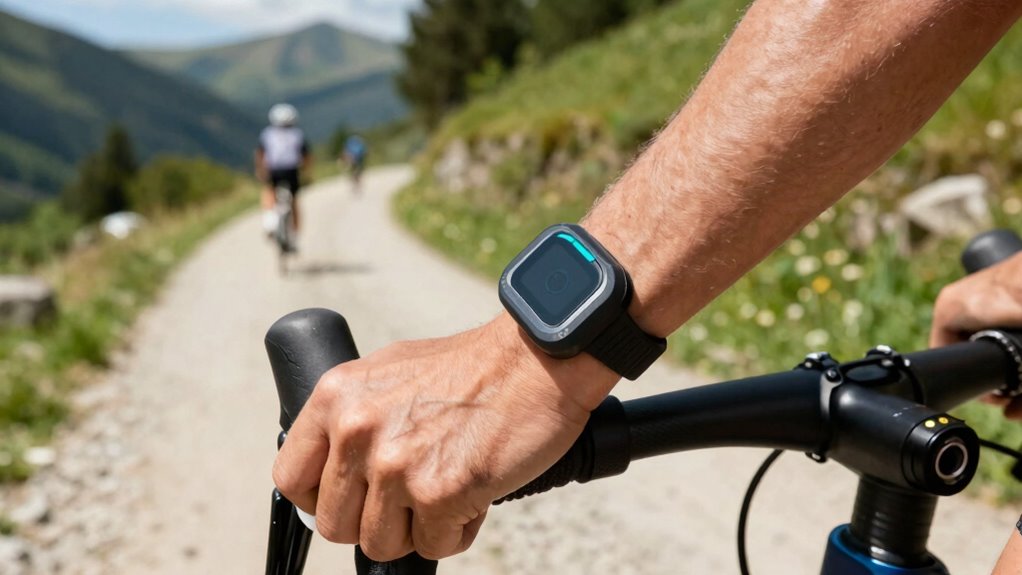
Using sensors helps you pedal more efficiently and get the most out of every ride. They track your power output and give you real-time feedback to improve your technique. With this data, you can push harder or recover better, making each ride more effective. Additionally, understanding your performance metrics allows for tailored training that targets your specific strengths and weaknesses. Some sensors also provide insights into cadence and pedaling efficiency, helping you optimize your overall cycling performance. Properly interpreting these cycling data can lead to more informed training decisions and better long-term results. Monitoring natural movement patterns with these sensors can further enhance your riding form and prevent injuries.
Enhances Pedaling Efficiency
To maximize your pedaling effort, cyclists turn to sensors that provide real-time feedback on your performance. These devices help you refine riding ergonomics, leading to more efficient pedaling. By adjusting your technique based on sensor data, you can reduce energy waste and prevent overexertion. Improved efficiency also means less strain on your bike components, simplifying bike maintenance. Using sensors allows you to identify whether you’re applying power evenly or favoring one leg, optimizing your overall ride. Here’s a deeper look: battery inverter generators can be a reliable power source for charging your cycling electronics during long rides or training sessions. Implementing proper cycling safety measures ensures you use these sensors effectively without risking injury or equipment damage. Additionally, understanding cycling ergonomics can further enhance your riding technique and comfort.
Monitors Power Output
Monitoring your power output allows you to gain precise insights into how much effort you’re putting into each pedal stroke. With this data, you can fine-tune your training, ensuring you’re pushing yourself without overexerting. Tracking power helps you identify areas where you need improvement, making your bike maintenance routine more effective by preventing overuse injuries. It also guides your cycling nutrition, showing when you need more fuel to sustain your effort or recover. Using sensors to measure power output keeps you focused on performance rather than just speed or distance, enabling smarter training decisions. By understanding exactly how much power you’re generating, you can optimize every ride, making improvements more measurable and consistent over time.
Optimizes Riding Technique
Cyclists turn to sensors because they provide immediate, actionable feedback that helps refine riding techniques. By analyzing data from torque or cadence sensors, you can adjust your pedaling efficiency and maintain peak power output. This improves your overall performance and helps prevent fatigue. Using sensors also highlights areas where your bike maintenance might be needed, such as chain or gear issues that could affect smooth pedaling. Additionally, better technique enhances road safety, as you’re more aware of your riding consistency. Incorporating sound vibrations techniques can further enhance your focus and recovery during rides. Understanding cycling biomechanics can also help you optimize your riding position and reduce injury risk. Embracing minimalism in your gear and approach can simplify your setup, allowing you to focus more on performance improvements. Recognizing the importance of performance metrics can guide you in making data-driven adjustments for continuous improvement.
As an affiliate, we earn on qualifying purchases.
How Do Torque Sensors Measure Power and Pedaling Force?
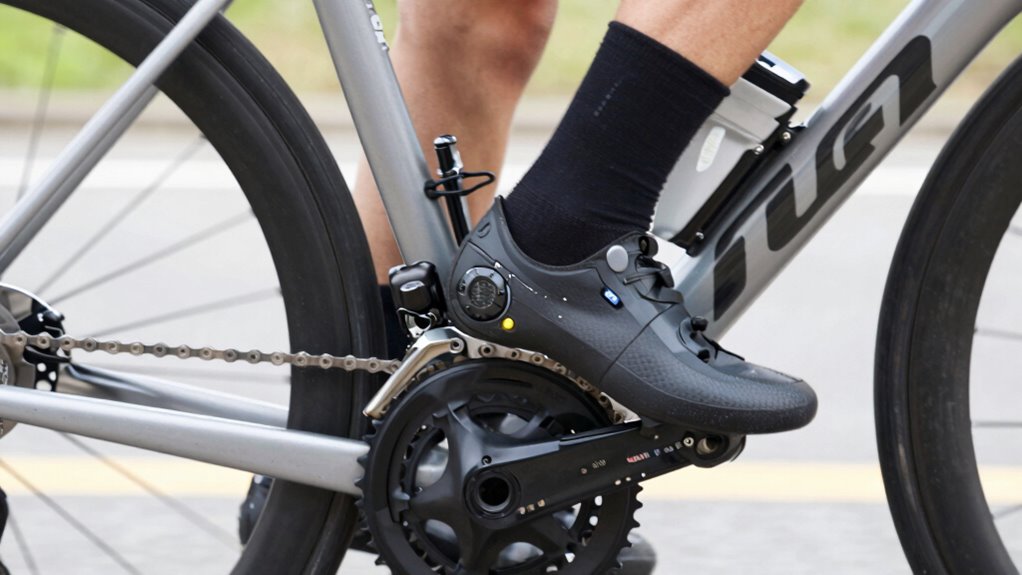
Torque sensors work by directly measuring the force you apply to the pedals, converting that force into an electrical signal. This measurement considers how your weight distribution influences power output and how aerodynamics factors can affect pedaling efficiency. The sensor detects variations in force based on pedal pressure, capturing subtle changes during your ride. These signals are processed to calculate your real-time power output, reflecting both the force applied and cadence. Keep in mind, external factors like position and bike setup impact readings. To visualize this, see the table below:
| Factor | Effect on Power Measurement | Consideration |
|---|---|---|
| Weight distribution | Alters pedal force application | Proper setup enhances accuracy |
| Aerodynamics factors | Influence resistance and force | Optimizing position improves data |
| Pedaling force | Directly measured by sensor | Consistent effort provides reliable data |
| Calibration process | Ensures measurement accuracy | Regular calibration maintains data integrity |
Additionally, external influences such as wind and terrain can also affect the sensor’s readings, making proper calibration and setup crucial for accurate data. Understanding how sensor technology works can help you better interpret your performance data and optimize riding efficiency.
As an affiliate, we earn on qualifying purchases.
How Do Cadence Sensors Track Pedaling Speed?
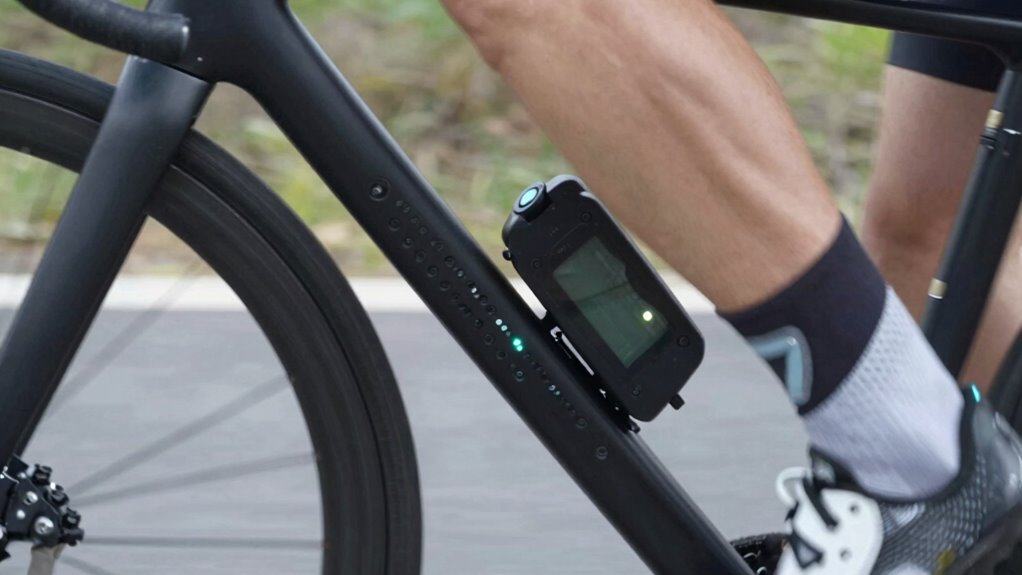
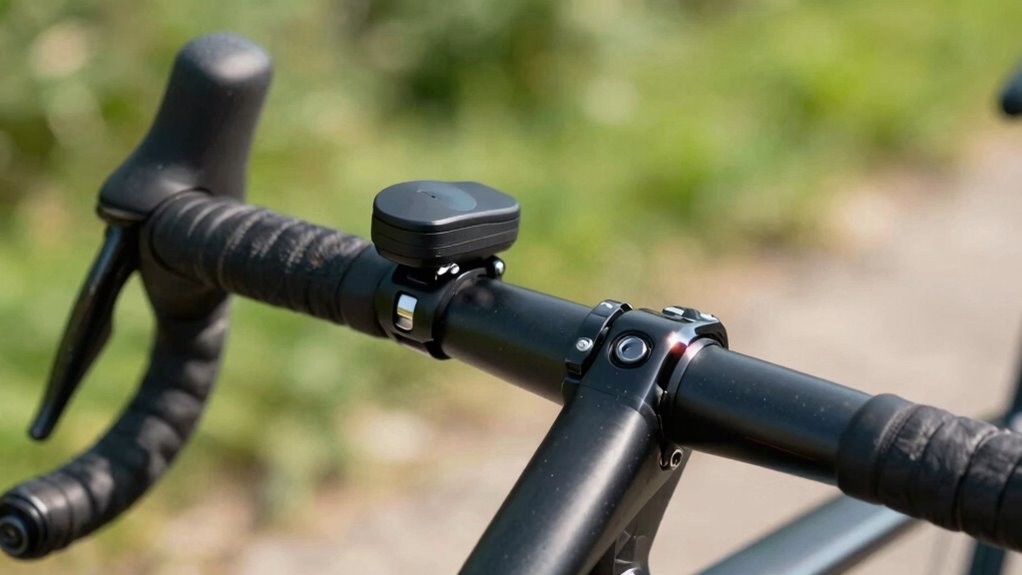
Cadence sensors detect your pedaling speed by measuring how quickly your crank or pedal rotates. They typically use magnets and a sensor to count each rotation or partial rotation. This data helps determine your pedaling rate in revolutions per minute (RPM). Using sensitive detection techniques, they can provide accurate readings even during intense cycling sessions. Additionally, some sensors incorporate wireless communication methods to transmit data seamlessly to your cycling computer or app.
How Sensors Measure Rotation
Ever wondered how cadence sensors keep track of your pedaling speed? These sensors detect rotation through strategic sensor placement on your bike. Typically, they’re mounted near the crank arm or pedal spindle, where they can reliably sense movement. As you pedal, the sensor registers each rotation or partial rotation, translating it into data. Additionally, some advanced sensors incorporate trusted industry reputation to ensure accuracy and reliability in data collection. To guarantee data accuracy, sensors often use the following methods:
- Magnetic detection: A magnet attached to a crank arm passes by a sensor, counting revolutions.
- Accelerometers: These detect slight vibrations or movements when pedaling.
- Signal filtering: Algorithms refine data, filtering out noise for precise readings.
Proper sensor placement is vital for consistent, reliable measurement of your pedaling speed.
Interpreting Pedaling Speed
Have you ever wondered how cadence sensors accurately track your pedaling speed? They detect small movements in your crank arm or pedal, converting these into electrical signals. These signals are then processed to determine your pedaling rate, which directly impacts rider comfort and bike maintenance. Proper interpretation helps optimize your ride, preventing overexertion or inefficient pedaling. Here’s a quick overview:
| Signal Detection | Data Processing | Rider Feedback |
|---|---|---|
| Crank movement | Signal filtering | Smooth cadence |
| Pedal motion | Speed calculation | Better control |
| Sensor sensitivity | RPM display | Enhanced comfort |
| Calibration | Real-time updates | Consistent riding |
| Maintenance needs | System syncing | Longer bike life |
This technology keeps your ride efficient, comfortable, and well-maintained. Understanding pedaling speed can also aid in diagnosing potential issues with your bike’s sensors. Additionally, regular sensor calibration ensures accurate readings and prolongs sensor lifespan.
What Are the Main Differences Between Torque and Cadence Sensors?
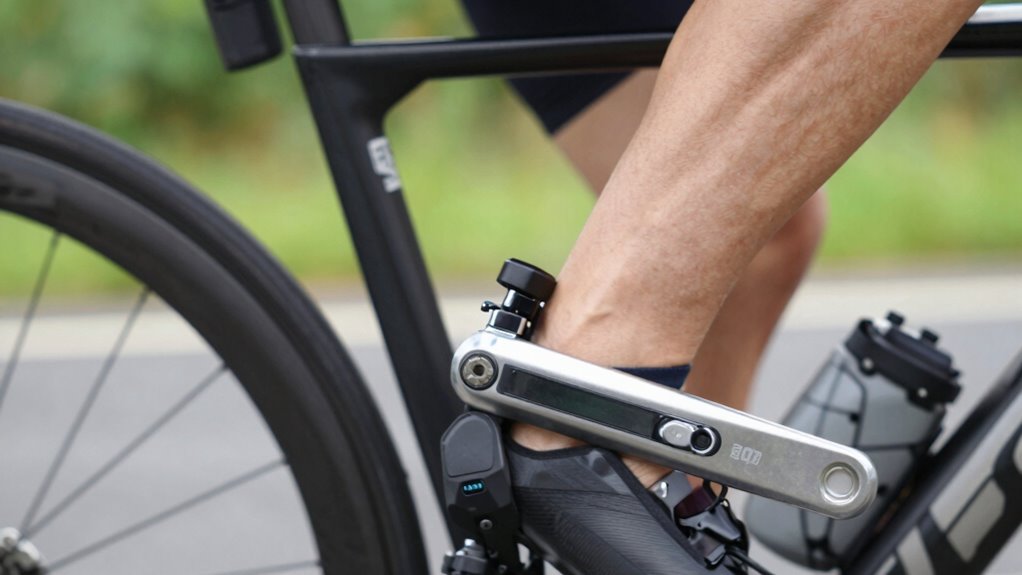
Understanding the key differences between torque and cadence sensors is essential for optimizing your cycling experience. Torque sensors measure the force you apply to the pedals, providing data on how hard you’re pushing. Cadence sensors track your pedaling speed, showing how fast you’re spinning.
Here are the main differences:
- Data Focus: Torque sensors reveal your power output, helping you manage cycling nutrition and energy efficiently. Cadence sensors focus on pedaling rhythm, aiding in maintaining consistent cadence.
- Bike Maintenance: Torque sensors often require more calibration and upkeep due to their detailed measurements, while cadence sensors are typically simpler to service.
- Training Benefits: Torque sensors enable more precise power-based training, whereas cadence sensors help optimize pedal technique and efficiency.
Are Torque Sensors Accurate and Reliable?

You might wonder if torque sensors are consistently accurate, especially over time. Calibration plays a key role in maintaining their reliability, and even small inconsistencies can affect your readings. Environmental factors like temperature and vibrations can also influence their performance, so it’s important to take these into account when evaluating their accuracy.
Calibration and Consistency
Ensuring that torque sensors provide accurate and consistent readings is essential for reliable cycling data. Proper sensor calibration is key to achieving data consistency, preventing discrepancies that could skew your performance insights. Regularly calibrate your torque sensor following manufacturer instructions to maintain accuracy over time. Here are three factors that influence calibration and consistency:
- Calibration frequency – Regular checks ensure sensor accuracy remains intact.
- Proper installation – Secure mounting reduces measurement errors.
- Firmware updates – Keeping software current improves sensor reliability.
Environmental Influences
Environmental conditions can substantially impact the accuracy and reliability of torque sensors during cycling. Humidity, rain, and extreme temperatures can affect sensor durability, leading to potential malfunctions or inconsistent readings. Moisture can seep into sensitive components, damaging the sensor or causing corrosion. Dust and dirt can interfere with internal mechanics, reducing precision over time. Environmental factors also influence how well the sensor performs under different conditions, making it less reliable in adverse weather. Proper maintenance, like keeping sensors dry and clean, can help preserve their durability. However, extreme conditions may still compromise accuracy. To guarantee consistent performance, choose sensors designed to withstand environmental influences, and regularly check for signs of wear or damage that could affect reliability during your rides.
What Are the Pros and Cons of Using Torque Sensors?

Torque sensors offer several advantages, making them a popular choice for accurate power measurement in cycling and other applications. They provide real-time feedback on how much force you’re applying, which can improve your overall riding efficiency. However, there are some drawbacks to take into account:
- Complex installation: Installing torque sensors often requires specialized bike maintenance skills, making upgrades more challenging.
- Cost: They tend to be more expensive than cadence sensors, which might impact your budget.
- Sensitivity to calibration: Torque sensors require regular calibration to maintain accuracy, which can be inconvenient for everyday riders.
Despite these cons, they enhance rider comfort by delivering precise feedback during rides, allowing you to optimize your effort and reduce fatigue.
What Are the Advantages and Disadvantages of Cadence Sensors?
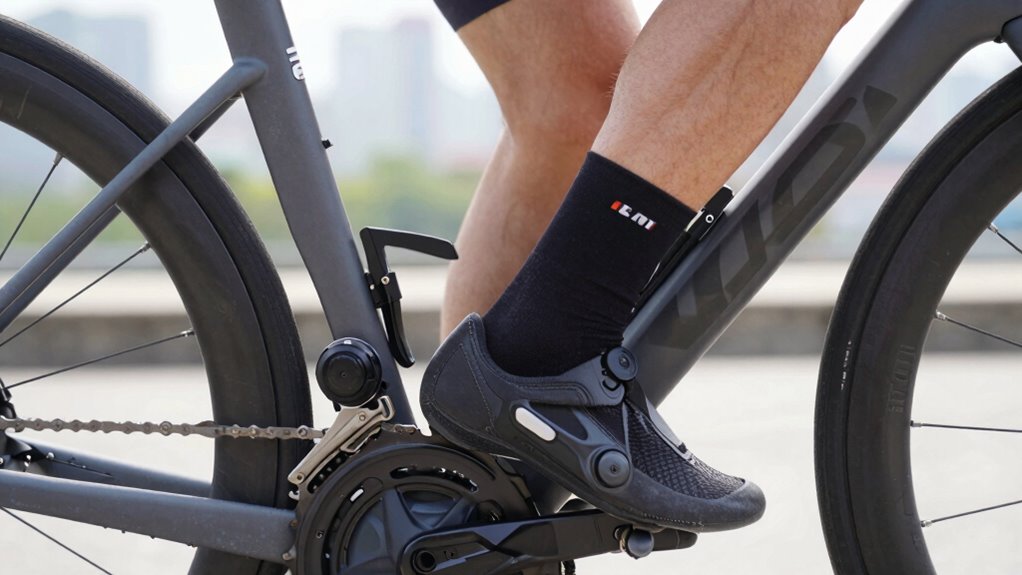
Cadence sensors, unlike torque sensors, focus on measuring how quickly you’re pedaling rather than the force behind each pedal stroke. This makes them ideal for riders who want real-time cadence data without needing to monitor power output, especially during mountain biking or on vintage bikes. The advantages include easy installation, lower cost, and straightforward data that helps improve pedaling rhythm. However, a key disadvantage is that they don’t provide insight into the actual power you’re generating, which can limit training effectiveness. The table below highlights these points:
| Advantage | Disadvantage | Best for |
|---|---|---|
| Easy to install | No power measurement | Mountain biking, vintage bikes |
| Affordable | Limited training data | Casual riders |
| Simple data | Less detailed info | Recreational riding |
| Lightweight | Not suitable for performance tracking | Beginners |
| Compatible with many bikes | Less useful for advanced training | All riding styles |
How to Choose the Best Sensor for Your Riding Style and Goals?
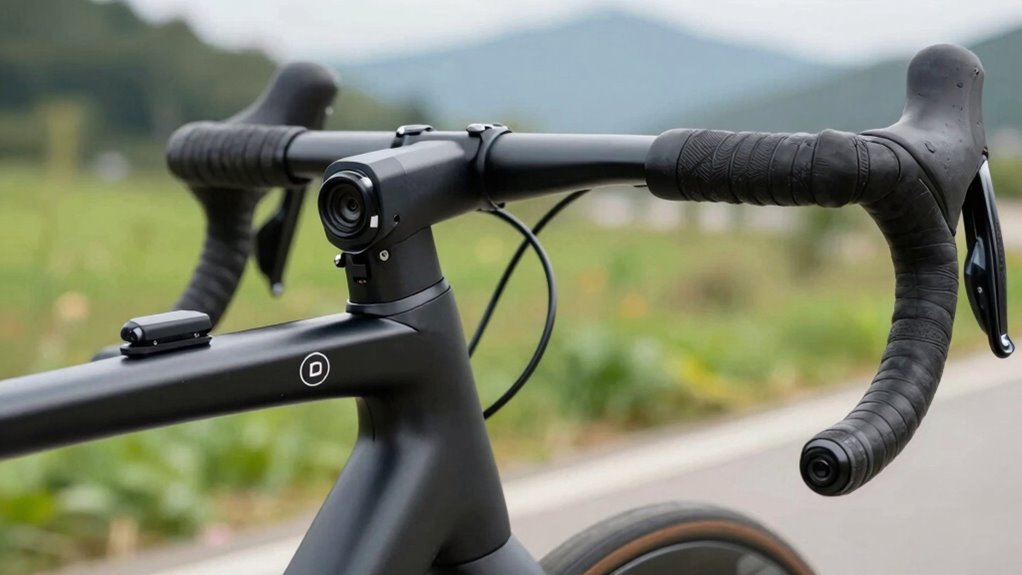
Choosing the right sensor depends on your specific riding style and goals. If you seek detailed power data, a torque sensor might suit you best, helping with accurate bike maintenance and pacing. For those focused on cadence and efficiency, a cadence sensor provides straightforward insights. Consider these factors:
- Riding Terrain and Weather Impact: Torque sensors perform better in varying weather conditions, maintaining accuracy despite rain or wind.
- Maintenance Needs: Cadence sensors are simpler and require less upkeep, ideal if you want minimal maintenance.
- Training Goals: If your goal is to improve power output and bike handling, torque sensors offer more in-depth feedback.
Assess your riding environment and objectives to choose the sensor that aligns with your style, ensuring you get the most from your cycling experience.
How Combining Torque and Cadence Sensors Can Boost Your Cycling Data?
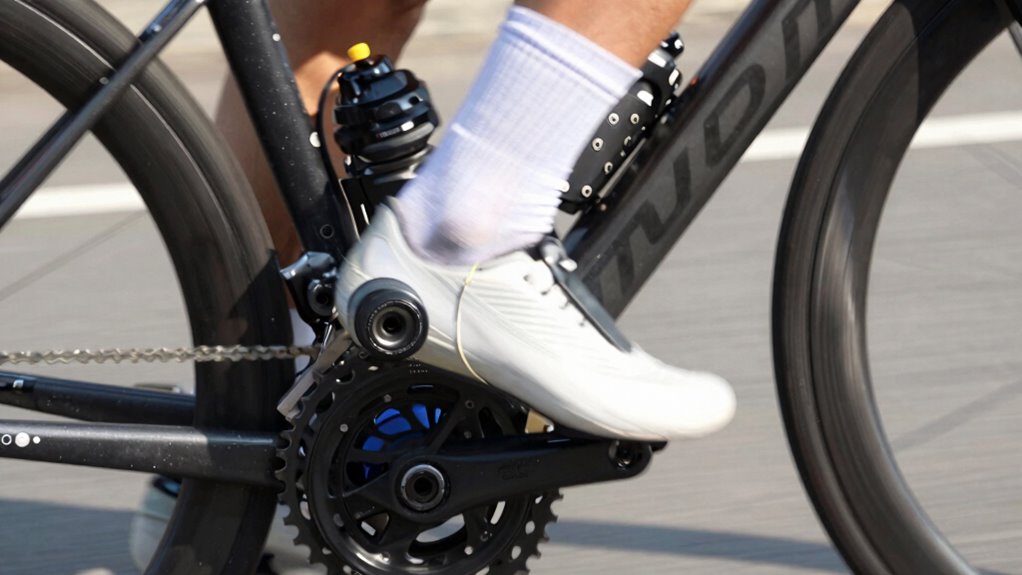
By combining torque and cadence sensors, you can access a more complete view of your cycling performance, giving you insights that neither sensor alone can provide. Sensor integration allows for a richer dataset, revealing how much power you generate and how quickly you turn the pedals. This combination improves data accuracy, as it cross-references metrics for more reliable results. With both sensors working together, you gain a clearer understanding of your pedaling efficiency, intensity, and fatigue levels. This detailed information helps you fine-tune your training, optimize your effort, and track progress more effectively. Ultimately, integrating torque and cadence sensors gives you a holistic view of your ride, enhancing your ability to make informed adjustments and reach your cycling goals faster.
Frequently Asked Questions
Can Torque and Cadence Sensors Be Used Together on the Same Bike?
Yes, you can use torque and cadence sensors together on the same bike. Just make sure to calibrate each sensor properly to guarantee accurate data. Keep in mind that using both sensors may slightly impact battery life, so monitor their power levels regularly. Combining these sensors gives you more detailed insights into your ride, helping you optimize performance and training effectively.
How Do Environmental Conditions Affect Sensor Accuracy?
Imagine pushing your limits, only to find your sensor isn’t accurate—that’s environmental impact at play. Weather conditions like rain, extreme cold, or heat can disrupt sensor calibration, making readings unreliable. Dust, mud, or moisture can interfere with sensors, reducing their precision. To keep your data trustworthy, regularly check and recalibrate your sensors, especially after exposure to harsh environments, ensuring your ride remains smooth and data accurate.
Are There Compatibility Concerns With Different Bike Computers?
You might face compatibility concerns with different bike computers, especially regarding sensor calibration and data synchronization. Before purchasing, check if your bike’s sensors are compatible with your computer’s brand and model. Some systems require specific connections or settings. Ensuring proper calibration helps maintain accuracy, and seamless data synchronization guarantees your ride metrics are updated correctly across devices. Always verify compatibility to avoid frustrating setup issues during your rides.
What Maintenance Is Required for Torque and Cadence Sensors?
A stitch in time saves nine, so you should regularly check your sensors. For torque and cadence sensors, you need to calibrate them periodically to guarantee accurate readings. Keep an eye on battery life and replace batteries as needed to prevent interruptions. Additionally, clean the sensors gently to avoid dirt buildup, which can affect performance. Proper maintenance keeps your sensors functioning smoothly and extends their lifespan.
Do Sensors Impact Bike Weight or Aerodynamics?
Sensors do have minimal impact on bike weight and aerodynamics, mainly due to their sensor placement on the crank or wheel. While they add slight bulk, it’s hardly noticeable during your ride. Proper calibration procedures ensure they function smoothly, keeping performance at its best. Keep sensors snug and well-positioned to minimize drag, and you’ll hardly feel their presence, allowing you to focus on your ride without worrying about added weight or aerodynamics.
Conclusion
Choosing between torque and cadence sensors depends on your riding goals. If you want precise power data, torque sensors are your best bet, but if tracking pedal speed works for you, cadence sensors do the trick. Often, combining both offers the full picture, so you can fine-tune your performance. Remember, it’s all about finding what works best for you—after all, you have to ride your own bike to truly know the terrain.
Evergreen bestsellers Picks
bestsellers
As an affiliate, we earn on qualifying purchases.