

The AI uncanny valley happens when algorithms create highly realistic robots or avatars that still feel unsettling. Even if they look almost human, subtle flaws in emotional expression or social cues can trigger discomfort or mistrust. This occurs because our brains rely heavily on these cues to judge sincerity and authenticity. As AI progresses, overcoming these emotional gaps is key to smoother interactions. If you want to find out how developers are addressing these challenges, there’s more to explore ahead.

Get business pricing on tech for your team
- Business-only prices and quantity discounts
- Tax-exempt purchasing
- Multiple users, one account, clear invoices
Key Takeaways
- AI algorithms often produce highly realistic outputs but may lack genuine emotional understanding, leading to the uncanny valley effect.
- Slight imperfections in AI behavior or appearance can trigger discomfort despite advanced capabilities.
- Achieving authentic empathy remains a challenge, causing perceptual dissonance between appearance and emotional response.
- Human reliance on subtle social cues makes AI’s failure to mimic sincerity more noticeable and unsettling.
- Improving emotional authenticity and subtle social cues is essential for reducing the uncanny valley in AI interactions.
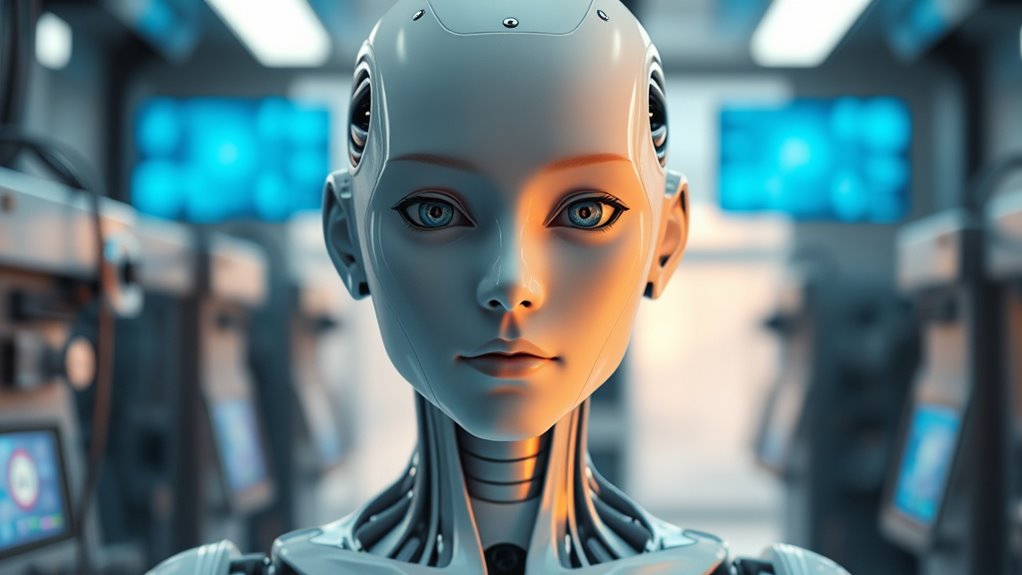
Have you ever felt uneasy when a robot or computer-generated character looks almost human but not quite right? That unsettling feeling is at the heart of the uncanny valley, a phenomenon that reveals just how delicate the line is between AI achievements and discomfort. When a machine or digital avatar exhibits human likeness, it can evoke familiarity and trust—until something’s just a little off. The subtle imperfections or mechanical movements can trigger a sense of eeriness, making you subconsciously recoil. This is where the concept of robot empathy comes into play. Despite advances in AI, many robots and virtual agents still struggle to convincingly express genuine emotions, which hampers their ability to resonate emotionally with humans. Achieving true robot empathy is a complex challenge because it requires machines to interpret and respond to human feelings authentically, not just simulate them. The more human-like a robot appears, the higher the expectation for it to demonstrate empathy convincingly. When it falls short, it doesn’t just feel like a flaw—it amplifies the uncanny valley effect. The human likeness of these creations can be both a blessing and a curse. On one hand, a highly human-like robot can foster comfort, making interactions feel more natural. On the other, when subtle cues like eye movements, facial expressions, or voice tone seem slightly unnatural, it sparks discomfort. This gap between appearance and emotional authenticity creates an eerie dissonance that’s hard to ignore. The uncanny valley isn’t just about visual realism; it’s also about the emotional and social cues that humans rely on to gauge sincerity. When AI doesn’t quite hit the mark, it’s as if the machine is pretending to be something it’s not, which can stir feelings of distrust or even fear. As designers push toward more realistic robots and avatars, understanding this emotional response becomes crucial. They need to find ways to bridge the gap, to make these machines feel less like uncanny imposters and more like genuine companions. But that’s easier said than done. Until AI can master not only human likeness but also authentic robot empathy, the uncanny valley will remain a barrier—an eerie reminder of how much we still depend on subtle cues to feel comfortable around machines that mimic us. Improving color accuracy in digital representations could help mitigate some of these perceptual gaps, making interactions feel more genuine.
As an affiliate, we earn on qualifying purchases.
Frequently Asked Questions
How Can Developers Bridge the Gap in Ai’s Uncanny Valley?
To bridge the AI uncanny valley, you should focus on enhancing emotional engagement and authenticity. Incorporate natural language processing and emotional cues to make interactions feel more genuine. Regularly test with real users to identify areas where AI feels artificial, then refine responses to better mimic human nuance. By actively improving these aspects, you create a more relatable and trustworthy experience, reducing the discomfort users often feel with near-human AI.
What Industries Are Most Affected by Ai’s Uncanny Valley?
You’ll find the entertainment, healthcare, and customer service industries most affected by AI’s uncanny valley. In these sectors, robot empathy and emotional realism are essential for meaningful interactions. When AI falls short of human-like empathy, it can create discomfort or mistrust. Improving emotional realism helps make robots feel more relatable, but the gap still challenges developers to create machines that genuinely understand and respond to human emotions seamlessly.
Are There Ethical Concerns Related to Creating Human-Like AI?
You should know that 75% of people feel uneasy around highly human-like AI, highlighting ethical concerns about emotional authenticity and cultural sensitivity. Creating human-like AI raises questions about deception, emotional manipulation, and cultural insensitivity. You might unintentionally reinforce biases or misrepresent cultures, leading to mistrust. It’s vital to prioritize transparency and respect, ensuring AI systems genuinely understand and honor human emotions and cultural contexts without crossing ethical boundaries.
How Does User Perception Influence AI Design Strategies?
Your perception shapes AI design strategies by emphasizing emotional resonance to build user trust. When users see AI that feels relatable and genuine, they’re more likely to engage comfortably. You should focus on creating interfaces that evoke positive emotions, balancing human-like qualities without crossing the uncanny valley. This approach boosts user confidence, ensuring they feel understood and safe, ultimately fostering long-term trust and satisfaction with AI interactions.
What Future Advancements Might Overcome Current AI Limitations?
Future breakthroughs in AI could markedly improve emotional intelligence, helping algorithms better understand and respond to human feelings. You might see more natural interactions, as AI learns to interpret subtle cues and context. These advancements will bridge the gap in current limitations, making AI more relatable and effective. By focusing on emotional intelligence, developers will create machines that genuinely connect with users, transforming how you interact with technology daily.
As an affiliate, we earn on qualifying purchases.
Conclusion
As you navigate the AI uncanny valley, remember that these algorithms are like imperfect mirrors—reflecting human traits but never quite capturing their full depth. Just when you think they’re close to mastery, subtle flaws remind you they’re still a work in progress. Embracing this gap means understanding that AI’s brilliance comes with limitations, much like a painting that’s almost perfect but leaves you longing for that final brushstroke. Progress is steady, but perfection remains just out of reach.
As an affiliate, we earn on qualifying purchases.
As an affiliate, we earn on qualifying purchases.
Fall Picks
fall essentials
As an affiliate, we earn on qualifying purchases.