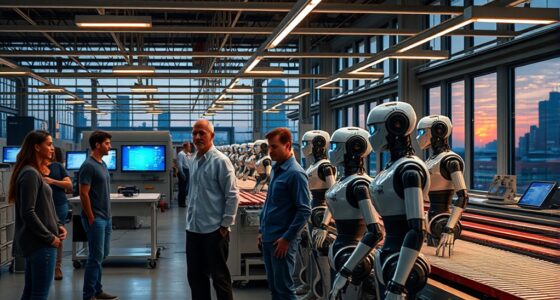
AI is transforming creativity by acting as a collaborative partner that enhances your imagination rather than replacing it. It automates tasks, offers new ideas, and explores styles that you’d take longer to develop. AI fosters innovation while respecting artistic integrity and ethical boundaries. Instead of threatening human ingenuity, it expands your creative horizons and supports ongoing experimentation. If you explore further, you’ll discover how this synergy shapes a future where technology and human expression co-evolve.

Get business pricing on tech for your team
- Business-only prices and quantity discounts
- Tax-exempt purchasing
- Multiple users, one account, clear invoices
Key Takeaways
- AI acts as a collaborative partner, enhancing human creativity through idea generation and experimentation.
- Ethical use of AI ensures it amplifies human imagination without undermining authenticity or artistic integrity.
- AI expands creative boundaries by enabling exploration of new styles, concepts, and perspectives.
- Concerns about AI replacing artists highlight the importance of viewing AI as a tool, not a substitute.
- Responsible integration of AI fosters a future where technology amplifies rather than replaces human ingenuity.

Have you ever wondered how artificial intelligence is transforming creativity? As AI tools become more sophisticated, they’re not just automating tasks; they’re reshaping how we create, collaborate, and think about art. But with this rapid evolution comes a critical question: how do AI ethics influence this new landscape? AI ethics involves understanding the moral responsibilities we hold when designing and deploying AI systems, especially in creative fields. It’s about guaranteeing AI enhances human expression without undermining the authenticity or value of artistic work. People worry about AI replacing human artists, but many see it as a tool for artistic collaboration rather than competition. When you work alongside AI, you’re not handing over your creative process; you’re amplifying it. AI can serve as a partner, offering new ideas, generating variations, or even helping refine your vision. This partnership allows you to push the boundaries of your imagination, exploring styles or concepts that might have taken much longer to develop alone. It’s like having an endless brainstorming buddy who never runs out of ideas. AI’s role in artistic collaboration opens up opportunities for diverse voices and perspectives, fostering innovation that might not emerge in traditional settings. When you integrate AI into your creative process, you’re participating in a new form of co-creation, where human intuition and machine intelligence complement each other. However, this collaboration also raises ethical questions about authorship and originality. Who owns the final piece—the human or the AI? How do we guarantee that AI-generated content is used responsibly and fairly? These are essential considerations because, without clear guidelines, AI could be exploited to produce misleading or plagiarized work. That’s where AI ethics plays a critical role. It guides creators and developers toward transparent, fair, and responsible use of AI in art. Additionally, understanding the philosophical themes of authenticity and existence can deepen your appreciation of how AI influences notions of originality in art. By adhering to ethical standards, you can leverage AI’s capabilities without compromising artistic integrity or authenticity. Embracing AI as a collaborative tool allows you to experiment and expand your creative horizons, all while respecting the moral boundaries that keep art genuine. The future of creativity isn’t about AI replacing human talent but about enhancing your ability to imagine and realize ideas in ways previously unimaginable. When you approach AI ethically and thoughtfully, you’re not just working alongside technology—you’re shaping a new era of artistic expression that celebrates both human ingenuity and machine innovation.
As an affiliate, we earn on qualifying purchases.
Frequently Asked Questions
Can AI Truly Understand Human Emotions in Creative Processes?
AI cannot truly understand human emotions in creative processes. While it can analyze patterns and mimic emotional cues, it lacks genuine emotional authenticity and empathetic understanding. You might find AI helpful in generating ideas or enhancing creativity, but it doesn’t experience feelings or connect on a deep emotional level like humans do. So, your authentic emotional expression remains irreplaceable, with AI serving as a supportive tool rather than a true emotional partner.
How Does AI Influence Cultural Diversity in Art and Design?
AI dramatically transforms cultural diversity in art and design, acting like a supercharged engine for global expression. You can leverage AI to boost cultural preservation and enhance diversity representation, making unique traditions accessible worldwide. It empowers artists from diverse backgrounds to share their stories, ensuring no culture gets lost in the shuffle. By doing so, AI helps create a richer, more inclusive artistic landscape that celebrates humanity’s vast cultural tapestry.
Will Ai-Generated Content Diminish the Value of Human Craftsmanship?
AI-generated content doesn’t diminish the value of human craftsmanship; instead, it raises originality concerns and questions about machine authenticity. You might worry that AI could make art feel less genuine, but your unique perspective and emotional depth remain irreplaceable. Embrace AI as a tool that enhances your creative process, helping you push boundaries without sacrificing the authenticity and craftsmanship that make your work truly valuable.
What Ethical Concerns Arise From Ai’s Role in Creative Industries?
You should consider the ethical concerns AI introduces to creative industries, like safeguarding intellectual property and addressing algorithmic bias. These technologies can threaten original work by infringing on rights or perpetuating unfair stereotypes. As you navigate this digital domain, stay vigilant about protecting creators’ rights and promoting fairness. By doing so, you help ensure AI enhances human creativity without compromising moral integrity or artistic authenticity.
How Can Artists and AI Collaborate Effectively Without Replacing Each Other?
You can collaborate effectively with AI by establishing clear creative boundaries and embracing a flexible workflow. Use AI as a tool to enhance your ideas, not replace your unique vision. Engage in collaborative workflows where AI handles repetitive tasks, freeing you to focus on innovation. This partnership amplifies your creativity, allowing you to explore new depths without losing your artistic voice, ensuring both human and AI strengths work in harmony.
digital art tools with AI features
As an affiliate, we earn on qualifying purchases.
As an affiliate, we earn on qualifying purchases.
Conclusion
You might worry AI will replace your creativity, but it’s really about enhancement, not replacement. AI acts as a tool to spark new ideas, challenge your thinking, and push boundaries you hadn’t considered. Instead of fearing it, embrace AI as a collaborator that amplifies your unique imagination. Your human touch, intuition, and emotion remain irreplaceable—AI just helps you unleash even greater creative potential. Together, you can create things that were never possible before.
AI-powered creative brainstorming tools
As an affiliate, we earn on qualifying purchases.
As an affiliate, we earn on qualifying purchases.
As an affiliate, we earn on qualifying purchases.
Halloween Picks
halloween
As an affiliate, we earn on qualifying purchases.