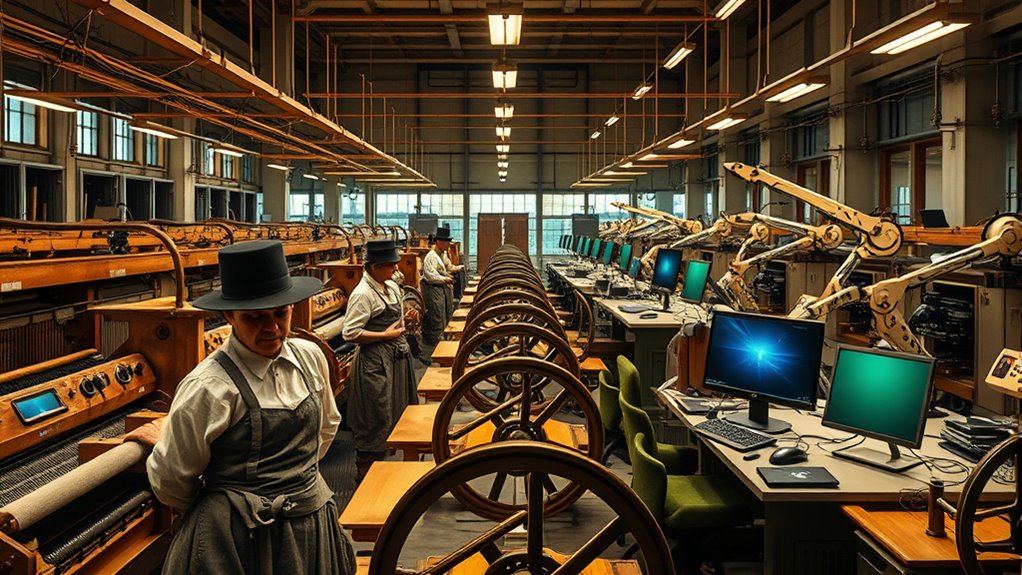

Throughout history, technological advances—from spinning jennys to AI—have dramatically reshaped work and wealth. When new machines emerge, workers often resist, fearing job losses, just like the Luddites did. Over time, innovations boost productivity, create new industries, and shift urban life. While progress brings opportunities, it also causes displacement and inequality. To understand how these shifts continue and what they mean for your future, explore how each wave of change has transformed society.

Get business pricing on tech for your team
- Business-only prices and quantity discounts
- Tax-exempt purchasing
- Multiple users, one account, clear invoices
Key Takeaways
- Technological innovations historically increased productivity but often disrupted existing jobs, prompting societal resistance like the Luddite movement.
- Industrial advancements shifted work from manual craftsmanship to centralized factory systems, transforming labor and urban life.
- Societies responded with labor movements and legal reforms to address job security, wages, and working conditions amid technological change.
- Modern digital tools and AI continue to reshape industries, displacing some jobs while creating new economic opportunities and wealth.
- Throughout history, technological progress has been a double-edged sword, driving growth while challenging workers’ roles and societal structures.
industrial revolution steam engine model
As an affiliate, we earn on qualifying purchases.
As an affiliate, we earn on qualifying purchases.
The Rise of Mechanical Innovations and Initial Resistance

The rise of mechanical innovations transformed industries, but not everyone welcomed these changes. As you adopt new machines like Hargreaves’ spinning jenny, you notice yarn production skyrocketing. When Arkwright’s mills powered by Watt’s steam engines emerge, traditional handcrafting struggles to keep pace. Crompton’s spinning mule and Cartwright’s power loom boost textile output, making fabrics cheaper and more plentiful. These innovations replace manual labor, sparking fears of job loss. Yet, they also improve efficiency, enabling mass production. The improved steam engines cut fuel use and power large factories, pushing industries forward. Ironmaking advances, like coke-fueled blast furnaces and rolling mills, produce more iron faster and cheaper. Meanwhile, machine tools like boring and milling machines bring precision, setting the stage for the factory system. Resistance is natural amid rapid technological change. Inventions such as Watt’s improved steam engine significantly boosted industrial productivity and laid the groundwork for modern manufacturing. Additionally, understanding the financial aspects of industrial expansion reveals how investment and resource allocation fueled these technological advancements and their adoption. Furthermore, the development of supportive infrastructure such as railways and canals played a crucial role in distributing raw materials and finished goods efficiently. The technological innovation during this period also led to shifts in labor markets and economic structures, which had long-term impacts on society. Moreover, the increasing importance of scientific principles in engineering and manufacturing helped refine and accelerate technological progress. A focus on energetic alignment can help industries adapt more smoothly to technological shifts and foster a positive environment for innovation.
historical spinning jenny replica
As an affiliate, we earn on qualifying purchases.
As an affiliate, we earn on qualifying purchases.
The Luddite Movement and Societal Concerns
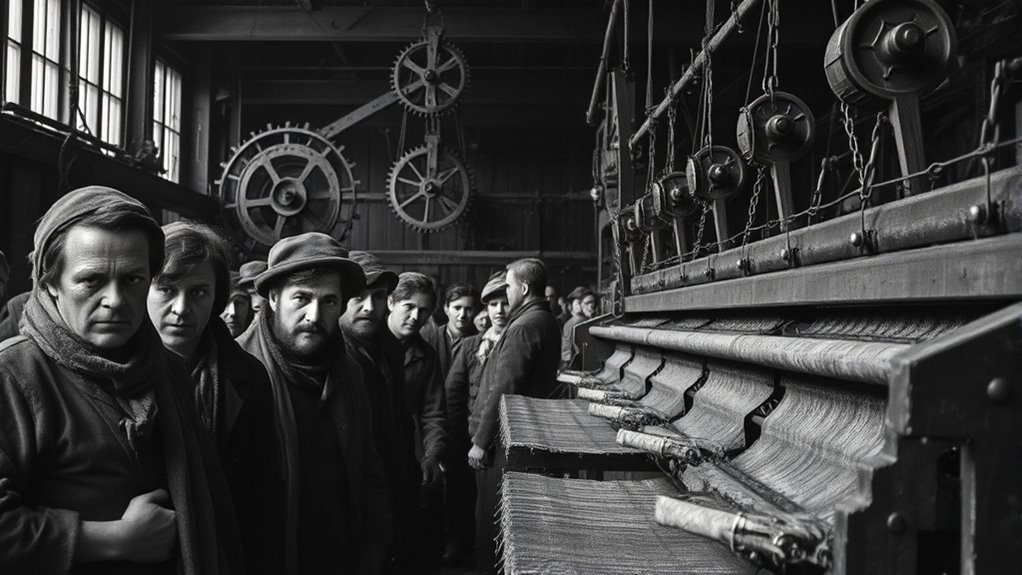
Why did the Luddite movement arise amid the rapid spread of new machinery? You’re facing economic hardship caused by high unemployment and inflation during the Napoleonic Wars. Skilled workers in textiles see their jobs threatened as automated machines, like stocking frames and steam-powered looms, produce goods faster and cheaper. These machines undermine wages, devalue craftsmanship, and create economic instability, making workers fear losing their social status. The Luddites, operating secretly in regions like Nottinghamshire and Lancashire, targeted specific machinery to protect their livelihoods. The government responded harshly, using military force and legal penalties, including executions. Their actions reflected deep societal concerns: job security, declining wages, and the erosion of traditional skills, all sparked by the rapid mechanization transforming their lives. Color accuracy and image quality also played roles in how these machines impacted workers’ perceptions of their work and environment. Additionally, the societal fears about technological unemployment fueled their resistance to mechanization. Moreover, the emergence of cultural identity among workers contributed to their collective resistance, emphasizing the importance of traditional skills and community bonds.
As an affiliate, we earn on qualifying purchases.
Transformations in Production and the Shift to Factory Systems
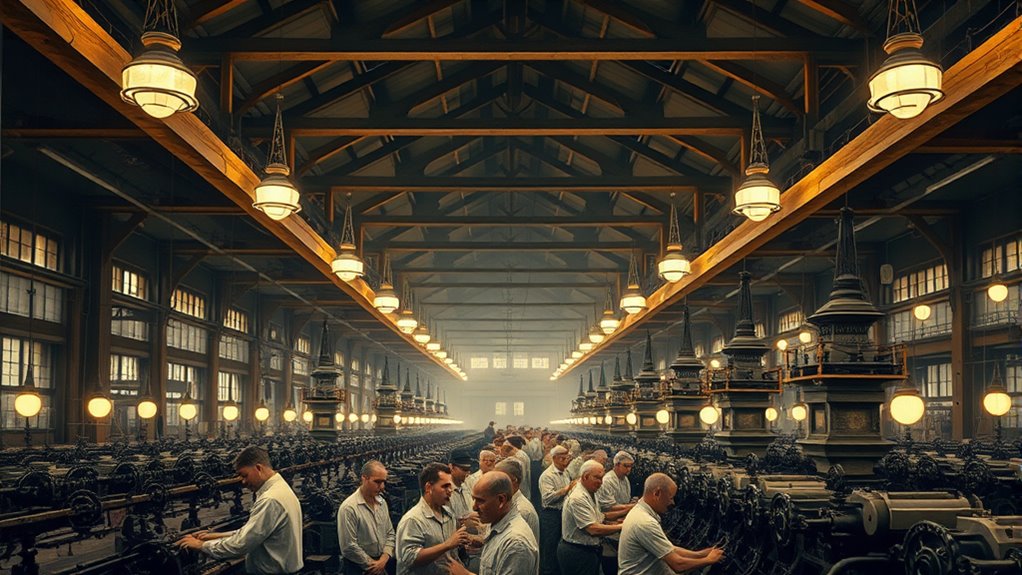
During the late 18th and early 19th centuries, the Industrial Revolution transformed manufacturing by shifting from dispersed, handcrafted production to centralized, mechanized factory systems. Factories emerged near waterpower sources and transportation routes, enabling large-scale operations. Power-driven machinery replaced manual tasks, boosting speed and output. The division of labor organized work into specialized tasks, increasing efficiency and standardization. Economies of scale and mass production lowered costs and expanded markets. This shift moved workers from rural, artisan roles to urban wage labor, fueling urbanization and often leading to overcrowded, unsafe living conditions. Factory work created unskilled jobs accessible to men, women, and children, driving wages down. Technological innovations like the spinning jenny, power loom, and assembly line further increased productivity and streamlined manufacturing processes. Additionally, cybersecurity vulnerabilities during this period highlighted the importance of protecting industrial innovations from theft and sabotage, emphasizing the need for secure technological advancements. The introduction of technological innovations also contributed to industrial espionage, which became a concern for protecting exclusive manufacturing techniques. Moreover, innovative machinery played a critical role in accelerating industrial growth and transforming traditional crafts into factory-based production. As industrial processes grew more complex, the importance of asset division in managing the resulting wealth and property became increasingly significant for business owners and workers alike.
As an affiliate, we earn on qualifying purchases.
The Impact of Transportation and Communication Breakthroughs
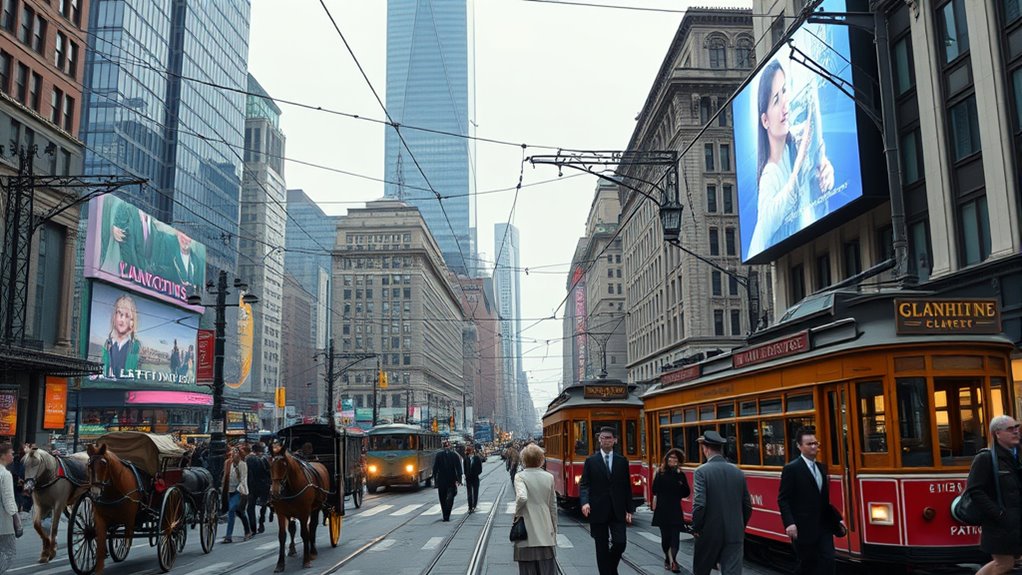
How have advances in transportation and communication reshaped the way you connect and trade across the globe? These breakthroughs speed up exchanges and expand opportunities. Here’s how:
- Faster shipping methods, like supersonic flights and automated trains, cut delivery times, boosting global trade.
- Improved logistics, such as guided bus systems and driverless metros, increase efficiency in urban and regional transport.
- Communication innovations—telegraphs, Morse code, and digital networks—enable instant long-distance contact, fostering collaboration.
- The internet and digital tools connect distant regions, opening markets and facilitating cultural exchange.
- The development of early transportation innovations, such as the domestication of the horse and the invention of the wheel, laid the foundation for modern global connectivity early innovations.
- These technological advancements have also facilitated the expansion of supply chains, making it easier for goods to reach markets worldwide and supporting economic growth. Additionally, the integration of digital logistics platforms has further optimized supply chain management.
- Moreover, the advent of engine tuning in vehicles has increased transportation efficiency and performance, further supporting global trade networks.
- Advances in maintenance practices and projector bulb care have improved the longevity and reliability of transportation technologies, ensuring consistent service.
These developments have strengthened supply chains, supported economic growth, and made the world more interconnected—yet also raised environmental concerns along the way.
Urbanization, Labor Movements, and Social Change
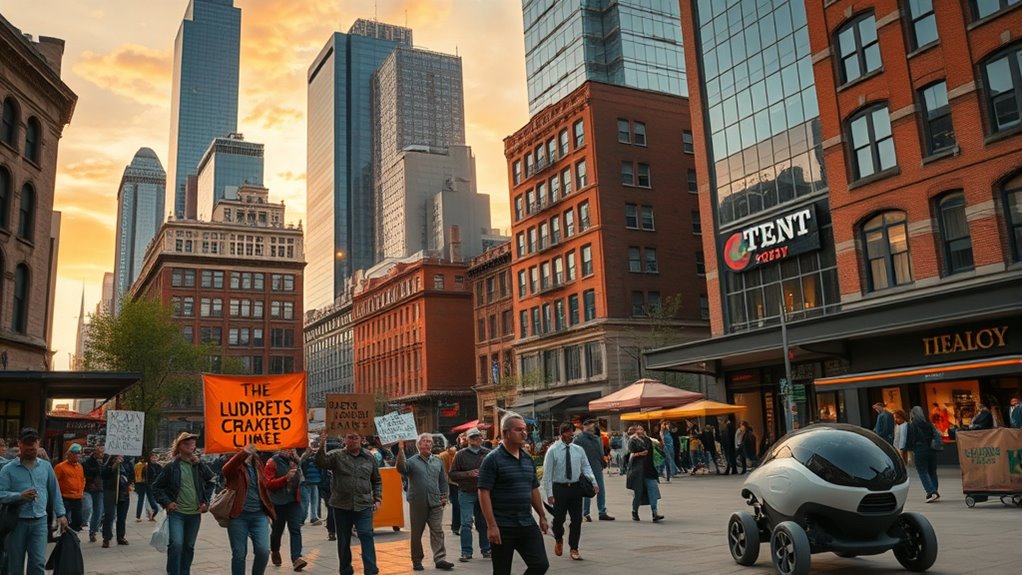
Urbanization transforms where and how people work, often leading to more organized labor movements. As populations concentrate in cities, workers gain collective power to demand better conditions and rights. These changes reshape social structures, highlighting the link between migration, urban growth, and social activism. Over 4 billion people, more than half of the global population, live in urban areas, which amplifies the potential influence of urban workers in shaping social and economic policies. Additionally, the rise of digital literacy and creative innovation tools has empowered workers and communities to advocate for social change in new ways. The development of industrial technologies has historically been intertwined with shifts in labor organization and economic distribution, underscoring how technological progress continually influences social dynamics. The ongoing evolution of labor movements demonstrates how technological advancements can both challenge and support workers’ rights and economic stability. Moreover, technological integration in workplaces continues to evolve, affecting how labor is organized and negotiated in modern economies. As these technological changes progress, they further influence the economic distribution and the structure of work environments.
Urban Growth and Migration
Urban growth results from multiple interconnected factors. Here’s how migration shapes it:
- Population increase, both naturally and through rural-to-urban moves.
- Industrialization drawing people from rural areas in search of jobs.
- International migration, especially during periods of economic opportunity.
- Technological advances enabling better infrastructure and living conditions. These innovations have also facilitated the development of smart cities, which optimize urban resources and improve quality of life.
Between 1900 and 1950, U.S. urban populations surged from 40% to 65%. Globally, urban residents grew nearly six-fold since 1950, shifting wealth and power to cities. Industrialization in Europe, North America, and beyond accelerated migration, transforming social structures. As cities expand, they become hubs of cultural diversity, economic activity, and social change, shaping the future of work and wealth.
Rise of Labor Movements
Ever wonder what fueled workers to organize and challenge industrial power during rapid urban growth? As industries expanded, job conditions worsened, wages stagnated, and exploitation grew. You saw early labor groups like the National Labor Union (1866) and Knights of Labor (1869) emerge, fighting for fair wages, safer workplaces, and inclusion. Massive strikes, like the Great Railroad Strike of 1877 and the Haymarket Square rally of 1886, highlighted workers’ frustrations, often met with violence and repression. Leaders like Samuel Gompers pushed for collective bargaining through the AFL, while groups like the IWW aimed for broader radical reforms. Over time, legal victories and public support helped shape workplace laws, reducing child labor, establishing the eight-hour day, and creating safety standards—marking a pivotal shift in social and economic power. The formation of the American Federation of Labor in 1886 signaled a new era of organized labor advocating for workers’ rights.
The Era of Automation, Computing, and Global Trade
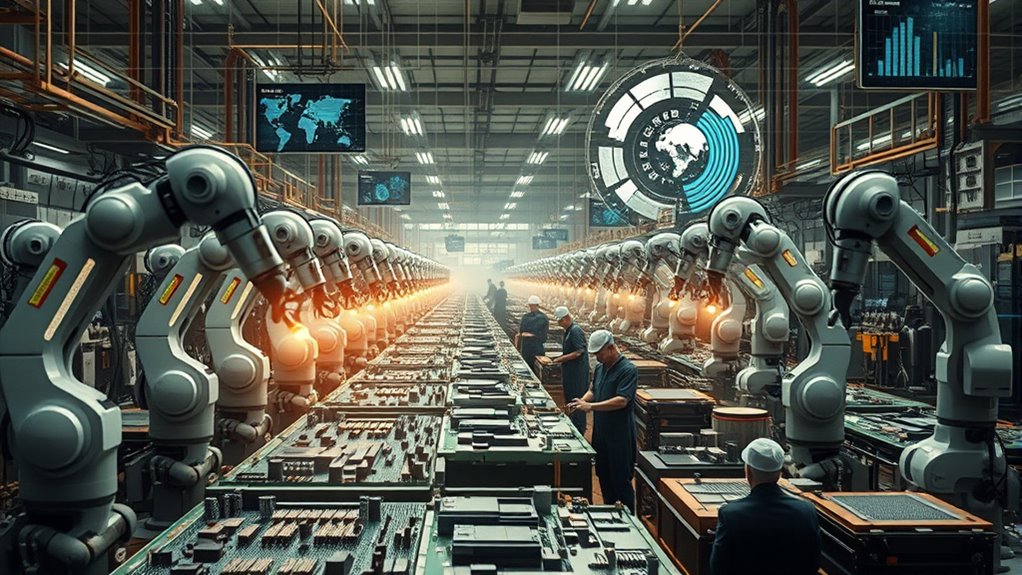
Automation, computing, and global trade now work together to transform how businesses operate across borders. They boost efficiency, accuracy, and compliance, reducing delays and costs. You’ll notice that:
- Automation streamlines processes like product classification and trade transactions.
- It improves accuracy, minimizing errors and customs delays.
- Compliance automation software helps meet regulations and cut fines.
- Computing consolidates data for real-time insights, better decision-making, and market strategies.
- Large datasets are essential for AI development, enabling systems to handle complex and irregular data to improve trade operations. Data requirements
In industries like metal, rubber, plastics, and automotive, automation increases trade volume and expands global value chains. It also creates new tasks and reduces the reliance on outdated systems. Overall, these technologies enable faster, smarter, and more cost-effective global trade operations.
Modern Technological Shifts: AI, Robotics, and the Digital Economy
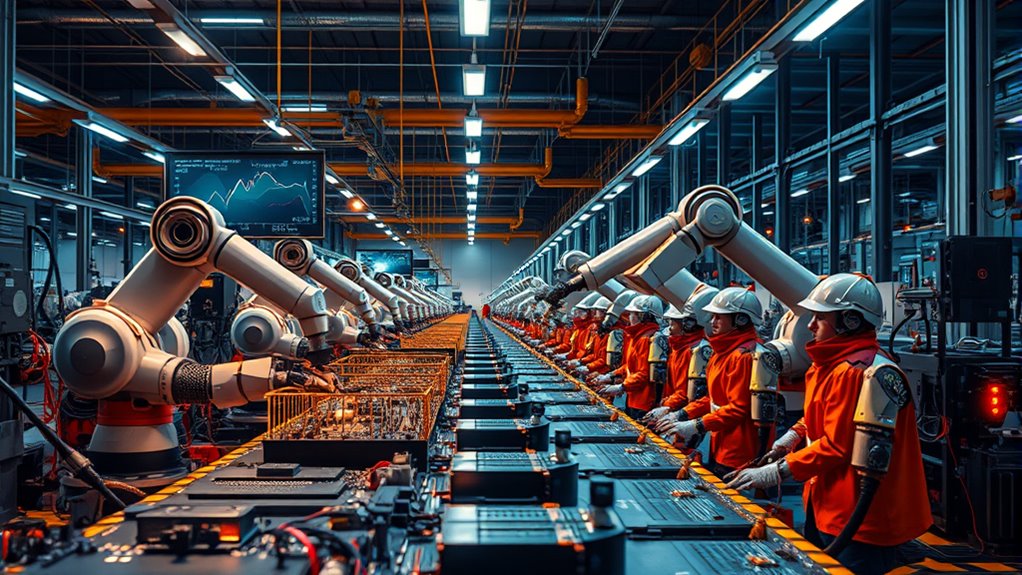
Modern technological shifts are rapidly transforming workplaces and economies through the widespread adoption of AI, robotics, and digital tools. Nearly every company invests in AI, yet only 1% believe they’ve mastered its use. AI is empowering you to access new potential and drive economic growth, especially with advances in generative models. Meanwhile, robotics are revolutionizing industries faster than expected, displacing jobs but also creating vast opportunities—like the personal robot market, projected to reach $63.8 billion by 2030. Digital transformation is a top priority, with AI and automation driving 86% growth in data processing and 58% in robotics. Manufacturers, in particular, are investing heavily, using AI to optimize supply chains. As these technologies expand, they reshape sectors, offering both challenges and exciting economic prospects.
Challenges of Displacement, Inequality, and Policy Responses
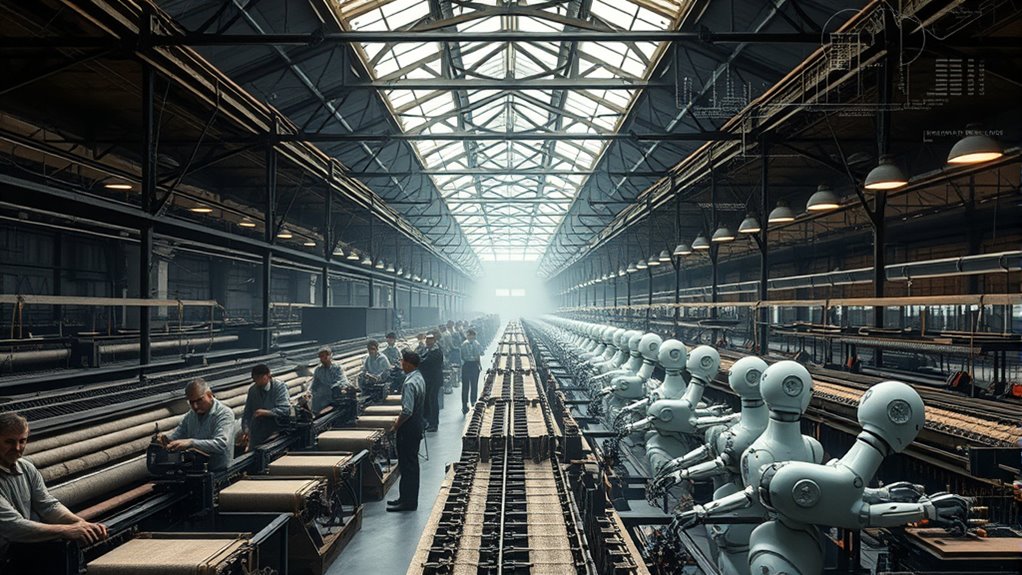
As technological advancements accelerate, they bring significant challenges related to job displacement, economic inequality, and the need for effective policy responses. You’ll face the reality that by 2025, around 92 million jobs could be displaced, with AI responsible for 14% of these losses. Displaced workers often come from routine roles, especially in IT, where roughly 152,000 professionals were unemployed in January 2025. To address these issues, governments are implementing:
- Reskilling programs to prepare workers for new roles
- Incentives for companies to create jobs
- Strengthened social safety nets for displaced workers
- Educational reforms focusing on emerging skills
These steps aim to mitigate inequality and support workers amid ongoing technological change.
The Future of Work: Innovation, Adaptation, and Sustainability
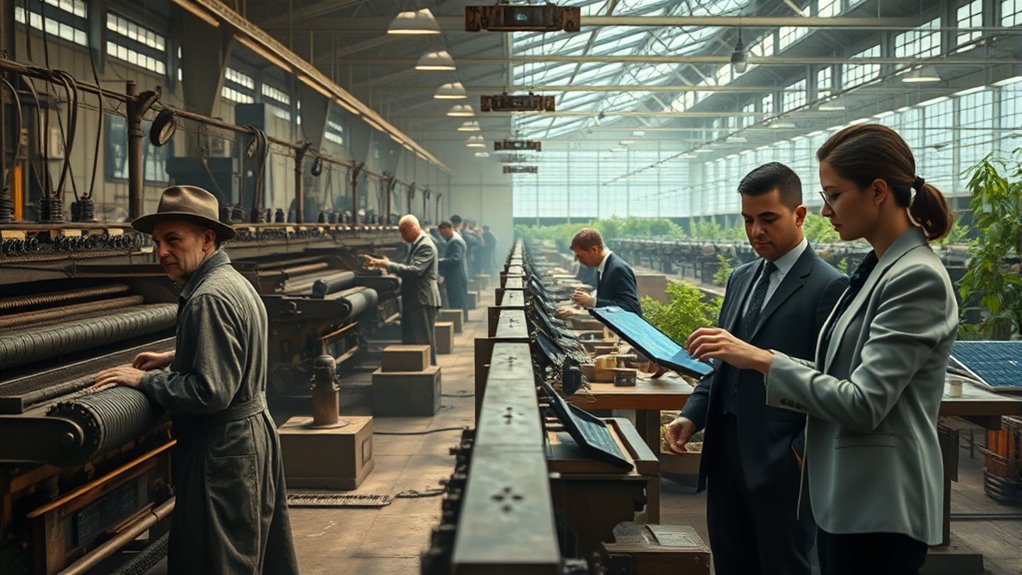
Technological innovation is reshaping the workplace at an unprecedented pace, driven by advancements in generative AI, automation, and digital connectivity. You’ll see broad digital access transforming over 60% of businesses by 2030, creating new opportunities in tech, green, and care sectors. Robotics and automation are considered game-changers by more than half of global employers, while advances in energy will impact nearly half of all companies. As some jobs—like clerical roles—decline, new roles in AI, data analytics, and renewable energy emerge, with 170 million jobs expected globally by 2030. To stay competitive, you’ll need reskilling in areas like cybersecurity and creative problem-solving. Flexible work models, including remote and hybrid arrangements, will become standard, supporting diversity, inclusion, and sustainable growth.
Frequently Asked Questions
How Did Early Technological Fears Influence Industrial Policy?
Your question about early technological fears influencing industrial policy highlights how worries about job loss and social disruption shaped decisions. These fears led governments to support basic research, promote innovation, and develop policies that balance technological progress with economic stability. They also prompted efforts to manage labor displacement, foster unions, and regulate industry. Overall, these anxieties pushed policymakers to create strategies that aimed to protect workers while encouraging technological growth.
What Role Did Government Regulation Play During the Luddite Era?
Imagine a stormy sky casting shadows over a bustling factory floor. During the Luddite era, the government’s regulation acts like thunder, cracking down on machine-breaking with laws that made it a capital offense. They deployed soldiers to quell protests, enforcing strict penalties. These measures aimed to protect industrial progress but deepened social tensions, highlighting how regulation sought to control unrest while supporting economic growth, often at workers’ expense.
How Have Technological Shifts Historically Affected Global Economic Power?
Technological shifts have historically reshaped global economic power by redistributing wealth and influence. You see, as innovations like the steam engine, mass production, and digital technologies emerge, they shift economic dominance from traditional centers to new hubs. Countries that adopt and adapt quickly gain advantages, while others lag behind. These changes often lead to new centers of wealth and power, transforming the global economic landscape over time.
What Social Strategies Have Mitigated Job Displacement During Tech Revolutions?
Imagine a flood of displaced workers drowning in unemployment waves. Social strategies act like sturdy life rafts—unemployment insurance cushions wage losses, while social assistance keeps people afloat. Reskilling programs are like lifeboats, guiding workers to new shores. Policy interventions, like bridges, connect old jobs to new opportunities. Entrepreneurship and societal support create islands of hope, helping workers rebuild, adapt, and thrive amid the relentless tide of technological change.
How Can Future Policies Promote Equitable Benefits From Emerging Technologies?
You can promote equitable benefits from emerging technologies by supporting international cooperation on AI policies, guaranteeing transparency, and fostering inclusivity. Invest in digital infrastructure and education, especially in underserved areas, to bridge the digital divide. Develop social safety nets that adapt to AI-driven changes, and encourage diverse entrepreneurship. By continuously monitoring AI’s impact on wealth distribution, you help create policies that ensure technology benefits everyone equally.
Conclusion
As technology continues to evolve, you’ll face new opportunities and challenges that could redefine your work and wealth in ways you’ve never imagined. Will you adapt and thrive in this rapidly shifting landscape, or get left behind? The future of work is unfolding before your eyes—full of potential, but also uncertainty. Stay alert, because the next chapter of innovation might just change everything, and you won’t want to miss what’s coming next.
Fall Picks
fall essentials
As an affiliate, we earn on qualifying purchases.