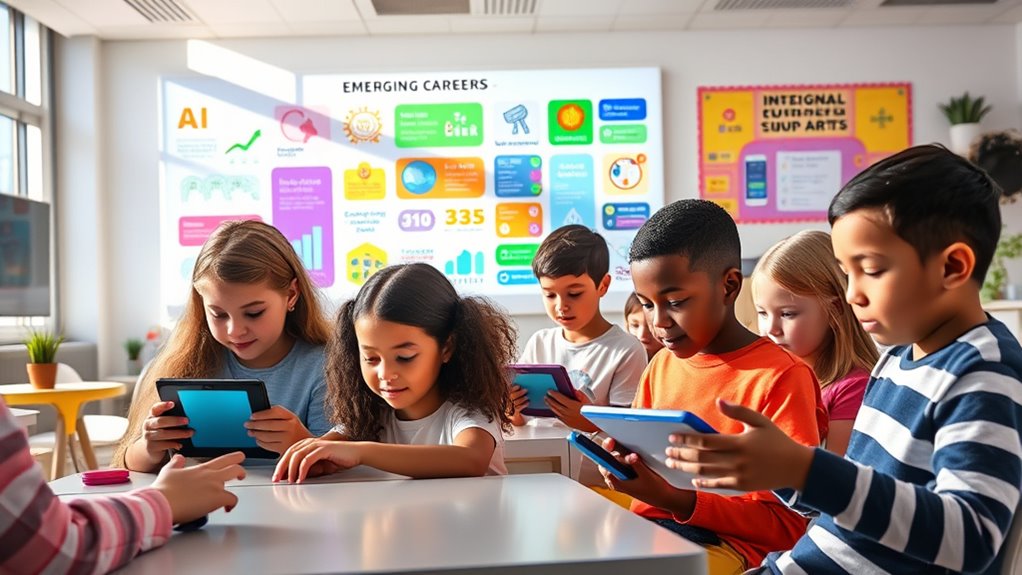

To prepare for a future without traditional jobs, you need to focus on developing industry-relevant skills, digital literacy, and adaptability through micro-credentials and personalized learning. Emphasize lifelong learning, practical expertise, and cross-disciplinary skills that employers value. Support inclusive and flexible education environments that foster innovation and continuous growth. Staying ahead means embracing change and equipping yourself with the tools for a constantly evolving job landscape—keep exploring to discover how to future-proof your skills.

Get business pricing on tech for your team
- Business-only prices and quantity discounts
- Tax-exempt purchasing
- Multiple users, one account, clear invoices
Key Takeaways
- Emphasize developing adaptable, cross-disciplinary skills and digital literacy to prepare students for evolving, non-traditional career pathways.
- Incorporate micro-credentials and industry-relevant certifications to validate practical skills and enhance employability outside traditional degrees.
- Foster personalized, flexible learning environments that cater to individual goals and promote lifelong, continuous education.
- Collaborate with industry partners to design real-world training programs that bridge skill gaps and support emerging fields.
- Promote inclusive, accessible education spaces that develop social-emotional skills and adaptability for diverse future work environments.
micro-credentials for professional development
As an affiliate, we earn on qualifying purchases.
As an affiliate, we earn on qualifying purchases.
Adapting Education Systems to Rapid Technological Changes
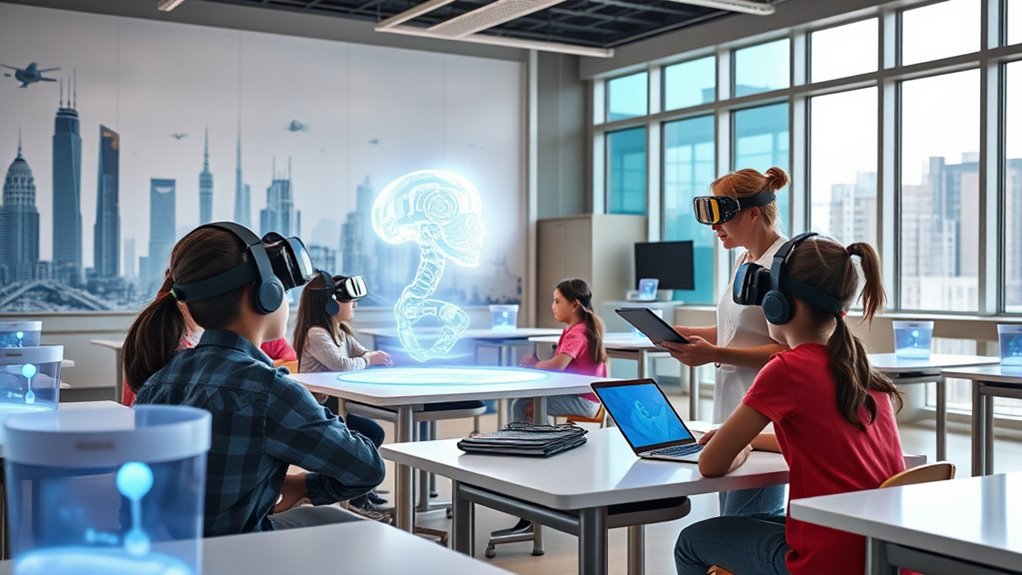
To keep pace with rapid technological advancements, education systems must actively adapt their curricula and teaching methods. You should incorporate digital literacy initiatives that embed technology into lessons, preparing students for future roles. Personalized learning, driven by adaptive systems, ensures instruction meets individual needs, increasing engagement and success. Data analytics help inform teaching strategies, enabling continuous improvement in student outcomes. Integrating AI and robotics in classrooms exposes students to automation technologies, making them ready for evolving industries. Emphasizing STEM education equips learners with essential skills in science, technology, engineering, and math. AI-powered tools can also assist teachers in identifying student learning gaps and tailoring instruction accordingly. Additionally, fostering digital skill development is crucial for empowering students to navigate an increasingly connected world. Incorporating knowledge about health benefits of juice, such as the advantages of green juices and detoxifying drinks, can also promote overall wellness and resilience among students. Moreover, understanding the diverse designs of planters can inspire creative thinking about sustainable and aesthetic solutions in various fields. Developing innovative teaching methods is essential to effectively engage students and adapt to the rapid pace of technological change. Staying ahead means embracing robotics integration and other emerging tools that align education with the fast-changing technological landscape. These changes require updating curricula, investing in infrastructure, and training teachers to effectively utilize new tools.
AI and robotics educational kits for students
As an affiliate, we earn on qualifying purchases.
As an affiliate, we earn on qualifying purchases.
Emphasizing Skills Development Over Traditional Degrees

You should focus on developing practical skills, as they directly translate to job performance and adaptability. Employers increasingly prioritize specific expertise over traditional degrees, especially with the rise of micro-credentials. Emphasizing skills prepares you better for a dynamic job market and future career success. In fact, organizations with a skills-first approach are 63% more likely to achieve better results and be agile in adapting to change skills-first approach. Participating in hackathons, both virtual and in-person, can be an effective way to develop and showcase these practical skills in real-world scenarios. Additionally, understanding the importance of projector technology can help individuals leverage multimedia tools for effective presentations and demonstrations, further enhancing their skill set in various professional environments. Recognizing the significance of industry-specific skills can also give you a competitive edge in rapidly evolving fields.
Skills Over Credentials
As the job market evolves, skills are increasingly taking precedence over traditional degrees in hiring decisions. Employers now prioritize competencies, certifications, and hands-on experience over formal diplomas. The market for alternative credentials is projected to grow by $1.84 billion between 2025 and 2029, reflecting this shift. By 2025, nearly half of companies are expected to drop degree requirements for key roles, focusing instead on skills-first hiring models. Universities are adapting by offering microcredentials and career-focused pathways, aligning education with workforce needs. Skills-based credentials, being shorter, verifiable, and job-relevant, help learners demonstrate their capabilities more effectively. This trend benefits both employers seeking diverse talent and job seekers aiming for adaptable, competency-driven careers. Additionally, the recognition of the benefits of raw food highlights the importance of practical skills and knowledge in choosing healthy, nutrient-dense options that support overall well-being. Developing curriculum design and instructional strategies tailored to skills-based learning can further enhance the effectiveness of these alternative credential programs. A focus on organizational skills can also help learners better manage their educational and professional development journeys. Furthermore, understanding the Best Modern Toilet can be essential in teaching proper hygiene and sustainable disposal practices, which are vital skills in many settings. Incorporating holistic SEO strategies into educational content can improve reach and engagement for these innovative learning models.
Practical Expertise Matters
Practical expertise is increasingly shaping hiring decisions because companies value candidates who can hit the ground running. You’ll find that many organizations prioritize skills over traditional degrees, with 19% of U.S. job postings not requiring a college diploma. This shift helps match talent more effectively and reduces onboarding time, as employers seek candidates capable of immediate contribution. In fast-evolving industries, practical knowledge keeps you relevant, since curricula can become outdated quickly. Employers now expect versatility, with cross-disciplinary skills allowing you to adapt to new roles easily. Hands-on experience and problem-solving capabilities are more valued than theoretical knowledge, enabling faster productivity. As global education shifts toward competency-based training and skills development, developing practical expertise positions you for success in a future where traditional jobs may no longer define your career path. Acquiring practical skills is essential for adapting to this changing landscape, especially as many roles evolve or become obsolete. Additionally, cultivating mindfulness can enhance your ability to learn new skills efficiently and maintain focus in dynamic work environments. Recognizing the importance of up-to-date knowledge in emerging fields like payment solutions can give you a competitive edge in the evolving job landscape.
Micro-Credentials Rise
The rise of micro-credentials marks a significant shift in how skills are valued over traditional degrees. You’ll find that 87% of employers hired at least one micro-credential holder last year, and 85% are more likely to hire candidates with these certificates. They also offer a competitive edge, with 90% willing to pay 10–15% higher starting salaries for micro-credentialed candidates. Employees benefit too—28% received pay raises, and 21% earned promotions after earning micro-credentials. Nearly 70% saw productivity increases, and 83% gained confidence to adapt to new roles. The market is booming, projected to hit $117 billion by 2025, with institutions and learners embracing stackable credentials and online platforms. This trend highlights a shift toward skills-based hiring, emphasizing competencies over traditional degrees. Employer perceptions and hiring practices are increasingly favoring candidates with micro-credentials, reflecting a broader acceptance of these credentials in the workforce. Additionally, the credentialing ecosystem is evolving rapidly to support diverse learning pathways and industry-specific standards. Moreover, advancements in AI in Business, such as automation and NLP, are transforming how organizations evaluate and recognize skills, further supporting this shift. As skin health research advances, the development of specialized solutions like eye patches illustrates the growing focus on targeted skincare interventions.
As an affiliate, we earn on qualifying purchases.
Implementing Micro-Credentials and Personalized Learning Pathways
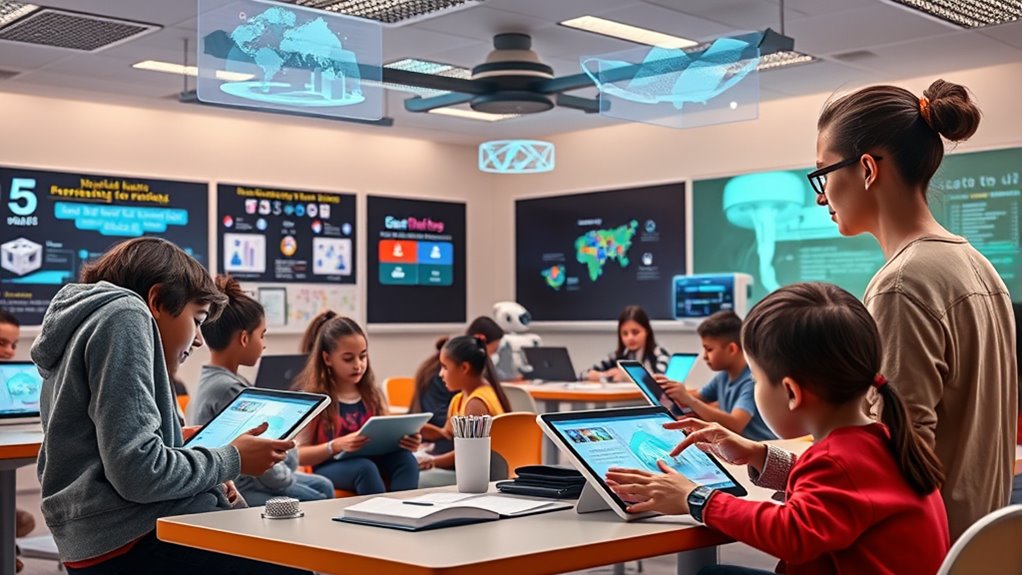
You can create tailored learning experiences by combining micro-credentials with personalized pathways that adapt to your unique needs. These credentials offer validated, industry-relevant skills, enabling you to acquire expertise quickly and efficiently. Embracing this approach helps you stay agile in a rapidly changing job landscape. Research shows that integrating micro-credentials into education significantly improves skill proficiency and reduces training costs for employers.
Tailored Learning Experiences
Implementing micro-credentials and personalized learning pathways transforms education by aligning each student’s journey with their unique goals and strengths. This approach boosts engagement, motivation, and achievement, as students receive tailored content and pacing. The personalized learning market is projected to grow to over $15 billion by 2029, reflecting its expanding influence across education sectors. Data-driven platforms analyze individual progress, adjusting instruction in real time to optimize outcomes. Students learn faster—30 to 40% quicker—and course completion rates soar by 70%.
| Key Benefits | Implications |
|---|---|
| Higher motivation | Students take ownership of their learning journey |
| Better engagement | Deeper, self-directed learning experiences |
| Faster progress | Better preparation for future jobs |
| Improved outcomes | Increased success and retention |
Micro-Credentials Validation
Micro-credentials serve as targeted, flexible validation tools that confirm specific skills and knowledge, complementing personalized learning pathways. They are compact, focusing on narrow competencies relevant to industry needs, and typically last from days to months. You demonstrate proficiency through practical tasks, ensuring real-world applicability. These credentials are often issued as digital badges or certificates, which are portable and shareable across platforms. The EU emphasizes transparency and clear assessment criteria, supporting standardization and quality assurance. Micro-credentials can be stacked to form larger qualifications, aligning with evolving job demands. They’re usually offered by accredited institutions or professional bodies, giving credibility and industry recognition. Micro-credentials are increasingly recognized by employers and industry leaders, making them valuable for career advancement. This validation method enables you to showcase your skills efficiently, making it easier for employers to verify your competencies without traditional degrees.
Accelerated Skill Acquisition
Accelerating skill acquisition through micro-credentials and personalized learning pathways enables you to acquire targeted competencies efficiently and flexibly. Micro-credentials are increasingly adopted by employers for skills-based hiring, with 90% using them to identify work-ready candidates. They help fill skill gaps and facilitate lateral career moves, especially in emerging fields like generative AI and cybersecurity. Students value micro-credentials; one-third have earned them, and 80% believe they boost job success. Educational institutions are responding by integrating micro-credentials into credit programs and offering personalized, modular pathways that improve engagement and retention. AI-driven systems analyze learner data, creating tailored pathways that can cut learning time in half, increase course completion, and reduce dropout rates. This approach accelerates skills development while aligning education with industry needs.
As an affiliate, we earn on qualifying purchases.
Bridging the Youth Skills Gap Through Targeted Training
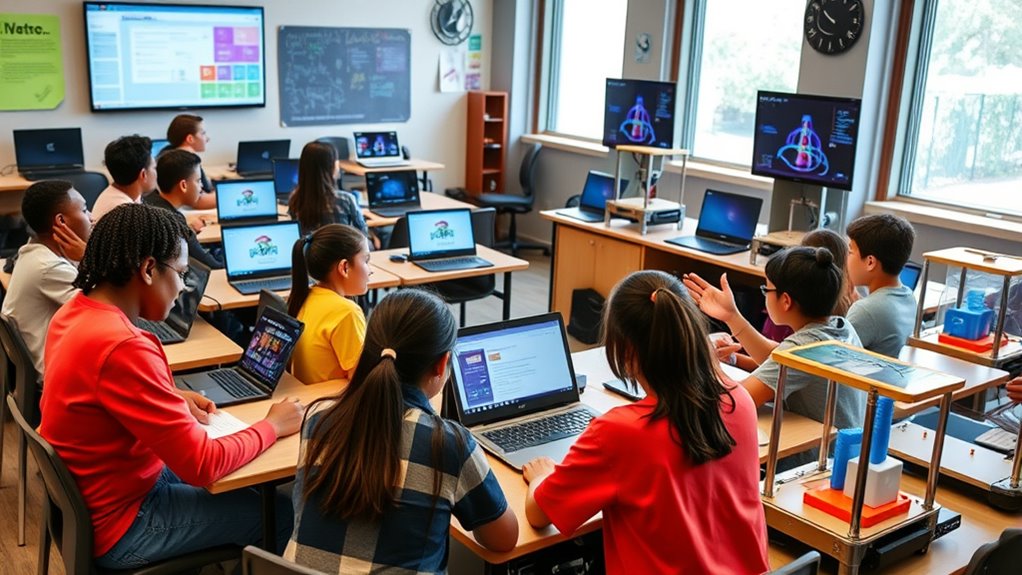
Bridging the youth skills gap requires targeted training programs that align with current industry needs and prepare young people for the evolving job market. Focused initiatives like industry partnerships, on-the-job training, and nondegree programs can provide practical skills quickly. These programs help reduce barriers and equip youth with multidisciplinary abilities valued across sectors. To illustrate, consider this table:
| Program Type | Benefits | Focus Area |
|---|---|---|
| Nondegree Accreditation | Fast skill acquisition, industry relevance | Technical skills |
| Earn-and-Learn | Practical experience, immediate employment readiness | Applied skills |
| On-the-Job Training | Real-world exposure, workplace adaptability | Industry-specific |
| Industry Partnerships | Curricula aligned with market needs | Skill relevance |
| Continuous Learning | Long-term adaptability, lifelong career growth | Soft and hard skills |
Promoting Digital Literacy and Future-Ready Competencies

Promoting digital literacy and future-ready competencies is essential for preparing youth to thrive in an increasingly technological world. You need to understand that digital skills are now core for employment, communication, and societal participation. As skills rapidly evolve, especially with AI, AR/VR, and media literacy, early integration into education is crucial. Yet, many systems lack the infrastructure and trained teachers to deliver effective digital education. You must also recognize that students’ digital literacy scores are declining, making critical thinking about online content more important than ever. Embracing emerging technologies like AI and immersive tools can enhance learning. To succeed, collaboration between policymakers, educators, and tech companies must prioritize investments in digital infrastructure and curricula, ensuring all students develop the competencies needed for future careers.
Fostering Lifelong Learning and Continuous Upgrading

To prepare for a future where jobs constantly evolve, fostering lifelong learning and continuous upgrading becomes essential. You need to stay adaptable amidst rapid technological and economic shifts. Employers are investing heavily in ongoing education, with 25% of online college enrollments funded by benefits. This support helps retain talent and develop skills. Policy initiatives like training allowances and wage subsidies make reskilling accessible. Consider these key points:
Embrace lifelong learning through employer support and policy initiatives to stay competitive in a constantly evolving job market.
- Employer-sponsored programs serve as both retention tools and talent pipelines.
- Digital credentials like micro-credentials and badges support targeted skill development.
- Online learning is expanding, reaching an estimated 57 million learners worldwide by 2027.
- Flexibility in learning pathways enables you to balance education with work and life commitments.
Continuous learning guarantees you remain competitive in a transforming job market.
Building Inclusive and Flexible Learning Environments
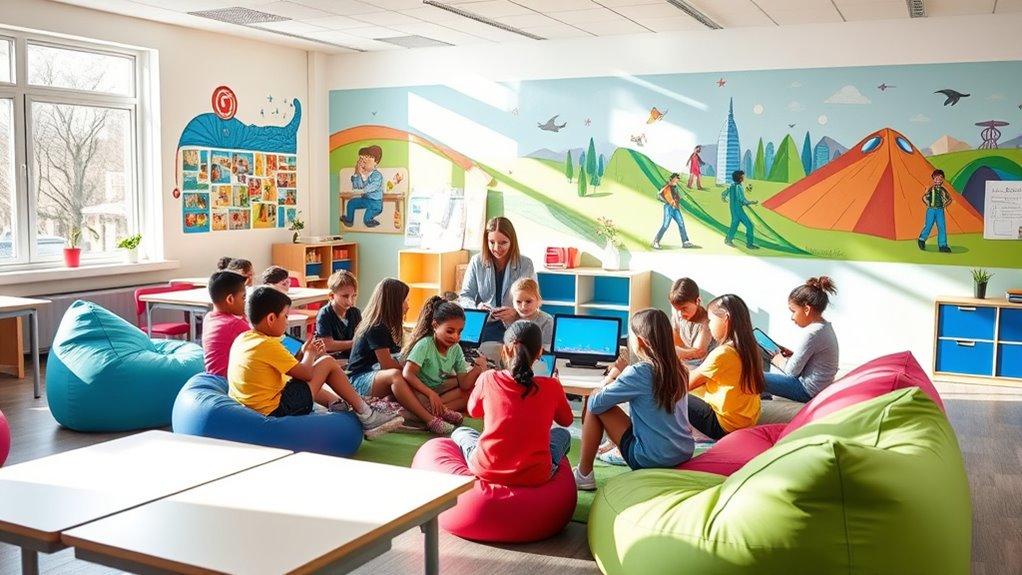
Creating inclusive and flexible learning environments guarantees that all students have equal opportunities to succeed, regardless of their backgrounds or abilities. You should ensure laws and policies support this, as 68% of countries define inclusive education to cover marginalized groups. Focus on integrating students with special needs into mainstream classrooms to promote social cohesion and reduce segregation. Design interactive spaces that benefit students with and without special needs by engaging them actively, supporting diverse learning styles, and fostering cognitive and social development. Incorporate flexible features like moveable furniture and varied workspaces to personalize learning, boost engagement, and improve mental well-being. These adaptable environments increase accessibility, accommodate different circumstances, and help all students participate fully, preparing them for a future where adaptability and inclusivity are essential.
Frequently Asked Questions
How Will Education Funding Adapt to Support New Learning Models?
You’ll see education funding shift to support innovative models like high-dosage tutoring and extended learning. More investments will target evidence-based strategies, partnerships, and workforce development integration. Funding will also focus on closing gaps between high- and low-poverty schools, ensuring all students access new opportunities. As policies evolve, expect increased support for technology, sustainability, and non-traditional careers, helping you prepare for a dynamic, skills-driven future.
What Role Do Employers Play in Shaping Educational Curricula?
Think of employers as the compass guiding educational curricula. You play a crucial role by providing insights into industry needs, guaranteeing skills taught match real-world demands. You help design relevant programs, offer work-based learning like internships, and share practical insights through workshops. Your involvement ensures students develop essential skills, broaden career understanding, and gain authentic workplace experiences, making education truly aligned with today’s dynamic job market.
How Can Teachers Be Trained to Deliver Personalized, Competency-Based Education?
You can train teachers to deliver personalized, competency-based education by providing ongoing professional development focused on mastery-based instruction and technology integration. Encourage them to create clear, measurable competencies aligned with real-world skills, and use collaborative learning strategies. Offer practical training on mapping curricula, evaluating progress continuously, and designing scenario-based activities. Support their growth with resources and peer collaboration to guarantee they effectively foster personalized learning experiences.
What Measures Ensure Equitable Access to Digital Learning Tools?
Imagine opening a door that leads to endless learning opportunities—yet, for 2.6 billion people, that door remains closed due to lack of internet access. To guarantee equitable digital learning, you must support infrastructure expansion, provide affordable devices, and create community hubs. Policies and partnerships also play a vital role. With these measures, you help bridge the digital divide, giving everyone a fair shot at quality education.
How Will Assessments Evolve to Measure Skills Effectively?
You’ll see assessments evolve into continuous, real-time processes that adapt to rapid changes. Instead of static tests, you’ll use dynamic, scenario-based evaluations integrated into daily workflows. These assessments will measure complex skills like analytical thinking, collaboration, and digital literacy, often using AI-powered platforms. Trust in traditional methods declines as ongoing feedback and advanced analytics guide your development, helping you stay prepared for evolving job demands and future opportunities.
Conclusion
As you journey into this evolving landscape, remember that education is your compass and your sail. Embrace adaptability like a chameleon changing with its surroundings, and see lifelong learning as your trusted anchor in turbulent waters. By sharpening skills and fostering inclusivity, you’ll navigate a future where traditional jobs fade into a vibrant tapestry of opportunity. Together, you can sculpt a resilient, innovative world where growth blossoms beyond the horizon.
Fall Picks
fall essentials
As an affiliate, we earn on qualifying purchases.