
TL;DR
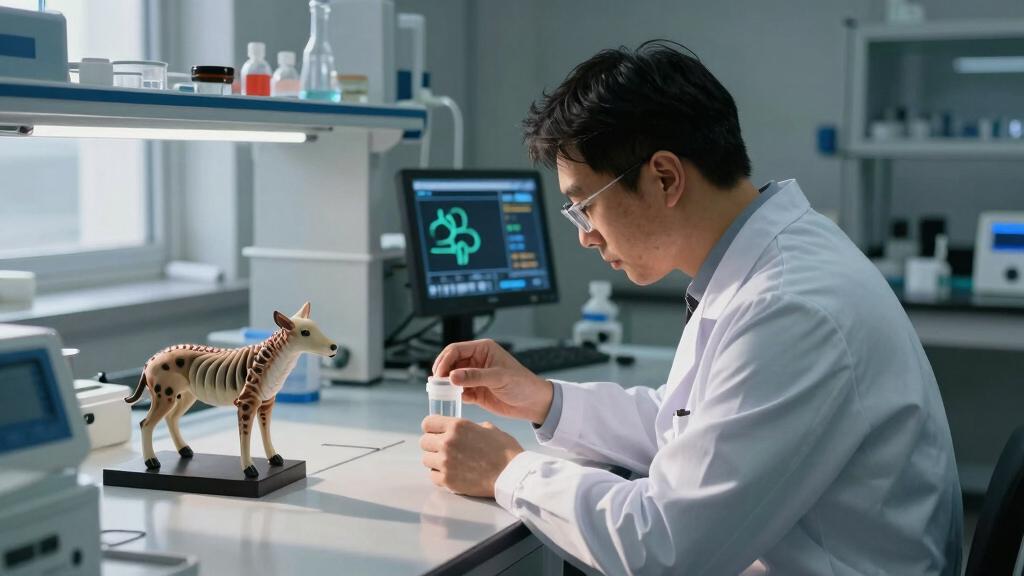
Scientists have discovered that mammals’ ability to regenerate body parts is not lost but dormant. A new two-step treatment successfully stimulated tissue regrowth in a study, challenging long-held beliefs. This could lead to improved healing therapies.
Scientists have demonstrated that mammals, including humans, may retain dormant regenerative capabilities that can be activated with specific treatments, challenging the long-standing view that regeneration is lost in these species.
A study published in Nature Communications by researchers at Texas A&M College of Veterinary Medicine and Biomedical Sciences shows that a two-step treatment using growth factors can stimulate regeneration of bones, joints, and ligaments in mammals. The approach involves applying fibroblast growth factor 2 (FGF2) after initial healing, followed by bone morphogenetic protein 2 (BMP2), prompting the body’s cells to rebuild tissues that are normally replaced by scar tissue.
Researchers emphasize that these findings suggest the regenerative capacity in mammals is not entirely absent but hidden within existing healing processes. The study challenges the assumption that mammals lack the cellular potential for regeneration, proposing instead that the ability is dormant and can be reactivated under the right conditions.
While the regenerated tissues were not perfect replicas of original structures, they included key components such as bone, tendons, and ligaments, arranged in patterns similar to natural anatomy. The process involves redirecting fibroblasts—cells involved in scar formation—toward a regenerative pathway, including a phenomenon called positional re-specification, where cells are instructed to rebuild different structures than they normally would.
Implications for Future Regenerative Medicine
This research could transform approaches to healing and tissue repair, potentially reducing scarring and enabling regeneration of complex structures like limbs or joints in humans. Because some of the growth factors used are already approved or in clinical trials, translating these findings into therapies may be faster than with entirely new drugs.
Understanding that mammals retain a dormant regenerative potential opens new avenues for medical research, shifting the paradigm from viewing regeneration as lost to viewing it as reactivatable. This could lead to treatments that enhance recovery after injuries or surgeries, improving quality of life and reducing disability.

Rapid Healing Cream, Growth Factor Skin Repair for Cracked Heels, Hands, Cuts, Burns & Post-Procedure, Restores & Protects with NovoSerum, Panthenol B5, Ceramide 3 & Shea Butter, 1.7 fl oz
- Innovative Skin Repair Formula: Contains patented NovoSerum with growth factors
- Clinically Proven Effectiveness: Increases collagen and GAGs in less than a month
- Nourishing and Moisturizing: Includes ceramide 3, panthenol, shea butter, and peptides
As an affiliate, we earn on qualifying purchases.
As an affiliate, we earn on qualifying purchases.
Historical Views on Mammalian Regeneration
For decades, scientists believed that mammals, including humans, had lost the ability to regenerate complex tissues, unlike animals such as salamanders or newts, which can regrow entire limbs. The prevailing view was that mammalian healing relied on scar formation, which prevents true regeneration. However, recent studies suggest this may not be entirely accurate.
Research in regenerative biology has shown that mammals possess some regenerative cells and pathways, but these are typically suppressed or inactive during normal healing. The new study builds on this understanding, demonstrating that with specific interventions, these dormant pathways can be reactivated to promote tissue regeneration.
“The capacity for regeneration is not absent in mammals; it is just hidden within our normal healing processes and can be activated.”
— Dr. Ken Muneoka

Portable Extracorporeal Shockwave Therapy Machine, V100 Shock Wave Therapy Device for Joint & Muscle Pain Relief, Muscle Bone Tissue Regeneration
- Power Output: Max 100W with adjustable energy and frequency
- Interchangeable Massage Heads: 14 heads for various body areas
- User-Friendly Design: Compact, lightweight, and travel-ready
As an affiliate, we earn on qualifying purchases.
As an affiliate, we earn on qualifying purchases.
Unanswered Questions About Regeneration Activation
While the study demonstrates successful tissue regeneration in controlled experiments, it remains unclear whether this approach can be safely and effectively applied in humans. The long-term stability and functionality of regenerated tissues need further investigation. Additionally, it is not yet confirmed whether similar treatments can induce full limb or organ regeneration in mammals.

Pure Therapro Rx Acute Injury Tendon & Ligament Support, 90 Capsules
- Supports Tendon and Ligament Repair: Promotes self-repair and collagen synthesis
- Contains Type I Collagen: Supports tendon structure and biomechanics
- Clinically Supported Formula: Backed by 5 scientific studies for safety and efficacy
As an affiliate, we earn on qualifying purchases.
As an affiliate, we earn on qualifying purchases.
Next Steps Toward Clinical Applications
Researchers plan to refine the treatment protocol, testing its safety and efficacy in larger animal models. Clinical trials in humans could be considered once these studies demonstrate consistent, safe results. Further research will also explore whether additional factors or techniques can improve the quality and complexity of regenerated tissues.

FACTORFIVE Regenerative Serum, Hero Anti-Aging Treatment with Adult Human Stem Cell Growth Factors and Copper Peptides for Fine Lines, Pores, Tightness, and Smoothing, 0.35 fl oz / 10 ml
- Best-Selling Anti-Aging Serum: Targets wrinkles, sun spots, and skin firmness
- Biotechnology in a Bottle: Contains ethically-sourced human stem cell growth factors
- Fights Multiple Signs of Aging: Reduces fine lines, sun spots, and improves skin texture
As an affiliate, we earn on qualifying purchases.
As an affiliate, we earn on qualifying purchases.
Key Questions
Can mammals naturally regenerate body parts?
Currently, mammals do not naturally regenerate body parts in the way salamanders do. However, recent research suggests they may have a dormant regenerative potential that can be activated with specific treatments.
What are the key growth factors involved in this regeneration process?
The study focused on fibroblast growth factor 2 (FGF2) and bone morphogenetic protein 2 (BMP2), both of which are already known and used in some medical treatments.
Does this mean humans can grow limbs again?
Not yet. The research shows promise for regenerating tissues like bones and ligaments, but full limb regeneration in humans remains a goal for the future.
Are there risks associated with activating dormant regenerative pathways?
Further studies are needed to assess safety, as manipulating cellular pathways could have unintended effects. Clinical trials will evaluate safety before any widespread application.
How soon might this lead to new treatments?
It could still take several years of research and testing before therapies based on this approach become available in clinics.
Source: Hacker News


![GPT-5.6 Sol Ultra Produces Proof Of The Cycle Double Cover Conjecture [Pdf]](https://deepintellica.com/wp-content/uploads/2026/07/gpt-5-6-sol-ultra-produces-proof-of-the-cycle-double-cover-conjecture-pdf-featured-560x300.jpg)