
TL;DR

Get business pricing on tech for your team
- Business-only prices and quantity discounts
- Tax-exempt purchasing
- Multiple users, one account, clear invoices
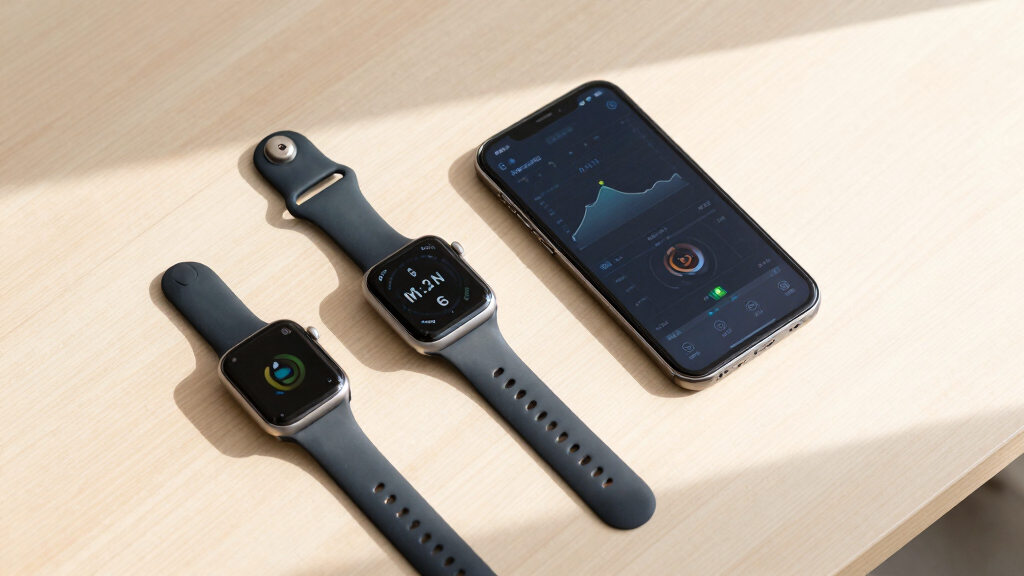
Smartwatches equipped with advanced sensors and AI analysis are increasingly capable of detecting early signs of illness, such as respiratory infections, before symptoms develop. While promising, their clinical reliability remains limited, and they are not substitutes for medical diagnosis.
Smartwatches with advanced sensors and AI-driven analysis are showing promise in detecting early signs of illness, including respiratory infections, before symptoms manifest. This development could enable earlier intervention and reduce disease transmission, making wearable health tech more clinically relevant than ever before.
Recent studies from institutions such as Texas A&M and Stanford indicate that smartwatches can identify physiological changes—like variations in skin temperature, heart rate, and respiratory patterns—that precede symptoms of illnesses such as COVID-19 and influenza. These devices analyze combined sensor data against individual baselines to flag potential health issues. Companies like Apple, Oura, and Whoop have incorporated AI features, including symptom tracking and health coaching, to help users interpret their data. However, experts caution that most smartwatch metrics are not yet reliable enough for definitive medical diagnoses, often producing false positives or misinterpretations. The technology is primarily useful for detecting deviations from normal health patterns, which can prompt users to seek medical advice sooner.
Potential for Early Illness Detection Through Wearables
This technology could transform personal health management by enabling earlier detection of illnesses, potentially reducing transmission rates during pandemics and improving health outcomes. It also highlights the growing role of AI in interpreting complex health data, although limitations mean these devices are not yet substitutes for professional medical diagnosis.
smartwatch health monitoring sensors
As an affiliate, we earn on qualifying purchases.
As an affiliate, we earn on qualifying purchases.
Advances in Sensor Technology and AI in Wearables
Wearable health devices have evolved from simple step counters to sophisticated sensors capable of monitoring sleep, skin temperature, oxygen saturation, and heart rate variability. Recent research underscores their potential to detect early signs of respiratory infections before symptoms appear, especially when combined with AI analysis. While some features, like AFib detection, are clinically validated, most health metrics remain approximate. The integration of AI coaching and symptom tracking is a recent trend, aiming to help users interpret data and seek care early. Nonetheless, medical professionals emphasize that these devices are supplementary tools, not diagnostic replacements.
“While wearables can alert us to abnormal patterns, they are not yet precise enough for diagnosis. They serve best as early warning signals prompting further medical evaluation.”
— Dr. Jane Smith, Cardiologist
wearable health device for early illness detection
As an affiliate, we earn on qualifying purchases.
As an affiliate, we earn on qualifying purchases.
Limitations and Reliability of Wearable Health Data
It remains unclear how accurate and reliable these early detection capabilities are across diverse populations and conditions. False positives and negatives could lead to unnecessary anxiety or missed diagnoses. The extent to which AI can reliably interpret complex physiological data without clinical validation is still under investigation.
AI-enabled fitness tracker with temperature and heart rate
As an affiliate, we earn on qualifying purchases.
As an affiliate, we earn on qualifying purchases.
Future Developments in Wearable Disease Monitoring
Ongoing research aims to improve sensor accuracy and AI algorithms for better predictive power. Regulatory approval processes and clinical trials will determine how widely these features can be adopted. Expect further integration of AI-driven health coaching and more personalized health alerts, but with continued emphasis on supplementing, not replacing, traditional healthcare.
advanced health smartwatch for respiratory monitoring
As an affiliate, we earn on qualifying purchases.
As an affiliate, we earn on qualifying purchases.
Key Questions
Can my smartwatch diagnose illnesses?
Currently, most smartwatches cannot diagnose illnesses. They can detect early signs or deviations from normal patterns, which may prompt medical consultation.
How accurate are smartwatch health metrics?
Some metrics like AFib detection are clinically validated, but many others, such as sleep stages or calorie estimates, are only approximate and not suitable for medical decisions.
Will AI-powered wearables replace doctors?
No, AI-driven wearables are intended as supplementary tools to assist early detection and health management. They do not replace professional medical diagnosis or treatment.
What are the privacy concerns with health data from wearables?
Health data collected by wearables is sensitive, and users should be aware of how their data is stored and shared. Manufacturers are subject to privacy regulations, but users should review privacy policies carefully.
When can I expect more reliable early detection features?
Further validation through clinical trials and regulatory approval is needed. Advances in sensor technology and AI will likely improve accuracy over the next few years, but widespread reliable early detection remains a work in progress.
Source: Engadget
Fall Picks
fall essentials
As an affiliate, we earn on qualifying purchases.