
TL;DR

Get business pricing on tech for your team
- Business-only prices and quantity discounts
- Tax-exempt purchasing
- Multiple users, one account, clear invoices
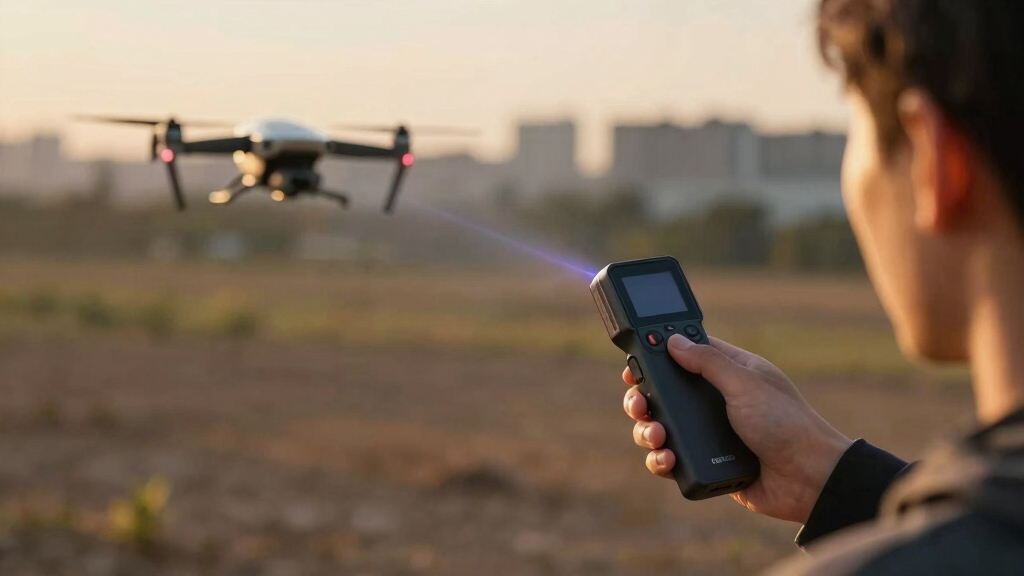
Chinese defense supplier Harbin Xinguang introduced a backpack-sized laser weapon at the Beijing arms expo, capable of destroying small drones within seconds. The system uses AI for target identification and can be rapidly deployed, marking a significant step in portable drone defense technology.
Chinese defense company Harbin Xinguang Optic-Electronics Technology unveiled a new man-portable laser weapon capable of destroying small drones within seconds at the Beijing Defence Information Equipment & Technology Exhibition 2026. The system, called the Lijian II and Lijian III, weighs around 25-30 kg and uses AI for target identification, marking a notable advancement in portable drone defense technology. This development signals China’s progress in deploying compact, effective anti-drone systems for military and security applications.
The Lijian II and Lijian III are lightweight, backpack-sized laser units that weigh approximately 30 kg and 25 kg respectively. Each draws about 2 kW of power and costs roughly 2 million yuan (US$295,000). The units are designed for quick deployment by one or two soldiers, with a split configuration comprising a laser emitter, an air cooling system, and a handheld control terminal. The emitter alone weighs about 15 kg, and the cooling system around 10 kg. Both models can target drones up to 500 meters (1,640 feet), with the Lijian III capable of burning through a drone in approximately four seconds. The system also features AI-based targeting, cued by external sensors such as radar, to automatically identify and engage incoming drones.
These portable lasers are part of a broader Chinese effort to develop effective, low-cost counter-drone systems. The company also showcased a fixed-position model, the Lijian-10G, which operates at 10 kW and can target drones up to 1,200 meters (3,900 feet), but requires a larger liquid-cooled power supply. The portable units are positioned as easier to operate and rapidly deployable, suitable for protecting military facilities and critical infrastructure. Compared to heavier, higher-power systems like the U.S. Army’s 20 kW LOCUST or Israel’s 100 kW Iron Beam, China’s portable lasers focus on close-range, low-cost drone defense, with the ability to engage small, slow-moving targets efficiently.
Implications for Portable Drone Defense Capabilities
This development signifies a notable shift toward portable, AI-enabled laser systems that can be quickly deployed by individual soldiers or small teams. The ability to burn through small drones within seconds at close range offers a cost-effective alternative to traditional missile or projectile-based countermeasures, which can be expensive and logistically complex. The integration of AI for target recognition enhances operational efficiency and reduces the need for extensive manual targeting, potentially transforming how military and security forces defend against swarms of small, low-flying drones. As drone threats grow in both military and civilian contexts, such portable systems could become a standard component of layered defense strategies, especially in environments where mobility and rapid response are critical.
portable anti-drone laser weapon
As an affiliate, we earn on qualifying purchases.
As an affiliate, we earn on qualifying purchases.
China’s Progress in Portable Laser Defense Technology
China has been actively developing directed-energy weapons for several years, with previous demonstrations of mounted and vehicle-based laser systems capable of engaging drones and other small targets. The recent expo presentation marks a significant step in miniaturizing this technology into portable units suitable for infantry deployment. Historically, heavier laser systems like the U.S. LOCUST and Israel’s Iron Beam have demonstrated higher wattage capabilities for longer-range engagement, but at the cost of portability. China’s focus on lightweight, AI-enabled lasers aligns with a broader trend toward versatile, mobile defense systems designed to counter the increasing proliferation of small, inexpensive drones used in both military and civilian contexts.
“The lightweight design and AI targeting make these systems highly adaptable for rapid deployment in diverse operational scenarios.”
— an anonymous researcher
man-portable laser drone defender
As an affiliate, we earn on qualifying purchases.
As an affiliate, we earn on qualifying purchases.
Unconfirmed Performance and Deployment Details
All specifications are based on manufacturer disclosures and have not been independently verified through testing. It remains unclear how the system performs under different environmental conditions or against various drone types. The extent of operational deployment, including whether these units are already in active service at Chinese military facilities, has not been confirmed and is subject to further clarification.
AI targeting laser system for drones
As an affiliate, we earn on qualifying purchases.
As an affiliate, we earn on qualifying purchases.
Next Steps for Testing and International Observation
Further independent testing and evaluation are needed to confirm the system’s effectiveness and operational reliability. Observers will likely monitor whether China begins deploying these units at military sites or exports them to allied countries. Additionally, other nations may accelerate their own development of portable laser defenses in response, leading to a potential increase in portable directed-energy systems globally.
compact laser weapon for security
As an affiliate, we earn on qualifying purchases.
As an affiliate, we earn on qualifying purchases.
Key Questions
How effective is the laser at destroying drones?
The system reportedly burns through small drones within about four seconds at a range of 500 meters, but independent verification is pending.
Can these systems be used against larger or faster drones?
The current 2 kW laser is optimized for small, slow, or low-flying targets at close range. Engagement of larger or faster drones would likely require higher power or different systems.
Are these portable lasers already in operational use?
Chinese officials stated the units are deployed at some military facilities, but details about active service or operational readiness are not confirmed.
What are the main advantages of these portable lasers?
The key benefits include rapid deployment, low cost per shot compared to missile-based systems, and AI-assisted target identification, making them suitable for defending critical sites against drone threats.
How do these systems compare to Western counterparts?
Compared to systems like the U.S. LOCUST or Israel’s Iron Beam, China’s portable lasers are lower in power but more mobile, focusing on close-range, quick-response scenarios.
Source: Tom’s Hardware: For The Hardcore PC Enthusiast
Fall Picks
fall essentials
As an affiliate, we earn on qualifying purchases.