
TL;DR

Get business pricing on tech for your team
- Business-only prices and quantity discounts
- Tax-exempt purchasing
- Multiple users, one account, clear invoices
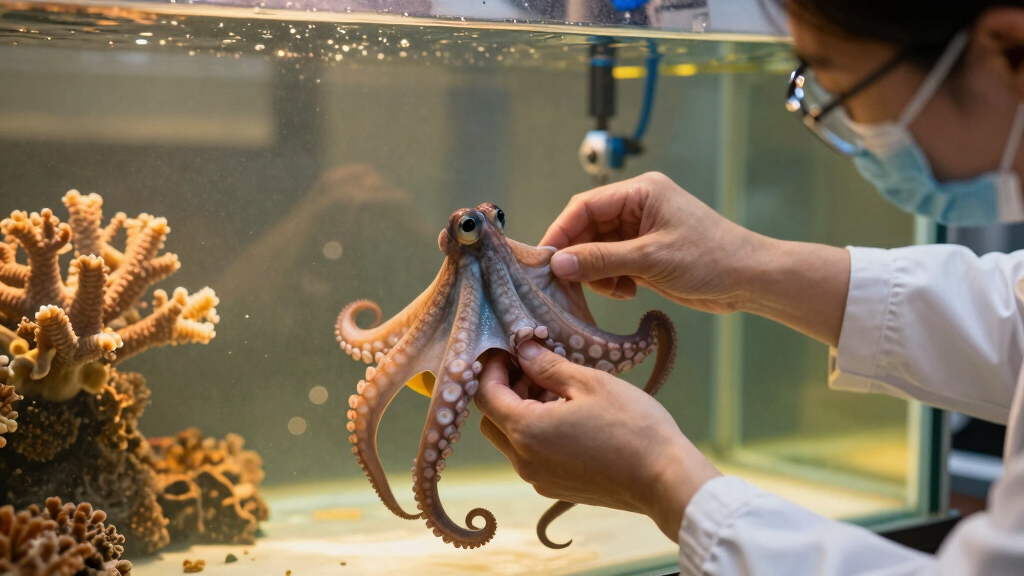
Scientists from the Charles Darwin Foundation have discovered a new species of octopus at nearly 1,800 meters deep near the Galapagos Islands. The small, blue octopus features unique physical traits and adds to the known biodiversity of deep-sea life.
Scientists from the Charles Darwin Foundation have confirmed the discovery of a new octopus species near the Galapagos Islands, found at a depth of nearly 1,800 meters. The small, blue octopus, no larger than a golf ball, features distinctive stubby arms with a single row of suckers, marking it as a unique addition to marine biodiversity.
The discovery was made during a recent deep-sea exploration conducted by Charles Darwin Foundation researchers. The octopus was observed at approximately 1,800 meters (about 5,900 feet) below the ocean surface, an environment rarely explored due to its extreme depth and technical challenges. The species is characterized by its striking blue coloration and diminutive size, measuring no more than a golf ball.
Researchers noted that the octopus has stubby arms with only one row of suckers, a feature that distinguishes it from other known octopus species. The team collected samples for further analysis to confirm its classification as a new species, which is now undergoing genetic and morphological studies.
Why It Matters
This discovery is significant because it expands understanding of deep-sea biodiversity, particularly in the underexplored habitats near the Galapagos Islands. It highlights the potential for discovering new marine species in extreme environments and underscores the importance of continued exploration and conservation efforts in these regions.
The small size and unique physical traits of this octopus may also provide insights into adaptation mechanisms in deep-sea creatures, which could have broader implications for marine biology and evolutionary studies.
As an affiliate, we earn on qualifying purchases.
Background
Deep-sea exploration has increasingly revealed new species in recent years, as technological advances allow scientists to reach previously inaccessible habitats. The Galapagos region, known for its rich biodiversity, remains a focus for marine research. This discovery follows other recent findings of deep-sea organisms, emphasizing the ocean’s vast unexplored diversity.
Previous deep-sea expeditions have documented various unusual species, but this is among the first reports of a small, blue octopus with such distinctive features near the Galapagos. The discovery adds to the ongoing efforts by the Charles Darwin Foundation to catalog and protect marine life in the region.
“This tiny octopus is a remarkable find, showcasing the incredible diversity that still exists in the deep ocean. Its unique physical traits suggest specialized adaptations to its environment.”
— Dr. Maria Lopez, Marine Biologist at Charles Darwin Foundation
“We are in the process of analyzing genetic samples to confirm its status as a new species. The physical features already indicate it’s distinct from known octopus species.”
— Dr. James Carter, Marine Taxonomist
As an affiliate, we earn on qualifying purchases.
What Remains Unclear
It is not yet confirmed whether this octopus is a new species or a variation of an existing one. The genetic analysis is still underway, and further studies are needed to establish its taxonomic status. Details about its behavior, population size, and ecological role remain unknown.
As an affiliate, we earn on qualifying purchases.
What’s Next
Researchers will complete genetic testing and morphological analysis to officially describe the species. Future expeditions may explore its habitat further to understand its behavior and ecological significance. Conservation assessments could follow based on these findings.
underwater exploration flashlight
As an affiliate, we earn on qualifying purchases.
As an affiliate, we earn on qualifying purchases.
Key Questions
How was the octopus discovered?
The octopus was found during a deep-sea exploration conducted by Charles Darwin Foundation scientists at nearly 1,800 meters deep off the Galapagos Islands.
What makes this octopus different from others?
It is notably small—no larger than a golf ball—and has a distinctive blue coloration with stubby arms featuring a single row of suckers.
Is this the first deep-sea octopus discovery near Galapagos?
No, but this particular species appears to be new based on initial observations. Further analysis is needed for confirmation.
Why is discovering new species important?
New species discoveries expand understanding of biodiversity, evolutionary adaptation, and can inform conservation efforts in fragile ecosystems.
When will the species be officially classified?
Following genetic and morphological analysis, the classification process could take several months, with an official description published afterward.
Source: reddit
Halloween Picks
halloween
As an affiliate, we earn on qualifying purchases.