
TL;DR
Hong Kong researchers developed a new stainless steel, SS-H2, that withstands high potentials and corrosive seawater environments, potentially lowering costs for green hydrogen production. The material’s unique dual-passivation mechanism is unprecedented and still under study.
Researchers at the University of Hong Kong have developed a new ultra stainless steel, called SS-H2, that can resist corrosion under extreme electrochemical conditions typical of seawater electrolysis, a key step toward cheaper, durable green hydrogen production.
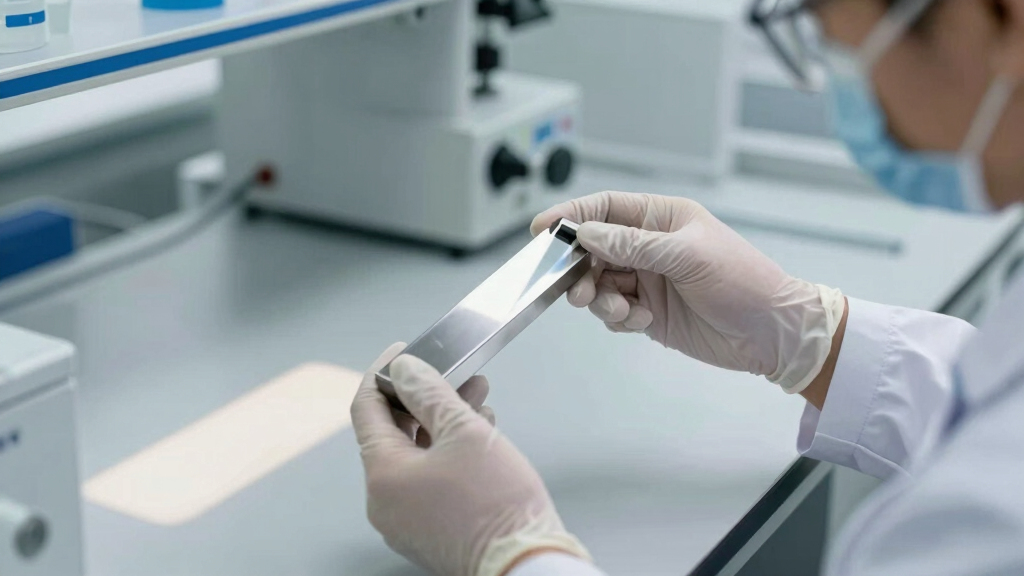
The HKU team, led by Professor Mingxin Huang, engineered a stainless steel alloy capable of enduring high electrical potentials without degrading. This alloy forms a second protective layer, composed of manganese, on top of the traditional chromium oxide barrier, allowing it to operate at potentials up to 1700 mV—significantly higher than conventional stainless steels. This innovation addresses a major obstacle in seawater electrolysis, where salt and chloride ions cause rapid corrosion of standard materials. The discovery builds on the team’s previous work in advanced stainless steels and has moved from laboratory research to initial industrial applications, with patents filed and production of wire-based components underway. The new steel could reduce material costs for electrolyzer components by up to 40 times compared to titanium-based materials, potentially making seawater electrolysis more economically feasible.
Why It Matters
This breakthrough could significantly lower the cost barrier for large-scale green hydrogen production from seawater, a plentiful resource. By enabling electrolyzers to operate reliably in harsh seawater environments, SS-H2 may accelerate the transition to renewable hydrogen energy, impacting global efforts to reduce carbon emissions and develop sustainable energy infrastructure.

316L Stainless Steel Fiber Felt, Sintered Stainless Steel Felt, for Water Electrolysis (10×10 cm)
Filtration accuracy: 25 µm;
As an affiliate, we earn on qualifying purchases.
As an affiliate, we earn on qualifying purchases.
Background
Green hydrogen is produced by splitting water using renewable electricity, but seawater electrolysis faces challenges due to corrosion and side reactions. Current industrial electrolyzers rely on expensive materials like titanium coated with precious metals, which are cost-prohibitive for large-scale deployment. The HKU research builds on decades of stainless steel development, pushing the material’s electrochemical limits to enable more durable and affordable electrolyzers. The team’s previous work includes anti-COVID stainless steel and ultra-strong alloys, demonstrating a history of innovative steel development.
“This new stainless steel forms a second protective layer that allows it to withstand ultra-high potentials, addressing a core challenge in seawater electrolysis.”
— Professor Mingxin Huang
“The manganese-based passivation layer is counter-intuitive, but atomic-level results convinced us of its stability. It opens new pathways for alloy design at high potentials.”
— Dr. Kaiping Yu

BALABULALA Stainless Steel Cable Tie Gun Kit, 100pcs 11.8inch Heavy Duty Metal Zip Ties, Self-Locking UV & Corrosion Resistant Stainless Steel Zip Ties, for Fence, Exhaust Pipe, Chicken Coop, Farm Use
304 Stainless Steel Construction
As an affiliate, we earn on qualifying purchases.
As an affiliate, we earn on qualifying purchases.
What Remains Unclear
While the alloy has demonstrated promising results in laboratory and initial industrial settings, long-term durability and large-scale performance in operational electrolyzers remain to be fully validated. Further testing is needed to confirm its stability over extended periods and under real-world conditions.

Angyanco 12Gauge(2mm) 304 Stainless Steel Solid Wire, Steel Wire for Crafts,DIY Projects,Sculpting Jewelry Making (12Gauge-1.1pound)
High-Quality 304 Stainless Steel – Constructed from premium 304 stainless steel for superior strength and long-lasting durability in…
As an affiliate, we earn on qualifying purchases.
As an affiliate, we earn on qualifying purchases.
What’s Next
The team plans to conduct extended durability tests of SS-H2 in operational electrolyzers and scale up production of components such as meshes and foams. Additional patents are in progress, and collaborations with industry partners aim to integrate the alloy into commercial systems within the next few years.
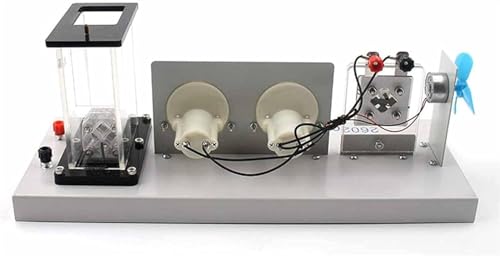
VERIMP Reversible Hydrogen Fuel Cell and Electrolyzer Physics and Electricity Experiment Hydrogen Oxygen Generator Kit Teaching Equipment High-Tech Hydrogen Fuel Cell and Electrolyzer
1. Electrical part: motor with wind shoulder, ammeter, voltmeter.
As an affiliate, we earn on qualifying purchases.
As an affiliate, we earn on qualifying purchases.
Key Questions
How does SS-H2 compare cost-wise to existing materials?
Replacing titanium components with SS-H2 could reduce structural material costs by approximately 40 times, making seawater electrolysis more economically viable.
What makes SS-H2 resistant to corrosion at high potentials?
The alloy forms a dual-passivation layer: the traditional chromium oxide and an additional manganese-based layer, which together protect the steel even at potentials up to 1700 mV.
Is this material ready for commercial deployment?
Not yet. While initial industrial applications are underway, long-term durability testing and large-scale validation are still in progress before commercial adoption.
Could this development impact global green hydrogen efforts?
Yes, if proven durable at scale, SS-H2 could lower costs and increase the feasibility of seawater electrolysis, a key technology for sustainable hydrogen production worldwide.