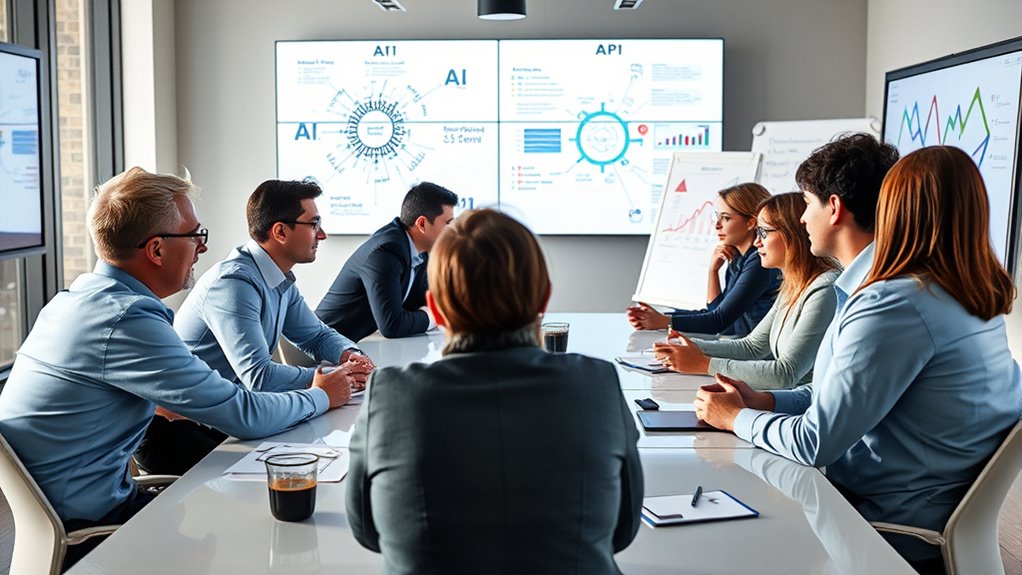

When implementing AI, balancing people and process is crucial. You need to manage the technical aspects while addressing employee concerns, fears, and resistance. Open communication, involving staff early, and providing tailored support help ease shifts. Remember, change isn’t just about upgrading systems—it’s about guiding your team through uncertainty and fostering trust. Prioritizing both human and technical elements creates a smoother transformation, so stay engaged to uncover key strategies for effective change management.
Key Takeaways
- Engage employees early by sharing AI benefits, addressing concerns, and involving them in planning to foster trust and reduce resistance.
- Prioritize transparent communication and active listening to balance technical deployment with human needs and foster acceptance.
- Offer tailored training and ongoing support to help staff adapt, boosting confidence and minimizing resistance to AI integration.
- Recognize resistance as a natural part of change, managing it through openness, involvement, and emphasizing the importance of human roles.
- Balance process improvements with people-centric strategies, ensuring employee well-being and fostering a culture receptive to AI-driven change.

Have you ever wondered whether your organization should prioritize its people or its processes? When implementing AI, this question becomes even more critical. You’ll quickly realize that managing change isn’t just about installing new technology; it’s about steering the human side of transformation. Employee resistance is a common obstacle you’ll face, often rooted in fears of job loss, unfamiliarity with new tools, or skepticism about AI’s value. Recognizing this resistance early on is essential for effective change management. Instead of ignoring or suppressing it, you need to understand where these concerns come from and address them openly. Open communication, transparency about goals, and involving employees in the process help ease fears and foster trust. When people feel heard and valued, resistance diminishes, and you create a more receptive environment for change.
Address resistance early with open communication and involvement for smoother AI change management.
You must also realize that change management isn’t a one-time effort; it’s a continuous process. It involves planning, communication, training, and ongoing support. When introducing AI, it’s tempting to focus solely on technical deployment—upgrading systems, integrating tools, and optimizing workflows. But neglecting the human element can lead to setbacks, delays, or even failure. To prevent that, you should involve your team from the start. Share the vision behind the AI initiative, explain how it will benefit both the organization and individual employees, and listen to their feedback. This inclusive approach helps reduce employee resistance because it shows respect for their concerns and demonstrates that their roles are still crucial, even as technology evolves. Recognizing the importance of change management strategies can significantly improve your chances of success.
You also need to be adaptable. Some employees may embrace AI quickly, while others need more time or tailored support. Offering extensive training and resources can build confidence and competence, making the transition smoother. Recognize that change management is about more than just rolling out new systems; it’s about guiding your people through uncertainty. If you focus solely on processes and technical aspects, you risk alienating your team, which can result in decreased morale and productivity. Balancing process improvements with people-centric strategies ensures that your change initiative is sustainable. When employees see that their well-being and growth matter, they’re more likely to engage positively with AI adoption.
Ultimately, successful AI implementation depends on your ability to manage both the technical and human sides of change. Prioritize clear communication, involve your team early, and address employee resistance head-on. By doing so, you foster a culture that embraces innovation rather than resists it, ensuring your organization benefits from AI’s potential while keeping your people engaged and motivated.
Frequently Asked Questions
How Can Leadership Effectively Communicate AI Changes to Staff?
To effectively communicate AI changes, you should prioritize transparent communication and maintain leadership visibility. Clearly explain the reasons behind AI implementation, addressing staff concerns openly. Be accessible for questions and updates, demonstrating your commitment to their understanding and involvement. Regularly share progress and challenges, fostering trust. By staying transparent and visibly engaged, you help staff adapt more smoothly and feel confident about the changes AI brings.
What Are Common Employee Resistance Reasons During AI Implementation?
You might face employee skepticism and change fatigue during AI implementation. Employees often doubt AI’s benefits or fear job loss, leading to resistance. Change fatigue can make staff feel overwhelmed by constant updates, reducing engagement. To overcome this, you should communicate transparently, address concerns empathetically, and involve employees early in the process. This approach helps build trust, reduces skepticism, and eases the progression, fostering a more receptive environment for AI adoption.
How to Balance Automation With Job Security Concerns?
Did you know 70% of employees worry about automation fears impacting their job security? To balance automation with these concerns, openly communicate how AI enhances roles rather than replaces them. Offer retraining programs and involve staff in planning to ease fears. Reassuring employees that AI is a tool to support, not threaten, their jobs builds trust and promotes smoother adoption. Your proactive approach can turn automation fears into opportunities for growth.
What Training Methods Best Prepare Teams for AI Adoption?
You should focus on interactive workshops and hands-on training to best prepare your teams for AI adoption. These methods engage participants actively, allowing them to practice real-world scenarios and build confidence with new technologies. By encouraging collaboration and problem-solving during training, you help your team adapt more quickly, understand AI’s capabilities, and feel more secure in their roles as they shift to AI-integrated workflows.
How Do Cultural Differences Impact AI Change Management?
Have you considered how cultural differences shape AI change management? Your approach can substantially influence success, especially when fostering cross-cultural collaboration. A global mindset helps you navigate diverse perspectives, adapt strategies, and build trust across teams. Recognizing and respecting these differences guarantees smoother transitions, encourages buy-in, and accelerates AI adoption. Without this awareness, miscommunication and resistance may hinder progress—so, are you prepared to bridge cultural gaps effectively?
Conclusion
Remember, managing change isn’t just about people or process alone. It’s about aligning your team’s mindset, embracing new workflows, and fostering a culture of continuous learning. It’s about communicating clearly, supporting consistently, and adapting swiftly. By balancing empathy with strategy, by valuing both human insight and technological innovation, you create a resilient foundation. Ultimately, success comes from integrating people and process—working together, learning together, growing together. That’s how change truly becomes your opportunity.