
🔍 Read the full analysis: The Future Of WiFi 7: Top AI-Driven Routers In 2026 on ThorstenMeyerAI.com

Get business pricing on tech for your team
- Business-only prices and quantity discounts
- Tax-exempt purchasing
- Multiple users, one account, clear invoices
TL;DR
In 2026, AI-enhanced WiFi 7 routers are transforming home connectivity with faster speeds, lower latency, and smarter network management. Key models include TP-Link Archer BE600, ASUS ROG Strix GS-BE12000, and Deco 7 Pro Mesh System.
In 2026, AI-powered WiFi 7 routers are now available, offering faster speeds, lower latency, and enhanced coverage for demanding households and gamers. Leading manufacturers like TP-Link, ASUS, and Deco have introduced models that leverage artificial intelligence to optimize network performance dynamically. This development signifies a major step forward in home networking technology, with implications for both consumers and the broader tech industry.
The top WiFi 7 routers in 2026 incorporate AI-driven features such as real-time traffic management, automatic channel switching, and adaptive beamforming to optimize performance across multiple devices. The TP-Link Archer BE600 stands out as a balanced choice, delivering high throughput and robust security, making it suitable for general household use. For gaming enthusiasts, ASUS’s ROG Strix GS-BE12000 offers ultra-low latency and stability, targeting high-demand applications. Meanwhile, the Deco 7 Pro Mesh System addresses the needs of large homes, providing seamless coverage through multiple nodes.
These devices support multi-band operation and multiple streams, enabling households with many smart devices to maintain consistent speeds and reduce congestion. Price points vary, with premium models offering advanced AI features and higher speeds, while more affordable options still provide significant performance improvements over previous standards. The integration of AI in these routers aims to simplify network management, automatically adjusting settings to optimize performance without user intervention.
The 10 picks
- 1
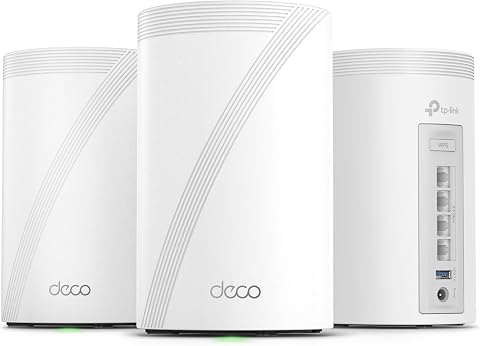 Deco 7 Pro Tri-Band WiFi 7 BE10000 Whole Home Mesh System 6-Stream 10 GbpsView on Amazon →
- 2
 ASUS ROG Strix GS-BE12000 WiFi 7 Gaming Router – Tri-Band, 12Gbps, MeshView on Amazon →
- 3
 TP-Link Archer BE12000 Tri-Band Wi-Fi 7 Router (Archer BE670)View on Amazon →
- 4
 Deco 7 Dual-Band WiFi 7 Mesh System, 4-Stream, 5 GbpsView on Amazon →
- 5
 NETGEAR Nighthawk Dual-Band WiFi 7 Router (RS90)View on Amazon →
- 6
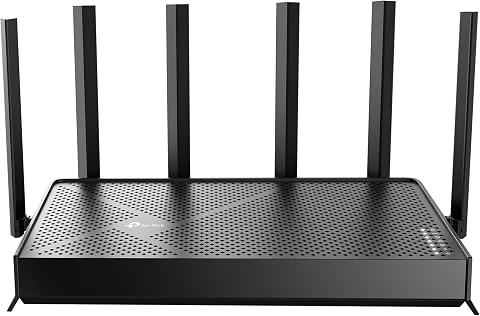 TP-Link Tri-Band WiFi 7 Router (Archer BE600)View on Amazon →
- 7
 TP-Link Tri-Band WiFi 7 Router (Archer BE550)View on Amazon →
- 8
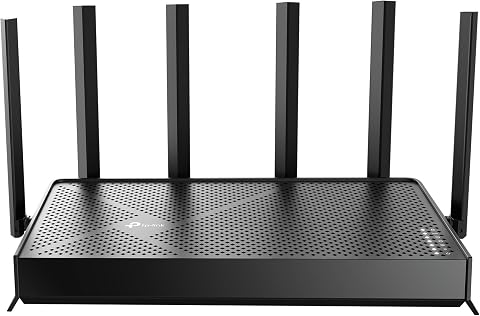 TP-Link BE6500 Dual-Band WiFi 7 Router (BE400)View on Amazon →
- 9
 TP-Link Dual-Band Wi-Fi 7 Router, Archer BE230View on Amazon →
- 10
 ASUS RT-BE55 WiFi 7 Router, 3.6Gbps, 2000 sq. ft., Mesh + VPN SupportView on Amazon →
The Impact of AI-Enhanced WiFi 7 Routers on Home Connectivity
The advent of AI-driven WiFi 7 routers in 2026 marks a significant upgrade in home networking, especially for households with high bandwidth demands. These devices promise to deliver more reliable, faster, and smarter connectivity, which is crucial as the number of connected devices continues to grow. For consumers, this means less lag during gaming, smoother streaming, and more stable smart home operation. For the industry, it signals a shift toward more intelligent, self-optimizing networks that can adapt in real time, reducing the need for manual configuration and troubleshooting.
Additionally, these advancements could influence future standards and encourage broader adoption of AI in networking hardware, potentially setting new benchmarks for performance and security. As 5G and fiber internet become more widespread, the importance of robust, adaptive WiFi infrastructure will only increase, making these routers vital for future-proofing home networks.
Development of WiFi 7 and AI Integration in Routers
WiFi 7, officially ratified in late 2023, introduces multi-gigabit speeds, multi-user MIMO, and wider channels, all designed to handle the increasing data demands of modern households. Manufacturers quickly began integrating artificial intelligence into their devices to maximize these capabilities, aiming to deliver smarter, more efficient networks. In 2025, early AI-enabled WiFi 7 routers started entering the market, but it was in 2026 that these devices became mainstream, with major brands launching models featuring advanced AI functions.
Previous WiFi standards, notably WiFi 6 and 6E, laid the groundwork for high-capacity, low-latency connections. However, they lacked the self-optimizing features that AI now provides, such as dynamic interference mitigation and automatic device prioritization. The new generation of routers leverages machine learning algorithms to continuously adapt to network conditions, providing a more seamless experience for users across various scenarios, including gaming, streaming, and smart home management.
Remaining Questions About AI-Driven WiFi 7 Routers
While the capabilities of these routers are promising, some uncertainties remain. It is not yet clear how widely adopted AI features will be across all brands and models, or how they will perform in complex, real-world environments over extended periods. Additionally, questions about long-term security, firmware updates, and compatibility with future devices are still being addressed by manufacturers and industry experts. The actual user experience may vary depending on home layouts, device ecosystems, and network demands, and comprehensive independent testing is ongoing.
Future Developments and Market Adoption in 2026 and Beyond
Manufacturers are expected to continue refining AI features, improving algorithms for better performance and security. In the coming months, more models are likely to incorporate AI-driven optimization, with firmware updates enhancing existing devices. Consumer adoption will depend on price, ease of use, and trust in AI security. Industry analysts predict that by late 2026, AI-enhanced WiFi 7 routers will become the standard for high-end and mainstream home networks, prompting further innovation in smart home integration and network management tools.
Consumers should watch for upcoming firmware updates, new model releases, and independent reviews to better understand how these devices perform in diverse environments. The ongoing evolution of WiFi 7 and AI integration will shape the future of home connectivity, making networks more adaptive, resilient, and easier to manage.
Key Questions
Will my current devices benefit from WiFi 7 routers?
Most existing devices are not yet compatible with WiFi 7, so they won’t see speed improvements directly. However, upgrading to a WiFi 7 router can future-proof your network for new devices that support the standard, and AI features can improve overall network stability for all connected gadgets.
Is investing in a WiFi 7 router worth it in 2026?
It depends on your internet plan and device needs. If you require ultra-low latency for gaming or high-speed transfers, WiFi 7 offers tangible benefits. For typical browsing and streaming, WiFi 6E may still suffice, and waiting for more mature WiFi 7 ecosystems could be advisable for budget-conscious buyers.
How does AI improve WiFi router performance?
AI enables routers to automatically optimize channels, manage device priorities, and adapt to interference in real time. This results in more stable, faster, and efficient networks, especially in environments with many connected devices.
Are AI features in WiFi 7 routers secure?
Most manufacturers incorporate security protocols like WPA3 and firmware auto-updates. However, as with any connected device, ongoing security assessments and updates are essential to protect against vulnerabilities. Consumers should choose models from reputable brands with a track record of security.
Source: ThorstenMeyerAI.com
Fall Picks
fall essentials
As an affiliate, we earn on qualifying purchases.